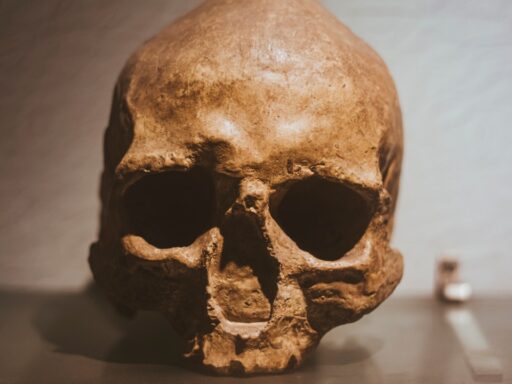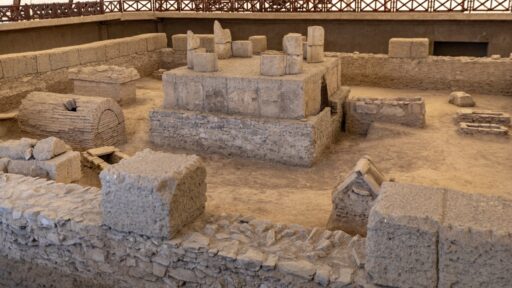
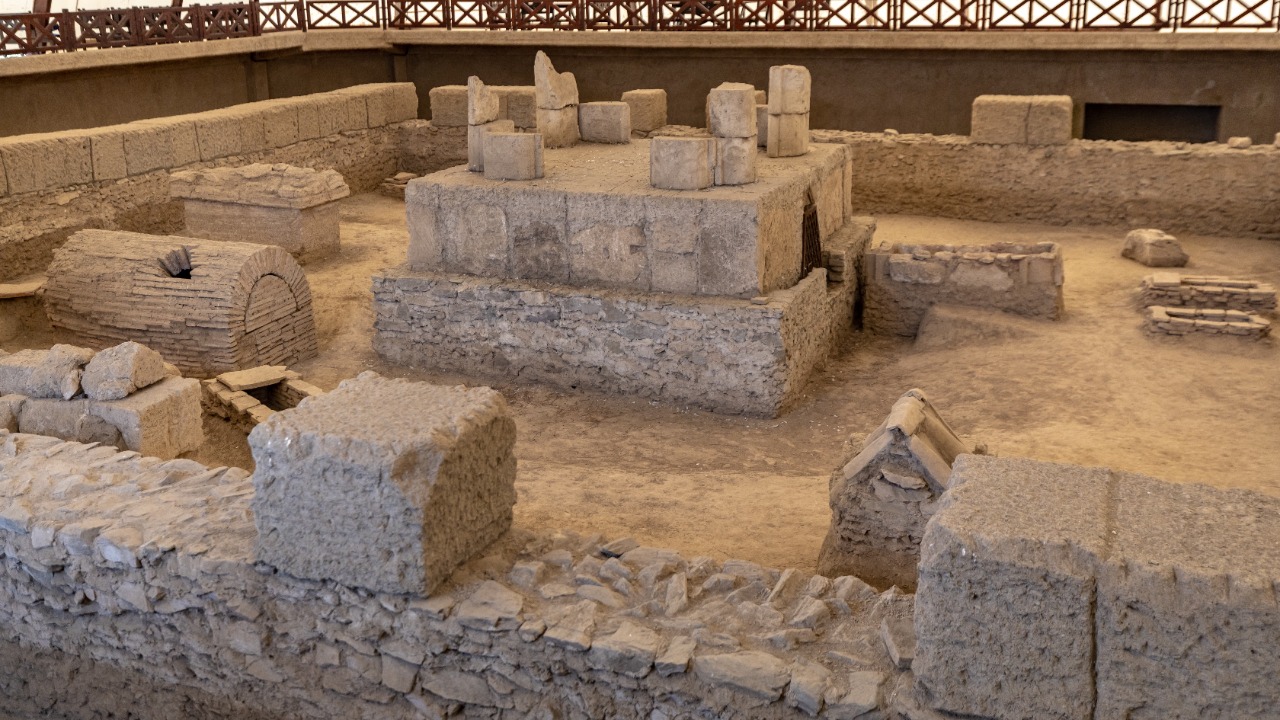

Archaeologists in Panama have completed the excavation of a 1,200-year-old elite tomb at the El Caño Archaeological Park, revealing a grave overflowing with gold ornaments and the remains of several people who died to accompany a powerful leader into the afterlife. The tomb, associated with the pre-Hispanic Coclé culture, offers one of the clearest windows yet into how hierarchy, warfare, and ritual sacrifice shaped life in ancient Central America.
With the burial now fully uncovered, researchers can shift from rescue-style digging to deeper questions about who this leader was, how his power was expressed in gold and blood, and what his story reveals about a region that sat at the crossroads of two continents long before Europeans arrived.
New details from a finished excavation at El Caño
The tomb at El Caño lay beneath a circular stone structure in Panama’s Coclé province, within a cemetery that has produced several spectacular burials since systematic work began there. In the most recent grave, archaeologists uncovered the skeleton of a high-status man surrounded by at least eight other individuals, interpreted as sacrificial victims, along with a dense assemblage of metal ornaments and weapons. Reporting on the excavation describes a burial chamber packed with gold breastplates, arm cuffs, bells, earrings, and a set of carefully arranged pectorals that framed the body of the central figure.
Researchers estimate the tomb dates to around 700 to 900 CE, during the Late Coclé period, based on ceramic styles and radiocarbon samples from the surrounding cemetery. The central individual was buried face down, with his body layered over other skeletons in a complex vertical arrangement that suggests a carefully staged funerary ritual rather than a single moment of interment. Positions of some of the accompanying individuals, along with associations with ropes or weapons, point to ritual killing at or shortly before the burial.
The wealth of metal artifacts is striking even by the standards of El Caño. Accounts of the excavation describe multiple large gold breastplates, hammered plaques, and embossed disks, along with copper alloy bells and weapons that would have flashed and rattled in life. One report notes that the tomb contained so much metal that it could be described as a “golden” grave, a description that aligns with earlier Coclé finds in the nearby Sitio Conte cemetery. The density of ornaments around the main skeleton, especially around the chest and head, confirms that the central figure was a leading war chief or ruler rather than a merely affluent individual.
Decorated ceramics, bone tools, and shell ornaments have also been identified in the fill, helping refine the chronology of the burial and connect it to broader Coclé artistic traditions. The presence of spearheads and other weapons near the central skeleton strengthens the interpretation that this person held military authority, not just ritual or hereditary status. Taken together, the finished excavation provides a complete view of the grave’s architecture and contents, rather than the partial snapshots that earlier seasons could offer.
How the El Caño tomb reshapes the story of ancient Panama
The completed work at El Caño matters because it fills a long-standing gap in understanding the societies that flourished between Mesoamerica and the Andes. For decades, archaeologists knew that the Coclé region produced spectacular goldwork, thanks to early twentieth century digs at Sitio Conte, but those excavations left many questions about social organization and ritual practices. The new burial, excavated with modern methods, provides fresh data on how power and violence were intertwined in this part of Central America.
Descriptions of the tomb emphasize that at least eight individuals died in connection with the burial of the central leader, some likely strangled or otherwise sacrificed to accompany him. One report on the discovery highlights that the grave contained both male and female victims, including warriors and possibly attendants, whose placement seems carefully choreographed around the main body. This pattern mirrors earlier Coclé burials where elites were interred with retainers and guards, but the El Caño tomb offers clearer stratigraphic evidence that these deaths were part of a single funerary event rather than accumulated over time.
The quantity and quality of metalwork also speak to far-reaching networks of exchange. Analyses of Coclé gold from related sites suggest that artisans used both locally sourced metals and materials obtained through trade with regions to the south and north. In the El Caño tomb, the mix of gold and copper alloys, along with stylistic parallels to other Coclé pieces, point to a society that controlled trade routes and converted that control into visible displays of authority. The burial therefore supports the view that central Panama was not a marginal zone but a hub that linked Caribbean and Pacific exchange systems.
Modern coverage of the excavation stresses how carefully the team is documenting each artifact and bone in situ, using 3D recording and detailed mapping. That level of documentation allows researchers to reconstruct the sequence of the burial and test hypotheses about sacrifice, social rank, and gender roles. For example, the distribution of gold ornaments across different skeletons can reveal whether some sacrificial victims were themselves high status, perhaps allied elites, or whether they were captives taken in war. Early interpretations suggest that at least one accompanying individual wore significant ornaments, which hints at a more complex hierarchy within the grave.
The find also feeds into broader debates about how to interpret ritual killing in pre-Hispanic societies. Some specialists argue that such burials reflect a political ideology in which the ruler’s body became a focal point for community identity, with sacrifice dramatizing the transfer of power and the maintenance of cosmic order. The El Caño tomb, with its combination of martial symbols and rich regalia, supports the idea that Coclé leaders cultivated an image of warrior-kings whose deaths required a dramatic closing act.
Why researchers are watching El Caño so closely now
The full excavation of the tomb has drawn international attention because it arrives at a moment when archaeologists are rethinking how to present pre-Columbian history to the public. One detailed account of the discovery notes that the grave was found within an area of El Caño that had been partially explored in earlier decades, but only now is being studied with systematic conservation and community engagement in mind. That shift means the site is not just a source of museum pieces but a living research laboratory and educational resource.
Coverage of the project has highlighted how the excavation team is coordinating with Panamanian authorities to secure the artifacts and eventually display them in national institutions. The gold ornaments and sacrificial victims from El Caño offer a powerful narrative for museums that want to move beyond simplified tales of “treasure” and instead explain how metallurgy, warfare, and ritual intersected. As one analysis of the site points out, the new tomb can be compared in detail with earlier Coclé graves that were excavated with less documentation, helping curators reinterpret older collections that have been in storage for decades.
The find has also become a reference point in broader discussions of how ancient American societies organized power. Reporting on the El Caño cemetery notes that multiple elite burials in the area share similar patterns of gold wealth and human sacrifice, which suggests a stable political tradition rather than isolated episodes. By providing a well-dated and thoroughly recorded example, the newly finished tomb gives researchers a benchmark for comparing sites across Panama and neighboring regions.
International media interest has amplified the scientific stakes. A detailed feature on the excavation explains that the tomb’s combination of gold, copper, and sacrificed retainers resembles high-status graves in parts of Colombia and Costa Rica, hinting at shared ideological themes across a wide area. Another report on the same discovery underscores that archaeologists are now focusing on micro-level evidence, such as wear patterns on ornaments and trauma on bones, to reconstruct the life histories of the individuals in the grave. These lines of inquiry turn a dramatic find into a dataset for understanding daily life, health, and violence in the Coclé world.