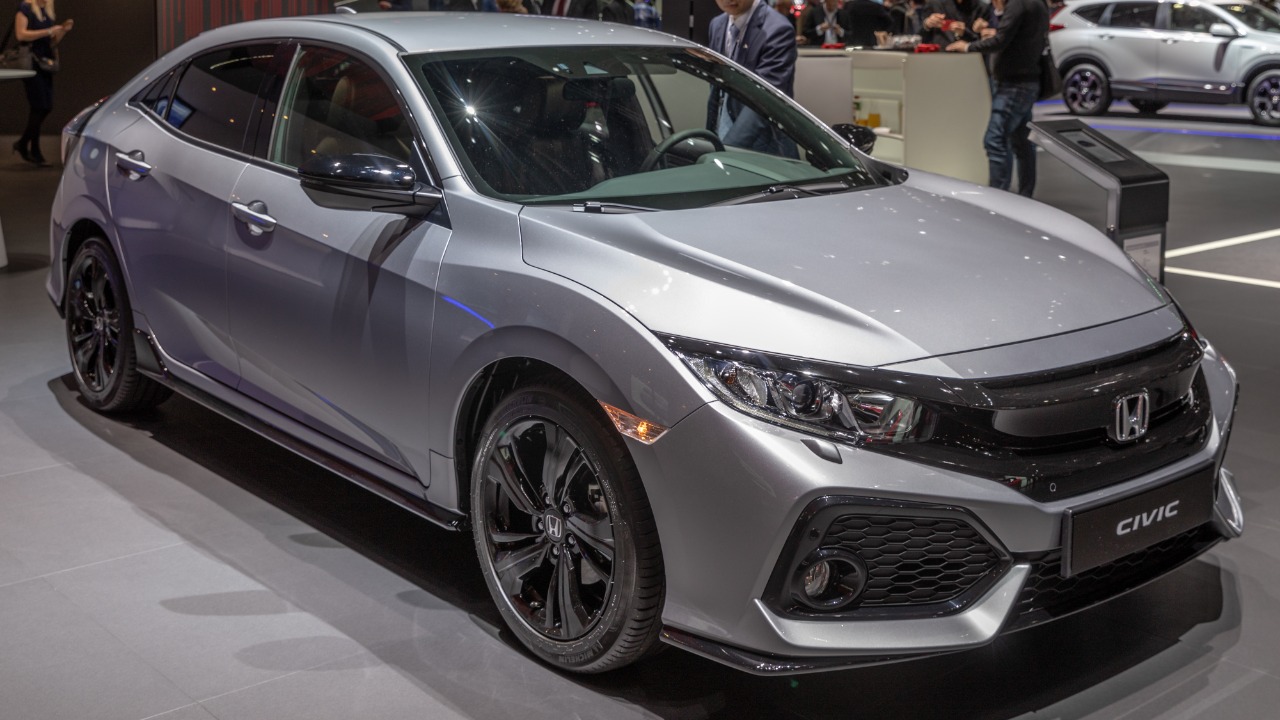

Car shoppers who focus only on the sticker price often miss the bigger number that really matters: what a vehicle costs to live with every year. Once fuel, insurance, maintenance, repairs, fees, and depreciation are added up, some models quietly save their owners thousands of dollars over a typical ownership period. At the front of that pack sits the Honda Civic, which consistently ranks among the least expensive cars to own while still feeling like a genuine upgrade from bare-bones transportation.
How the Civic topped a new low-cost ownership group
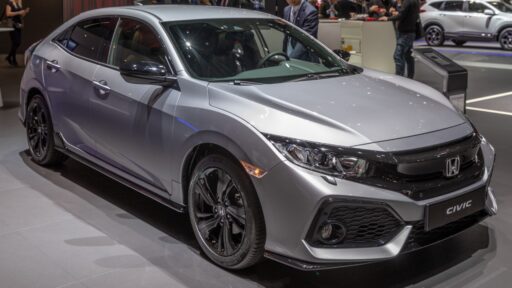
When analysts compare long-term ownership costs, they look beyond monthly payments to the full life of the car. A recent breakdown of ten-year cost of ownership highlighted compact cars that combine strong reliability records with modest fuel use and slow depreciation. In that analysis, the Honda Civic emerged as one of the clear standouts, with projected ten-year expenses that undercut many rivals in the same size class and even several smaller subcompacts. The study, which examined purchase price, fuel, insurance, maintenance, taxes, fees, and depreciation, found that the Civic’s balanced approach to efficiency and durability kept its total cost of ownership among the very lowest in the market over a decade of use, according to ten-year cost data.
The same research identified six other models that cluster near the Civic in annual cost terms. Compact and subcompact cars such as the Toyota Corolla, Hyundai Elantra, Kia Forte, Nissan Versa, and similar front-wheel-drive sedans and hatchbacks all showed relatively low depreciation and modest repair projections over ten years. A smaller hatchback like the Versa tends to carry the lowest purchase price, which helps keep financing charges and taxes down, while a compact sedan like the Corolla or Elantra offers slightly higher comfort and safety technology without a large jump in running costs. Taken together with the Civic, these models form a short list of mainstream cars that can realistically keep annual ownership spending at the lower end of the spectrum for a typical driver.
Shorter-term comparisons of new-car affordability point in the same direction. Rankings of the cheapest new cars on sale today, based on transaction prices and basic running costs, again highlight compact and subcompact models from mainstream brands. Lists of the most affordable new vehicles feature several of the same nameplates that appear in ten-year cost studies, including small sedans and hatchbacks from Kia, Hyundai, Nissan, and Mitsubishi, along with the Honda Civic and Toyota Corolla. These rankings focus on up-front price but also factor in fuel economy and expected maintenance, which helps explain why budget-friendly compacts dominate the segment of cheapest new cars.
Analysts who look at operating costs by fuel type find that small gasoline cars can still compete with hybrids and electric vehicles on annual out-of-pocket expenses, especially in regions where electricity rates are high or fast-charging infrastructure is limited. The Civic and its closest peers benefit from efficient four-cylinder engines, relatively light curb weights, and aerodynamics that keep fuel consumption low at highway speeds. A comparison of running costs across vehicle categories shows that compact gasoline cars sit near the bottom of the annual cost ladder, below larger crossovers and trucks and well below luxury models, according to a review of operating cost data that examined fuel, insurance, and maintenance for a wide range of vehicles.
Why the lowest-cost models matter more in a high-price era
The attention on cars that are cheap to own is not just a theoretical exercise. New-vehicle prices have climbed rapidly in recent years, and financing costs have risen with interest rates. That combination has pushed the average monthly payment for a new car into territory that strains many household budgets. Against that backdrop, a Civic or similar compact that can be bought for less than the average price of a new vehicle and then run for a decade with relatively predictable expenses becomes a key tool for buyers who need reliable transportation without long-term financial stress.
Fuel prices add another layer of pressure. While gasoline costs move up and down, the long-term trend of higher energy prices makes efficiency more valuable. Compact sedans like the Civic, Corolla, and Elantra often deliver real-world fuel economy that is significantly better than larger crossovers, which means fewer dollars spent at the pump every month. Over ten years, the difference between filling a compact car and fueling a midsize SUV can easily reach thousands of dollars, especially for drivers who rack up highway miles. That gap directly affects annual ownership costs and helps explain why small, efficient models dominate lists of low-cost vehicles.
Insurance and maintenance are quieter but still important parts of the equation. Insurers typically charge less to cover compact cars with strong safety ratings and moderate performance than they do for powerful trucks or luxury vehicles. Mainstream models like the Civic and Corolla also benefit from large parts networks and a deep pool of independent mechanics who know the platforms well. Routine service is relatively inexpensive, and when repairs are needed, parts availability helps keep bills down. Over a decade, those small savings on insurance premiums and shop invoices accumulate into meaningful reductions in annual ownership cost.
Depreciation may be the single biggest hidden driver of cost, and it is an area where the Civic and a few peers stand out. Models with strong reputations for reliability and long life tend to hold their value better, which means owners lose less money when they sell or trade in. A car that sheds value slowly effectively lowers its annual cost of ownership, even if the driver never sees that number in a monthly bill. The Civic’s long-standing resale strength, shared to varying degrees by the Corolla and some Hyundai and Kia compacts, is a major reason these cars surface repeatedly in ten-year cost analyses.
How low-cost ownership could shape the next wave of car choices
Looking ahead, the focus on cars that are inexpensive to own is likely to intensify. As more electric and hybrid models enter the market, buyers will compare not just purchase prices but full life-cycle costs. Battery-electric vehicles can offer very low fueling and maintenance expenses, but higher up-front prices and uncertainty about long-term battery life complicate the picture. In the near term, efficient gasoline compacts like the Civic and its six closest cost peers are positioned as a bridge between older, less efficient vehicles and a future in which electrified models dominate the low-cost rankings.
Manufacturers are already reacting to this pressure by trimming lineups and focusing on models that can deliver both profit and long-term value. Some brands have exited the small car segment in favor of crossovers, which has reduced choice at the very bottom of the price spectrum. That shift makes the remaining compact sedans and hatchbacks more significant for cost-conscious buyers. If automakers that still invest in small cars keep improving fuel economy, safety technology, and durability without inflating prices, the next generation of Civics, Corollas, and their rivals could continue to anchor the low-cost ownership lists well into the next decade.
At the same time, subscription-style ownership models and longer loan terms are changing how consumers think about car costs. Spreading payments over seven or eight years can make a more expensive vehicle look affordable on a monthly basis, but it also locks buyers into higher insurance, fuel, and maintenance costs for longer. Analysts who track total cost of ownership argue that a shorter loan on a modestly priced, efficient compact often leaves households in a stronger financial position than a stretched loan on a larger, more expensive vehicle. As awareness of these trade-offs grows, the appeal of cars with genuinely low annual costs is likely to rise.