
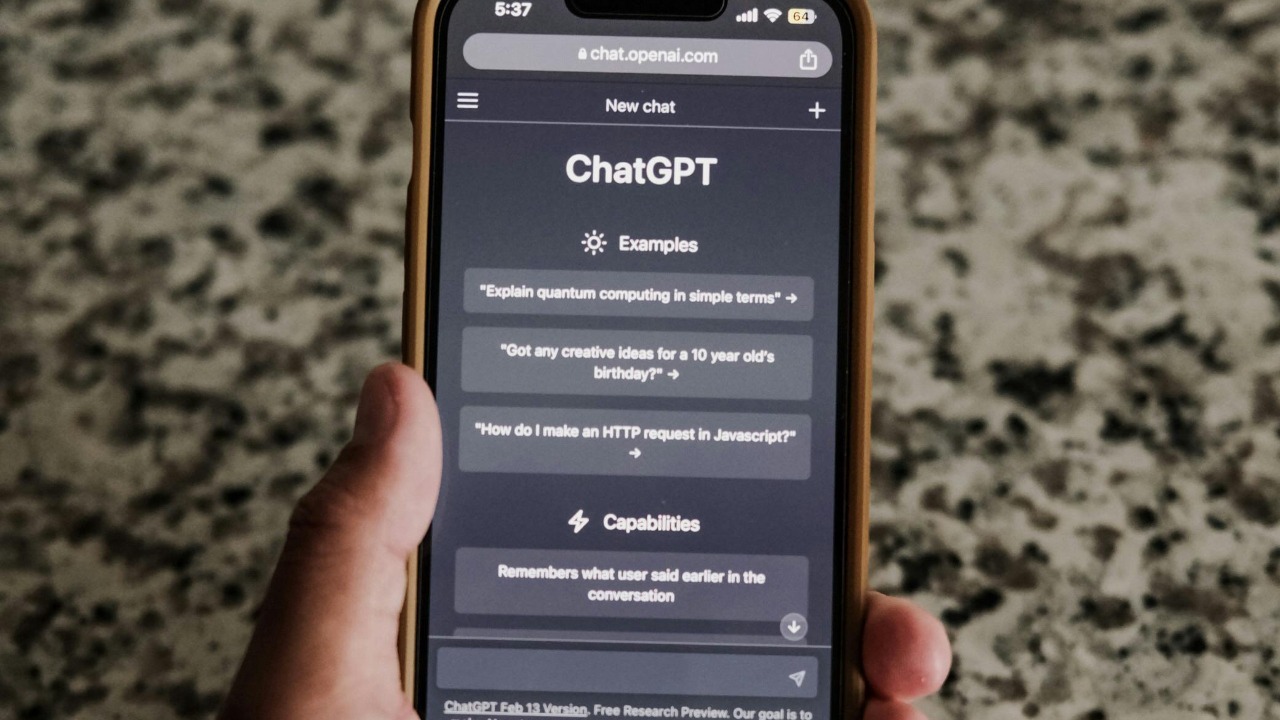

Apple is preparing a fundamental shift in how Siri works on the iPhone, turning the voice assistant into a front door for multiple AI models instead of a single, Apple-controlled brain. Users will be able to choose whether complex questions are routed to ChatGPT, Google Gemini, Anthropic Claude or Apple’s own system, effectively treating AI providers like interchangeable search engines.
The change moves the iPhone from a closed assistant model to a competitive AI marketplace built into the operating system. It also raises new questions about privacy, default choices and how much control Apple will really give to outside models that run on user data.
How iOS 27 turns Siri into an AI switchboard
Apple is working on an iOS 27 update that lets users assign third-party chatbots to power many of Siri’s new AI features. According to reports, Apple Intelligence will still handle on-device tasks such as notifications, message summaries and app control, but users will be able to pick external models for heavier language queries through a new settings panel that lists providers like OpenAI, Google and Anthropic. One report describes this as a built-in selector that surfaces options such as Gemini and Claude alongside Apple’s default model, with the system asking permission before sending a request off device.
The company is expected to expose this choice across the system rather than hiding it in a single app. When a user asks Siri to draft a long email, rewrite a document or explain a complex topic, the assistant can pass the request to the preferred provider and then read back or display the response. Early descriptions suggest that Apple will keep strict separation between its own on-device processing and cloud-based models, with clear prompts when data is about to leave the phone for ChatGPT or another service.
Developers are also being pulled into this new structure. Apple is said to be preparing APIs that let apps declare which AI provider they prefer for certain tasks, while still respecting the user’s global choice. That means a writing app on iOS could suggest Claude for editing, a coding tool could lean toward Gemini, and Siri would arbitrate those preferences in the background. The result is a more modular assistant layer where multiple companies compete behind a single microphone button.
Apple’s own AI stack will not disappear inside this model. Internal reporting describes Apple Intelligence as the default for quick, private operations on supported devices, with the option to escalate to external models when users want more creative or open-ended responses. On compatible iPhones, that blend of local and cloud processing is designed to keep routine Siri requests fast while still exposing the power of larger models when needed.
Why the ability to choose ChatGPT, Gemini or Claude matters
Letting users pick which AI model answers Siri changes the balance of power between Apple and major AI vendors. Until now, Siri has been a tightly controlled feature that only used Apple’s own technology, while apps like the ChatGPT client or Gemini had to live in separate icons. With iOS 27, those external models gain first-class status in the operating system, similar to how browsers or search engines can be swapped out, which gives OpenAI, Google and Anthropic a direct line to everyday voice queries.
The shift also acknowledges where users already spend their AI time. On current iPhones, many people rely on the dedicated ChatGPT app for complex prompts, and that experience is spreading into other contexts like CarPlay integration that lets drivers talk to OpenAI’s model through the dashboard. By wiring those same capabilities into Siri, Apple reduces the friction of juggling multiple assistants and keeps users inside its own interface even as they rely on outside AI brains.
Competition between models could directly affect answer quality. Gemini has strengths in search-style queries and code explanations, Claude is known for long-form writing and analysis, and OpenAI’s models often excel at creative prompts. Allowing users to switch among them from a single Siri setting encourages each provider to improve performance and safety, since being the default on millions of iPhones becomes a high-stakes prize rather than a background partnership.
Privacy and data control sit at the center of this change. Apple has built its recent AI pitch around on-device processing and limited data collection, while partners like OpenAI and Google traditionally rely on cloud infrastructure. Reports indicate that Apple plans to present clear consent prompts when Siri needs to send a request to an external provider, with language that explains what data is shared and how responses are generated. For users who prefer Apple’s stricter privacy posture, keeping Apple Intelligence as the default while selectively enabling ChatGPT or Gemini for specific tasks may become a common pattern.
There are also commercial stakes. Revenue-sharing agreements, placement fees or cloud infrastructure deals could all sit behind the simple toggle that lets an iPhone owner pick ChatGPT or Gemini as their primary AI. By positioning itself as the gatekeeper of that choice, Apple maintains leverage over fast-growing AI companies that want access to iOS users, while presenting the move as a win for user choice and flexibility.
How the new Siri experience will work in practice
From a user’s perspective, the overhaul turns Siri into something closer to an AI hub. Reports describe a redesigned Siri interface that can handle follow-up questions, reference on-screen content and pull from multiple models without forcing the user to think about which engine is active. If a user sets ChatGPT as the preferred provider, Siri can still answer simple device-control commands locally, then quietly route a complex research question to OpenAI’s servers and return the result in the same conversation.
Apple is expected to expose this flexibility through a dedicated settings screen and context prompts. A user might first encounter the choice when asking Siri for help with a long writing task, where the assistant offers to use Gemini or Claude for better results and then remembers that selection for future similar requests. According to one report, Apple is building a system-level picker that lists third-party chatbots and allows granular control over which categories of tasks each one can handle.
On the technical side, the company is leaning on its own Apple Intelligence models for anything that can reasonably run on the device. That includes features like notification triage, smart replies and local document summaries on supported iPhones and iPads. For heavier workloads, Apple can fall back to its own cloud models or hand off to integrated partners, which keeps latency manageable while still expanding what Siri can do. This layered approach is highlighted in reporting that describes third party chatbots as extensions of Apple’s core AI rather than full replacements.
The user interface changes are not limited to voice. Text-based interactions through the systemwide AI writing tools will also respect the chosen provider. For example, when a user highlights text in Apple Notes and taps an “improve writing” option, the system can either use Apple’s local model or, if configured, send the passage to Claude or Gemini for editing. That same choice could carry over into Mail, Pages and third-party apps that plug into the new APIs.
Reports suggest that Apple is paying particular attention to how these choices surface on devices used in the car. With ChatGPT already present on iPhone and expanding into CarPlay, Apple must coordinate voice triggers, wake words and safety controls so that drivers are not confused about which assistant is active. The company’s goal appears to be a unified Siri front end that can still take advantage of OpenAI’s conversational strengths without fragmenting the driving experience.