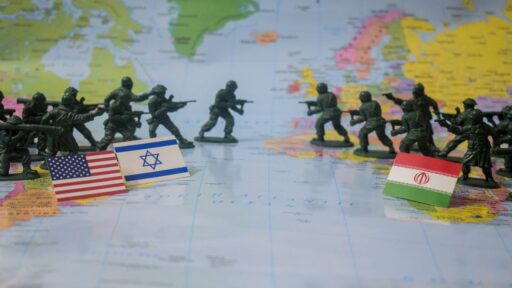
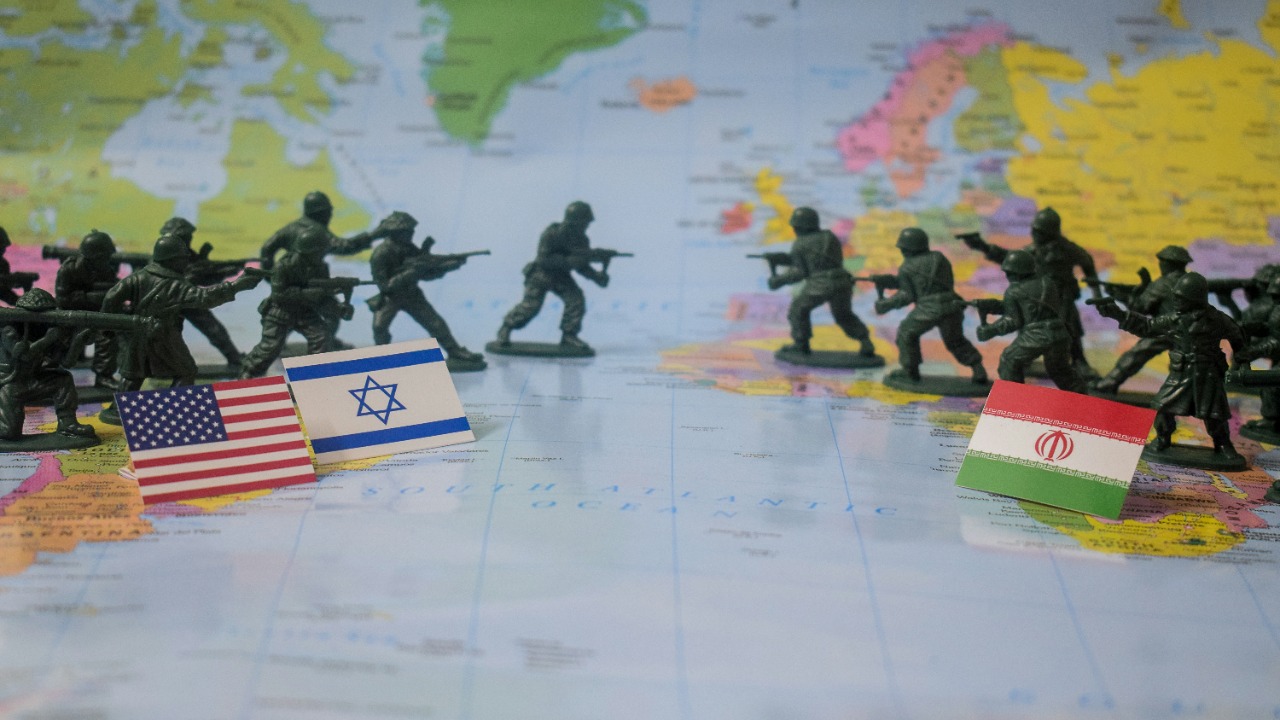

Iranian President Masoud Pezeshkian has urged Iranians to “fight the enemy and stand firm” as renewed missile attacks, American-led strikes and growing tensions around the Strait of Hormuz threaten to return the region to full-scale war.
Pezeshkian said the country must resist so that it does not submit to what he described as injustice and oppression. His remarks, reported in Al Jazeera’s live coverage of the Iran conflict, followed a fresh exchange of attacks involving Iran, the United States, Saudi Arabia, Jordan and Iran-backed armed groups in Iraq.
The language reflects Tehran’s attempt to present the conflict as a national struggle for survival rather than a dispute limited to nuclear policy, maritime security or regional influence. It also comes as President Donald Trump warns that the United States may respond forcefully to Iranian missile attacks targeting American forces.
Iran Launches Missiles Towards a US Base in Jordan
Iran’s Islamic Revolutionary Guard Corps said it fired ballistic missiles at Muwaffaq Salti Air Base in Jordan, an important hub used by the US military for regional operations.
Jordan’s armed forces said five Iranian missiles were intercepted and destroyed before reaching their targets. No immediate casualties or significant damage were reported. The Associated Press report on the renewed fighting described the barrage as one of the most serious escalations after several days of relative calm.
Iran maintains that American bases operating from neighbouring countries are legitimate military targets when they support strikes against Iranian territory. Jordan and other Gulf states have repeatedly argued that they should not be drawn into a conflict between Washington and Tehran.
The interception highlights the difficult position of countries hosting American personnel. They may not consider themselves parties to the war, yet Iranian missiles and drones can still place their territory, civilians and infrastructure at risk.
US and Saudi Aircraft Strike Armed Groups in Iraq
The Iranian missile attack followed air strikes by American and Saudi aircraft against logistics and weapons facilities used by Iran-backed militias in eastern Iraq.
The Popular Mobilization Forces, an umbrella organisation containing several predominantly Shia armed groups, said at least 20 fighters were killed and 32 wounded. Two Iraqi militia officials told the Associated Press that six Iranian advisers had also died, although it remained unclear whether they were included in the reported total.
Washington and Riyadh said the operation responded to drone attacks on Saudi oil infrastructure. Saudi officials accused Iraqi militias of participating in those attacks, although the groups initially denied responsibility. Yemen’s Iran-aligned Houthis separately claimed attacks against Saudi energy facilities.
The Saudi Ministry of Defence said the kingdom did not seek further escalation but would respond to aggression. Iraq’s government condemned the strikes as a violation of sovereignty and said diplomatic contacts had already been underway to investigate Saudi and American concerns.
The exchange demonstrates how quickly the Iran conflict can spread beyond the countries directly involved. Armed groups in Iraq and Yemen, American bases in Jordan and Saudi energy facilities have all become connected to the same widening confrontation.
Trump Threatens to Hit Back “Hard”
Trump has threatened a strong response following the latest Iranian attacks. His position increases the likelihood of additional American strikes, particularly against Revolutionary Guard missile sites, logistics facilities and infrastructure connected to operations against US forces.
The United States has already expanded its target list during the latest phase of fighting. Initial attacks concentrated on Iran’s navy, coastal defences, missile launchers and surveillance systems near the Persian Gulf. Later strikes reached roads, bridges, communications sites, military installations and infrastructure deeper inside Iran. The Associated Press assessment of the US campaign found that the expanding operation increasingly resembled the conflict’s opening phase.
Iranian authorities say more than 3,400 people have been killed since the war began, including dozens during the latest escalation. The figures originate from Iran’s Health Ministry and have not all been independently verified. Recent attacks have also disrupted transport, communications, electricity and water services in several Iranian regions.
The widening target list creates a growing risk for civilians. Attacks intended to weaken military logistics can also disrupt roads, telecommunications, water systems and power supplies used by surrounding communities.
Pezeshkian’s Message Is Also Directed at Iran’s Domestic Audience
Pezeshkian’s call to stand firm appears designed partly to maintain public unity as the conflict places growing pressure on Iran’s economy, infrastructure and political system.
The Iranian president has previously supported negotiations with the United States while insisting that talks cannot require Iran to surrender its national interests. His latest rhetoric is substantially harder, reflecting the pressure on civilian leaders to demonstrate resistance while the Revolutionary Guard plays an increasingly dominant role in wartime policy.
Iran’s political structure has faced additional uncertainty since Supreme Leader Mojtaba Khamenei was seriously injured in the February 28 attack that killed his father and predecessor, Ali Khamenei. Pezeshkian recently said communication with the new supreme leader was increasing, although Mojtaba Khamenei has not appeared publicly or released a verified voice recording since taking office.
Reuters reported that the Revolutionary Guard strongly supported Mojtaba Khamenei’s elevation and has gained influence during the war. In that environment, Pezeshkian’s use of defiant language may help prevent accusations that the civilian government is willing to make unacceptable concessions.
The Strait of Hormuz Remains the Central Dispute
The renewed fighting is closely connected to control of the Strait of Hormuz, the narrow waterway through which a major share of the world’s traded oil and liquefied natural gas normally passes.
Iran has rejected an Omani proposal under which Tehran and Muscat would each manage approximately half of the shipping traffic through the strait. Iranian Deputy Foreign Minister Kazem Gharibabadi said Tehran had proposed a temporary system allowing vessels to transit through Iranian territorial waters and insisted that navigation would not return to its prewar arrangement.
Before the conflict, commercial ships generally moved through internationally recognised traffic lanes. Iran now wants greater control over which vessels pass, how traffic is managed and what conditions apply.
The dispute has effectively undermined an earlier interim agreement intended to reduce hostilities. Attacks on ships and American operations against Iranian coastal positions have repeatedly interrupted attempts to reopen the route fully.
The US Energy Information Administration’s analysis of the disruption found that uncertainty surrounding Hormuz contributed to higher and more volatile crude-oil prices during the second quarter of 2026. Before the latest escalation, shipping disruptions had already forced regional producers to reduce output and encouraged vessels to avoid the waterway.
Saudi Energy Infrastructure Is Becoming Another Front
Saudi Arabia faces growing pressure on two sides. Iran’s control over Hormuz can restrict oil exports from the Persian Gulf, while Houthi attacks threaten Saudi facilities and shipping routes connected to the Red Sea.
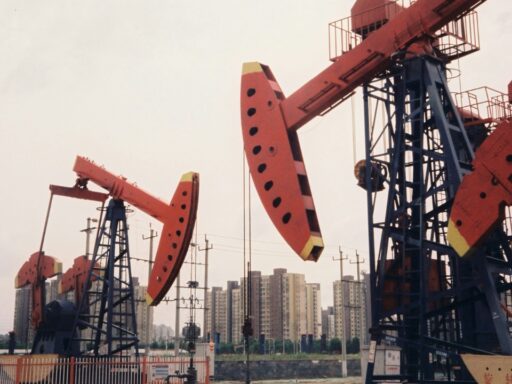
Satellite imagery analysed by the Associated Press showed damage at Saudi Aramco’s Abqaiq processing facility following recent attacks. Abqaiq can process approximately seven million barrels of crude oil per day, making it one of the most important energy installations in the world.
A separate attack reportedly damaged the Jazan refinery on Saudi Arabia’s Red Sea coast, forcing a temporary shutdown. That facility can process approximately 400,000 barrels per day.
The attacks threaten Saudi Arabia’s ability to use western export routes as alternatives to Hormuz. If both the Persian Gulf and Red Sea routes become unreliable, the effects could spread rapidly through global energy, transport and consumer markets.
Diplomacy Has Not Completely Collapsed
Regional mediators are still attempting to restore communication between Iran and the United States. A regional official told the Associated Press that intermediaries remained engaged with both sides, although no immediate breakthrough had been reported.
The United Nations has repeatedly warned that renewed full-scale fighting would have catastrophic consequences for civilians, regional security and the global economy. Secretary-General António Guterres has called on Iran and the United States to exercise maximum restraint, protect civilian infrastructure, respect navigation rights and return to negotiations. The UN’s official statement on the Gulf escalation emphasised that unresolved disputes must be addressed through diplomacy rather than a wider military campaign.
Those appeals have not prevented new attacks, but diplomatic channels remain important because neither side appears capable of achieving a quick, decisive victory.
The Latest Escalation Could Restart Full-Scale War
Pezeshkian’s appeal for Iranians to stand firm reflects a conflict entering another dangerous phase. Iran is presenting resistance as a national obligation, while Trump is signalling that attacks on American forces will bring a powerful response.
Iranian missiles targeting Jordan, US-Saudi strikes inside Iraq, Houthi attacks on Saudi infrastructure and disputes over Hormuz are no longer separate crises. They are becoming connected fronts in a regional war capable of expanding through every new act of retaliation.
The immediate danger is that each side believes escalation will strengthen its negotiating position. Instead, repeated retaliation may eliminate the remaining space for negotiation while increasing civilian casualties, energy disruption and the risk of drawing additional countries directly into the conflict.