
London Heathrow has spent decades as one of the most powerful names in global aviation. Dubai has more recently dominated international passenger rankings. Yet during the first half of 2026, neither airport occupied the top position.
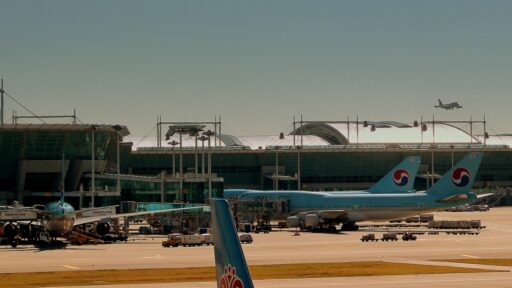
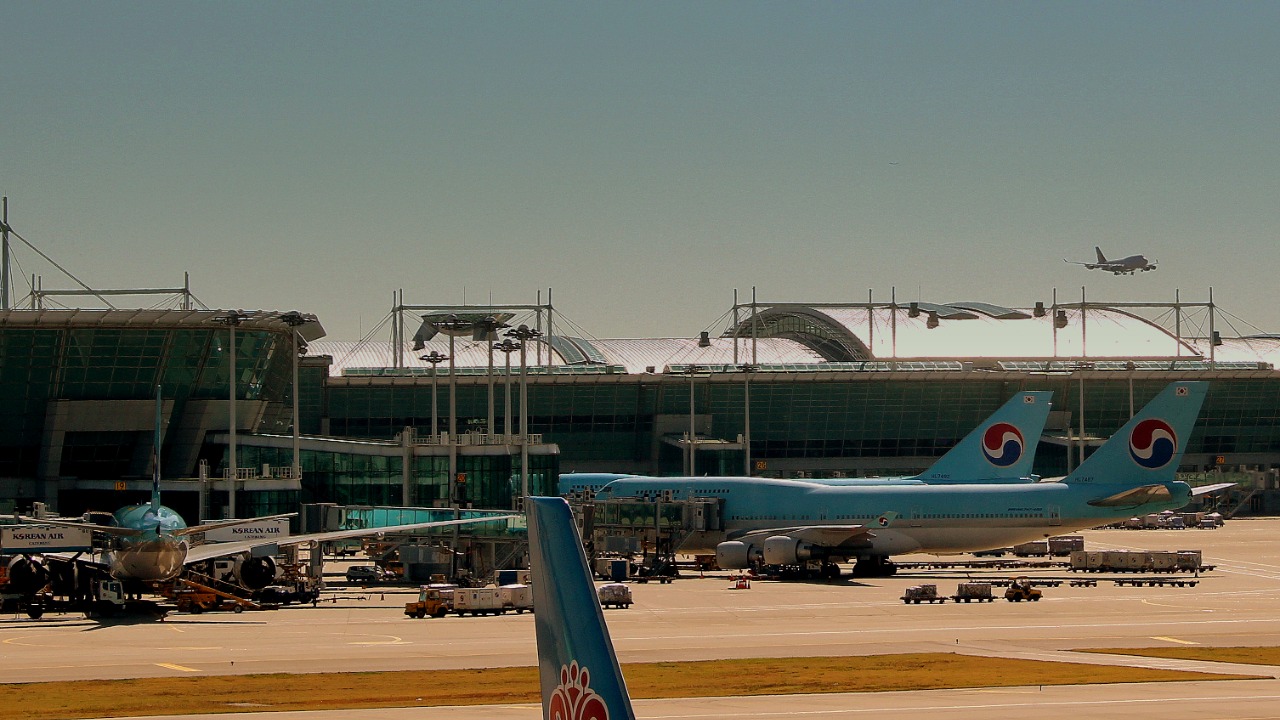
That distinction went to Incheon International Airport, South Korea’s main international gateway.
Preliminary figures from Airports Council International show that Incheon handled approximately 38.39 million international passengers between January and June 2026, narrowly beating Heathrow’s 37.79 million. Singapore Changi followed with about 34.53 million.
It is the first time Incheon has reached the top of the international passenger ranking since opening in 2001.
But the headline needs an important qualification.
Incheon has not suddenly become the world’s busiest airport by every measurement. The new ranking concerns international passenger traffic during the first half of 2026. Atlanta remains the leader in overall passenger traffic based on the latest full-year ACI rankings, while Dubai was the world’s busiest international airport for the full year of 2025.
What happened during the first six months of 2026 tells a much more interesting story about how quickly global aviation can change.
Incheon Has Climbed an Extraordinary Distance in 25 Years
Incheon International Airport only opened in 2001.
A year later, it ranked around 10th globally for international passenger traffic. By 2018, it had reached fifth place, and it ranked third in both 2024 and 2025.
That progression reflects South Korea’s growing importance as both a destination and a transfer point.
Incheon sits approximately 48 kilometers west of Seoul and serves as the country’s principal long-haul gateway. Gimpo Airport, much closer to central Seoul, handles a significant share of domestic services and shorter international routes.
That division allows Incheon to concentrate heavily on international traffic.
The airport now serves 101 airlines connecting 183 cities, including 158 international passenger destinations.
For an airport only a quarter-century old, that is a remarkable network.
Heathrow Was Beaten by About 600,000 Passengers
The difference between Incheon and Heathrow was relatively small.
Incheon recorded 38.39 million international passengers during the first six months of the year.
Heathrow handled approximately 37.79 million.
That puts the gap at roughly 600,000 passengers.
Heathrow itself was hardly having a disastrous year. It handled approximately 40 million passengers overall during the first half of 2026, its busiest first half on record. Heathrow continues publishing its monthly passenger statistics through its official traffic database.
So Incheon did not overtake an airport suffering from a broad collapse in travel demand.
Something more specific happened.
International aviation routes were disrupted elsewhere in the world, while Asian travel demand continued growing.
The Iran War Helped Rearrange Global Air Traffic
One of the biggest factors behind Incheon’s rise was geopolitical disruption in the Middle East.
Conflict involving Iran affected air travel through a region containing some of the world’s most important connecting hubs.
Dubai has traditionally occupied an exceptionally powerful position because passengers traveling between Europe, Asia, Africa, and other regions can connect through the Gulf.
In 2025, Dubai International handled more than 95 million international passengers, comfortably ahead of Heathrow’s 79.9 million and Incheon’s 73.6 million.
The 2026 conflict disrupted that pattern.
According to Incheon International Airport Corporation, reduced traffic through Middle Eastern hubs helped divert some connecting passengers toward alternative routes through East Asia.
That is a reminder that airport rankings are not determined simply by which terminal is nicest or which city attracts the most tourists.
Geography and geopolitics matter enormously.
When one major connecting region becomes difficult to use, traffic can migrate surprisingly quickly.
Incheon Was Growing Even Without Middle Eastern Disruption
It would be misleading, however, to explain Incheon’s new position entirely through war.
The airport’s international passenger traffic increased approximately 6.3% year over year during the first half of 2026.
A major part of that increase came from stronger travel within Asia.
More visitors from China and Japan traveled through Incheon, helping push the share of foreign passengers higher.
Foreign nationals represented approximately 39.3% of Incheon’s passengers during the first half of 2026, compared with 35.2% across 2025. During the second quarter, the figure reached a record 44.4%.
That matters because Incheon cannot become a truly global hub if it functions primarily as the airport Koreans use to travel abroad.
A major connecting airport needs foreign passengers.
The rising share suggests Incheon is increasingly serving travelers who view Seoul as either a destination or a useful point through which to reach somewhere else.
China’s Travel Recovery Is Particularly Important
South Korea sits in an unusually advantageous location for Northeast Asian aviation.
China is immediately to its west.
Japan is to its east.
Major Southeast Asian markets are accessible to the south.
North America lies across the Pacific.
That gives Incheon the potential to function as a connecting point between several enormous travel markets.
China’s recovery in international travel is especially important because even relatively small changes in Chinese outbound tourism can translate into millions of additional passengers across the region.
Japan is similarly significant.
Incheon already had strong Japanese traffic before reaching the top position in 2026. Its broader growth therefore reflects something structural: Northeast Asian international aviation has continued recovering and expanding.
Incheon Was Already Third Before This Happened
The airport’s 2025 numbers show why its rise should not be treated as a sudden accident.
ACI’s full-year international passenger ranking for 2025 placed the major hubs in this order:
Dubai handled 95.2 million international passengers, Heathrow handled 79.9 million, and Incheon handled approximately 73.6 million. Singapore followed with 69.4 million.
Incheon was therefore already sitting directly behind Heathrow.
Its 2025 international traffic had grown approximately 4.1% compared with the previous year.
The Middle East disruption did not transform a small airport into the world’s leader overnight.
It gave an already enormous and rapidly growing Asian hub an opportunity to move ahead.
Incheon Has Something Heathrow Desperately Wants: More Capacity
There is another major difference between the two airports.
Incheon has been expanding aggressively.
A four-phase development program completed in late 2024 increased its annual passenger capacity to approximately 106 million people.
That gives the airport considerable room to accommodate additional demand.
Heathrow’s capacity situation is much more difficult.
The British airport has operated close to its practical limits for years, which is why proposals for a third runway have generated such an enormous political, economic, and environmental debate.
An airport can have huge passenger demand and excellent airline connectivity, but physical constraints eventually matter.
Runways have finite capacity.
Terminals can process only so many passengers.
Airspace becomes congested.
If one airport has room to expand while another is already operating near its limits, their long-term growth potential can begin to diverge.
But Incheon Is Not the World’s Busiest Airport Overall
This distinction is essential because “world’s busiest airport” can mean several different things.
Airports can be ranked by total passengers, international passengers, cargo volume, or aircraft movements.
Incheon currently leads the preliminary international passenger ranking for the first half of 2026.
It does not lead overall passenger traffic.
According to Airports Council International’s latest global airport rankings, Atlanta Hartsfield-Jackson was the world’s busiest airport by total passenger volume in 2025, processing more than 106 million travelers. Dubai ranked second overall, while Tokyo Haneda was third.
Incheon ranked 12th overall with approximately 74.1 million passengers.
Why such a large difference?
Domestic aviation.
Atlanta processes an enormous number of passengers traveling within the United States.
Incheon is overwhelmingly an international gateway.
A ranking based specifically on international passengers therefore plays directly to Incheon’s strength.
Heathrow Has Also Lost Another Important Crown
Incheon’s rise is not the only ranking change Heathrow has experienced recently.
In July 2026, Istanbul Airport overtook Heathrow in monthly total passenger traffic.
Heathrow processed approximately 7.86 million passengers during the month, while Istanbul handled about 8.15 million. Heathrow had been Europe’s busiest airport in most years since 1996.
That does not mean Heathrow has suddenly become unimportant.
Quite the opposite.
Its enormous network, premium passenger base, connection with London, and limited capacity make it one of the world’s most valuable aviation assets.
But other airports are growing faster.
Istanbul is expanding.
Incheon is expanding.
Major Gulf airports continue investing heavily.
The global aviation hierarchy is becoming considerably more competitive.
Incheon Has Another Advantage: The Passenger Experience
Incheon has long built its reputation around more than sheer capacity.
The airport is known for extensive shopping, dining, transit facilities, cultural experiences, and services designed around international transfer passengers.
That matters because a connecting traveler often has choices.
Someone flying between North America and parts of Asia may have multiple possible hubs and airline combinations.
A smooth connection can influence which route he chooses the next time.
Airport quality cannot overcome every disadvantage in ticket price or schedule, but when millions of passengers are connecting annually, reducing friction becomes strategically important.
The airport has essentially been designed to make transferring through South Korea part of the product rather than merely an inconvenience between flights.
South Korea Also Has the World’s Busiest Domestic Air Route
South Korea’s aviation story contains another unusual statistic.
The route between Seoul Gimpo Airport and Jeju Island was the world’s busiest domestic air corridor in 2025, with approximately 14.4 million scheduled seats, according to aviation-data provider OAG.
That route demonstrates the extraordinary intensity of air travel inside a geographically compact country.
Jeju is one of South Korea’s most popular leisure destinations, and flights from Seoul operate at extremely high frequencies.
Combined with Incheon’s international growth, the route highlights how deeply aviation is embedded in South Korea’s transportation and tourism economy.
Could Incheon Keep the Number-One Position?
That is the harder question.
The first-half ranking is based on preliminary 2026 figures.
It is not yet a full-year global crown.
Middle Eastern aviation could recover as geopolitical conditions change, and Dubai entered 2026 with an enormous advantage based on its previous annual traffic.
In 2025, Dubai handled roughly 21.6 million more international passengers than Incheon.
That is a huge gap.
Incheon’s first-half leadership therefore reflects extraordinary circumstances as well as genuine underlying growth.
It may finish 2026 at number one.
It may not.
But even if Dubai eventually regains the lead, the first-half numbers reveal something important.
The gap between the world’s dominant international hubs is no longer impossible to disrupt.
Global Aviation’s Center of Gravity Keeps Moving East
For decades, airports such as Heathrow represented the natural centers of global aviation.
Europe sat between North America, Asia, Africa, and the Middle East, and London’s economic importance helped make Heathrow an international powerhouse.
That geography has not changed.
The global economy has.
Asian tourism has expanded.
China became one of the world’s largest travel markets.
South Korea grew into a major economic and cultural destination.
Japan remains an enormous aviation market.
Southeast Asian travel continues expanding.
At the same time, airports including Incheon, Singapore Changi, Istanbul, and Dubai have invested aggressively in infrastructure designed specifically around international connections.
The result is a much more competitive map.
Incheon’s first-half victory over Heathrow is therefore about more than 600,000 passengers.
It illustrates how quickly international travel flows can shift when infrastructure investment, regional growth, airline networks, and unexpected geopolitical disruption converge.
For the first six months of 2026, the airport that benefited most was not in London, Dubai, or Singapore.
It was outside Seoul.
And for an airport that opened only 25 years ago, becoming the world’s busiest gateway for international passengers even temporarily is an extraordinary achievement.