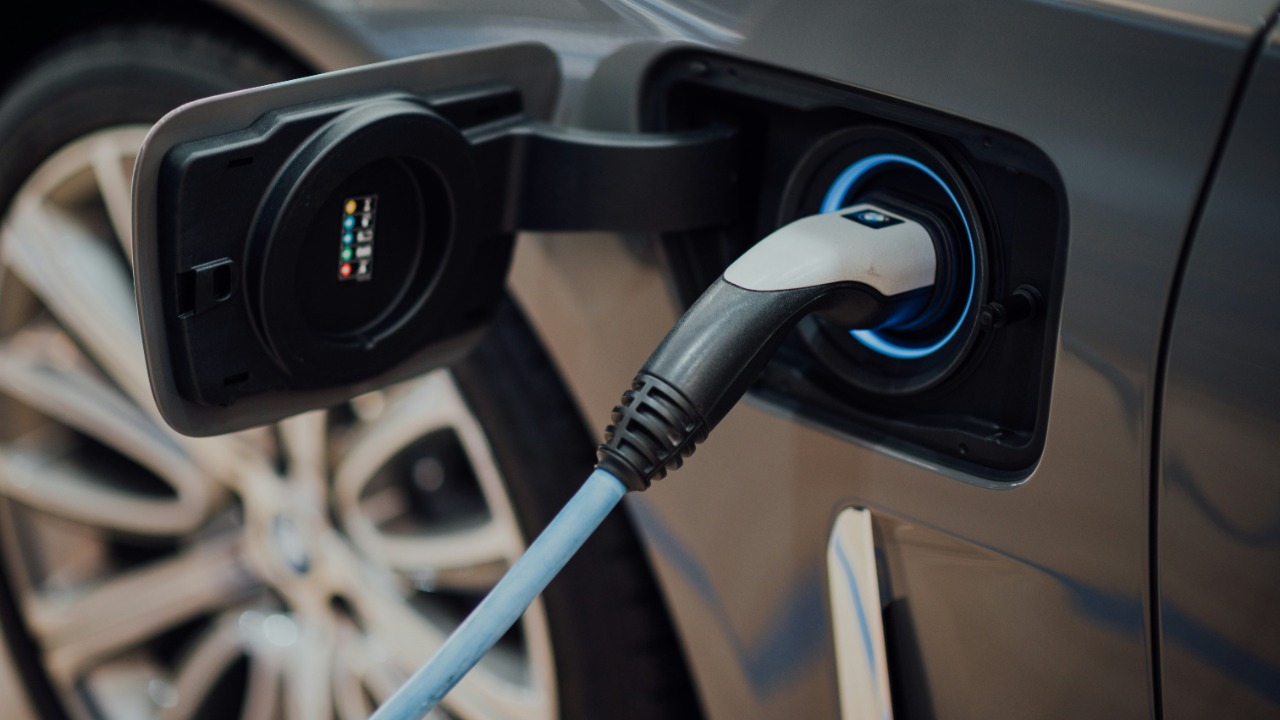

Plug-in hybrids used to offer a fairly limited compromise.
A driver might travel 15 or 20 miles on electricity before the gasoline engine started, making electric mode useful for short errands but difficult to rely on for an entire working day.
That is changing quickly.
Several modern plug-in hybrid electric vehicles, or PHEVs, can now travel 40 to more than 50 miles using electricity alone under U.S. testing. That is enough for many drivers to complete a normal commute without burning gasoline, while the engine remains available for longer journeys.
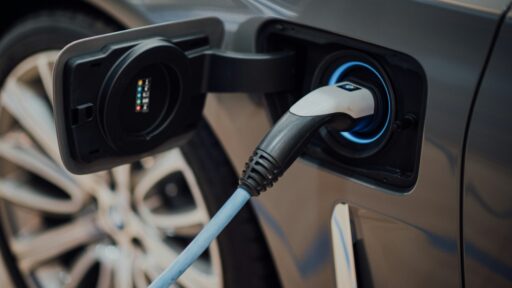
The U.S. Department of Energy explains that PHEVs combine rechargeable batteries with an internal-combustion engine, allowing them to operate on electricity before transitioning to gasoline.
For someone who can charge at home but is not ready to depend entirely on public charging during road trips, that combination can be remarkably practical.
These are nine of the most compelling long-range PHEVs available or relevant to U.S. buyers in 2026, with electric-range figures varying somewhat by model year, wheels and testing configuration.
Mercedes-Benz GLC 350e 4MATIC — 54 Miles
The Mercedes-Benz GLC 350e currently sets an impressive benchmark.
Its EPA electric range reaches approximately 54 miles, giving this luxury crossover enough battery capacity to behave almost like a full EV during ordinary commuting. Car and Driver actually managed 58 miles in its 75-mph highway test, exceeding the official estimate.
That is a meaningful achievement because highway driving generally consumes battery energy faster than slower urban travel.
The GLC combines a turbocharged 2.0-liter gasoline engine with an electric motor for 313 horsepower. Its battery capacity is roughly 23 kWh, unusually substantial for a PHEV.
There is another unusual advantage: DC fast charging.
Many plug-in hybrids support only slower AC charging because their relatively small batteries make fast charging less necessary. Mercedes gives the GLC 350e DC charging capability of up to around 60 kW, allowing a depleted battery to be replenished considerably faster on compatible equipment.
For drivers who regularly charge it, the GLC can spend a surprisingly large percentage of its life behaving like an electric SUV.
Range Rover Sport PHEV — 53 Miles
A Range Rover might seem like an unlikely efficiency champion.
Its size and luxury equipment work against it.
Yet the plug-in Range Rover Sport manages an EPA-rated 53 miles of electric driving, supported by a large 31.8-kWh battery.
That gives the SUV enough electric capacity for something more useful than silently leaving the driveway.
Car and Driver’s testing produced an even more interesting result. Its P550e travelled 54 miles at 75 mph before exhausting the usable battery charge.
For a large luxury SUV capable of serious towing and off-road driving, that is impressive.
The electric motor also suits the Range Rover character particularly well. Low-speed electric driving is quiet and smooth, which reinforces the luxury experience rather than merely improving fuel economy.
The obvious disadvantage is cost.
Someone buying a Range Rover Sport PHEV is not choosing the cheapest route toward reducing gasoline consumption.
He is getting one of the rare PHEVs capable of combining genuine electric commuting with large-SUV capability.
Range Rover PHEV — Around 50-Plus Miles
The full-size Range Rover applies essentially the same idea to an even more luxurious package.
Its large battery allows substantial electric-only operation despite the vehicle’s considerable weight.
EPA figures have placed recent versions at approximately 50-plus miles of electric range, depending on configuration and model year. Car and Driver notes that the Range Rover PHEV has achieved the same 53-mile EPA territory as its Sport sibling.
That transforms how someone might actually use a vehicle of this size.
If his normal weekday journeys total 25 miles and he charges every night, the gasoline engine may remain inactive for much of the week.
Then, when a 400-mile journey appears on Saturday, there is no need to plan the trip around charging stations.
That dual personality is the central attraction of a long-range PHEV.
Toyota RAV4 Plug-In Hybrid — Around 50 Miles
Toyota has been one of the most important manufacturers in hybrid technology for decades, so it is unsurprising that the RAV4 has become one of the stronger mainstream PHEVs.
Current 2026 comparisons place the latest RAV4 Plug-In Hybrid at approximately 50 miles of electric range, putting it among the longest-range options available without entering premium-European-SUV pricing.
That figure changes the vehicle’s usefulness considerably.
A 20-mile PHEV requires the gasoline engine fairly regularly.
A 50-mile PHEV can cover many American commuting patterns entirely from its battery.
Toyota’s advantage is also familiarity.
Drivers who do not want the behavioral change associated with switching completely to an EV can operate a RAV4 PHEV much like a conventional vehicle.
They can plug it in whenever convenient.
If the battery runs out, the hybrid powertrain simply continues operating.
That simplicity makes the RAV4 particularly compelling for households with only one vehicle.
Mercedes-Benz GLE 450e — Around 49–50 Miles
The larger Mercedes-Benz GLE 450e gives up very little electric range compared with the smaller GLC.
Current comparisons place it at approximately 49 to 50 miles of electric-only capability.
That makes it another PHEV capable of completing substantial everyday journeys without starting its gasoline engine.
Its appeal is different from the GLC’s.
The GLC prioritizes compact luxury-SUV dimensions and maximum electric range.
The GLE provides more space while retaining enough battery capacity to make charging worthwhile.
That last point matters.
Some older PHEVs had such short electric ranges that owners could reasonably question whether plugging them in every evening was worth the trouble.
When a charge provides nearly 50 miles, the answer becomes much easier.
BMW X5 xDrive50e — Around 40 Miles
The BMW X5 xDrive50e takes a slightly different approach.
Its current U.S. specification provides approximately 40 miles of electric range, while BMW’s upcoming updated model is expected to push that number higher.
BMW’s U.S. information lists the existing X5 PHEV around the high-30s to 40-mile mark depending on configuration.
More importantly, the next X5 xDrive50e is already moving the technology forward.
BMW says the updated model can reach as much as 102 kilometres under Europe’s WLTP test procedure, while preliminary U.S.-style estimates suggest around 44 miles may be achievable when the updated version arrives.
The X5 also demonstrates why buyers should not compare WLTP and EPA numbers directly.
European WLTP electric-range ratings are generally more optimistic than U.S. EPA figures.
A vehicle advertised with 100 kilometres of European electric range should not automatically be assumed to deliver 62 EPA miles in America.
Testing methodology matters.
Lexus NX 450h+ — Around 37 Miles
The Lexus NX 450h+ offers another route into plug-in-hybrid ownership.
Its electric range sits at approximately 37 miles, depending on specification and model year.
That may look modest beside the Mercedes GLC’s 54 miles.
In real-world terms, however, 37 miles can still be enough to eliminate gasoline consumption from a large percentage of someone’s weekly journeys.
Imagine a driver travelling 14 miles to work.
His round trip is 28 miles.
If he charges the NX every night, he could potentially commute Monday through Friday primarily on electricity while retaining a gasoline engine for weekend travel.
This is where judging a PHEV solely by its range ranking can become misleading.
The best electric range is useful.
The range that covers someone’s actual daily driving is what matters.
Ford Escape Plug-In Hybrid — Around 37 Miles
The Ford Escape Plug-In Hybrid remains interesting because it provides substantial EV capability without requiring luxury-car money.
Its electric range is approximately 37 miles.
That places it close to the Lexus NX in battery-only distance while targeting a different customer.
The Escape’s appeal is straightforward practicality.
Someone who wants an efficient family crossover but cannot justify the cost of a Mercedes or Range Rover can still complete many short journeys without gasoline.
There is a broader lesson here.
PHEV technology becomes environmentally and financially meaningful only when owners actually charge the vehicle.
If someone buys a plug-in hybrid but rarely plugs it in, he is carrying around the additional weight of a battery and electric powertrain without taking full advantage of them.
The Escape makes most sense when home or workplace charging is readily available.
Volvo XC60 Plug-In Hybrid — Around 35–36 Miles
The Volvo XC60 Plug-In Hybrid rounds out the group with roughly 35 to 36 miles of electric range in recent specifications.
Its number is lower than the leaders, but the XC60 combines its electric capability with considerable performance.
That reflects another direction PHEVs have taken.
Electrification is no longer used purely to reduce fuel consumption.
Manufacturers can use the electric motor to provide immediate torque while the gasoline engine contributes sustained high-speed power.
The result can be a vehicle that is quiet and electrically driven during a school run but extremely quick when both power sources operate together.
For someone whose daily mileage remains below roughly 30 miles, the XC60’s range can still cover most routine driving.
Why 40 or 50 Electric Miles Changes the PHEV Equation
The difference between 20 and 50 electric miles looks like only 30 miles on a specification sheet.
In everyday ownership, it can completely change how often the gasoline engine runs.
The U.S. Department of Transportation has long tracked commuting behavior showing that many everyday journeys are relatively short.
That makes a 40-to-50-mile PHEV unusually well suited to a particular lifestyle.
Someone drives to work.
He returns home.
He plugs the car in overnight.
The next morning, he begins with another full battery.
Under those conditions, the gasoline engine becomes something closer to an onboard long-distance backup system.
The vehicle can behave like an EV five days a week without creating the charging considerations of a battery-only car during a long road trip.
But EPA Range Is Not a Promise
A PHEV rated for 50 electric miles will not travel exactly 50 miles every time.
Temperature matters.
Cold weather can reduce battery performance.
Heating and air conditioning consume energy.
High-speed motorway driving generally requires more power than moderate city driving.
Large wheels and performance tires can also affect efficiency.
Driving style matters too.
Hard acceleration and sustained high speeds consume the battery faster.
Manufacturers and the EPA therefore provide standardized estimates rather than guarantees.
Someone comparing PHEVs should treat electric range as a useful benchmark, then consider how his actual driving differs from the test cycle.
Charging Every Day Is the Secret
A long-range PHEV can produce disappointing results when treated like a conventional hybrid.
The entire concept assumes regular charging.
Suppose someone owns a 50-mile PHEV but charges it once every two weeks.
After the first day or two, much of his driving will depend on gasoline.
Now imagine the same vehicle plugged in every night.
Fifty electric miles suddenly becomes potentially 350 electric miles per week if the driver repeatedly uses and replenishes the battery.
That is why access to home charging can matter more than another five miles on the specification sheet.
A driver choosing between a 45-mile and 50-mile PHEV should probably worry less about those five miles than whether he can conveniently recharge the vehicle.
A PHEV Is Not Automatically More Efficient Than an EV
Long electric range does not make plug-in hybrids universally better.
A fully electric vehicle eliminates the combustion engine, exhaust system, fuel tank and much of the mechanical complexity associated with combining two powertrains.
For someone with reliable home charging and adequate EV range, a battery-electric car may make more sense.
PHEVs serve a different buyer.
They work particularly well for someone who wants to electrify daily driving but regularly makes journeys where charging availability, towing, weather or route uncertainty makes him uncomfortable relying entirely on a battery.
That makes the PHEV less of a compromised EV and more of a transitional technology with a specific purpose.
Which Long-Range PHEV Makes the Most Sense?
The Mercedes-Benz GLC 350e is difficult to ignore if maximum EPA electric range is the priority. Its roughly 54-mile rating places it at the front of the current U.S. field, and real-world testing has demonstrated that the number is achievable under favorable conditions.
The Range Rover models provide similar range in far larger and more expensive packages.
Toyota’s RAV4 Plug-In Hybrid makes the concept accessible to a more mainstream family-SUV buyer.
The BMW X5 combines electric commuting with performance and luxury, while the Lexus, Ford and Volvo options demonstrate that even 35 to 40 electric miles can eliminate gasoline from many routine journeys.
The important number is therefore not necessarily the largest number.
It is the distance someone actually drives every day.
If his round-trip commute is 32 miles, a PHEV capable of travelling 40 electric miles could theoretically complete that journey without gasoline.
If he plugs it in again that evening, it can do exactly the same thing tomorrow.
And when a 500-mile road trip arrives?
There is still a gasoline engine waiting under the hood.
That is why today’s longest-range plug-in hybrids are becoming much more convincing. They no longer provide enough battery capacity merely to say they can drive electrically.
For many owners, they provide enough to make the gasoline engine unnecessary on most ordinary days.