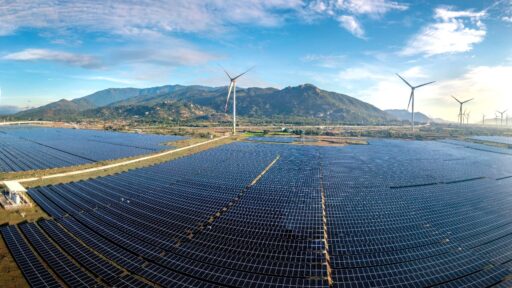
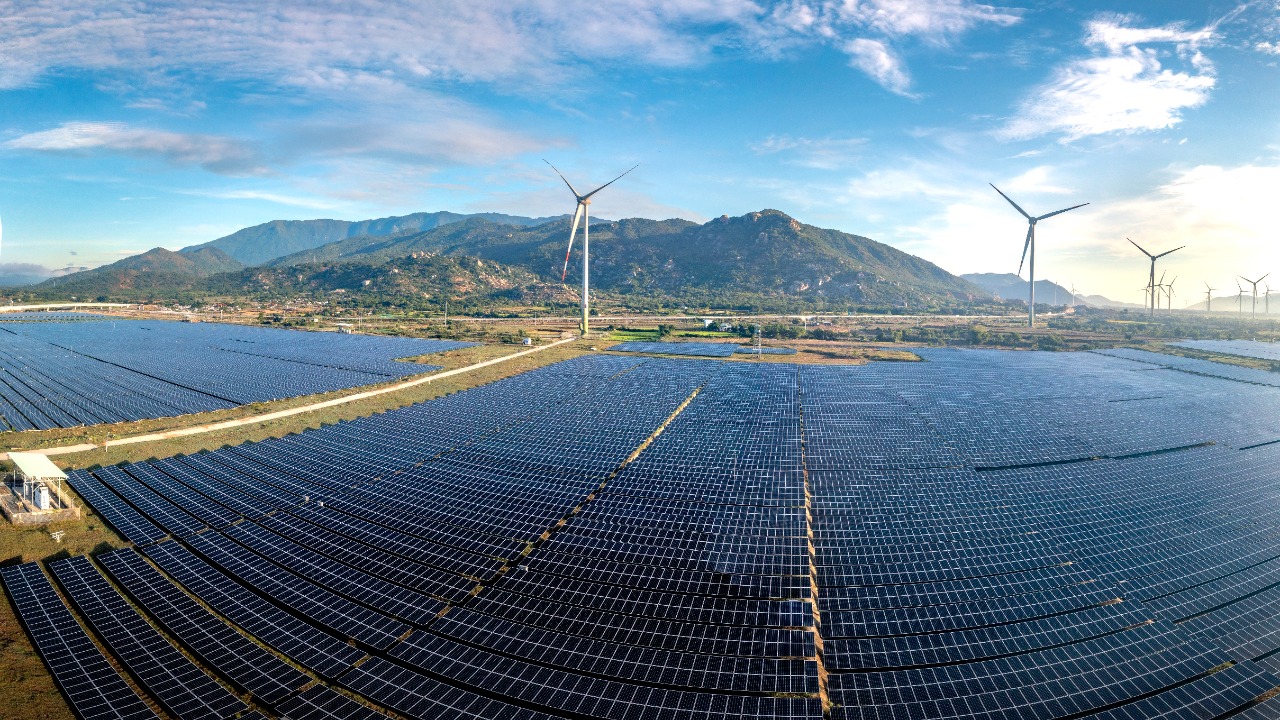

Solar energy generated more electricity than coal across the United States during a full month for the first time on record, marking a significant change in the country’s power system.
In May 2026, solar installations produced approximately 45.5 terawatt-hours of electricity, accounting for 12.8% of total U.S. generation. Coal-fired power plants generated around 43.4 terawatt-hours, giving coal a slightly smaller 12.2% share.
The milestone was identified by energy research organization Ember through an analysis of official monthly and preliminary hourly data from the U.S. Energy Information Administration. Ember’s U.S. solar and coal analysis found that May’s solar output was 17% higher than in the same month of 2025 and exceeded the previous monthly record set in July.
Solar also became the country’s third-largest individual electricity source during the month, behind only natural gas and nuclear power. Five years earlier, such a result would have appeared unlikely: coal supplied 19.7% of U.S. electricity in May 2021, while solar contributed only 5.4%.
“First Time Ever” Refers to a Full Month
The headline requires an important qualification. Solar did not permanently replace coal across the grid, nor did it generate more electricity during every hour of May.
The milestone means that total solar generation exceeded total coal generation when production was added together for the entire month. Solar output naturally rises during daylight and falls to zero after sunset, while coal plants can operate around the clock when they are available and economically selected by grid operators.
The comparison also includes electricity from both large utility solar farms and small-scale systems such as rooftop panels. Including distributed solar is essential because electricity generated on homes and businesses reduces the amount of power that must be supplied by conventional power plants.
Renewable energy as a broader category had overtaken coal on a monthly basis years earlier. The EIA reported that combined renewable sources first generated more U.S. electricity than coal in April 2019. What makes May 2026 different is that solar alone crossed the threshold. (EIA’s earlier renewable-energy milestone)
Strong Spring Conditions Helped Solar Move Ahead
May is particularly favorable for solar electricity. Days are long, sunlight is relatively strong and electricity demand is often lower than during the hottest part of summer.
Air-conditioning use typically rises sharply in June, July and August. Even when solar panels produce more electricity during those months, total national demand may rise faster, reducing solar’s percentage of the overall power mix.
Spring is also a common maintenance period for conventional power plants. Electricity demand is usually lower than during winter heating and summer cooling peaks, allowing some coal and natural-gas units to shut down temporarily for inspection or repair.
Coal generation reached an all-time monthly low of approximately 39.3 terawatt-hours in April 2026. It recovered to 43.4 terawatt-hours in May but remained 11% below its May 2025 level. Solar’s record output was therefore combined with unusually weak coal generation, creating the crossover.
That seasonal effect does not make the milestone meaningless. Solar could not have passed coal under the same conditions several years ago because the country did not have enough operating solar capacity. Favorable weather helped determine the month, but years of construction made the result possible.
Solar Capacity Is Expanding Faster Than Almost Any Other Source
The United States has added solar installations at a rapid rate across utility, commercial and residential markets.
Solar and energy storage represented 91% of all new U.S. generating capacity installed during the first quarter of 2026, according to the Solar Energy Industries Association and Wood Mackenzie. Solar alone added 7.8 gigawatts during the quarter and accounted for approximately 60% of new generating capacity. The country also passed six million cumulative solar installations.
The U.S. Energy Information Administration expects the expansion to continue. Developers reported plans to add 43.4 gigawatts of utility-scale solar capacity during 2026, which would represent a 60% increase over the amount added in 2025 if every planned project is completed. (EIA’s 2026 capacity forecast)
Solar growth is no longer limited to California and a few Southwestern states. Texas has become one of the country’s largest solar markets, while Florida, Ohio, Indiana, Michigan, Arizona and Mississippi have also recorded major additions.
States won by Donald Trump in the 2024 presidential election accounted for 74% of solar capacity installed during the first quarter of 2026. That geographic distribution shows that solar development is increasingly driven by practical factors such as electricity demand, construction speed, land availability and project economics rather than one political region.
Coal’s Long Decline Is the Other Half of the Story
Solar did not cross the threshold through growth alone. Coal’s role in the U.S. electricity system has been shrinking for years.
Coal plants face competition from natural gas, solar, wind and battery storage. Many existing facilities are old, require costly maintenance and take longer to start or adjust their output than newer generating resources.
Natural gas replaced coal as the country’s largest electricity source more than a decade ago. In 2025, natural gas supplied around 41% of U.S. utility-scale electricity, while coal contributed approximately 17%. Nuclear power supplied about 18%, and utility-scale solar produced roughly 7%. (EIA’s U.S. electricity overview)
Solar’s May victory therefore does not mean it has already overtaken coal over an entire year. Coal’s ability to operate overnight and increase production during periods of high demand means its annual generation remains substantial.
However, the direction of travel is clear. Solar generation has increased every year since 2006. In 2025, utility-scale solar output reached 296,000 gigawatt-hours, a 34% increase from the previous year. Small-scale solar added another 93,000 gigawatt-hours. (EIA’s 2025 wind and solar review)
Battery Storage Is Making Solar More Useful After Sunset
Solar’s largest limitation is timing. Panels may produce strongly around midday, while household electricity demand often remains high into the evening.
Battery storage helps address that mismatch. Large batteries can absorb electricity when solar production is abundant and discharge it after the sun goes down. They can also respond quickly to unexpected changes in demand or generation.
Storage does not turn solar into a permanently available energy source, and most current grid batteries provide only a limited number of hours of output. Nevertheless, rapidly expanding storage capacity allows grid operators to use more daytime solar without immediately curtailing excess production.
The relationship is visible in California, where utility-scale solar capacity increased 19% between April 2024 and April 2026 while battery capacity rose 79%. Solar surpassed natural gas generation within the California Independent System Operator during the first five months of 2026. (EIA’s California grid analysis)
Transmission expansion, flexible electricity demand and regional power trading will also be necessary. A solar farm producing excess electricity in one region becomes more valuable when transmission lines can deliver it to another area experiencing higher demand.
Coal Has Not Disappeared From the Grid
The monthly crossover should not be interpreted as proof that coal power is no longer used or that the U.S. grid can currently operate on solar alone.
Coal plants may increase production during extremely hot or cold weather, especially when electricity demand rises and other resources are unavailable. Some regions remain more dependent on coal because they have fewer renewable projects, limited transmission connections or local access to inexpensive coal supplies.
Natural gas also remains far ahead of solar. It supplied approximately 37% of U.S. electricity in May, almost three times solar’s share. Gas plants provide flexible generation that can respond when solar output changes, although their operation produces carbon dioxide and other emissions.
A reliable transition will require more than installing panels. It will depend on batteries, transmission lines, demand management, dependable generation and better coordination among regional grids.
The Milestone Shows a Structural Change, Not a Completed Transition
Solar passing coal for one month is both symbolic and technically important. It demonstrates that solar has moved beyond being a small supplementary resource and can now become one of the country’s leading electricity sources under favorable conditions.
The result does not mean coal has been permanently defeated, and the annual crossover has not yet occurred. Seasonal demand, weather, policy decisions, project delays and grid constraints could all affect how quickly solar gains additional ground.
Still, May 2026 established a new baseline. A technology that supplied only a small fraction of American electricity a decade ago has now generated more power over a full month than the fuel that once dominated the national grid.
Future months may move back and forth between solar and coal. The larger trend, however, is becoming difficult to miss: new electricity demand is increasingly being met by solar panels and batteries, while coal plays a progressively smaller role in the U.S. power system.