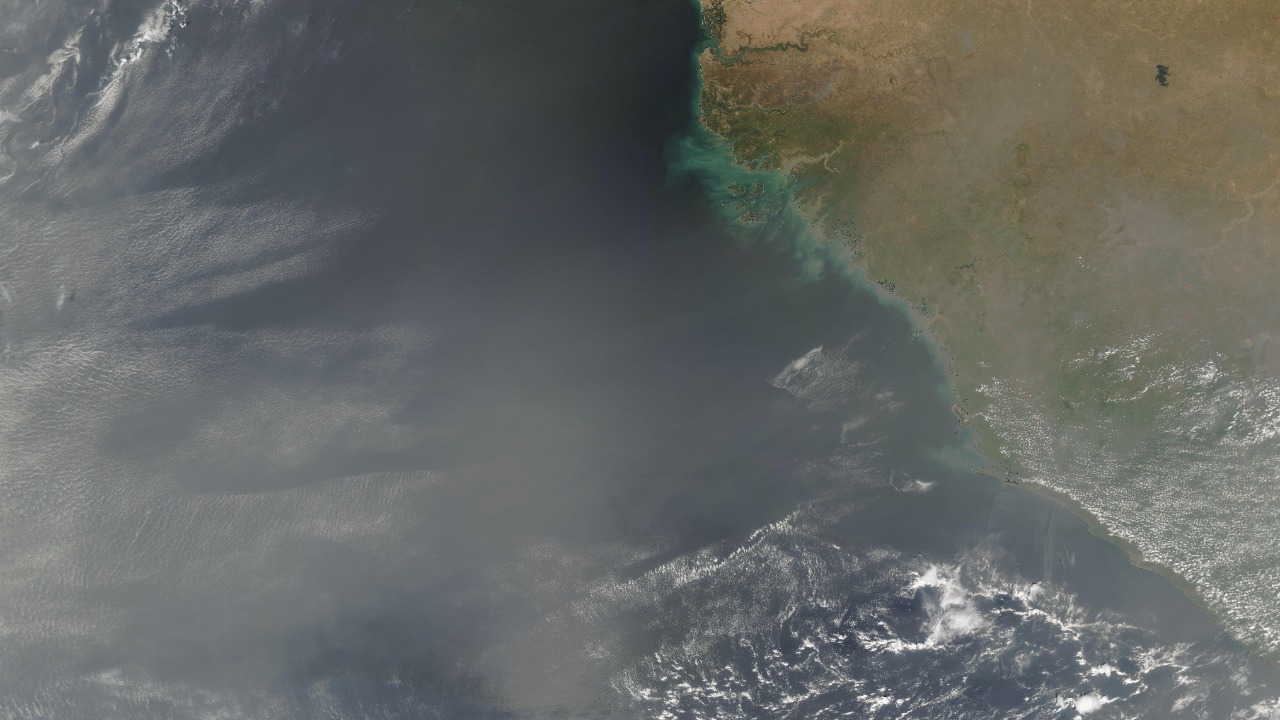

A massive Saharan dust plume has traveled thousands of miles across the Atlantic and is now spreading hazy skies across parts of the Gulf Coast. The plume began over the Sahara Desert in North Africa, moved westward across the tropical Atlantic, passed through the Caribbean, and reached the Gulf region just as summer heat intensified across the southern United States.
According to FOX Weather, the plume has been hazing skies over Florida and the Gulf Coast while helping trap heat and reduce air quality in some areas. The dust is part of the Saharan Air Layer, a dry, dusty mass of air that often moves across the Atlantic during late spring, summer, and early fall.
For residents from Florida to Texas, the effect can be easy to see. The sky may look milky, gray, or pale brown. Sunrises and sunsets may appear more orange, red, or dramatic. Visibility may drop slightly. People with asthma, allergies, or other respiratory issues may notice more irritation.
What Is the Saharan Air Layer?
The Saharan Air Layer is a hot, dry, dusty layer of air that forms over the Sahara Desert. Strong winds can lift huge amounts of mineral dust into the atmosphere. Once airborne, that dust can travel thousands of miles over the Atlantic Ocean.
NOAA’s Atlantic Oceanographic and Meteorological Laboratory describes the Saharan Air Layer as a mass of very dry, dusty air that forms over the Sahara Desert and moves across the tropical Atlantic. It can affect weather, air quality, tropical storms, and sky conditions far from Africa.
This is not unusual during hurricane season. Saharan dust outbreaks happen regularly in summer. What makes this event stand out is the plume’s size, its 5,000-mile journey, and its timing as parts of the Gulf Coast and Southeast deal with dangerous heat.
Why the Sky Looks Hazy
The haze comes from tiny mineral particles suspended in the air. These particles scatter sunlight and reduce the crisp blue color of the sky. Instead of a clear summer sky, people may see a washed-out or dusty appearance.
The dust can also create beautiful sunrises and sunsets. When the sun is low on the horizon, light travels through more atmosphere. Dust particles scatter shorter wavelengths and allow warmer red, orange, and pink colors to dominate. That is why Saharan dust events often produce dramatic evening skies.
But the same particles that make sunsets vivid can also irritate lungs and eyes. The beauty comes with a health warning.
Why Air Quality Can Drop
Saharan dust contains fine particles that can enter the nose, throat, and lungs. For most healthy adults, a light dust event may cause little more than mild irritation. For sensitive groups, it can be more serious.
People with asthma, chronic obstructive pulmonary disease, heart disease, allergies, or other respiratory conditions may notice coughing, wheezing, chest tightness, watery eyes, sore throat, or shortness of breath. Older adults, young children, outdoor workers, and people who exercise outside can also be more vulnerable.
The Environmental Protection Agency’s AirNow system is one of the best tools for checking local air quality. During Saharan dust events, people in affected areas should check local air-quality alerts before spending long periods outdoors.
Why the Dust Can Make Heat Feel Worse
Saharan dust is often associated with dry air aloft, but at the surface along the Gulf Coast, humidity can remain high. That means people may face both haze and dangerous heat at the same time.
The dust can act like a thin atmospheric blanket in some situations, trapping heat and helping keep temperatures elevated. FOX Weather reported that the dust layer over Florida and the Gulf Coast was interacting with a heat dome, pushing heat index values toward dangerous levels in parts of the South.
That combination is uncomfortable and potentially dangerous. Hazy skies may reduce direct sunlight slightly, but they do not necessarily bring relief. If humidity stays high and temperatures remain in the 90s, the heat index can still climb above 100°F.
What Gulf Coast Residents Are Seeing
Across parts of Florida, Louisiana, Mississippi, Alabama, and Texas, residents may notice hazy skies, muted sunshine, reduced visibility, and brighter sunsets. In Southeast Texas, the Houston Chronicle reported that Saharan dust was expected to bring hazy skies before wetter weather returned.
In South Texas, earlier dust plumes also produced hazy conditions after traveling more than 4,000 miles from Africa. The San Antonio Express-News reported that Saharan dust can reduce air quality because of fine particles such as silica and quartz.
The timing and intensity can vary by city. Some areas may see only light haze, while others may experience thicker dust, poorer visibility, and more noticeable air-quality effects.
Why Saharan Dust Can Suppress Storms
Saharan dust does not only affect the sky. It can also influence tropical weather. The Saharan Air Layer is usually dry, warm, and stable. Tropical storms need warm ocean water, moisture, rising air, and organized thunderstorms. Dry dusty air can interfere with that process.
NOAA has explained that the warmth, dryness, and strong winds associated with the Saharan Air Layer can suppress tropical cyclone formation and intensification. In simple terms, dust outbreaks can temporarily make parts of the Atlantic less favorable for tropical development.
That does not mean Saharan dust guarantees a quiet hurricane season. It can suppress storms in one region or for a limited period, but tropical activity can rebound once dust thins, moisture returns, and atmospheric conditions become more favorable.
Why Hurricane Forecasters Watch Dust Closely
Hurricane forecasters track Saharan dust because it can help explain pauses in tropical activity. A large dust plume moving across the Atlantic can dry out the atmosphere and disrupt thunderstorm growth. That can reduce the chance of tropical waves organizing into named storms.
However, the relationship is not simple. Dust can suppress storms, but it can also travel above or around other weather systems. A tropical wave may struggle in dry air one week and develop later once conditions improve.
This is why forecasters use satellites, models, aircraft data, ocean temperatures, wind patterns, and moisture measurements together. Dust is one piece of the hurricane puzzle, not the whole answer.
How Satellites Track the Plume
Saharan dust is visible from space. NOAA satellites can track beige or milky dust clouds as they move from Africa across the Atlantic. Satellite imagery helps meteorologists see where the dust is thickest, how fast it is moving, and which regions may be affected next.
NOAA’s satellite division has shown how Saharan dust can blow thousands of miles across the Atlantic, forming a broad plume that travels from the African coast toward the Caribbean and North America.
Without satellites, it would be much harder to monitor these long-distance dust events. The plume can cover huge areas of ocean where surface observations are limited.
Why the Dust Travels So Far
Saharan dust travels far because of strong seasonal winds and the structure of the atmosphere over the tropical Atlantic. Dust lifted from the desert can rise into a layer of air that moves westward with trade winds.
Once the dust is high enough, it can avoid immediate removal by local rain and travel for days. Some dust falls into the ocean, where it can provide minerals such as iron. Some reaches the Caribbean, Gulf of Mexico, Florida, Texas, and occasionally farther inland.
The idea that dust from Africa can affect air quality in the United States may sound surprising, but it is a well-known seasonal pattern. The Sahara is one of the world’s largest sources of airborne mineral dust.
Why People With Asthma Should Be Careful
People with asthma or lung disease should take Saharan dust seriously. Fine particles can trigger symptoms, especially during outdoor exercise or long periods outside. If the air looks hazy and local air-quality readings are elevated, it may be better to move workouts indoors.
The CDC’s air pollution guidance explains that particle pollution can affect breathing and heart health, especially for sensitive groups. While Saharan dust is natural, natural particles can still be harmful when concentrations are high.
People who use inhalers or respiratory medications should follow their treatment plans and keep medications available. Anyone with severe shortness of breath, chest pain, or worsening symptoms should seek medical care.
Why Outdoor Workers Face Added Risk
Construction crews, landscapers, delivery workers, road crews, lifeguards, farmworkers, and utility workers may have to spend hours outside during dusty conditions. If the dust arrives during a heat wave, the risk increases because workers face both air-quality stress and heat stress.
Employers should monitor heat index values, air quality, and local weather alerts. Breaks, shade, hydration, protective equipment, and adjusted schedules can reduce risk. Workers should be encouraged to report breathing difficulty, dizziness, chest tightness, or heat illness symptoms early.
The combination of heat and dust can be more dangerous than either one alone.
What Residents Can Do Indoors
When dust is thick, keeping indoor air clean becomes important. Residents can close windows and doors, run air conditioning on recirculate when possible, and use high-efficiency filters if available. Portable HEPA air cleaners can help in bedrooms or main living areas.
People should avoid adding indoor particle sources during poor air quality. That means reducing candle use, smoking, frying, and other activities that add smoke or particles indoors.
Pets can also be affected by air quality. Dogs and cats with breathing problems may need shorter outdoor time when dust levels are high.
Why Cars May Look Dusty
Saharan dust can settle on cars, windows, patio furniture, pools, and outdoor surfaces. After a light shower, the dust may leave a dirty film because raindrops pull particles out of the air and deposit them on surfaces.
Car owners may notice a tan or reddish coating after the plume passes. It is usually best to rinse dust off gently rather than dry-wipe it, because mineral dust can be abrasive and may scratch paint if rubbed into the surface.
Pool owners may also need to clean filters or skim surfaces if dust deposition is heavy.
Why This Event Feels Different From Smoke
Saharan dust haze can look somewhat similar to wildfire smoke, but the source and chemistry are different. Smoke comes from burning vegetation and contains soot, gases, and combustion byproducts. Saharan dust is mineral material lifted from desert soils.
Both can reduce visibility and worsen air quality, especially through fine particles. But public-health messaging may differ depending on particle concentration, local air-quality measurements, and sensitive groups.
Residents should not guess based only on sky color. Air-quality monitors and local weather agencies provide better guidance.
Why These Dust Events Are Seasonal
Saharan dust commonly moves across the Atlantic during late spring, summer, and early fall. This overlaps with hurricane season, which is why meteorologists discuss the Saharan Air Layer so often between June and September.
Dust outbreaks can come in waves. One plume may move through the Caribbean and Gulf, followed by another several days later. Some plumes are light and barely noticeable. Others are thick enough to produce widespread haze and air-quality alerts.
This event may not be the last dust episode of the season. Gulf Coast residents often see several rounds during summer.
Why The Public Should Avoid Overreacting
A Saharan dust plume is not automatically an emergency for everyone. Many people will mainly notice hazy skies and colorful sunsets. But sensitive groups should not ignore it, especially if air quality drops.
The balanced message is simple. Enjoy the sunsets, but check the air. Avoid strenuous outdoor activity if symptoms appear. Keep windows closed during heavier dust. Monitor local forecasts. Be extra careful if the dust overlaps with extreme heat.
The plume is dramatic because it traveled thousands of miles, but the practical response is the same as with many air-quality events: reduce exposure when needed and protect vulnerable people.
Final Takeaway
A 5,000-mile Saharan dust plume is spreading hazy skies across parts of the Gulf Coast after traveling from North Africa across the Atlantic, through the Caribbean, and into the southern United States. The dust can create vivid sunrises and sunsets, but it can also lower air quality, irritate lungs, reduce visibility, and make already dangerous heat feel worse.
The plume is part of the Saharan Air Layer, a dry, dusty air mass that can travel thousands of miles and temporarily suppress tropical storm development. That may help explain quiet periods in the Atlantic, but it does not eliminate hurricane risk for the season.
For Gulf Coast residents, the best response is awareness. Check local air-quality readings, limit strenuous outdoor activity if conditions worsen, protect people with asthma or heart and lung disease, keep indoor air clean, and take heat alerts seriously. The sky may look beautiful at sunset, but the dust behind that color is worth respecting.