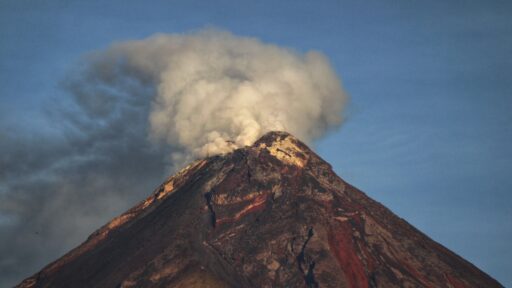
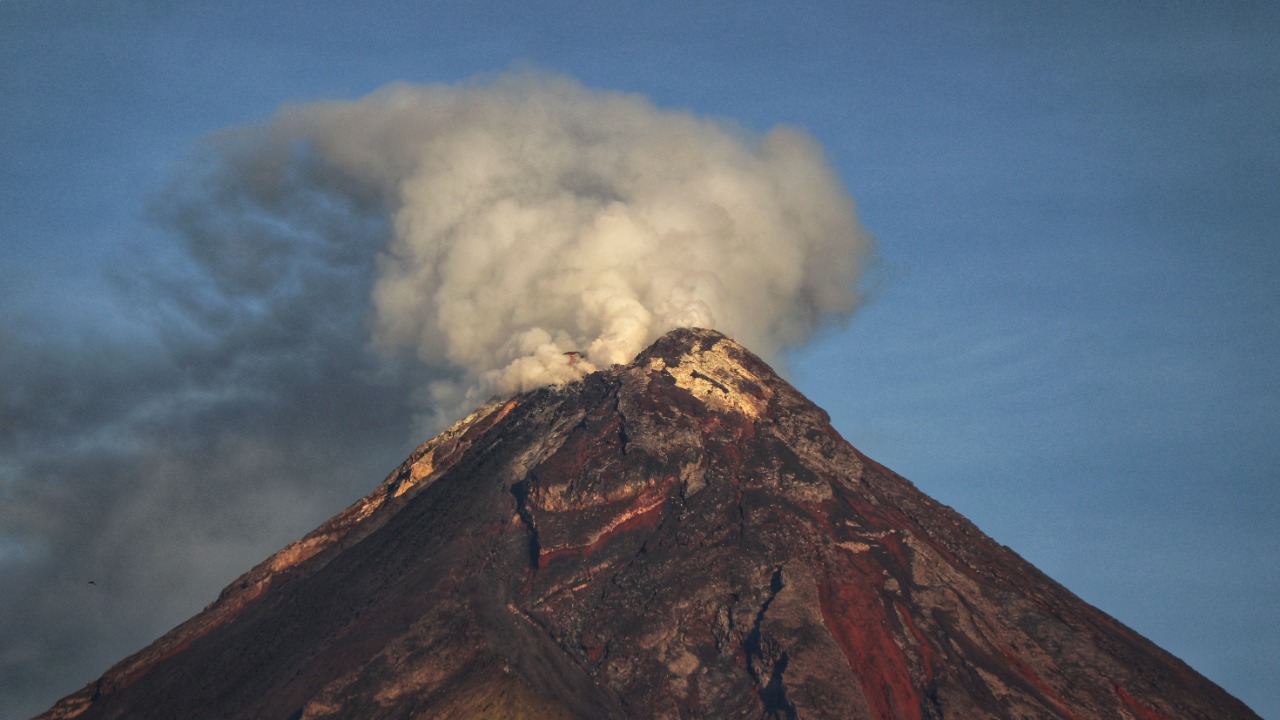

Mayon Volcano in the Philippines has again reminded nearby communities why it is one of the country’s most dangerous and closely watched volcanoes. Ash spread across towns in Albay province after hot volcanic material collapsed from the volcano’s slopes, affecting nearly 200,000 people and forcing thousands to leave their homes.
The Associated Press reported that more than 5,400 residents fled to emergency shelters after massive ash clouds drifted over communities near Mayon. Officials said the ashfall reduced visibility, damaged farms, affected livestock, and left many residents frightened.
Mayon was not described as having produced a full explosive eruption in that ashfall event. Instead, volcanologists said huge lava deposits on its slope suddenly collapsed into a pyroclastic flow, sending hot rock, ash, and gas downslope before ash drifted into nearby villages. That distinction matters, but it does not make the danger minor. Pyroclastic flows are among the deadliest volcanic hazards because they move fast, burn hot, and can destroy anything in their path.
Why Mayon Is Under Serious Watch
Mayon remains under Alert Level 3, which means a high level of volcanic unrest. Under the Philippine volcano alert system, this is not the highest alert, but it is serious. It signals that magma is involved and that hazardous eruptive activity remains possible.
The Philippine Institute of Volcanology and Seismology, known as PHIVOLCS, explains its warning system through its volcano alert levels. Alert Level 4 means a hazardous eruption is imminent, while Alert Level 5 means a hazardous eruption is underway. So when people say Mayon is “one step” from a major eruption, the clearest way to say it is that the volcano is one alert step below the “hazardous eruption imminent” stage.
That does not mean a catastrophic eruption is guaranteed. Volcanoes can intensify, pause, or decline. But Alert Level 3 means people near the volcano should take official warnings seriously and avoid danger zones.
The Ashfall Turned Daily Life Into a Hazard
Ashfall can make a town feel like night has arrived early. It can cover roads, rooftops, crops, water tanks, schools, vehicles, and power lines. It can make driving dangerous because visibility drops sharply. It can also make breathing uncomfortable, especially for children, older adults, and people with asthma or other lung conditions.
In Camalig, one of the towns near Mayon, officials described roads with almost no visibility during the ashfall. Farms were also damaged, and livestock deaths were reported. This is a reminder that volcanic ash is not just “dust.” It is made of tiny abrasive fragments of rock and glass that can irritate lungs, contaminate water, damage engines, and harm agriculture.
The International Volcanic Health Hazard Network warns that volcanic ash can affect breathing, eyes, skin, water supplies, machinery, and transport. Even when ashfall is not immediately deadly, it can disrupt an entire community.
Why Pyroclastic Flows Are So Feared
The ash that blanketed towns came after a collapse of volcanic deposits on Mayon’s slope. That collapse generated a pyroclastic flow, which is one of the most dangerous volcanic phenomena. A pyroclastic flow is a fast-moving avalanche of hot gas, ash, and rock that races down a volcano’s slopes.
Unlike slow lava flows, pyroclastic flows can move extremely fast. They can be hot enough to burn, suffocate, and destroy. People cannot outrun them at close range. This is why exclusion zones around volcanoes are so important.
Mayon’s steep cone shape makes it beautiful, but that same shape can channel volcanic material down gullies and slopes toward communities. When unstable lava or dome material collapses, gravity can send it downhill quickly.
Why Mayon Is So Famous and So Dangerous
Mayon is famous for its near-perfect cone, making it one of the Philippines’ most iconic natural landmarks. Tourists admire it, photographers capture it, and locals often see it as part of the landscape of home.
But Mayon is also the most active volcano in the Philippines. It has erupted many times in recorded history and has repeatedly forced evacuations in Albay province. Its beauty can make the danger feel familiar, but familiarity does not reduce the risk.
The volcano rises over communities that rely on farming, tourism, trade, and daily work close to its slopes. Many families live near hazard zones because of land, livelihood, and economic pressure. That makes evacuation decisions emotionally and financially difficult.
Why Residents Sometimes Stay Despite Warnings
When officials tell residents to evacuate, the decision may sound simple from outside. For families living near Mayon, it can be much harder. Leaving home means leaving crops, livestock, tools, shops, belongings, and income. Some people worry about theft. Others worry about crowded evacuation centers, heat, sanitation, food, and lost work.
That is why some residents delay evacuation until ashfall, rockfall, or visible activity becomes frightening. But volcanic hazards can change quickly. A slope collapse, explosion, or sudden ash plume may leave little time to escape.
Emergency managers must balance science, safety, and human reality. Warnings must be clear, shelters must be livable, and residents must trust that leaving early is safer than waiting for visible disaster.
The Alert Level Does Not Mean Panic, But It Does Mean Readiness
Alert Level 3 should not be treated as a reason for panic. It should be treated as a reason for disciplined preparation. The volcano is not at the maximum alert stage, but it is active enough that authorities are maintaining strict safety measures.
Residents near Mayon should monitor PHIVOLCS updates, local government announcements, and evacuation instructions. People should avoid the permanent danger zone and any extended danger areas identified by officials. Farmers, hikers, tourists, and residents should not enter restricted zones even if the volcano appears calm for a few hours.
Volcanoes can look quiet from a distance while dangerous processes continue inside or on the slopes.
Why Sulfur Dioxide Emissions Matter
Volcanologists also monitor sulfur dioxide emissions because they can signal magma activity. Increased volcanic gas can mean magma is rising, degassing, or interacting with the volcano’s system. It is not the only sign scientists watch, but it is an important one.
Recent local reports noted increased sulfur dioxide emissions from Mayon, with PHIVOLCS recording elevated gas output. The Philippine Star reported that Mayon’s sulfur dioxide emissions rose sharply in July, even as some other signs temporarily declined.
This is why volcano monitoring requires multiple instruments and observations. Scientists look at seismic activity, ground deformation, gas emissions, crater glow, lava behavior, rockfalls, ash emissions, and visual observations together. One signal alone rarely tells the whole story.
What Ash Does to Health
Volcanic ash can irritate the throat, nose, eyes, and lungs. People may experience coughing, sore throat, watery eyes, skin irritation, or breathing difficulty. Those with asthma, chronic lung disease, heart disease, or other health conditions may be more vulnerable.
Masks can help reduce ash inhalation, but they must fit well. Wet cloths may help in emergencies, but proper masks offer better protection. People should avoid sweeping ash dry because that sends particles back into the air. Lightly dampening ash before cleanup can reduce dust, but roofs must be cleaned carefully because wet ash can become heavy.
The World Health Organization notes that volcanic eruptions can affect health through ash, gases, contaminated water, injuries, and displacement. In evacuation centers, heat, crowding, sanitation, and respiratory problems can create additional risks.
Why Roads and Travel Become Dangerous
Ashfall makes roads slippery and reduces visibility. It can damage engines, clog air filters, scratch windshields, and make driving hazardous. Motorists may have trouble seeing lanes, signs, pedestrians, animals, and other vehicles.
Air travel can also be affected because volcanic ash is dangerous for aircraft engines. Ash can melt inside jet engines, damage turbine blades, and create serious safety hazards. This is why aviation authorities monitor ash plumes and sometimes restrict airspace near active volcanoes.
Even if the ash plume does not reach major airports, local travel can be disrupted by road closures, poor visibility, and cleanup operations.
Why Farms Suffer Quickly
Ashfall can damage crops by coating leaves, blocking sunlight, and making plants harder to harvest or sell. Heavy ash can break branches and bury vegetables. It can contaminate water sources and grazing areas. Livestock may inhale ash, eat ash-covered grass, or suffer from lack of clean water.
For farming communities near Mayon, ashfall is not only a health problem. It is an income problem. A single ash event can destroy crops, kill animals, and leave families dependent on relief assistance.
The AP reported livestock deaths and damaged vegetable farms in Camalig after the ashfall. That kind of damage can last long after the sky clears.
Why Cleanup Must Be Done Carefully
Cleaning ash is not the same as cleaning ordinary dirt. Ash is abrasive and can scratch surfaces. If it is swept dry, it becomes airborne again. If it gets wet, it can become heavy and difficult to move. On rooftops, heavy ash can increase collapse risk, especially on weaker structures.
People cleaning ash should protect their eyes, nose, mouth, and skin. They should avoid unnecessary outdoor exposure during active ashfall. Water systems should be protected, and drinking water should be checked if contamination is possible.
Local officials often prioritize roads, schools, evacuation centers, health facilities, and drainage systems because ash can block waterways and contribute to flooding or lahars when rain arrives.
The Lahar Threat After Ashfall
After volcanic ash and loose deposits accumulate on slopes, rain can turn them into lahars. A lahar is a fast-moving volcanic mudflow that can rush down river channels and low areas. Lahars can occur during or after an eruption, sometimes long after ash was deposited.
This is especially important in the Philippines because heavy rain, tropical storms, and typhoons can quickly mobilize volcanic material. Communities downstream from Mayon must pay attention not only to eruptions but also to rainfall warnings.
A volcano can therefore remain dangerous even after the ash plume stops. Loose volcanic material on slopes can become a second hazard when weather changes.
Why Monitoring Mayon Is Difficult
Monitoring a volcano like Mayon requires instruments, cameras, field reports, satellite data, gas measurements, seismic networks, and visual observation. But weather can interfere. Clouds may hide the summit. Rain can block views. Ash can damage instruments. Dangerous conditions may limit access to monitoring sites.
Scientists must make decisions with imperfect information. They may know the volcano is restless without being able to see every change directly. That is why official bulletins often include cautious language and emphasize that conditions can change.
A volcano forecast is not like a clock. It is a risk assessment based on signs that may strengthen or weaken.
Why Mayon Is Part of a Bigger Philippine Hazard Landscape
The Philippines sits along the Pacific Ring of Fire, where tectonic plates interact and create frequent earthquakes and volcanic activity. The country has more than 20 active volcanoes, including Mayon, Taal, Kanlaon, Bulusan, and others.
This makes volcano preparedness a national issue, not just a local one. Many communities live near volcanoes because volcanic soil can be fertile and landscapes support farming and tourism. But those benefits come with risk.
The challenge is not simply moving everyone away forever. It is building systems that allow people to live more safely through monitoring, education, evacuation planning, land-use rules, and resilient infrastructure.
Why Officials Keep the Danger Zone Closed
The permanent danger zone around Mayon exists because hazards can occur without much warning. Rockfalls, lava collapse, ash explosions, gas emissions, and pyroclastic flows can affect areas close to the volcano suddenly.
People sometimes enter restricted zones to farm, retrieve animals, take photos, or check property. That can be deadly. When a volcano is at Alert Level 3, the danger zone should be treated seriously even during quiet periods.
Official restrictions may feel frustrating, but they are based on the reality that the closest areas to the volcano offer the least time to escape.
What Residents Should Do Now
Residents near Mayon should follow local evacuation orders and avoid restricted zones. Families should prepare emergency bags with masks, water, medicines, documents, chargers, clothes, and basic supplies. People should protect drinking water, keep animals away from ash-covered feed when possible, and check on neighbors who may need help.
Those outside evacuation zones should still be ready for ashfall. Windows and doors should be closed during ash events. Vehicles should be covered if possible. People should avoid unnecessary driving when visibility is poor. Children, older adults, and people with respiratory conditions should stay indoors when ash is falling.
The most important step is to rely on official updates, not rumors or dramatic social media posts.
Final Takeaway
Mayon Volcano remains under serious watch after ashfall affected towns in Albay province and forced thousands of people into evacuation shelters. Nearly 200,000 people were affected after volcanic material collapsed from Mayon’s slopes, producing ash clouds that reduced visibility, damaged farms, and frightened residents.
The volcano is under Alert Level 3, meaning a high level of unrest. It is not yet at the “hazardous eruption imminent” stage, but it is close enough on the warning scale that residents must take the danger seriously. Elevated gas emissions, pyroclastic-flow activity, ashfall, and continued unrest all show that Mayon remains unpredictable.
For people near the volcano, the safest response is preparation, not panic. Follow PHIVOLCS and local government guidance, avoid danger zones, protect against ash exposure, prepare for possible evacuation, and remember that Mayon’s calm moments do not erase the danger building on its slopes.