
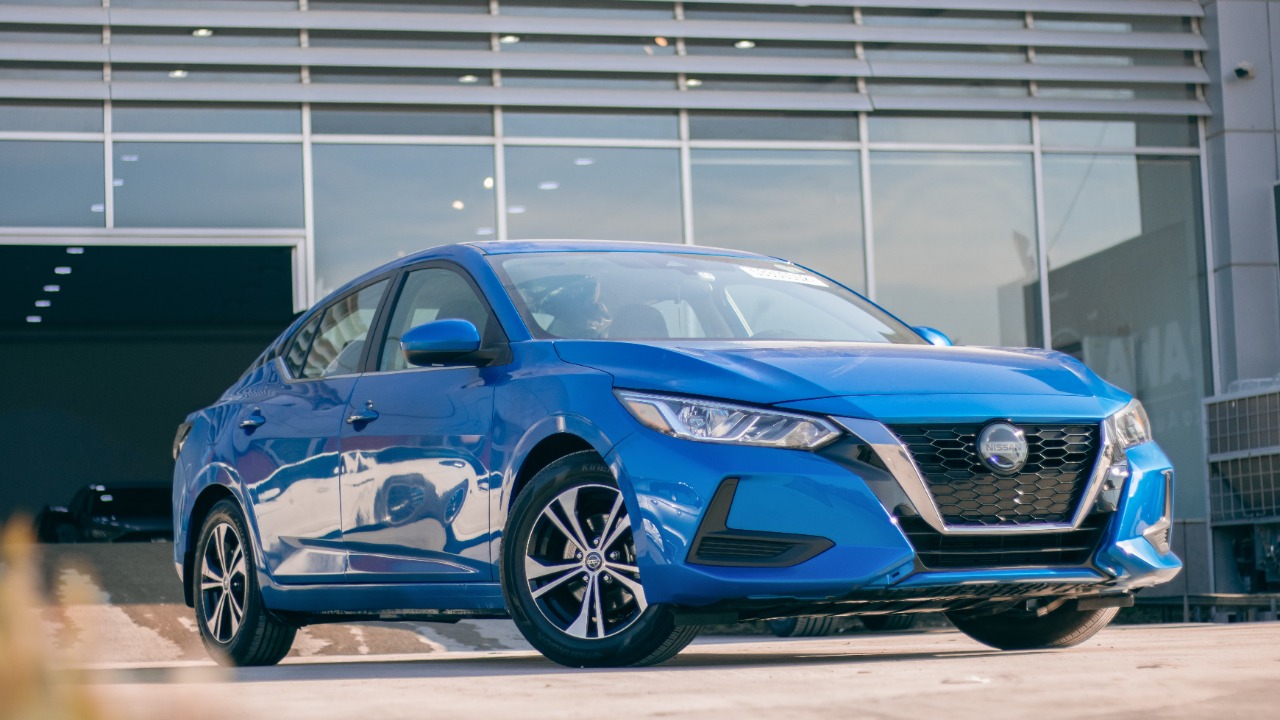

Federal safety regulators are pressing Nissan to address what they describe as a serious defect in its popular Sentra compact sedan, prompting a fresh recall and renewed scrutiny of how the company manages known risks. The move affects a wide swath of recent-model Sentras on American roads and raises broader questions about how quickly automakers act once early warning signs appear.
For owners, the issue is not abstract. The defect can interfere with basic vehicle control, and regulators say it has already triggered complaints that include loss of steering response. That combination has turned a routine recall notice into a test of trust between Nissan, its customers, and the government agencies that oversee vehicle safety.
How the latest Sentra recall came together
The current action centers on a defect in the front suspension and steering system of certain Nissan Sentra sedans, which federal regulators have flagged as a safety risk. According to the recall documentation summarized in a recent regulatory filing, the affected cars can experience a failure in components that help keep the front wheels aligned and responsive to steering input.
Regulators describe the defect as serious because it can lead to a partial or complete loss of steering control. In practical terms, drivers may notice the vehicle pulling to one side, unusual noises from the front end, or a steering wheel that no longer tracks straight. In more severe cases, a sudden change in alignment can make it difficult to keep the car in its lane, especially at highway speeds or during emergency maneuvers.
The recall follows a pattern that has become familiar in the auto industry. Consumer complaints and warranty claims begin to cluster around a specific issue, engineers then trace the problem to a particular part or manufacturing process, and once the pattern is clear enough, the automaker is required to notify the National Highway Traffic Safety Administration and propose a remedy. In this case, Nissan’s internal review and the regulators’ own analysis converged on the same conclusion: the defect created an unreasonable risk to safety that could not be left unaddressed.
Nissan is notifying owners of the affected Sentras by mail and through dealer networks. The company plans to inspect the front suspension and steering assemblies and replace any defective parts at no cost to the customer. Dealers are also being instructed to look for secondary damage, such as uneven tire wear, that may have resulted from prolonged driving with the defect present.
Why the Sentra defect is drawing heightened scrutiny now
The Sentra occupies a key spot in Nissan’s lineup as an affordable, high-volume compact sedan, which means any safety problem with this model has an outsized impact. Hundreds of thousands of these vehicles are on U.S. roads, and many belong to younger drivers, commuters, and budget-conscious families who rely on them as primary transportation. A steering-related defect in such a widely used car magnifies the potential risk across the driving public.
Regulators have labeled the problem serious in part because steering failures rarely give drivers much time to react. Unlike some defects that slowly worsen or remain mostly an annoyance, a sudden change in steering behavior can quickly escalate into a loss of vehicle control. That risk is heightened under conditions that are already challenging, such as wet pavement, heavy traffic, or high-speed highway driving. Even a single crash tied to such a defect can have severe consequences, which is why safety agencies tend to treat steering issues as high priority.
The timing also intersects with a broader conversation about recall fatigue and driver awareness. Over the past several years, U.S. drivers have been bombarded with recall notices from multiple automakers, covering everything from airbag inflators to engine fires. Many of those recalls involve problems that are inconvenient but not immediately life threatening. When regulators single out a defect as particularly serious, as they have with the Sentra steering issue, they are effectively trying to cut through that noise and signal that this is one repair owners should not postpone.
For Nissan, the recall arrives as the company works to rebuild its reputation after earlier controversies and quality concerns. The Sentra has often been marketed as a straightforward, reliable commuter car, a contrast to more complex crossovers and electric models. A safety issue that touches the core promise of basic dependability can erode that positioning, especially if owners feel they were not warned early enough or treated transparently.
Regulatory dynamics are also at play. Safety agencies have been under pressure from lawmakers and consumer advocates to act more aggressively when patterns of complaints emerge. In that environment, labeling a defect as serious is not only a technical assessment but also a signal that the agency is willing to push automakers to move faster and cast a wider net when problems surface.
What owners should do and how Nissan’s response will shape the outcome
For Sentra owners, the immediate priority is straightforward: confirm whether their vehicle is covered by the recall and schedule the repair as soon as parts and appointments are available. Nissan is directing owners to contact dealers, who can check vehicle identification numbers against the recall list and explain the inspection and replacement process. Drivers who notice symptoms such as pulling, vibration, clunking noises from the front suspension, or a steering wheel that no longer centers properly are being urged to stop driving and arrange for towing to avoid further risk.
The repair itself is expected to focus on replacing the defective steering and suspension components and verifying that the alignment and steering response meet factory specifications. Because the defect can cause uneven tire wear, some owners may also need new tires, which raises questions about who bears that cost. The recall remedy typically covers the defective parts, but Nissan’s handling of any related damage will influence how fairly customers feel they are being treated.
Looking ahead, the effectiveness of Nissan’s communication will likely determine how quickly the risk is reduced on the road. Clear recall notices, flexible scheduling, and transparent explanations of the problem can all help convince owners to act. Conversely, long waits for parts, confusing letters, or inconsistent dealer responses can leave many affected vehicles unrepaired for months or longer.
Regulators are likely to monitor completion rates closely. If a large share of recalled Sentras remain unrepaired, federal officials could push Nissan to expand outreach, add incentives, or adjust the remedy. They may also examine whether earlier field data should have triggered a faster response, which could feed into future enforcement decisions or civil penalties if they conclude that the company moved too slowly.
The episode also feeds into a larger shift in how automakers approach safety. As vehicles become more complex and connected, companies are increasingly expected to treat safety issues as ongoing risks that require continuous monitoring rather than one-off fixes. For a relatively simple mechanical defect in a mainstream sedan, that expectation is no less relevant. How Nissan tracks post-repair performance, responds to any lingering complaints, and updates its internal testing and supplier oversight will be watched by both regulators and industry rivals.
For Sentra owners and other drivers who share the road with them, the stakes are immediate. A prompt, thorough recall campaign can sharply cut the odds that a steering failure leads to a crash. A slow or uneven response, by contrast, would leave a known hazard circulating in traffic. The coming months will show whether Nissan and federal regulators can translate their serious language about the defect into equally serious follow-through, measured not in press releases but in safer miles driven.