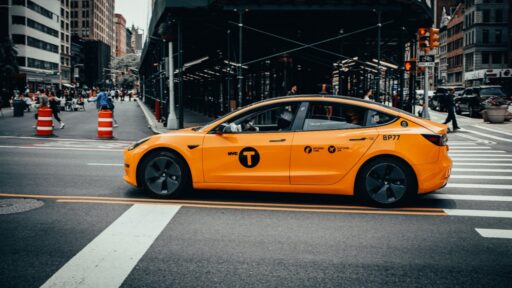
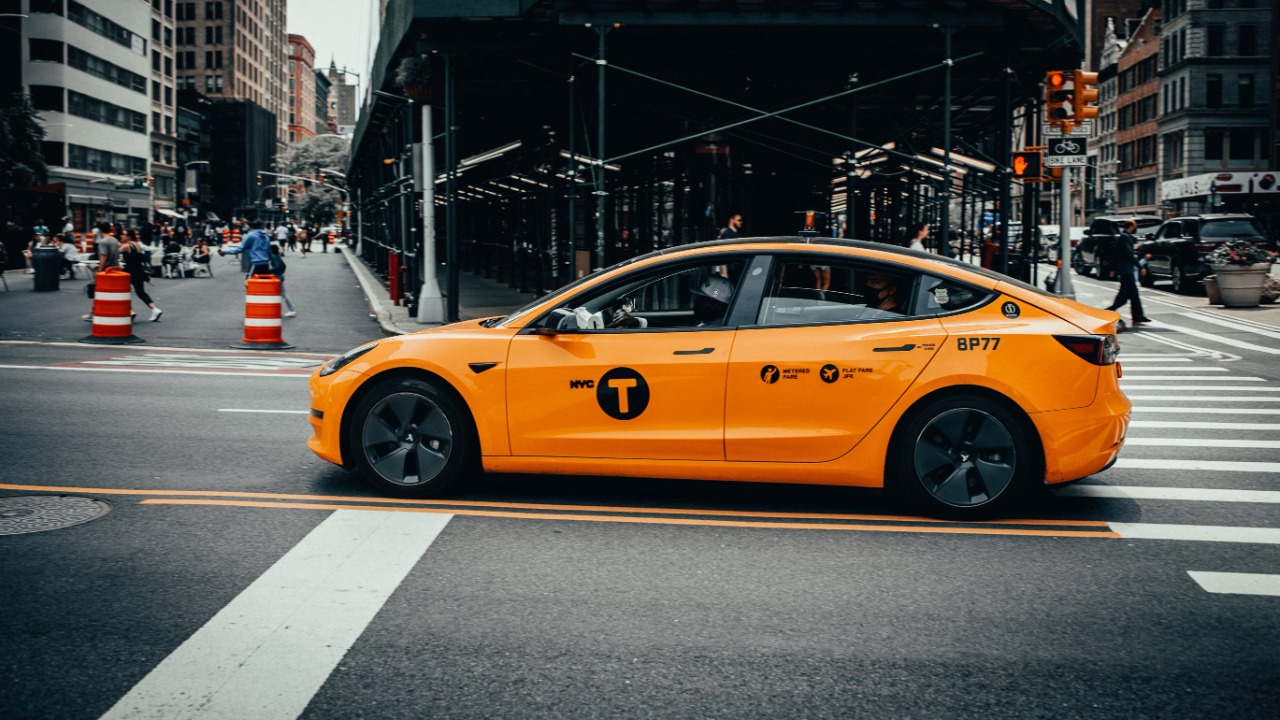

Las Vegas is about to become one of the most important robotaxi battlegrounds in the United States.
Nevada regulators have approved Tesla, Waymo, and Uber to begin charging passengers for autonomous rides in Clark County, including Las Vegas. The approvals mean these companies can move beyond testing and free demonstration rides and start operating robotaxis as actual commercial transportation services.
The scale could become significant quickly.
Tesla has reportedly been cleared for as many as 5,000 robotaxis, while Waymo and Uber have each received permission for up to 1,000 vehicles in the region over the next year.
That does not mean 7,000 driverless cars will suddenly appear on Las Vegas roads tomorrow.
It does mean Nevada has created the regulatory path for them to arrive.
And for a city built around tourism, airports, hotels, conventions, and short urban trips, autonomous taxis may find one of their most natural markets.
Tesla Received the Largest Deployment Allowance
Tesla’s Nevada approval is the most ambitious of the three.
According to reporting following an August 20 regulatory meeting, Tesla can deploy as many as 5,000 robotaxis over the next 12 months.
The company reportedly told regulators that the 5,000 figure represents the maximum allowed rather than an immediate deployment target.
Tesla indicated that getting approximately 2,500 vehicles operating in Nevada by 2027 would already make it extremely happy.
That distinction is important.
Regulatory permission is not the same thing as operational capacity.
Tesla still needs vehicles.
It needs charging infrastructure.
It needs remote-support systems.
It needs maintenance operations.
And it needs autonomous software capable of handling Las Vegas traffic reliably enough to satisfy both regulators and paying customers.
The company’s robotaxi strategy is based heavily on its vision-based autonomous-driving technology rather than the more sensor-heavy approach used by some competitors.
Nevada will give Tesla another major environment in which to prove that strategy commercially.
Tesla’s Permit Could Eventually Extend Beyond Las Vegas
Tesla’s approval may also provide considerably more geographic flexibility than the initial Clark County rollout suggests.
Engadget reports that the company’s permit can potentially support operations across Nevada as long as Tesla notifies regulators before expanding its coverage.
That could eventually make cities such as Reno relevant too.
For now, Las Vegas is the obvious priority.
The city offers dense concentrations of riders around the Strip, airport, convention centers, hotels, and entertainment districts.
That allows an autonomous fleet to serve substantial demand without necessarily covering enormous suburban distances.
It is essentially the same reason conventional taxis and ride-hailing platforms work so well there.
The difference is that the driver may disappear.
Waymo Can Now Charge for Rides in Las Vegas
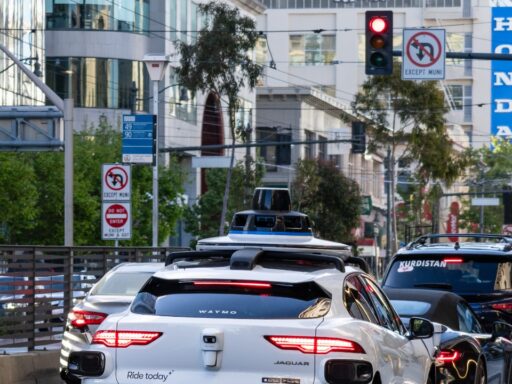
Waymo’s regulatory position is different because the company had already received approval to operate fully autonomously in Las Vegas before the new commercial permit.
Nevada officials allowed Waymo to remove human safety riders in July.
The latest approval adds the piece every business eventually needs:
revenue.
Waymo can now charge passengers for autonomous rides rather than limiting operations to testing or free services. It has permission to deploy as many as 1,000 robotaxis in the region over the next year.
That puts Nevada alongside other markets where Waymo has steadily expanded its commercial robotaxi operations.
The company has taken a more methodical approach than many rivals, typically mapping and validating specific operating areas before opening them to passengers.
Readers can follow its current commercial operations through Waymo’s official service information.
Waymo May Have an Experience Advantage
Tesla attracts enormous attention because of the size of its consumer vehicle fleet and Elon Musk’s promises around autonomy.
Waymo has a different advantage.
It has already been operating fully driverless commercial rides at meaningful scale in U.S. cities.
That gives the company experience with problems that do not appear during simple autonomous-driving demonstrations.
What happens when a rider leaves something behind?
How does the vehicle behave when police direct traffic manually?
What happens if construction changes a road?
How does someone contact support?
How does a robotaxi behave when an emergency vehicle approaches?
Commercial autonomy is partly an AI-driving problem.
It is also an operations business.
Nevada will provide another test of whether Waymo’s slower, geographically constrained approach can scale effectively.
Uber Is Taking a Completely Different Route
Uber’s approval is particularly interesting because Uber is not primarily trying to build its own autonomous vehicle.
Instead, it wants autonomous vehicles from other manufacturers to operate through the Uber platform.
Nevada has authorized Uber to deploy as many as 1,000 robotaxis in Clark County, with planned operations involving Amazon’s Zoox and Hyundai-backed Motional.
That strategy makes Uber less like an autonomous-car manufacturer and more like the marketplace connecting autonomous fleets with passengers.
Someone opens Uber.
Requests a ride.
The vehicle that arrives might eventually have no human driver.
For Uber, that could be strategically powerful.
The company already has an enormous customer base.
Its challenge is adding autonomous supply without spending billions developing every vehicle itself.
Zoox Is Already Charging Riders in Las Vegas
Nevada’s robotaxi market is actually becoming crowded faster than the latest approvals suggest.
Amazon-owned Zoox began paid robotaxi rides in Las Vegas earlier this month after receiving federal approval to commercially deploy its purpose-built driverless vehicles.
Zoox takes an even more radical approach than Tesla or Waymo.
Its vehicle is not a conventional passenger car modified for autonomous driving.
It was designed from the beginning as a robotaxi.
There is no traditional driver’s seat.
No steering wheel.
Passengers sit facing one another inside a carriage-like cabin.
Federal regulators granted Zoox an exemption allowing up to 2,500 such vehicles annually over two years, subject to additional safety-reporting requirements.
That means Las Vegas could eventually host several fundamentally different interpretations of what a driverless taxi should be.
Nevada Has Been Friendly to Autonomous Vehicles for Years
Nevada’s openness to robotaxis did not begin this week.
The state describes itself as the first in the U.S. to authorize autonomous-vehicle operations and maintains a deliberately flexible regulatory framework. The Nevada DMV says all levels of automation can operate on public roads as long as vehicles meet safety and registration requirements.
Interestingly, Nevada does not directly test or certify each autonomous-driving technology.
Manufacturers and developers generally use a self-certification process demonstrating compliance with applicable state requirements.
That makes Nevada relatively attractive to companies trying to deploy new autonomous systems.
Testing still requires insurance or bonding requirements. Nevada’s autonomous testing framework specifies $5 million in coverage or an equivalent bond or cash deposit in addition to ordinary vehicle insurance requirements.
The state is therefore permissive, but not completely hands-off.
Paid Rides Are a Much Bigger Test Than Free Ones
It is easy to underestimate the significance of charging money.
A free pilot can tolerate inconvenience.
A commercial taxi cannot.
If someone pays for a robotaxi to reach the airport, she expects it to arrive.
If the vehicle stops behind a delivery truck and refuses to proceed, that is no longer an interesting autonomous-driving experiment.
It is bad transportation.
Paid service therefore forces companies to compete on ordinary consumer expectations.
Price.
Availability.
Pickup time.
Cleanliness.
Reliability.
Coverage.
Customer support.
Safety.
Autonomous technology can attract the first ride.
Only good service earns the second.
First Responders Are Becoming Part of the Robotaxi Problem
Tesla’s discussion with Nevada regulators revealed another issue that becomes more important as fleets grow.
Emergency responders need to understand how to interact with autonomous vehicles.
Tesla said it is working with law enforcement on a roughly five-minute instructional video showing first responders what to do during emergencies involving its robotaxis.
That might sound like an unusual requirement until the vehicle has no driver available to answer questions.
Police may need to know how to identify the car’s status.
Firefighters may need to disable it safely.
Responders may need to open doors or move the vehicle.
Ordinary traffic procedures were built around the assumption that a licensed human sits behind the steering wheel.
Robotaxis break that assumption.
As autonomous fleets expand, emergency-response standards will need to evolve with them.
Las Vegas Is Almost the Perfect Robotaxi Laboratory
Few American cities offer a better combination of conditions for commercial autonomous taxis.
Tourists constantly need transportation.
Many passengers are unfamiliar with local roads anyway, so they already rely heavily on taxis and ride-hailing apps.
Large hotels create predictable pickup and drop-off locations.
The airport generates continuous demand.
Convention traffic creates another major customer base.
And unlike a commuter who may drive his own car every day, a tourist has little reason to care whether the vehicle belongs to a human driver or an autonomous fleet.
If the ride arrives quickly and costs less, that may be enough.
There is one complication.
Las Vegas traffic can be chaotic.
Pedestrians.
Tour buses.
Taxis.
Ride-hailing vehicles.
Construction.
Nighttime crowds.
Unpredictable human drivers.
That makes the city commercially attractive and technically difficult at the same time.
Robotaxis Could Put Pressure on Uber’s Traditional Drivers
Uber’s involvement creates one of the industry’s biggest economic questions.
What happens to human ride-hailing drivers if autonomous vehicles become cheaper to operate?
A human driver needs income.
A robotaxi needs electricity, maintenance, insurance, software, and capital.
If the autonomous vehicle eventually costs less per mile, ride-hailing companies have a powerful incentive to use more of them.
That transition will not happen instantly.
Human drivers can operate almost anywhere.
Autonomous fleets generally start inside carefully defined service areas.
But every new city increases the portion of trips technology could eventually handle.
Uber’s strategy appears designed to ensure that if autonomous vehicles replace some human-driven rides, customers still book those rides through Uber.
Tesla Faces a Different Business Opportunity
For Tesla, robotaxis represent more than another ride-hailing service.
Musk has long argued that autonomous transportation could become a major part of Tesla’s future value.
Instead of selling a vehicle once, a robotaxi fleet can generate revenue repeatedly.
A car can potentially transport paying passengers for years.
That creates an entirely different economic model.
However, it depends on solving full autonomy reliably enough for regulators and customers.
Nevada’s approval gives Tesla room to demonstrate that model at larger scale.
If it succeeds, the company can point toward commercial operating data rather than promises.
If it struggles, the same public deployment will make those weaknesses visible.
Safety Will Decide Whether Expansion Continues
Every robotaxi company ultimately faces the same challenge.
The technology does not need to be perfect.
Human drivers certainly are not.
But autonomous systems need to demonstrate that they can operate safely enough to justify replacing the person behind the wheel.
Regulators are already demanding increased reporting.
Zoox’s federal exemption, for example, includes requirements covering crashes, unusual stops, and software behavior.
One serious incident can quickly change public opinion.
That means the next phase of the robotaxi competition may be less about impressive demonstrations and more about boring statistics.
Miles driven.
Crashes.
Interventions.
Service interruptions.
Passenger complaints.
That is what mature transportation systems are judged by.
Nevada Is Turning Robotaxis Into a Real Market
For years, self-driving taxis have existed somewhere between technology experiment and commercial promise.
Nevada’s latest approvals push them further toward ordinary transportation.
Tesla can deploy thousands of vehicles.
Waymo can begin collecting fares.
Uber can bring autonomous partners onto the same platform people already use for human-driven rides.
Zoox is already charging customers in Las Vegas.
The result could be unusually revealing.
Instead of comparing autonomous vehicles through demonstrations, several competing systems may soon operate in the same city, serving many of the same customers.
That means passengers can start answering the question themselves.
Which robotaxi arrives faster?
Which feels safer?
Which is cheaper?
Which handles Las Vegas traffic better?
And perhaps most importantly, after someone takes a ride with nobody sitting behind the wheel, does the second trip still feel futuristic or does it already feel normal?