
A major wildfire west of Madrid has forced the evacuation of one of NASA’s three Deep Space Network facilities, temporarily removing a strategically important ground station from normal operations.
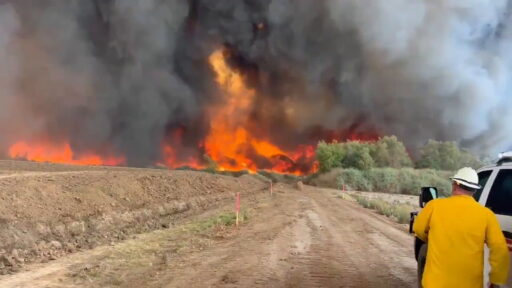
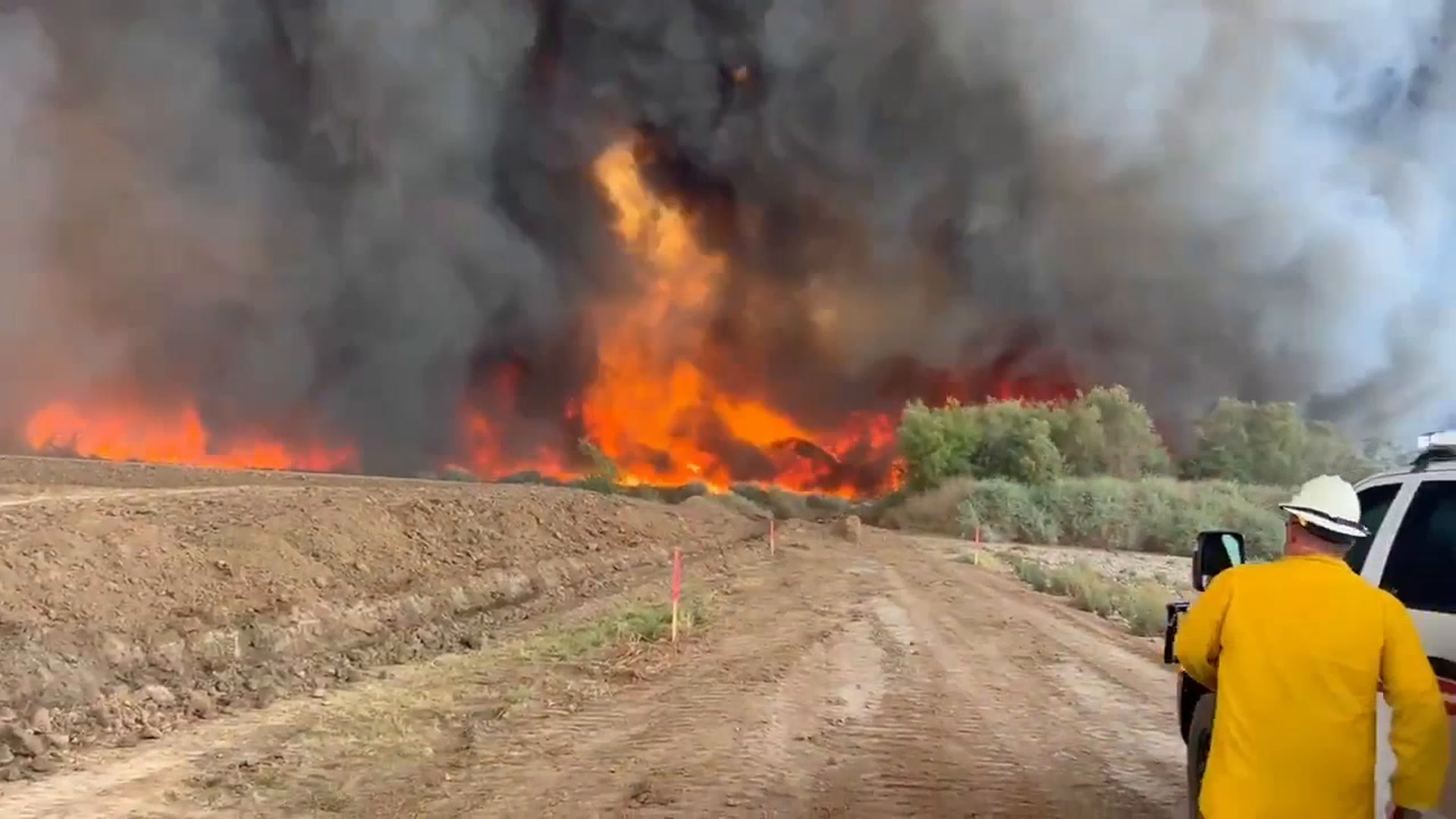
The Madrid Deep Space Communications Complex, located near Robledo de Chavela, was evacuated on July 24 as flames advanced across the surrounding region. NASA confirmed that all personnel left safely, but the agency could not immediately determine whether antennas, electronics, buildings or other sensitive systems had been damaged.
The fire reportedly passed through the complex itself, making the incident more serious than a precautionary evacuation caused by nearby smoke. NASA plans to assess the site once emergency authorities determine that personnel can safely return. Until then, spacecraft communications have been redirected to another Deep Space Network facility in California.
Why NASA Evacuated the Madrid Ground Station
The Madrid facility sits in a rural and heavily vegetated area approximately 65 kilometres west of central Madrid. Its remote location helps shield its enormous antennas from radio interference, but the surrounding landscape can become vulnerable during periods of severe heat, dry vegetation and strong winds.
As fires spread through western Madrid and neighbouring Ávila, authorities ordered evacuations across Robledo de Chavela and several surrounding communities. Nearly 100 employees were reportedly removed from the communications complex as emergency crews worked to protect the facility. Local officials described the situation around the station as critical while the fire remained difficult to control.
NASA said it was coordinating with local authorities and the US Embassy in Spain. The agency’s first priority was protecting personnel rather than attempting to maintain normal operations while flames approached the site.
The scale of the regional emergency extended far beyond the NASA facility. Spain declared a national emergency as several fires near Madrid and Ávila forced thousands of residents to leave their homes. Extreme heat, strong winds and abundant dry vegetation allowed the fires to expand rapidly and challenge local firefighting resources.
What the Madrid Complex Actually Does
The Madrid Deep Space Communications Complex is not an ordinary satellite ground station. It forms one-third of NASA’s Deep Space Network, the global communications system used to send commands to distant spacecraft and receive scientific information from missions operating around the Moon, Mars and far beyond.
The network consists of three major antenna sites. One is located at Goldstone in California, another near Canberra in Australia and the third near Madrid in Spain. These facilities are positioned approximately 120 degrees apart in longitude.
That placement allows the network to follow spacecraft as Earth rotates. When a probe moves below the horizon at one station, another complex can take over the connection. NASA describes the DSN as the world’s largest and most sensitive scientific telecommunications system.
The Madrid site includes several giant dish antennas capable of detecting extremely weak radio signals sent across enormous distances. Its antenna collection includes a 70-metre dish and several 34-metre systems used for communications, tracking, navigation and scientific observations.
The complex began operating during the 1960s and has been expanded repeatedly as deep-space missions became more demanding. Its official MDSCC history page explains how the site developed from its first 26-metre antenna into a major component of the international Deep Space Network.
Which Space Missions Depend on the Network?
NASA’s Deep Space Network supports several dozen missions at any given time. Its users include planetary spacecraft, lunar missions, Mars orbiters and rovers, solar observatories, space telescopes and probes travelling toward the outer reaches of the solar system.
Voyager 1 and Voyager 2 rely on the network to return extremely faint signals from interstellar space. The James Webb Space Telescope also communicates with its mission team through the DSN while operating around the Sun-Earth L2 point, approximately 1.5 million kilometres from Earth.
The network also supports Mars missions and lunar exploration programmes. During the Artemis II mission, the DSN acquired the spacecraft’s signal after it travelled beyond the communications range normally handled by near-Earth systems.
Losing access to Madrid does not mean NASA has lost contact with all these missions. However, it reduces the amount of available antenna time and places greater scheduling pressure on the remaining facilities.
NASA Shifted Operations to California
NASA said mission support was transferred to the Goldstone Deep Space Communications Complex in California. The transition was intended to maintain continuity and avoid an interruption in communications with active spacecraft.
This transfer demonstrates why the network was designed with geographically separated sites. A local emergency at one facility does not automatically disable the entire system. Goldstone and Canberra can assume additional responsibilities while Madrid remains unavailable.
However, the three complexes are not completely interchangeable at every moment. Spacecraft visibility depends on their position relative to Earth, while individual dishes may support different frequencies, transmitters and technical requirements.
The DSN also operates under a heavily scheduled system because numerous missions compete for limited antenna time. Moving Madrid’s work to Goldstone may therefore require mission controllers to adjust communication windows, rearrange lower-priority observations or use different antennas.
NASA’s interactive Deep Space Network Now service normally shows which antennas are communicating with spacecraft in real time. It illustrates how several dishes across the three sites coordinate to support missions throughout the solar system.
The Extent of the Damage Remains Unknown
The most important unanswered question is whether the fire damaged critical infrastructure.
Large communications antennas are designed to operate outdoors in difficult conditions, but wildfire exposure presents hazards extending beyond visible flame damage. Heat can affect cabling, control systems, motors, power distribution equipment and sensitive receivers. Smoke, ash and debris may also contaminate electronics or interfere with mechanical systems.
NASA had not completed a damage assessment because the emergency situation made it unsafe for personnel to re-enter the complex. Reports indicated that the wildfire moved through the facility’s grounds, but that does not confirm that its main antennas or control buildings were destroyed.
A full inspection will likely need to examine more than the physical condition of the dishes. Engineers may need to test electrical power, network connections, antenna movement, transmitters, receivers, cooling systems and timing equipment before the complex can resume mission support.
Even when equipment appears intact, precision tracking facilities require careful calibration. Deep-space navigation depends on accurate measurements of spacecraft position, velocity and radio-signal timing. Small technical problems can therefore matter even when the main structures remain standing.
Why a Long Closure Would Still Matter
The remaining DSN sites provide operational resilience, but redundancy does not make Madrid unnecessary. Deep-space communications demand is increasing as more countries and commercial organisations launch lunar and planetary missions.
Each additional mission requires scheduled periods for commands, tracking and data reception. Some spacecraft need frequent communication, while others can operate independently for longer intervals and store information until a suitable ground station becomes available.
A short Madrid outage may be absorbed through schedule changes. A prolonged closure could create greater competition for Goldstone and Canberra, limiting flexibility and potentially delaying some non-urgent communication sessions.
The event also highlights the vulnerability of scientific infrastructure to environmental emergencies. Deep-space ground stations are deliberately built in remote locations with low radio interference, but those locations may face wildfire, extreme heat, flooding or other regional hazards.
A Global Space Network Confronts a Local Disaster
The evacuation demonstrates how a crisis on Earth can affect spacecraft operating millions or even billions of kilometres away. NASA’s probes may travel through deep space, but every instruction and scientific transmission still depends on physical antennas, power systems and personnel on the ground.
The network’s global design allowed NASA to move support to California without reporting a widespread loss of spacecraft communications. That resilience is significant, but the longer-term impact will depend on what engineers find at the Madrid complex.
Until authorities permit a safe return, the condition of the station’s antennas and supporting systems remains uncertain. The safety of the evacuated personnel is confirmed. The future of normal operations at one of the world’s most important deep-space communications facilities will depend on the damage assessment that follows.