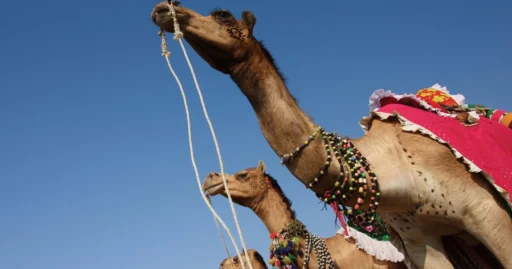
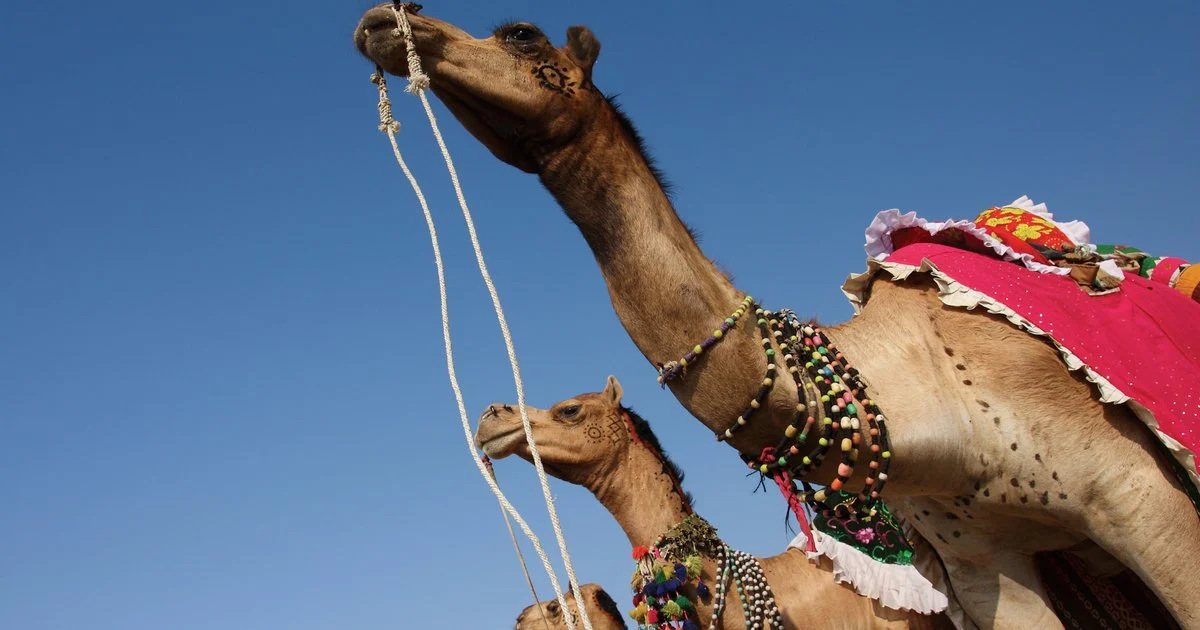

Camels are famous for surviving conditions that would quickly overwhelm most livestock. They conserve water, tolerate large changes in body temperature and continue producing milk during dry periods when cattle struggle to survive.
Yet reports from East Africa suggest that even these highly adapted animals are being pushed beyond their limits. Herders and veterinarians in Kenya and Ethiopia have described camel calves dying, adults developing heat-related illness and entire herds weakening as unusually high temperatures combine with prolonged drought, depleted grazing land and shrinking water supplies.
The situation does not mean camels have suddenly lost their desert adaptations. It shows that biological resilience has boundaries. A camel may tolerate a hot afternoon or several days without water, but repeated heat exposure becomes far more dangerous when the animal is also malnourished, travelling longer distances and unable to recover during cooler periods.
Herders Are Reporting Rising Camel Losses
In Ethiopia’s Afar region, herders have reported camels suffering from exhaustion and developing blisters on their feet as the ground becomes intensely hot. One herder told the BBC that eight camel calves had died within a month because of the extreme conditions.
Veterinary officials in northern Kenya have also observed a rise in hyperthermia, the medical term for an abnormally high body temperature. Hassan Nuya Guyo, a veterinary officer in Marsabit County, said camel deaths associated with extreme heat had increased by more than 15% over the previous two years. He also reported that heat-stressed animals were becoming more vulnerable to multiple infections.
These observations have not yet produced a comprehensive continent-wide mortality count. Camel deaths are difficult to document across remote pastoral areas where veterinary services, weather stations and formal livestock records may be limited.
The available evidence nevertheless shows that the problem extends beyond isolated animals. Herders across parts of Ethiopia, Kenya and Somalia are experiencing a combination of direct heat stress, drought, disease and food scarcity that is damaging camel health and productivity.
Camels Are Remarkably Heat-Tolerant, Not Indestructible
A camel’s ability to survive in the desert comes from several physical and physiological adaptations.
Unlike humans and many other mammals, a dehydrated camel can allow its body temperature to rise during the day and fall at night. This reduces the need to cool itself through sweating, helping it conserve water. Research into camel thermoregulation has documented substantial daily changes in body temperature under desert conditions, particularly when water is limited.
The animal’s oval-shaped red blood cells can continue circulating when dehydration makes the blood more concentrated. Its kidneys conserve water efficiently, while its nasal passages help recover moisture from exhaled air. Fat stored in the hump provides an energy reserve without insulating the entire body beneath a thick layer of fat.
Camels also possess cellular heat-shock responses that help protect proteins and tissues during exposure to high temperatures. Their circulatory anatomy assists in preventing excessively hot blood from reaching the brain. These adaptations explain why camels can function in environmental conditions that would place cattle under severe stress.
They still have a thermal limit. Research on intensive camel farming places the upper edge of the animal’s thermoneutral zone at approximately 40°C under adequate watering conditions. Beyond that range, the animal must spend more energy regulating its temperature, and the risk increases when exposure is prolonged.
Heat Is Only Part of the Problem
The phrase “extreme heat is killing camels” simplifies a more complicated chain of events.
A healthy adult camel with water, shade and adequate food may tolerate very high daytime temperatures. The danger becomes much greater when drought removes those protections.
Dry conditions reduce the vegetation available for browsing. Herders must move their animals farther in search of pasture and water, increasing physical exertion during the hottest part of the year. Weak animals consume less food, while lactating females may produce less milk for their calves.
Calves are particularly vulnerable because their bodies are smaller, their immune systems are still developing and they depend heavily on their mothers’ milk. When a heat-stressed female becomes dehydrated or undernourished, the calf experiences the effects even without reaching the same level of direct heat exposure.
Heat can also weaken immune responses and make existing infections more dangerous. Camel-welfare research identifies reduced appetite, lethargy, reluctance to stand and death among the possible consequences when the animals can no longer regulate their temperature adequately.
The outcome is therefore better understood as cumulative stress. Temperature, water scarcity, poor nutrition, disease and long-distance movement reinforce one another until the camel’s famous resilience is no longer enough.
Research Confirms What Herders Are Seeing
A 2025 study published in Pastoralism: Research, Policy and Practice examined how camel herders in southern Ethiopia’s Borana Zone perceived changing environmental conditions.
Researchers surveyed 260 pastoral and agro-pastoral households. Respondents reported rising temperatures, irregular rainfall and more frequent drought, while also linking those changes to poorer camel health, reduced productivity, reproductive problems, disease and mortality. The complete camel-herder climate study is available through the journal.
Perception studies do not replace direct veterinary measurements or long-term mortality records. They are still valuable because pastoralists observe their herds daily across many seasons and often recognise environmental changes before formal monitoring systems capture them.
Earlier research in southeastern Ethiopia similarly found that pastoral communities considered camels more resilient than cattle under drought conditions. This perceived advantage has encouraged some livestock keepers to shift towards camels as rainfall becomes less dependable.
The new concern is that the adaptation strategy itself is becoming less secure. Camels may remain more resilient than cows, but “more resilient” does not mean unaffected.
Climate Change Is Increasing the Pressure
The World Meteorological Organization’s State of the Climate in Africa 2025 reported that Africa is warming faster than the global average. The rate of warming since 1991 has been substantially higher than during earlier 30-year periods, while drought affected more than 8.5 million people in East Africa during 2025.
The report also identified a significant decline in rainfall during the Horn of Africa’s March-to-May rainy season. Reduced rainfall does not create the same conditions everywhere, but repeated failures can prevent rangelands, livestock and household resources from recovering between droughts.
Global warming does not mean every year or every location will become uniformly hotter and drier. East Africa continues to experience damaging floods as well as drought. This variability can itself harm pastoral systems because communities must prepare for both water shortages and sudden destructive rainfall.
For camels, the greatest risk may come from longer and more frequent periods in which daytime heat remains intense, nights provide less cooling and drought limits access to water and nutritious browse.
Camel Losses Threaten Human Livelihoods
The welfare of camels cannot be separated from the wellbeing of the communities that depend on them.
Across Africa’s drylands, camels provide milk, meat, transport, income and financial security. Camel milk can remain available during dry seasons when production from cattle declines, making it particularly important for household nutrition.
The Food and Agriculture Organization describes camels as an increasingly important economic and nutritional resource for Africa as climate change intensifies. The International Livestock Research Institute similarly identifies camel value chains as a major opportunity for strengthening food security and climate resilience in Kenya, Ethiopia and Somalia.
Losing a calf is not simply the loss of one animal. It removes future milk production, breeding potential and market value. Repeated losses can leave a pastoral household without enough food or livestock to recover from the next drought.
This creates a dangerous cycle. Families may sell animals early because they cannot afford supplementary feed or veterinary care. Distress sales increase supply and reduce prices, leaving households with fewer resources precisely when they need money for food, water and relocation.
What Can Be Done to Protect Camels?
Camels cannot be moved into air-conditioned barns across Africa’s vast rangelands. Adaptation must fit mobile pastoral systems and the economic realities of the communities managing them.
Reliable access to strategically located water points can reduce the distance animals must travel during extreme heat. Emergency fodder and nutritional supplements can protect lactating females and calves when natural vegetation disappears. Research in Kenya has found that dry-season concentrate supplementation can improve camel milk yield and quality.
Shade near markets, veterinary points and permanent settlements can reduce direct solar exposure. Early-warning systems can also alert herders to approaching heatwaves and help them change travel, watering or market schedules.
Veterinary surveillance remains essential because heat stress may resemble or worsen infectious disease. Animals showing rapid breathing, weakness, refusal to eat or difficulty standing need assessment before dehydration and organ damage become irreversible.
Longer-term action requires protecting migration routes and restoring rangelands. Camels survive difficult environments partly by moving to wherever water and vegetation remain available. Fencing, settlement expansion and conflict can prevent that mobility even when resources exist elsewhere.
Camels Are a Warning, Not a Lost Cause
The current reports do not show that camels are about to disappear from Africa. They remain among the animals best equipped to support pastoral communities in hot, dry environments.
Their suffering is still an important warning.
Climate adaptation has often involved replacing cattle with camels because camels can endure greater heat and water scarcity. When the replacement species also begins experiencing significant losses, the margin for further adaptation becomes much smaller.
Camels can tolerate extraordinary conditions, but they cannot create water, restore pasture or protect themselves indefinitely from rising temperatures. Their biology provides resilience, not immunity.
The sight of desert animals developing heat injuries and dying from cumulative climate stress demonstrates that extreme conditions are reaching beyond human expectations. Protecting the camel now means protecting the people, food systems and cultures that have depended on it for generations.