
From a distance, HD 189733 b looks uncannily familiar, a deep blue world that could be mistaken for a cousin of our own planet. Up close, it is anything but friendly, a gas giant where molten glass whips through the air at thousands of miles per hour and daylight and darkness are locked on opposite sides. NASA-backed observations of this extreme exoplanet now reveal a weather system so violent that it both echoes and distorts the physics that shape Earth.
By tracking winds that scream around the planet at roughly 5,400 miles per hour and decoding an atmosphere laced with glass and toxic gases, scientists are using this so‑called “nightmare world” as a laboratory for understanding how planets form, evolve and, in rare cases, end up temperate and habitable. I see HD 189733 b as a distorted mirror, one that mimics some of Earth’s basic ingredients while pushing them to lethal extremes.
The blue “Earth twin” that is nothing like home
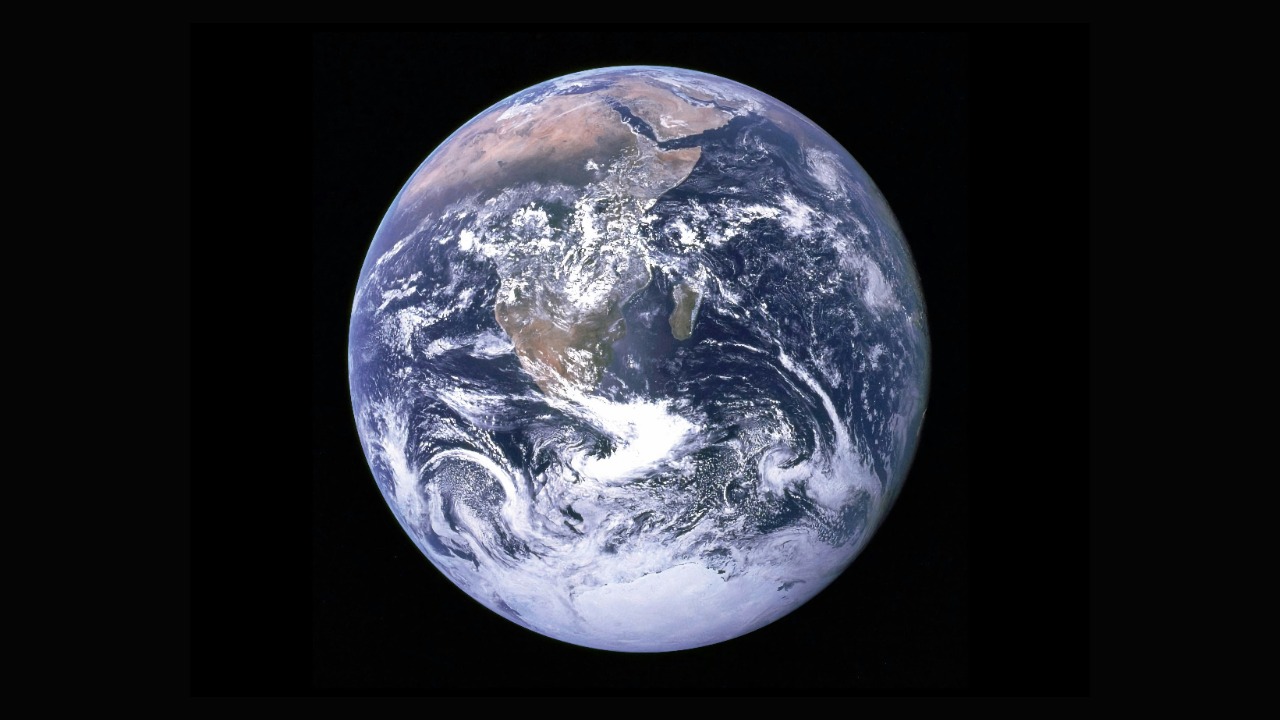
HD 189733 b orbits a star in the constellation Vulpecula, roughly 64.5 light‑years from the Solar Sy, close enough in cosmic terms to make it one of the best studied exoplanets. Astronomers classify it as a “hot Jupiter,” a gas giant about the size of Jupiter that hugs its parent star so tightly that one side always faces the light. That close orbit superheats its atmosphere, yet when telescopes first captured its color, the planet appeared as a serene blue dot reminiscent of Earth’s oceans.
That visual echo is where the resemblance stops. As one detailed analysis put it, HD 189733 b may look like a friendly blue world, But it is far bigger and hotter than Earth, more akin to the ice giants Uranus and Neptune in appearance than to any rocky world. Its deep blue hue likely comes from silicate particles and other molecules in its atmosphere rather than from liquid water, turning the comforting color of our seas into a warning flag that conditions there are radically different.
Glass rain and 5,400 mph winds
The most infamous feature of HD 189733 b is its sideways glass rain, a phrase that sounds like science fiction until you look at the data. Observations suggest that its atmosphere contains clouds “laced with glass,” tiny silicate droplets that condense and then fall as molten shards, driven horizontally by ferocious winds. One widely shared description notes that the planet, located about 63 light‑years away, rains glass Sideways. Yes, that combination of molten material and lateral wind shear would shred any spacecraft or hypothetical visitor long before it reached the deeper atmosphere.
NASA‑supported work has gone further, mapping the winds that drive this lethal weather. Using high‑resolution spectroscopy, scientists tracked a belt of air racing around the equator at about 5,400 miles per hour, a speed roughly 20 times faster than the most extreme jet streams on Earth. The agency describes how this equatorial band on HD 189733 b allowed researchers to measure and map a complete weather system on a world outside our Solar Sy for the first time. In a separate analysis, a team from the University of Warwick described this Extreme wind on the Exoplanet HD as far more violent than Earth’s worst storms, underscoring just how alien this “weather” really is.
A “nightmare world” with familiar ingredients
Despite its brutality, HD 189733 b is built from some of the same chemical pieces that shape our own skies, which is part of what makes it scientifically valuable. Earlier this year, researchers reported finding a molecule in its atmosphere that had never been detected outside our Solar Sy before, using the planet’s large size and frequent transits to tease out faint spectral fingerprints. One report described how an exoplanet the size of Jupiter has long intrigued astronomers because of its scorching temperatures, screaming winds and sideways rain, making it an ideal target for this kind of atmospheric chemistry.
At the same time, other teams have focused on the planet’s smell, or at least the gases that would create one. A detailed study found that at only 64 light‑years from Earth, HD 189733 b is the nearest hot Jupiter that astronomers can watch crossing in front of its star, and its atmosphere appears to contain hydrogen sulfide, the same compound that makes rotten eggs reek. That mix of silicates, exotic molecules and sulfurous gases helps explain why Nasa scientists have taken to calling HD 189733 b a Deadly “nightmare world,” a place where familiar chemistry is pushed into lethal territory.
How NASA and others decoded a hostile atmosphere
What makes HD 189733 b so scientifically rich is not just its extremity, but its accessibility. The planet is close enough and aligned just right that telescopes can watch it regularly pass in front of its star, letting astronomers measure how starlight filters through its atmosphere. Early work with the Hubble Space Telescope showed that There is a “blue marble” alien planet just 63 light‑years from Earth, and Researchers used its transits to infer that its atmosphere is loaded with tiny particles that scatter blue light. Later, more precise instruments teased out signatures of silicates and other molecules, building the case for glassy clouds and violent rain.
Ground‑based observatories then added wind measurements by tracking how spectral lines shifted as air masses moved toward and away from us. NASA’s own write‑up of the 5,400 mile‑per‑hour jet on Nov highlighted how this was the first time scientists had directly measured and mapped a weather system on a planet outside our Solar Sy. Visual explainers have since popularized the discovery, with one widely shared clip warning that “this is HD189733b, it looks beautiful but it would tear you apart,” as it describes how the planet rains glass sideways and its winds reach extreme speeds, a message echoed in a short video.
Why an unlivable world still matters for Earth
For all its drama, HD 189733 b is not a candidate for life as we know it, and the sources are blunt about its poor prospects. The planet’s entry in 64.5 light‑years away notes that its intense irradiation and atmospheric composition make it deeply hostile, with temperatures and winds that would obliterate any known biology. Yet that very hostility is what makes it a powerful test case for the physics of atmospheres, from how heat moves between a planet’s day and night sides to how clouds form under crushing gravity and searing light.
By comparing HD 189733 b’s dynamics to our own, scientists can stress‑test climate models and refine the tools they use to interpret spectra from more temperate worlds. The same techniques that revealed glass rain and hydrogen sulfide here will be applied to smaller, cooler planets that might actually resemble Earth. In that sense, the “nightmare world” is a necessary stepping stone, a place where I can watch familiar processes like wind, cloud formation and chemical cycling play out at full volume. Its discovery story, from early Facebook posts marveling that HD 189733 b is an exoplanet where it rains glass to detailed descriptions of a gas giant with one side always facing its star, shows how quickly our picture of a distant world can sharpen when multiple lines of evidence converge.
That sharpening has continued as more observers have weighed in. A separate summary of HD 189733b emphasizes again that this gas giant, discovered in 2005, may look like a friendly blue planet but hides an atmosphere with clouds “laced with glass” that pour down in violent storms. Another widely shared post stresses that HD 189733b, which is 63 light‑years away, rains glass Sideways. Yes, its winds reaching extreme speeds make it a hellish world. Popular explainers on HD189733b echo the same message, turning a complex scientific portrait into a vivid reminder that not every blue planet is a potential second Earth.