
After years of shrinking reservoirs, damaged crops and growing concern over urban water supplies, Mexico may finally be approaching the end of its prolonged drought cycle.
Rainfall during 2025 dramatically reduced the amount of land experiencing drought, while the 2026 rainy season has continued that recovery. Current forecasts suggest that widespread drought could largely disappear before the season ends, although isolated dry regions may remain.
The improvement is substantial. Before the 2025 rainy season, around 46.5% of Mexico was classified as experiencing moderate to exceptional drought. By the beginning of 2026, that figure had fallen to 7.4%. According to data reported from the National Water Commission’s drought monitoring system, only 2.4% of the country remained under drought conditions by June 15, 2026.
That represents a remarkable change from 2024, when extreme heat and low rainfall pushed large parts of the country into severe water stress.
The Recent Drought Reached Its Worst Point in 2024
Mexico’s drought was not equally severe in every year or every region. It developed gradually, intensified during repeated dry seasons and became particularly destructive during 2023 and 2024.
By the end of May 2024, nearly 76% of Mexico was experiencing some level of drought. Reservoirs were falling rapidly, agricultural regions were struggling with irrigation shortages and unusually high temperatures increased evaporation from soils and surface water. The National Oceanic and Atmospheric Administration’s review of Mexico’s drought described the combination of long-term dryness and extreme heat as one of the country’s most serious recent climate events.
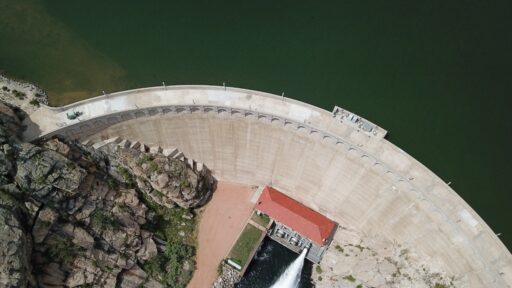
The Cutzamala System, which provides part of the water used in the Valley of Mexico, became one of the clearest symbols of the crisis. Its combined storage dropped to approximately one-quarter of capacity in June 2024, raising fears that authorities might need to impose increasingly severe restrictions.
Northern and central states faced some of the most persistent conditions. Chihuahua, Sonora, Sinaloa, Durango and parts of central Mexico experienced varying degrees of agricultural and hydrological drought. The effects included dry grazing land, stressed livestock, reduced planting and greater pressure on groundwater.
Two Consecutive Rainy Seasons Changed the Picture
The recovery did not happen after one isolated storm. It resulted from sustained rainfall across two rainy seasons.
Mexico received above-average precipitation during much of 2025, allowing reservoirs, rivers and soils to begin recovering after several years of accumulated deficits. By October 2025, the combined storage of the country’s 210 most important reservoirs had risen to 72% of capacity. The Cutzamala System reached 96.8%, its highest level in seven years, according to Conagua’s 2025 reservoir report.
Water levels naturally declined again during the following dry season as reservoirs supplied cities, farms and industry. By June 17, 2026, the country’s 210 major reservoirs stood at a combined 48% of normal maximum capacity. The arrival of the new rainy season then began restoring storage once more.
The first half of 2026 delivered a national rainfall surplus of 7.9% compared with the 1991–2020 climatological average. June became the nineteenth-wettest June recorded in Mexico since national records began in 1941.
These figures do not mean that every region received the same amount of rain. Some areas remained dry, while others experienced damaging storms and flooding. However, the broader national pattern was wet enough to continue reversing the drought.
The Cutzamala System Is Recovering Again
The renewed improvement in the Cutzamala reservoirs is particularly important because the system supports millions of people in Mexico City and surrounding metropolitan areas.
By the end of June 2026, the system held approximately 543.9 million cubic metres of water, equal to 69.51% of its operating capacity. By July 9, storage had risen further to 70.86%.
Valle de Bravo was at 78.31%, Villa Victoria at 66.12% and El Bosque at 60.68%. These levels were considerably healthier than during the most severe period of the drought, although authorities continued to advise careful water use. The latest figures were reported through Conagua’s Cutzamala storage updates.
Reservoir recovery provides greater flexibility for water managers, but it does not remove every supply problem. Water must still be treated, pumped and delivered through an extensive network. A full reservoir offers limited benefit when distribution infrastructure is damaged or inefficient.
El Niño Could Bring More Rain to Northern Mexico
Atmospheric conditions may continue supporting rainfall during the remaining months of 2026.
The US Climate Prediction Center estimated an 82% probability that El Niño would develop between May and July 2026. Mexico’s meteorological authorities anticipated a favorable beginning to the rainy season, followed by weaker rainfall during part of July and another possible increase from September into October.
The Mexican monsoon is expected to support precipitation across northwestern Mexico, where some of the country’s most stubborn drought areas have remained. Stronger rainfall in northern states could reduce the remaining patches of severe drought and improve soil moisture before the end of the season.
However, El Niño does not produce identical effects everywhere. Its influence can vary by season, region and ocean temperature. It may bring beneficial rain to one part of the country while contributing to heat, flooding or unusual dryness elsewhere.
Mexico’s rainy and tropical cyclone season officially runs from May 15 to November 15. Forecasts for 2026 anticipated between 18 and 21 tropical cyclones in the Pacific and between 11 and 15 in the Atlantic. These systems can replenish reservoirs, but they can also produce destructive flooding, landslides, strong winds and coastal damage.
Ending Drought Does Not End Water Scarcity
A drought classification measures recent environmental conditions. It does not provide a complete assessment of a country’s long-term water security.
Rain can increase river flow, improve soil moisture and refill reservoirs relatively quickly. Aquifers may take much longer to recover, especially when groundwater extraction continues faster than natural recharge.
Mexico also has a strong regional divide. A recent OECD study using satellite-based drought indicators found that northern states experience more frequent and severe water stress than southern regions. Many northern areas also contain water-intensive agricultural, industrial and energy activities, increasing their economic exposure to future droughts.
Mexico City faces an additional problem because extensive groundwater extraction has contributed to land subsidence. Parts of the metropolitan area are sinking as underground layers compact, which can damage roads, buildings, drainage systems and water pipes. Heavy rainfall cannot quickly reverse that physical damage or restore compacted aquifers.
The current recovery should therefore be understood as valuable relief rather than proof that Mexico’s water challenges have been permanently solved.
Heavy Rain Can Create a Different Kind of Emergency
The same storms that reduce drought can overwhelm cities.
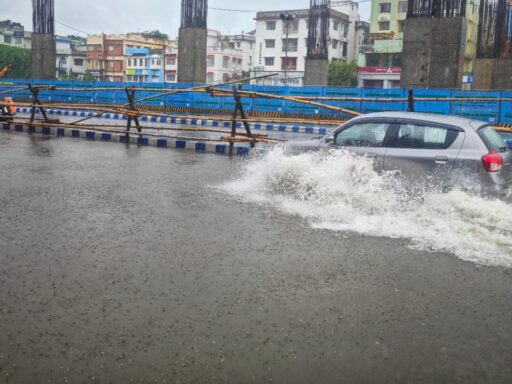
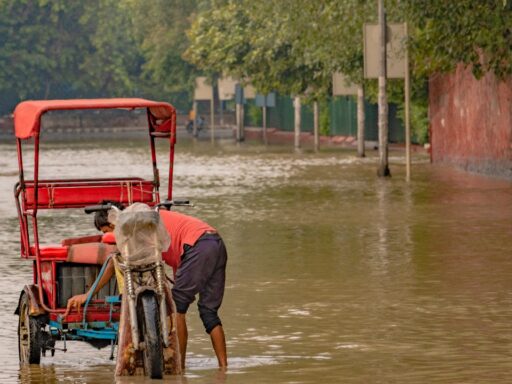
Urban surfaces such as roads, parking areas and buildings prevent water from soaking naturally into the soil. During intense rainfall, enormous volumes can enter drainage systems within minutes. Blocked drains, limited pumping capacity and construction in flood-prone areas can then turn beneficial rain into a public emergency.
Mexico City recorded 241 millimetres of rain in June 2026, almost double its historical June average of 126 millimetres. While the rainfall strengthened reservoirs, it also contributed to street flooding and pressure on urban drainage infrastructure.
This apparent contradiction is becoming increasingly important. A city can experience flooding and water scarcity during the same year because excess stormwater is not always captured, stored or directed toward aquifer recharge.
Rainwater harvesting offers one practical response. Systems installed in homes and schools can collect roof runoff for washing, cleaning, irrigation and, with appropriate treatment, drinking. Projects described by The Guardian’s reporting on rainwater harvesting in Mexico City show how rainfall can reduce household dependence on irregular municipal supplies.
The Recovery Creates an Opportunity to Prepare
Wet years are the best time to prepare for the next dry period.
Mexico’s National Water Plan includes efforts to modernize irrigation, improve infrastructure, regulate concessions, prevent overexploitation and direct water toward communities with the greatest need. Agricultural irrigation is especially important because efficiency improvements can reduce pressure on rivers, reservoirs and aquifers. The National Water Plan presented by Conagua also includes strategic infrastructure projects and river restoration measures.
The current rains offer immediate relief and a chance to rebuild reserves. They may even bring the country’s six-year drought-plagued period to a close at the national level.
Yet the real success will not be measured only by whether drought disappears from the next monitoring map. It will depend on whether Mexico uses this wetter period to repair infrastructure, recharge water systems, improve agricultural efficiency and prepare for the next inevitable cycle of heat and low rainfall.
The drought may finally be breaking. The country’s long-term water challenge is far from over.