
At the ruins of ancient Memphis on the Nile’s west bank, archaeologists have uncovered a series of enormous limestone blocks carved with the cartouche of a long-dead pharaoh. The fragments, pulled from beneath a modern village, appear to belong to a monumental structure that once dominated Egypt’s first capital. Their sudden appearance is reshaping how researchers picture royal power and urban life at Memphis during the height of the pharaonic state.
The discovery links scattered clues from earlier digs with fresh evidence of large-scale construction, suggesting that Memphis was home to far more massive royal architecture than the surviving ruins alone imply. For Egyptologists, the blocks are not just relics but new data points in a live debate over which kings built what, and where, along one of the most heavily excavated stretches of the Nile Valley.
Fresh evidence from buried blocks at Egypt’s first capital
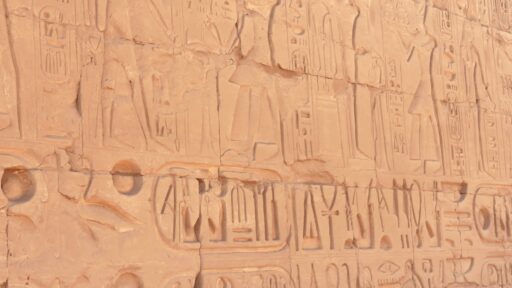
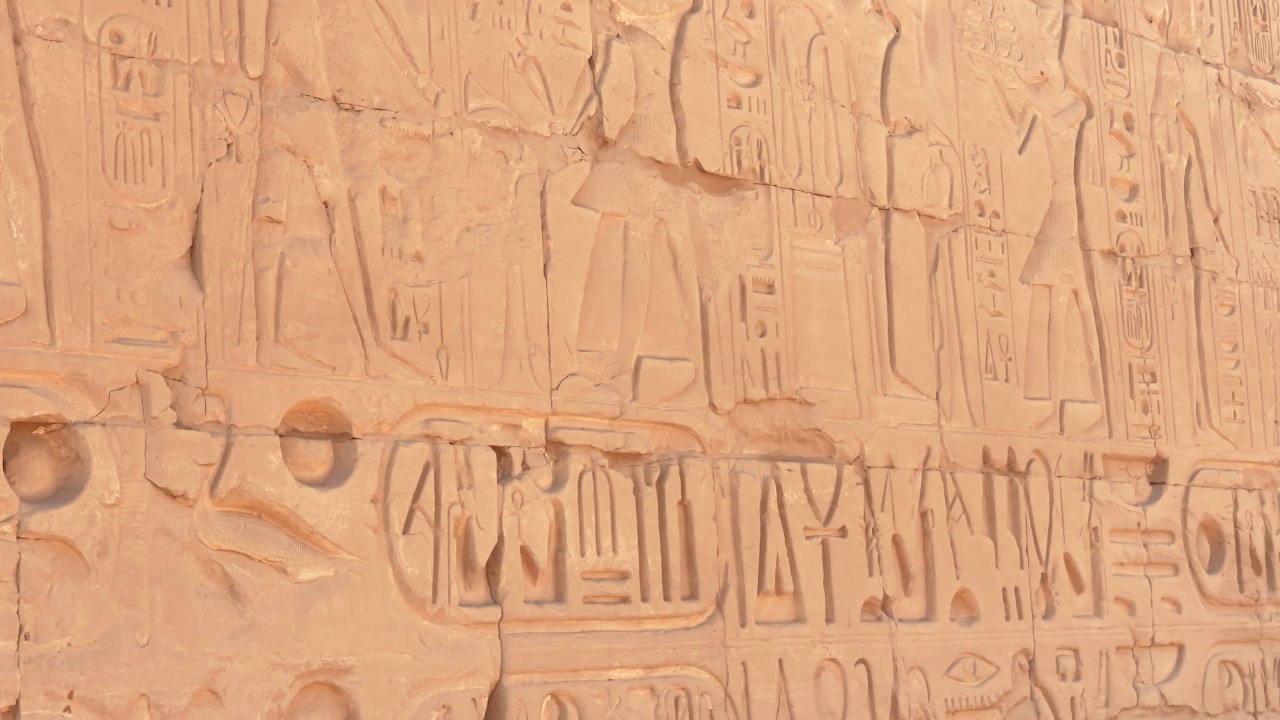
The newly exposed blocks were found within the archaeological zone of Mit Rahina, the modern settlement that overlays much of ancient Memphis. Excavators working around existing houses and fields identified huge limestone pieces, some more than a meter thick, bearing finely carved hieroglyphs and the royal cartouche of a pharaoh whose name had already appeared on scattered finds from the site. According to early descriptions of the find, the blocks likely formed part of a large temple or palace complex that once stood near the city’s sacred precincts, although the original ground plan remains unclear.
Archaeologists had long suspected that substantial monuments from this king’s reign were still hidden beneath the village, since earlier surveys had documented reused blocks and inscribed fragments in secondary contexts. What distinguishes the latest discovery is the concentration and size of the elements. The newly documented pieces include corner blocks, wall sections, and decorated faces that retain traces of paint, all carved with consistent royal titulary that ties them to a single building program. Initial reports on the massive blocks emphasize that the stones were found in situ or close to their original positions, which strengthens the case that a major structure once occupied this exact spot.
Memphis served as a political and religious hub for much of pharaonic history, yet its ruins are harder to interpret than those of more isolated pyramid fields or desert temples. The city’s stone was quarried and reused over millennia, and modern construction has covered large swaths of the ancient urban core. Each new cluster of architectural blocks, especially when linked to a named king, gives researchers a rare fixed point in a landscape that is otherwise heavily disturbed. The latest find allows them to anchor royal activity in a specific neighborhood and period, then connect that to textual and artistic evidence scattered across other sites.
Early analysis suggests that the blocks date to a prosperous phase when Memphis functioned as a gateway between Upper and Lower Egypt and as a staging ground for royal building projects across the region. The quality of the carving and the scale of the stones indicate that the pharaoh invested heavily in stone architecture at the capital, not only at outlying pyramid complexes. That pattern matters for understanding how kings balanced their presence between funerary monuments on the desert edge and living temples within the city itself.
Why the carved blocks change the story of Memphis now
The timing of the discovery matters as much as the content. Over the past decade, archaeologists have shifted attention from isolated tombs to the broader urban fabric of ancient Egyptian cities. Memphis, despite its historical importance, has lagged behind sites like Luxor and Saqqara in public awareness, partly because its remains are fragmentary and embedded in a living community. The emergence of a large, name-bearing monument from beneath Mit Rahina gives that urban story a concrete focal point and helps bridge the gap between scattered ruins and the bustling capital described in ancient texts.
For Egyptology, tying substantial architecture to a specific pharaoh provides a new test case for long-running debates over royal ideology and resource allocation. If this king invested in a sprawling stone complex at Memphis, that choice might reflect a deliberate strategy to project authority in the administrative heart of the country, rather than concentrating resources solely on a pyramid or a distant cult temple. Researchers can now compare the scale and decoration of the Memphis blocks to known monuments from the same reign, looking for shared motifs in scenes of offering, military triumph, or divine legitimization.
The find also feeds into ongoing work on how Memphis functioned as a religious center. The city hosted cults of Ptah, Sekhmet, and other deities, and many kings built or expanded temples there to secure divine favor. If the newly uncovered structure turns out to be a temple annex or a processional gateway, it could clarify how royal ceremonies moved through the city and how different sanctuaries related to one another. Even if the building was primarily administrative or residential, its decorated surfaces likely carried ritual scenes that blur the line between palace and temple, a hallmark of pharaonic political theology.
Beyond academic circles, the appearance of monumental blocks with a recognizable royal name helps renew public interest in Memphis as a tourist destination. Visitors who travel to see the colossal statue of Ramesses II or the open-air museum at Mit Rahina often leave with the impression that little remains of the ancient capital. The new evidence of a large, inscribed structure suggests that significant portions of the city still lie hidden, waiting for careful excavation. That narrative supports ongoing efforts by Egyptian authorities to promote Memphis and its surrounding necropolis as part of a broader cultural itinerary that stretches from Giza to Dahshur.
The discovery also intersects with heritage management in a densely populated area. Excavation under and around modern houses requires delicate coordination with residents, who live atop the remains of a world-famous city. The fact that archaeologists were able to document and recover such large blocks in this context shows that negotiated, community-based approaches to fieldwork can yield major results without wholesale displacement. As more of Memphis’s buried architecture emerges, those relationships will become even more important to balance scientific goals with local needs.
Future digs, digital reconstructions, and unanswered questions
The next phase for the Memphis blocks will be slow, methodical, and heavily interdisciplinary. Conservators must stabilize the limestone surfaces, which have endured centuries of groundwater, salt, and modern activity. Epigraphers will record each hieroglyphic sign, including minor variations in the royal cartouche, to confirm the pharaoh’s identity and refine the dating of the monument. Architectural historians will study tool marks, block dimensions, and join patterns to reconstruct how the building once stood, even if only a fraction of its original stones survive.
Field teams are likely to expand excavation around the findspot to look for foundations, column bases, or floor pavements that could define the building’s footprint. Ground-penetrating radar and other noninvasive survey methods offer a way to map subsurface anomalies across the village without immediate excavation. If those surveys reveal aligned rows of stones or voids that match expected wall lines, they will guide targeted trenches that minimize disruption while maximizing information. Any additional inscriptions, especially those naming deities or listing building materials, will help clarify whether the structure was primarily cultic, administrative, or residential.
Digital technology will play a central role in making sense of the scattered blocks. Using photogrammetry and laser scanning, researchers can create high-resolution 3D models of each stone, then experiment with virtual reconstructions of the monument. That process allows them to test different arrangements of wall scenes, align the architecture with known topographic features, and share interactive models with colleagues worldwide. For a site like Memphis, where large-scale clearance is impossible, such virtual rebuilding becomes a practical stand-in for physical reconstruction.