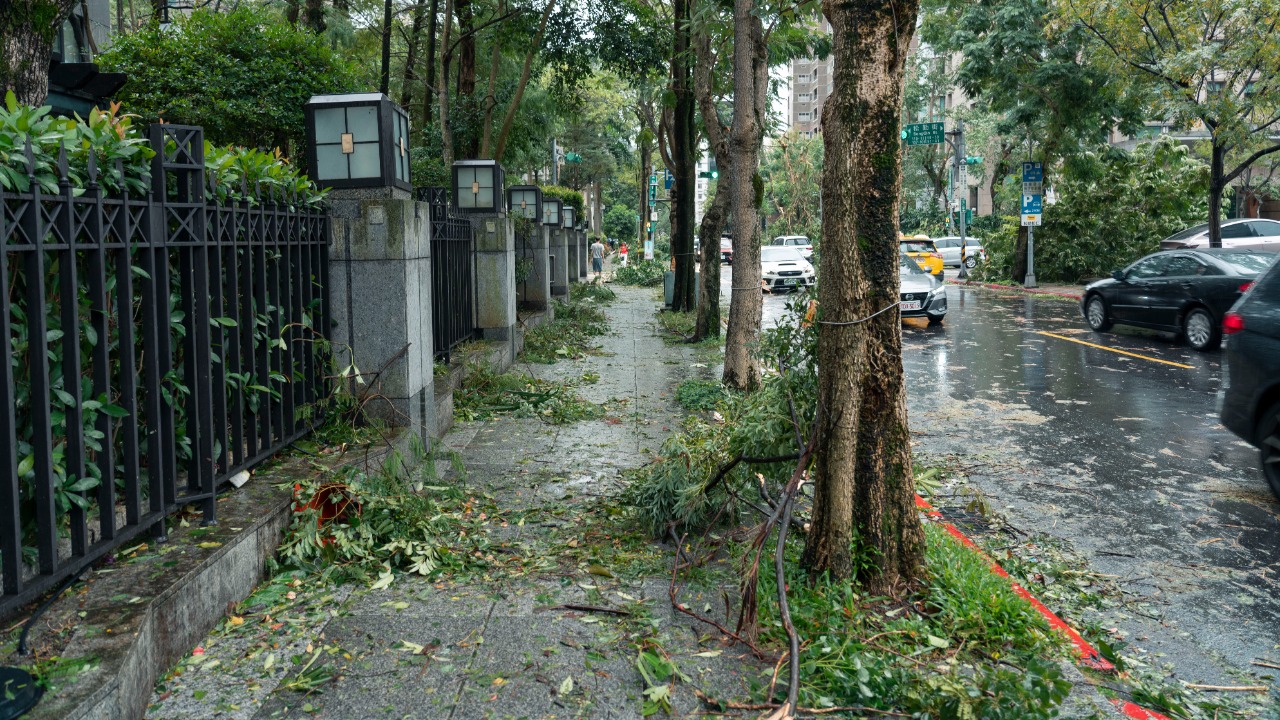

Japan ordered the evacuation of more than 2 million people as Typhoon Mekkhala spun toward its southern coastline, while the same storm lashed Taiwan with violent winds and torrential rain. The mass movement of residents, shuttered transport links, and preemptive power cuts showed how both countries are drawing on hard lessons from past disasters as climate risks intensify across the western Pacific.
How the Mekkhala threat reshaped daily life across Japan and Taiwan
As Typhoon Mekkhala tracked north across the Philippine Sea, Japanese authorities activated wide-area emergency plans that pushed more than 2 million residents from vulnerable coastal and low-lying districts into public shelters or safer homes inland. Local governments in Kyushu and along parts of Shikoku and Honshu issued non-compulsory but strongly worded evacuation advisories, backed by continuous alerts through television, mobile phones, and community loudspeakers. Officials focused on communities facing combined risks of storm surge, river flooding, and landslides, especially where steep hillsides press close to dense urban neighborhoods.
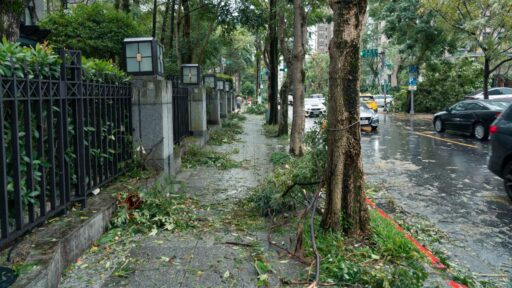
Taiwan, meanwhile, felt the brunt of Mekkhala’s eyewall as it scraped along the island, bringing destructive gusts and heavy bands of rain that triggered flash floods and mudslides in mountainous counties. Schools and offices in several cities were closed, flights were canceled, and ferry routes to outlying islands were suspended. Emergency crews in central and southern Taiwan worked to clear toppled trees from roads and restore downed power lines, while monitoring swollen rivers that threatened to breach levees.
Japan’s national government framed the evacuation orders as a deliberate attempt to get ahead of the storm’s worst impacts. Officials cited past typhoons in which residents waited too long to leave and were later trapped by rising water or blocked roads. The scale of the current operation, which moved more than 2 million people in a relatively short window, reflected a broad shift toward earlier, more conservative calls for relocation when forecast models converge on a high-impact landfall scenario.
Transport and energy systems adjusted in lockstep. Operators suspended some shinkansen services in western Japan, grounded domestic flights on expected landfall days, and shut key sections of expressway where crosswinds and flooding posed major hazards. Utilities pre-positioned repair teams and, in some coastal districts, cut power preemptively to reduce the risk of electrical fires or electrocution if lines were torn down by Mekkhala’s winds. Similar measures appeared in Taiwan, where authorities temporarily closed sections of the Suhua Highway and other landslide-prone routes that hug steep cliffs above the Pacific.
None of these moves were improvised. They followed detailed typhoon protocols refined after past tragedies, including deadly flooding in Kyushu and catastrophic landslides in western Japan. The Mekkhala response illustrated how those playbooks now operate at national scale, with evacuation centers stocked in advance, medical teams on standby, and clear chains of command that link municipal leaders with central disaster agencies.
Why Mekkhala’s evacuations highlight a shifting disaster-risk calculus
The decision to move millions of people ahead of Mekkhala captured a deeper change in how Japan and Taiwan are thinking about extreme weather. Both governments increasingly treat severe typhoons as near-inevitable seasonal threats whose impacts can be moderated only through early action and resilient infrastructure. The Mekkhala episode showed that the political and social appetite for disruption, in the form of large-scale evacuations and shutdowns, is growing as memories of past losses remain fresh.
Japan’s approach has been shaped by a series of deadly storms and floods that exposed gaps in communication and public trust. In earlier disasters, some residents ignored or misunderstood evacuation advisories, uncertain whether they were truly at risk. Authorities now emphasize clear, color-coded alert levels and repeated messaging that explains what each level requires. During Mekkhala, that system helped translate forecast wind speeds and rainfall totals into plain-language guidance about when to leave and where to go, supporting the evacuation of more than 2 million people before the storm’s arrival.
For Taiwan, Mekkhala reinforced the island’s dual status as both a frontline climate hotspot and a critical node in global supply chains. Typhoons that knock out power or flood industrial parks can ripple through sectors such as semiconductor manufacturing and shipping. In response, authorities have set stricter standards for flood defenses around key ports and industrial zones, while energy planners work to harden transmission lines and substations against high winds and debris. Mekkhala’s passage tested those upgrades, as crews rushed to restore electricity to affected districts and keep major export facilities operating safely.
Regional climate science adds another layer of urgency. Studies of western Pacific typhoons point to a trend toward more intense storms that carry larger volumes of rainfall, even if the total number of systems per season fluctuates. Warmer sea surface temperatures provide more energy for cyclones, and slower-moving storms can dump extreme amounts of rain over the same area. That combination magnifies the risk of the kind of river flooding and landslides that Japan and Taiwan both fear when a system like Mekkhala approaches densely populated coasts.
Public expectations are shifting as well. Residents who watched previous disasters unfold now demand faster, clearer action from authorities. The Mekkhala evacuations, along with the closure of schools, rail lines, and airports, signaled that leaders are willing to accept short-term economic costs to avoid repeat scenes of people stranded on rooftops or trapped in inundated homes. For many families, the inconvenience of a temporary move was a trade-off they were prepared to make after seeing how quickly water levels can rise in past storms.
The experience also underscored the importance of targeted support for vulnerable groups. Local governments worked to evacuate nursing homes, hospitals, and assisted-living facilities ahead of Mekkhala, arranging accessible transport and medical supervision. Community volunteers checked on elderly neighbors and people with disabilities who might struggle to leave on their own. These efforts reflect a growing recognition that successful evacuation is not just about issuing warnings, but about ensuring that everyone has the means to act on them.
Media coverage played a central role in shaping public understanding of the threat. Detailed storm tracks, projected rainfall maps, and footage of Mekkhala’s impact on Taiwan gave residents in Japan a visceral sense of what might be coming. One widely shared overview of the highlighted how quickly advisories expanded as the storm neared, reinforcing the idea that conditions could deteriorate faster than many people expect.
How Mekkhala will shape future preparedness in Japan and Taiwan
In the storm’s aftermath, both Japan and Taiwan face a familiar but still demanding task: turning a high-stress emergency into a blueprint for better resilience. Officials will review how evacuation orders were communicated, where shelters reached capacity, and which neighborhoods struggled with transport bottlenecks or last-minute confusion. Those assessments are likely to feed into updated hazard maps, refined alert criteria, and new investments in flood and landslide defenses along Mekkhala’s path.
For Japan, one immediate priority is likely to be the expansion and modernization of evacuation infrastructure. Some shelters reported crowding and limited privacy, especially for families with children or people with special medical needs. Municipalities are expected to look at additional sites, improved ventilation and sanitation, and better stockpiles of food, water, and emergency supplies. Digital tools, including smartphone apps that show real-time shelter capacity and route conditions, are also poised to play a larger role in future operations.
Urban planning debates will intensify as well. Mekkhala’s rainfall and wind patterns will give engineers new data on which levees, seawalls, and drainage systems performed as designed and which fell short. That evidence is likely to influence zoning decisions in river basins and coastal plains where development has pushed into areas at high risk of inundation. Some local governments may revisit building codes for homes and small businesses in those zones, adding requirements for elevated foundations, flood barriers, or reinforced roofs.