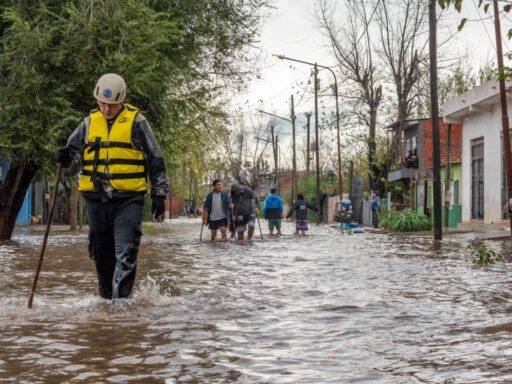
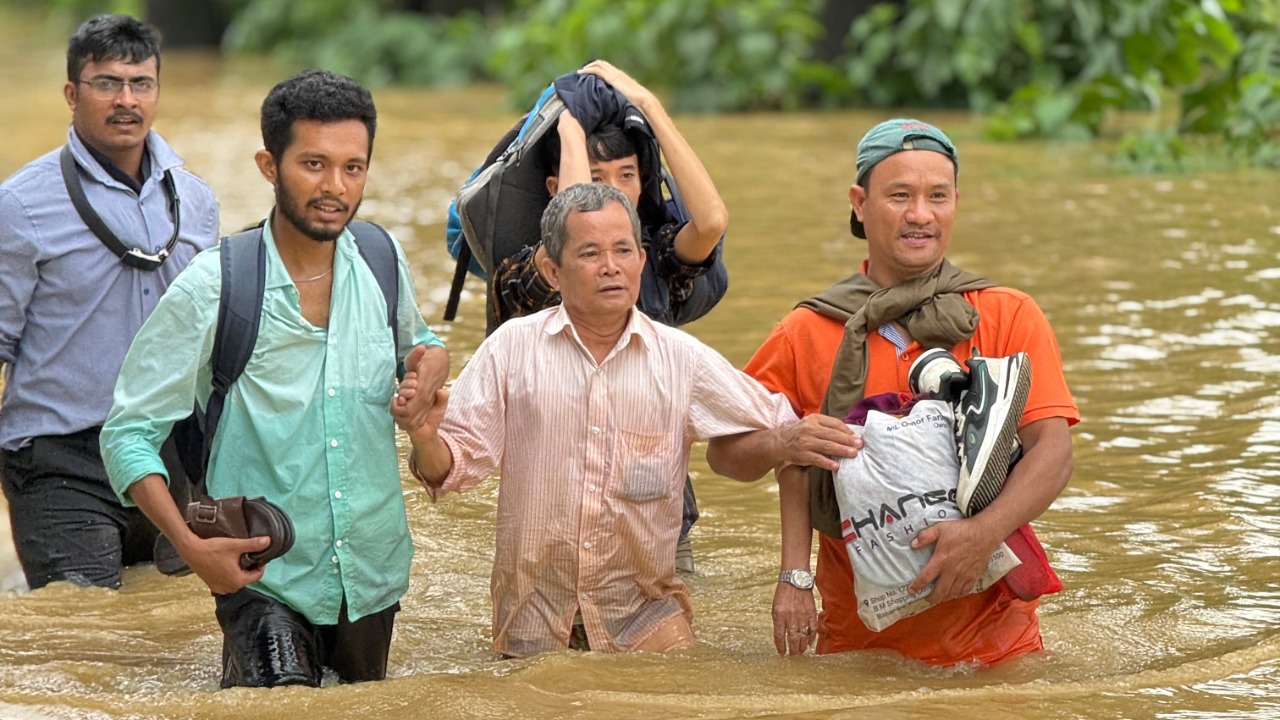

Rescue teams pulled hundreds of people from floodwaters across southeastern Missouri after extraordinary rainfall overwhelmed rivers, washed out roads and trapped children at summer camps.
At least 350 people were rescued across the affected region, including more than 200 children and staff airlifted from Camp Taum Sauk near Lesterville. The Missouri National Guard used Black Hawk helicopters after rising water and damaged roads cut off the camp from ground transportation.
Early reports circulated figures of approximately 160 campers, but later official accounts placed the Camp Taum Sauk evacuation at 202 campers and counselors. The wider rescue total included residents, campground visitors and people trapped in homes, vehicles, trees and buildings elsewhere in the flood zone.
The flooding followed a historic burst of rain that dropped between 6 and 12.5 inches across parts of the state in less than 24 hours. Some estimates described the rainfall as a one-in-1,000-year event for the locations that received the heaviest totals.
Helicopters Reached Campers Stranded by Rising Water
Camp Taum Sauk became one of the main focuses of the emergency response after floodwater surrounded the property and made nearby roads impassable.
Campers and counselors reportedly moved to safer ground as water continued rising around the camp. Missouri Army National Guard crews then used helicopters to carry them to Arcadia, where families could reunite with the children.
The operation required eight UH-60 Black Hawk helicopters, according to reports on the state response. Each flight removed groups of evacuees from an area that could no longer be reached safely by ordinary vehicles.
Video shared by Missouri authorities showed the rescued campers arriving near a school and playground. State officials described the evacuation as an experience families had not expected but would not forget.
Helicopter evacuation is generally used when roads, bridges or boat routes are unavailable or too dangerous. Aircraft can reach isolated groups quickly, but heavy rain, low visibility, power lines, trees and unstable landing areas can complicate operations.
The Federal Emergency Management Agency’s flood-safety guidance advises people in flood-prone areas to move to higher ground when warnings are issued and to avoid waiting until roads become submerged.
Hundreds Were Rescued Across Southeastern Missouri
The summer-camp evacuation represented only part of the wider emergency.
In Reynolds County, responders carried out approximately 90 water rescues. Some people were found trapped in trees, on rooftops or inside structures surrounded by rapidly moving water. At least two emergency boats reportedly capsized during rescue attempts, showing the danger faced by first responders.
Emergency crews also responded to Bearcat Getaway campground after rushing water caused part of a building to collapse. Approximately 17 to 20 people were thrown into or surrounded by floodwater, but officials later confirmed that everyone involved had been accounted for.
Additional rooftop rescues took place at Black River Lodge, while other residents required assistance after roads disappeared beneath water or vehicles became stranded.
The scale of the operation pushed the statewide rescue count beyond 350. That total covered multiple counties and rescue agencies rather than a single concentrated evacuation.
One Woman Died After Her Home Was Swept Away
Despite the large number of successful rescues, the flooding turned deadly in Crawford County.
A 23-year-old woman was reported missing after floodwater damaged and partially swept away her home near Huzzah Creek. She and her boyfriend attempted to escape using a kayak, but she and three dogs were carried away by the current. Her body was later recovered approximately 1.8 miles downstream.
Her death demonstrated how quickly flash flooding can become unsurvivable. Water moving across a road or through a building can contain trees, construction material, vehicles and other debris that greatly increases its destructive force.
The National Weather Service flood-safety guidance warns that six inches of moving water can knock down an adult, while deeper water may carry away vehicles. Drivers should never attempt to cross a flooded roadway because the pavement beneath the water may already have collapsed.
Why the Flooding Became So Severe
The disaster developed when slow-moving storms repeatedly passed over the same parts of southeastern Missouri.
This pattern, sometimes called training, allows one thunderstorm to follow another over the same location. Rain accumulates faster than soil, drainage systems, streams and rivers can absorb or carry it away.
Parts of the region received more than a foot of rain within a day. The sudden volume caused smaller creeks to rise rapidly and pushed the Black River toward a potentially record crest of around 28 feet.
Mountainous and wooded terrain can increase the speed at which runoff reaches valleys. Summer camps and recreational properties are also frequently located near rivers because of boating, fishing and swimming access, placing them closer to areas vulnerable to sudden flooding.
A location does not need to be experiencing heavy rain directly to flood. Water falling upstream can move into rivers and creeks hours later, producing dangerous rises under skies that may already appear calmer.
Missouri Declared a State of Emergency
Missouri Governor Mike Kehoe declared a state of emergency as the scale of the flooding became clear.
The declaration supported the deployment of the National Guard and allowed state resources to assist local agencies with evacuations, shelter operations, road closures and damage assessment.
The American Red Cross opened a shelter in Centerville for residents forced from their homes. Authorities also warned that many roads remained impassable and that additional rain could produce renewed flooding before rivers had time to fall.
Residents seeking current shelter and disaster information can use the American Red Cross emergency resources, while local emergency-management alerts remain the most important source for evacuation instructions.
The Flood Threat Extended Beyond Missouri
The storm system did not stop at Missouri’s borders.
The National Weather Service warned that severe thunderstorms and flash flooding could affect a broad area extending from the Ozarks toward the Ohio and Tennessee river valleys. Communities in Kentucky, Tennessee and West Virginia were advised to prepare for possible flooding as the storms moved south and east.
Eastern Tennessee experienced flooded roads and downed power lines, while officials in several states urged residents near rivers and low-lying roads to remain ready to move to higher ground.
The event showed how one slow-moving weather system can create emergencies across several states, even though the most dramatic rescues initially occurred in Missouri.
Camp Safety Is Under Renewed Scrutiny
The Missouri rescues occurred roughly a year after catastrophic flooding at Camp Mystic in Texas killed children and counselors. That earlier tragedy increased public attention on how quickly camps receive warnings and how prepared they are to evacuate.
In Missouri, the successful evacuation of more than 200 campers and staff prevented a similarly devastating outcome. Camp personnel moved children away from immediate danger while state and local agencies organized the helicopter operation.
However, the event may still lead to reviews of camp placement, communication systems, evacuation routes and access to high ground. A written emergency plan is only useful when staff can receive warnings promptly and move large groups before water blocks their route.
Parents may reasonably ask camps how weather alerts are monitored, where children are taken during a flood warning and whether backup communication remains available when electricity or cellular service fails.
Recovery Will Continue After the Water Recedes
The immediate rescue phase protected hundreds of lives, but communities still face damaged homes, roads, camp facilities and public infrastructure.
Floodwater may contaminate wells, leave mold inside buildings and weaken roads or foundations. Residents should avoid entering damaged structures until authorities confirm they are stable.
The Centers for Disease Control and Prevention’s flood-recovery guidance explains that standing water may contain sewage, chemicals, sharp debris and electrical hazards. Flood-damaged food, medicine and drinking-water systems may also require careful evaluation.
The confirmed evacuation of 202 campers and counselors, combined with hundreds of other rescues, made the Missouri operation one of the largest flood responses in the state in recent years.
The outcome also carried a clear warning. Flash flooding can transform a familiar campsite, road or home into a dangerous environment within minutes. In this case, rapid action by camp staff, first responders and National Guard crews helped bring more than 350 people to safety.