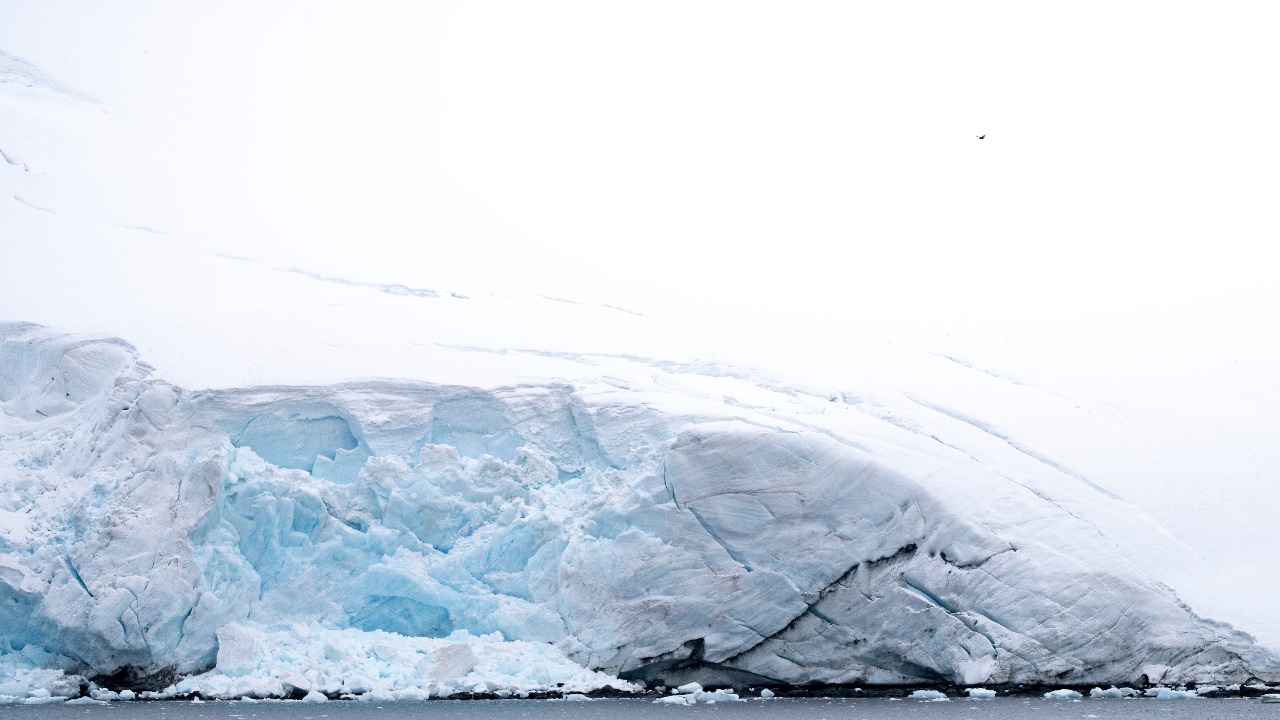

Warm deep-ocean water is gradually moving closer to Antarctica’s vulnerable ice shelves, while separate research suggests that hidden channels beneath the ice can trap that heat and intensify local melting far beyond what many climate models represent.
Together, the findings reveal a troubling combination. Antarctica is losing part of the cold-water barrier that historically protected its coastal ice, and the shape of the ice itself may concentrate incoming heat in places where it can cause the greatest structural damage.
The research does not mean Antarctica will suddenly collapse or produce an immediate surge in sea level. It does suggest that some ice shelves, including those in comparatively cold East Antarctica, may be more sensitive to modest ocean warming than scientists previously recognized.
A Huge Pool of Ocean Heat Is Shifting South
Researchers led by the University of Cambridge examined changes in Circumpolar Deep Water, a relatively warm and salty water mass that circulates around Antarctica beneath the colder surface ocean.
Using ship measurements, autonomous Argo floats and machine-learning techniques, the team reconstructed monthly Southern Ocean conditions across approximately four decades. The analysis found that Circumpolar Deep Water expanded and migrated toward Antarctica during the past 20 years.
The study, published in Communications Earth & Environment, is significant because climate models had predicted such a shift, but limited observations had previously made it difficult to confirm directly.
Research ships provide detailed temperature, salinity and nutrient measurements, but important Southern Ocean routes may be surveyed only about once per decade. Argo floats collect data more frequently, although their observational record is shorter. Combining the two sources allowed the researchers to create a more continuous picture of changing ocean heat.
The resulting evidence indicates that warm water is not merely expected to approach Antarctica in a possible future scenario. The shift is already visible in observational data.
Why Water That Seems Cold Can Still Melt Ice
Circumpolar Deep Water would not feel warm to a person. Around Antarctica, it may be only one or two degrees Celsius above zero.
However, seawater beneath thick ice shelves can remain liquid below zero because salt lowers its freezing temperature, while high pressure changes the local melting point. Water only slightly above that freezing threshold can therefore carry enough heat to melt large quantities of ice.
The danger increases when that water crosses the Antarctic continental shelf and enters cavities beneath floating ice shelves. Once underneath, it transfers heat directly to the ice base, producing melting that cannot be easily observed from the surface.
The Cambridge-led study found that the reservoir of this relatively warm water is expanding toward the coastline. That does not prove it will immediately reach every ice-shelf cavity, because winds, currents, underwater ridges and continental-slope fronts can still limit access.
It does mean the potential heat source is moving closer to the places where it could destabilize the ice sheet.
Hidden Channels Can Trap the Incoming Heat
A second 2026 study explains why even a modest amount of warm water may create an unexpectedly large effect.
Researchers examined the Fimbulisen Ice Shelf in East Antarctica, an area generally regarded as colder and less immediately vulnerable than the rapidly changing ice shelves of West Antarctica.
The underside of Fimbulisen is not smooth. It contains long channels and grooves, some several kilometers wide and hundreds of meters deep.
Using a detailed map of the ice base and a high-resolution model of the ocean cavity beneath it, the researchers compared a realistic channelled ice shelf with a hypothetical smoother version. They then tested both structures under cold conditions and during moderate intrusions of Circumpolar Deep Water.
The channels changed the circulation beneath the ice. They produced localized overturning flows that trapped warmer water near the channel crests instead of allowing it to pass through the cavity quickly.
Inside those areas, simulated melting increased by approximately an order of magnitude. The peer-reviewed Nature Communications study concluded that even moderate warm-water intrusions could significantly affect the stability of ice shelves previously considered relatively protected.
Local Melting Could Exceed 10 Meters Per Year
Under the warmer simulation, average melting across the complete Fimbulisen cavity remained relatively low at approximately one meter per year. That was still much lower than rates associated with heavily exposed West Antarctic ice shelves.
The important difference appeared inside the channels.
There, melt-rate anomalies exceeded 10 meters per year in parts of the modeled cavity. A detailed example involving a channel approximately 150 meters high and three kilometers wide showed how warm, meltwater-modified deep water became trapped and circulated against the ice.
This concentrated melting matters because ice-shelf stability depends on more than the total amount of ice lost. The location and pattern of thinning can determine whether the shelf remains structurally strong.
Uneven melting may deepen existing channels, increase stresses and weaken areas near the grounding line, where land-based ice begins floating on the ocean.
The study found that channels increased average basal melting and amplified the shelf’s response to ocean warming. Under warm conditions, the effect of channelled topography was particularly strong in the deeper ice region.
Floating Ice Shelves Act as Brakes
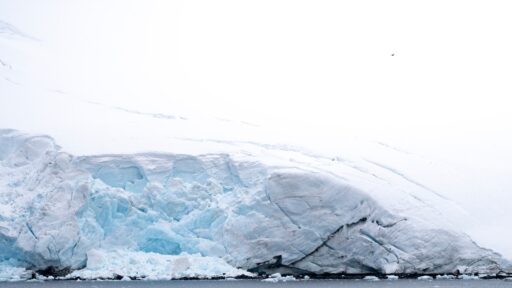
Antarctic ice shelves are floating extensions of glaciers and the continental ice sheet. Because they already displace ocean water, melting a floating shelf does not directly raise sea level by a large amount.
Their indirect role is far more important.
Ice shelves push against islands, underwater ridges and the sides of coastal embayments. That resistance slows the movement of grounded inland ice toward the sea, functioning like a brake or buttress.
When an ice shelf thins, fractures or collapses, the glaciers behind it can accelerate. Because that inland ice is currently resting on land, its movement into the ocean adds water and raises global sea level.
The National Snow and Ice Data Center explains that collapsed or weakened shelves no longer restrain their feeding glaciers effectively. Satellite observations have already shown that Antarctica’s ice shelves have lost trillions of metric tons since the 1990s.
Why the New Findings Make Projections More Concerning
Large climate and ice-sheet models cannot resolve every channel, eddy and circulation pattern beneath Antarctica’s ice shelves.
The Fimbulisen researchers warned that current models generally do not capture the newly identified heat-trapping mechanism. Leaving it out could cause projections to underestimate how sensitive cold East Antarctic shelves are to small changes in coastal water temperature.
That does not mean every current sea-level estimate is wrong by a specific amount. The study examined one shelf through high-resolution modeling and identified a process that must now be tested in other locations and incorporated into larger simulations.
It does show why Antarctica remains one of the greatest uncertainties in long-term sea-level projections.
The ice sheet contains enough water to raise global sea level by roughly 58 meters if it melted completely, although such a complete loss would take an extremely long time and is not a near-term forecast. Even a small percentage of that total would have major consequences for coastal cities and infrastructure.
East Antarctica May Not Be as Protected as It Appears
West Antarctica receives much of the attention because several of its glaciers already have direct access to warm deep water and rest on bedrock that slopes downward inland.
East Antarctica is colder and contains far more ice. Many of its shelves have been considered comparatively stable because cold continental-shelf water limits basal melting.
The Fimbulisen results challenge the assumption that “cold” automatically means safe.
The study found that relatively subtle Circumpolar Deep Water intrusions could be amplified by small-scale topography beneath the shelf. Observations also indicate that warm-water access has strengthened beneath Fimbulisen since 2016 and may continue increasing.
If similar channel-driven processes operate elsewhere, sections of East Antarctica could respond more strongly to ocean changes than coarse models suggest.
The Southern Ocean Affects the Entire Climate System
The movement of ocean heat toward Antarctica has consequences beyond ice loss.
The Southern Ocean absorbs a major share of the excess heat produced by greenhouse warming. It also helps move heat, carbon and nutrients between the surface and deep ocean.
Very cold, dense water forms around Antarctica and sinks, helping drive global overturning circulation. Increased ice melt adds fresh water to the ocean surface, which can make it harder for dense water to form and sink.
Changes in that circulation could alter how the global ocean stores heat and carbon. The Cambridge researchers said the observed poleward movement of warm deep water is consistent with an emerging change in Southern Ocean circulation predicted by climate models.
Scientists are still determining how quickly these processes will develop and how they will interact. The system includes feedbacks that can either slow or accelerate regional changes over different periods.
Antarctica Is Not Collapsing Tomorrow, but the Warning Is Clear
The studies do not predict a sudden continent-wide failure.
The first documents a long-term movement of deep-ocean heat toward Antarctica. The second shows how underwater channels beneath one cold ice shelf can trap modest warm-water intrusions and increase local melting by roughly tenfold.
The concern comes from their interaction.
A growing reservoir of heat is moving nearer to the coast at the same time scientists are discovering mechanisms that can concentrate that heat beneath vulnerable ice. Some of those mechanisms are too small to appear directly in the models used for global sea-level projections.
Further field measurements, underwater instruments and higher-resolution models will be required to determine how widespread the channel effect is. Even so, the research strengthens the evidence that ocean warming can destabilize Antarctic ice from below before major changes become obvious at the surface.
The melting may be hidden beneath hundreds of meters of ice, but its consequences would eventually reach coastlines around the world.