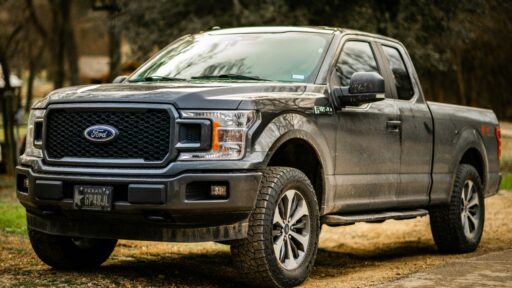
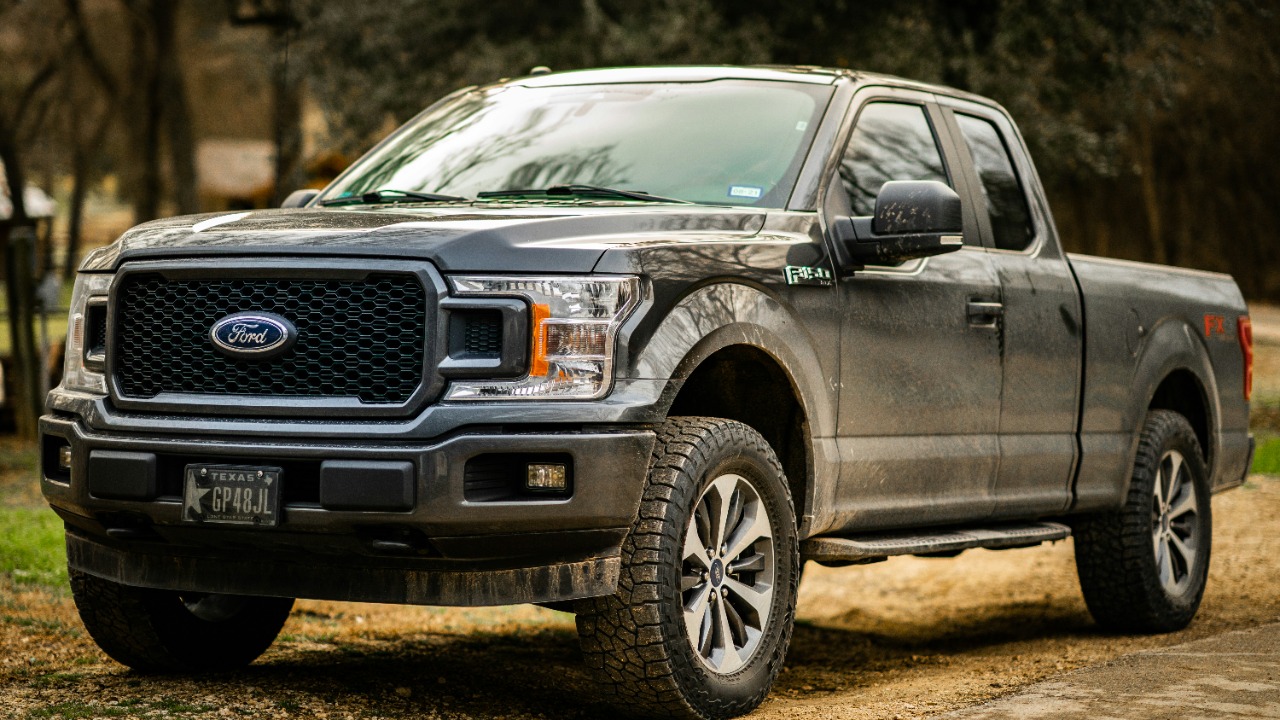

The Ford F-150 has achieved something no full-size pickup had managed in years: earning a place on Consumer Reports’ annual Top Picks list.
Consumer Reports named the 2026 Ford F-150 its Best Full-Sized Pickup Truck, citing improved predicted reliability alongside its strong powertrains, spacious cabin and straightforward controls. The selection marks the first time a full-size pickup has qualified for the organization’s Top Picks list since 2019.
That distinction is significant because full-size trucks often perform well in towing, hauling and owner satisfaction while struggling to meet Consumer Reports’ reliability threshold. The F-150 did not suddenly become flawless, but its recent improvement was strong enough to move it from a capable truck with reliability concerns into the organization’s highest recommendation tier.
Why the F-150’s Top Pick Status Matters
Consumer Reports does not select its Top Picks based on popularity, sales volume or manufacturer claims alone. Vehicles must perform strongly in the organization’s road tests, demonstrate acceptable predicted reliability, provide important safety features and satisfy other ownership criteria.
The F-150 had already earned recognition for power, practicality and cabin space. Reliability had been the primary barrier preventing it from joining the annual list.
Consumer Reports now expects the 2026 F-150 to deliver approximately average reliability compared with the average new vehicle. That description may sound modest, but average reliability is a meaningful achievement in the full-size pickup segment, where complex powertrains, towing equipment, electronics and luxury features can create numerous potential trouble areas.
The organization’s broader 2026 automotive report also noted that the F-150, F-150 Hybrid and electric F-150 Lightning improved from below-average to average predicted reliability. That progress contributed to Ford reaching 11th place in the brand rankings, its strongest result in 15 years.
It Is the First Full-Size Truck Top Pick Since 2019
The F-150’s inclusion ends a long absence for traditional large pickups.
According to Ford’s summary of the Consumer Reports results, no full-size truck had made the Top Picks list since 2019. Smaller pickups could still qualify during that period, but the largest trucks repeatedly fell short of the full combination of reliability, road-test performance and safety standards required.
That gap shows why the new selection is more than another award for America’s most familiar pickup. Consumer Reports has historically been willing to praise individual truck strengths while withholding a complete recommendation when ownership data indicates significant reliability problems.
The 2026 F-150 crossed that threshold because its recent model-year data suggested the improvement was not limited to a single test vehicle.
Consumer Reports bases its predicted reliability assessments on subscriber surveys covering hundreds of thousands of vehicles. Its latest reliability data considered reports from approximately 380,000 vehicles and evaluated as many as 20 potential trouble areas, including engines, transmissions, electrical accessories, brakes and hybrid components.
The PowerBoost Hybrid Helped Strengthen the Case
Consumer Reports specifically highlighted the performance of the F-150’s available 3.5-liter PowerBoost hybrid.
The system combines a turbocharged V6 engine with an electric motor, giving the truck strong acceleration and considerable towing capability. Ford rates the 2026 PowerBoost to produce 578 pound-feet of torque and tow as much as 11,600 pounds when properly configured.
Consumer Reports measured 20 mpg overall in its real-world testing of the four-wheel-drive hybrid. That was lower than the EPA’s 24-mpg combined estimate but still slightly better than the 19 mpg recorded by the tested 2.7-liter turbocharged gasoline model.
The one-mpg difference means buyers should not select the hybrid solely because they expect a dramatic reduction in fuel costs. Its stronger argument lies in the combination of power, efficiency and utility.
The PowerBoost can also be equipped with Ford’s Pro Power Onboard system, which allows the truck to function as a mobile source of electricity for tools, appliances or emergency needs. Certain trims offer output of up to 7.2 kilowatts.
That capability can be useful for contractors, campers and homeowners during electrical outages, although buyers should carefully compare equipment packages because output levels vary by configuration.
The Conventional F-150 Still Has Major Strengths
The Top Pick recognition is not limited to the hybrid’s fuel economy.
Consumer Reports praised the F-150’s broad range of strong powertrains, roomy crew-cab interior and easy-to-understand controls. The tested 2.7-liter turbocharged V6 delivered effortless acceleration and smooth, well-timed shifts from its 10-speed automatic transmission.
The crew-cab versions provide generous space for rear passengers, while the cabin remains exceptionally quiet for a work-oriented vehicle. Consumer Reports said the interior’s noise isolation can rival luxury vehicles.
Simple controls are another practical advantage. Many modern vehicles rely heavily on touchscreen menus for routine functions, but the F-150 retains a relatively clear interface for commonly used settings.
Ford also offers numerous configurations, including regular, extended and crew cabs, different bed lengths and trims ranging from basic work models to luxury and off-road versions. This variety allows buyers to create highly specialized trucks, but it can also make shopping confusing.
A configuration designed for maximum towing may provide a different payload rating, ride quality and purchase price from a visually similar truck on the same dealership lot.
BlueCruise Added Another Top Pick Strength
Consumer Reports also pointed to the availability of Ford BlueCruise as one of the F-150’s notable features.
BlueCruise allows hands-free driving on approved divided highways while a driver-monitoring system checks that the person remains attentive. For 2026, Ford expanded the availability of a one-time-purchase BlueCruise option across several trims, including qualifying XLT, Lariat, Tremor, King Ranch and Platinum models.
The system does not make the F-150 autonomous. The driver remains responsible for observing traffic, responding to hazards and taking control whenever necessary.
Buyers should also verify whether BlueCruise is included permanently, offered through a temporary trial or tied to a subscription. Two trucks that appear to have the same hardware may come with different service terms.
The technology may make long highway journeys less tiring, but it should not outweigh basic considerations such as reliability, towing requirements and vehicle size.
The F-150 Is Not the Most Comfortable Full-Size Truck
Top Pick status does not mean the F-150 led the segment in every category.
Consumer Reports found that its ride remained somewhat jittery, even after recent improvements. The Ram 1500 delivered a more comfortable ride, while the Chevrolet Silverado 1500 and GMC Sierra 1500 twins also provided better ride quality in some conditions.
Steering was described as slow, and handling remained cumbersome compared with smaller vehicles. Those characteristics are not unusual for a large body-on-frame pickup, but they matter for buyers who spend most of their time commuting rather than towing or carrying heavy loads.
The tall cabin can also be difficult to enter without running boards, particularly for shorter passengers or people with limited mobility.
A test drive should therefore include rough pavement, parking maneuvers and passenger entry rather than only a short trip on a smooth highway.
Average Reliability Does Not Mean Problem-Free Ownership
The headline can easily create the impression that Consumer Reports now considers the F-150 exceptionally reliable. The underlying assessment is more measured.
The 2026 model is predicted to have about average reliability, not class-leading or perfect reliability.
That improvement was enough to satisfy the Top Pick requirements when combined with the truck’s strong road-test performance, safety equipment and versatility. It does not eliminate the possibility of defects, software problems or recalls.
Vehicle owners should still check the National Highway Traffic Safety Administration recall database using the specific VIN. NHTSA reported that nearly 29 million vehicles were affected by safety recalls during 2025, demonstrating that even highly rated new models require continued monitoring.
Recall history and predicted reliability also measure different things. A recall addresses a specific safety defect across a defined vehicle population, while reliability ratings estimate the likelihood of broader ownership problems.
Buyers Must Match the Truck to the Actual Job
The F-150’s extensive range makes it possible to spend far more than necessary.
Consumer Reports listed the 2026 F-150 Hybrid with a base-price range extending from approximately $37,290 to $79,005, depending on trim and equipment.
A buyer who needs basic transportation and occasional home-improvement hauling may not benefit from an expensive luxury trim or maximum-towing package. Conversely, someone pulling a large trailer cannot safely select a truck based only on the engine name or advertised maximum.
Ford’s maximum available towing capacity can reach 13,500 pounds on certain properly equipped configurations, but the actual rating changes with the cab, bed, engine, axle ratio, drivetrain and installed options.
Payload is equally important because passengers, cargo, accessories and trailer tongue weight all count against the truck’s available capacity.
The doorjamb label and official towing documentation provide more useful information than a broad marketing figure.
A Major Turnaround for Ford’s Best-Known Truck
The F-150 has long been valued for versatility, powertrain choice and work capability. What changed for 2026 was its ability to pair those strengths with reliability data good enough to satisfy Consumer Reports’ demanding Top Pick standards.
It is the first full-size pickup to earn that distinction since 2019, and the achievement reflects a broader improvement across Ford’s F-150 family.
The result does not make the truck perfect. Its ride remains less comfortable than some competitors, its size can make daily driving difficult, and average predicted reliability still leaves room for ownership problems.
However, buyers who previously avoided the F-150 because of reliability concerns now have stronger evidence supporting it. For the first time in years, Consumer Reports believes a traditional full-size pickup offers the complete balance of capability, performance, safety and dependability required to become one of its best vehicles of the year.