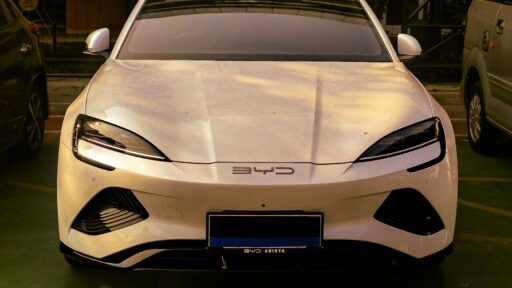
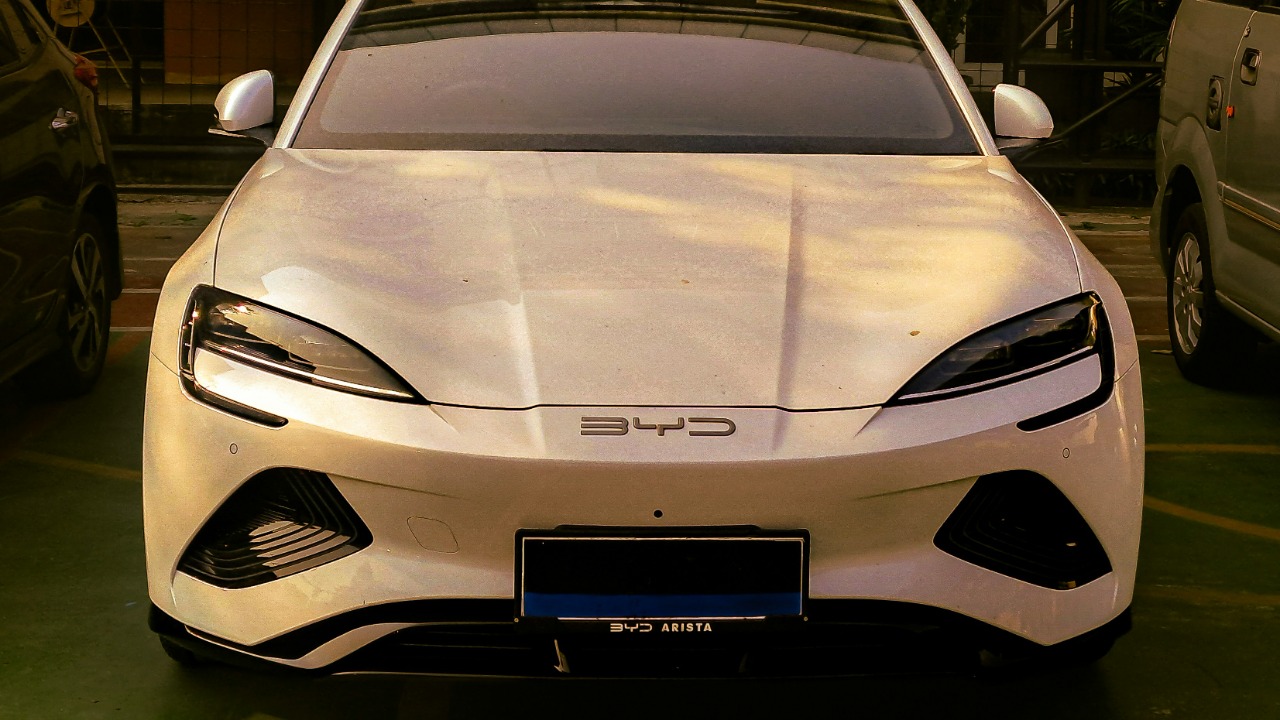

Chinese electric vehicles often look surprisingly inexpensive beside American alternatives. Some offer long equipment lists, modern interiors and competitive driving ranges at prices that would barely cover an entry-level gasoline vehicle in the United States.
The difference is not explained by one hidden shortcut. Chinese manufacturers benefit from lower battery costs, tightly connected supply chains, enormous production volumes, intense domestic competition and years of industrial support. They also tend to build smaller vehicles and use lower-cost battery chemistry more aggressively than American automakers.
According to the International Energy Agency, producing a battery-electric car in China costs more than 30 percent less than producing one in an advanced economy. Roughly one-third of that production-cost gap comes from the battery, while the remainder reflects broader manufacturing advantages that also affect conventional vehicles.
China Controls Much of the EV Battery Supply Chain
The battery is usually the most expensive individual component in an electric vehicle. Controlling its materials, cells and manufacturing equipment gives Chinese automakers a major cost advantage.
China accounted for 70 percent of global electric-car production in 2025 and more than 80 percent of battery-cell manufacturing. It also produced approximately 85 percent of cathode active materials and more than 90 percent of anode active materials used in EV batteries.
This concentration creates a tightly connected industrial system. Battery-cell factories, mineral refiners, component suppliers and vehicle assembly plants can operate within the same manufacturing regions. Shorter transport distances, established supplier relationships and large local order volumes help reduce logistical and procurement costs.
American automakers are expanding domestic battery production, but many parts of the U.S. supply chain remain under construction. Materials or components may travel through several countries before reaching a vehicle factory, adding shipping expense, inventory risk and exposure to changing tariffs.
The International Energy Agency reported that battery packs made in China were approximately 30 percent cheaper than those produced in the United States in 2025. That difference alone can translate into thousands of dollars on a vehicle with a large battery.
Chinese Manufacturers Use More Affordable Battery Chemistry
Many inexpensive Chinese EVs use lithium iron phosphate batteries, commonly called LFP batteries.
LFP cells generally avoid costly nickel and cobalt. They can also offer strong durability, thermal stability and the ability to tolerate frequent charging to a high state of charge. Their main disadvantage is lower energy density, which can make a battery heavier or larger for the same driving range.
Chinese battery companies spent years improving LFP performance and scaling production. Manufacturers such as BYD also developed pack designs that reduce unnecessary structural material and fit more usable battery capacity into a given space.
American EVs have historically relied more heavily on nickel-rich battery chemistry, especially in vehicles marketed around long range, rapid acceleration and premium performance. These batteries can store more energy for their weight, but their materials and manufacturing processes may cost more.
The difference reflects product priorities as much as technical capability. A compact Chinese commuter vehicle does not need the battery size required by a large American electric pickup or three-row SUV.
China Produces EVs at Enormous Scale
High production volume spreads engineering, tooling and factory costs across more vehicles.
China has the world’s largest EV market, giving domestic manufacturers access to millions of potential buyers without first establishing expensive overseas distribution networks. As factories produce more batteries, motors, control systems and vehicles, companies gain experience and identify opportunities to reduce waste and simplify assembly.
The scale also gives manufacturers greater negotiating power with suppliers. A company ordering batteries or electronic components for hundreds of thousands of vehicles can often obtain better pricing than a manufacturer placing smaller orders.
By 2025, China represented 60 percent of worldwide EV battery deployment. The United States accounted for approximately 10 percent.
Scale does not guarantee profitability. Some Chinese automakers operate on thin margins or lose money while competing for market share. Nevertheless, the overall industrial volume supports an ecosystem of specialized suppliers that can produce EV parts faster and more cheaply.
Competition Forces Chinese Automakers to Cut Prices
China’s EV market contains a large number of manufacturers competing for the same customers.
BYD, Geely, SAIC, Changan, Chery, Xiaomi and multiple newer brands regularly introduce vehicles with aggressive pricing and rapid technology updates. Tesla’s local operations add further pressure.
This competition creates frequent price reductions and encourages manufacturers to redesign components for lower cost. A vehicle that remains unchanged for several years can quickly lose attention when rivals introduce improved batteries, faster charging or additional technology at a similar price.
The result is difficult for manufacturers but beneficial for price-sensitive buyers. The IEA reported that approximately 30 percent of battery-electric models offered in China had an entry price below $20,000 in 2025. It also found that 70 percent of battery-electric cars sold there were cheaper than the average conventional vehicle.
American EV competition is less concentrated at the lowest end of the market. Many U.S. models are crossovers, large SUVs or pickups, categories that require more materials and larger batteries.
Chinese EVs Are Often Smaller and Simpler
Comparing prices without comparing vehicle types can create a misleading picture.
China sells many small city cars, compact hatchbacks and short-range urban vehicles. These products require less steel, aluminum, interior material and battery capacity than an American pickup or family-sized SUV.
A smaller vehicle also needs less energy to move, allowing the manufacturer to offer acceptable range with a more compact battery. Reducing battery capacity can lower the price significantly.
American consumers have historically favored trucks, SUVs and crossovers. Automakers respond by producing EVs with large cabins, powerful motors, heavy-duty structures and batteries designed to deliver hundreds of miles of range.
An inexpensive Chinese city car would therefore not be a direct replacement for an electric Ford F-150 or Chevrolet Silverado. However, Chinese manufacturers also produce midsize sedans and crossovers that remain competitively priced, showing that vehicle size explains only part of the difference.
Vertical Integration Removes Supplier Markups
Several leading Chinese EV manufacturers produce more of their own components than traditional automakers.
BYD, for example, manufactures batteries, electric motors, power electronics and semiconductor components in addition to assembling complete vehicles. Other Chinese companies maintain close relationships with large domestic battery and technology suppliers.
Vertical integration can reduce dependence on outside companies and remove multiple layers of supplier profit. It can also speed up design changes because engineers working on the battery, software and vehicle platform operate within the same corporate structure.
Traditional American automakers commonly purchase major systems from established suppliers. This model offers flexibility and specialist expertise, but each supplier must recover its own research, manufacturing and administrative costs.
New American EV companies have adopted more integrated approaches, yet they still operate within a higher-cost domestic manufacturing environment and lack China’s full local battery-material network.
Government Support Helped Build the Industry
China has supported new-energy vehicles through purchase incentives, tax reductions, manufacturing programs, infrastructure investment and local industrial policies.
Direct purchase subsidies were gradually reduced, but other support remained. For EVs bought in China during 2026 and 2027, the vehicle-purchase tax is reduced by half, with a maximum exemption of 15,000 yuan per passenger vehicle.
Government assistance did more than reduce the retail price of individual cars. Long-term policies encouraged companies to invest in battery research, mineral processing, factories and charging infrastructure before the market reached its current size.
The European Commission concluded that China’s battery-electric vehicle value chain benefited from subsidies that threatened economic injury to European producers. The EU consequently introduced additional countervailing duties ranging from company-specific rates to broader duties for other cooperating manufacturers.
Government support is not unique to China. The United States has also offered manufacturing loans, tax incentives and consumer credits to expand domestic EV and battery production. The difference is that China’s strategy began earlier and developed alongside a much larger domestic manufacturing network.
Labor Costs Matter, but They Are Not the Main Explanation
Chinese factory labor has traditionally cost less than American automotive labor, but describing Chinese EVs as cheap merely because of wages oversimplifies the issue.
Modern battery and vehicle plants are highly automated. Materials, energy, machinery, financing, logistics, software and production efficiency can matter as much as assembly wages.
The IEA’s finding that China also maintains a major production-cost advantage in conventional vehicles supports this broader explanation. The country’s advantage comes from an entire manufacturing ecosystem rather than one unusually inexpensive component or workforce.
China’s factories also benefit from dense clusters of electronics and automotive suppliers. A design team can source displays, cameras, wiring, motors and control modules from companies operating within the same industrial region.
Why Americans Cannot Simply Buy These Cheap EVs
The United States has largely prevented Chinese-branded EVs from entering its market at their domestic prices.
U.S. Section 301 tariffs on electric vehicles imported from China were increased to 100 percent in 2024. That tariff comes in addition to other applicable import duties, making direct sales economically difficult.
Chinese vehicles would also need to meet American safety, cybersecurity, regulatory and dealership requirements. Shipping, homologation, replacement-parts distribution and warranty support would add further cost.
Therefore, a Chinese EV priced at the equivalent of $18,000 in its home market would not necessarily cost $18,000 in an American showroom. Its price would rise considerably before accounting for dealer margins or adaptations required for the United States.
Trade restrictions are intended to protect domestic manufacturing and prevent subsidized imports from overwhelming American producers. The trade-off is that American consumers have less access to the lowest-priced EVs available globally.
American EVs Are Designed Around a Different Business Model
American automakers often prioritize high-margin vehicles because developing an entirely new electric platform is expensive.
A manufacturer can recover its investment more quickly by selling premium crossovers and trucks than by competing immediately in the sub-$25,000 segment. Large vehicles also align with established American consumer demand.
High labor expenses, dealership networks, advertising, regulatory compliance and legacy pension or manufacturing obligations can further affect costs. American vehicles may also include larger batteries because buyers expect long highway range in a geographically large country.
This strategy does not mean American companies are incapable of producing cheaper EVs. It means their current product lines, factories and profitability targets make inexpensive models more difficult to justify.
The Price Gap Is Structural, Not Mysterious
Chinese EVs are cheaper because China built a complete electric-vehicle industrial system at enormous scale.
Lower battery prices, widespread LFP adoption, compact vehicle designs, vertical integration, dense supplier networks and fierce competition all reduce costs. Government support helped establish that system, while the size of the domestic market allowed it to mature rapidly.
American manufacturers face higher battery costs, newer supply chains and a market dominated by larger vehicles. Tariffs also prevent Chinese models from reaching U.S. consumers at their original prices.
The gap may narrow as American battery factories expand and lower-cost models enter production. China, however, is not standing still. Its manufacturers continue reducing costs, improving charging performance and expanding internationally.
The low prices are therefore not merely the result of cheap labor or government subsidies. They reflect more than a decade of coordinated investment, production experience and competition across nearly every stage of EV manufacturing.