
When explorers pried open a long-sealed cave in southern France, they did not just find old rocks. They walked into a perfectly preserved Ice Age gallery where mammoths, lions, rhinos, and human handprints still seemed to move across the walls after some 20,000 years in the dark. The discovery instantly joined the tiny club of prehistoric sites whose art is so fresh and complex that it forces archaeologists to rethink what Stone Age people could do.
The cave, protected by a natural rockfall since the late Pleistocene, offers a rare control sample of deep time. With nothing modern intruding, every pigment trace, footprint, and charcoal scrap records a moment in human history that has not been edited by later centuries.
New access to a perfectly sealed Ice Age gallery
The newly opened French cave sits in limestone country where rivers have carved a honeycomb of cavities and shafts. According to reporting on the site, a rock collapse near the entrance sealed its inner chambers for roughly 20,000 years, which meant that no later visitors, animals, or air currents disturbed the interior microclimate or its fragile art. When specialists finally entered, they found walls dense with animals, geometric signs, and stenciled hands that had been shielded from light since the last Ice Age, comparable in preservation to other sealed sanctuaries such as preserved artworks elsewhere in France.
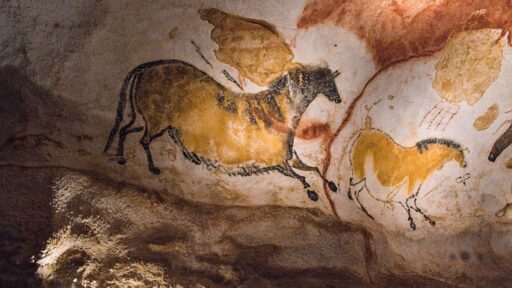
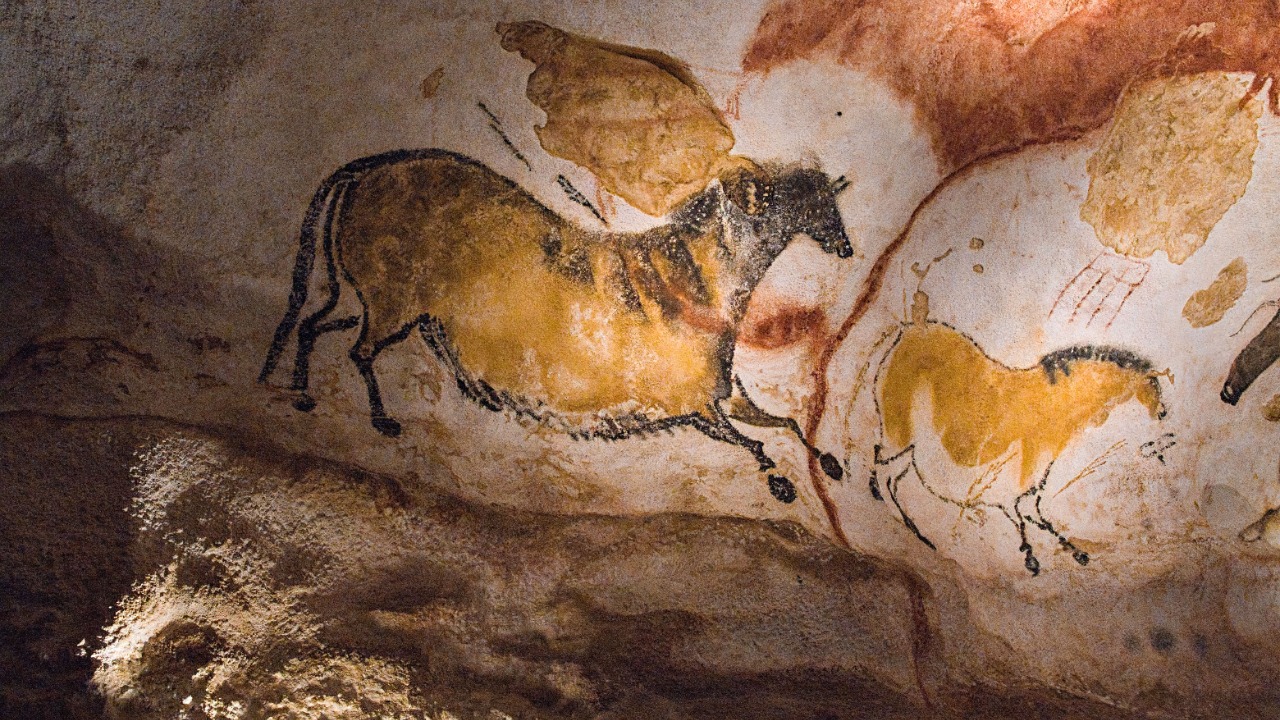
Inside, researchers documented panels where horses, bison, woolly rhinoceroses, and big cats overlap in layers of black and red pigment. Some figures are shaded or use the curve of the rock to suggest volume, a technique that hints at a sophisticated eye for perspective. On other walls, negative hand stencils appear in clusters, created by blowing pigment around a hand pressed to the surface. The outlines are crisp, indicating that moisture, mold, and mineral growth never had the chance to erode them.
The floor tells its own story. Archaeologists have described undisturbed footprints pressed into ancient clay, along with scattered charcoal and broken torch fragments. Together, these details show that the cave was not a domestic shelter but a place visited periodically for specific activities, most likely rituals that combined movement, light, and sound deep underground.
From a faint breeze to an Ice Age time capsule
Although the latest discovery involves a cave sealed for about 20,000 years, it follows a pattern set by another now famous French site that remained closed for even longer. In 1994, three explorers in the Ardèche region noticed a faint current of air coming from a cliff face. They followed that breeze through a narrow opening and into what turned out to be a vast cavern that had been shut off for roughly 30,000 years. That cave, known for its lions and rhinoceroses, became a benchmark for how completely a rockfall can isolate a prehistoric environment, and the story of those three explorers who followed a faint breeze now serves as a template for the new find.
In both cases, the key factor was geological chance. A collapse near the entrance created a plug that blocked not only people but also insects, larger animals, and most air movement. That seal kept humidity and temperature remarkably stable, which in turn preserved delicate pigments and calcite formations. Archaeologists see these caves as time capsules because they freeze a cultural moment with almost no later contamination.
The new site appears to share several traits with that earlier discovery. Its animal repertoire is dominated by large, powerful species that would have been dangerous or impossible to hunt regularly, such as cave lions and rhinoceroses. This pattern suggests symbolic rather than practical motives. The artists were not simply drawing dinner; they were engaging with creatures that carried spiritual or social weight. The density of images, along with evidence of repeated visits, points to a long tradition of use that may span generations.
What the cave changes about Ice Age art and society
The quality and preservation of the paintings give researchers an unusually sharp view of Ice Age creativity. In many open caves, water and mineral deposits blur outlines and wash away fine details. Here, pigment strokes and engraving lines remain visible enough for experts to reconstruct the sequence of actions. That clarity has already prompted comparisons with more recent art traditions and challenged assumptions that Paleolithic images were simple or naive.
One striking feature is the use of the natural rock surface. Artists positioned animals so that bulges and recesses suggest muscles or movement. This practice shows a deliberate dialogue with the cave itself, as if the painters saw living forms emerging from the stone and chose to emphasize them. The effect is especially strong where multiple animals overlap, creating a sense of motion that some researchers interpret as early attempts to depict sequences or even proto-animation.
The hand stencils and possible fingerprints embedded in pigment also provide rare biometric data. By comparing hand sizes and finger proportions, specialists can estimate the age and sex of some participants. Early analyses from similar sites suggest that adolescents and women took part in the painting process, which complicates the older picture of cave art as the domain of male hunters alone. If the new cave confirms a similarly diverse group of artists, it will strengthen the case for a more inclusive view of Ice Age communities.
The cave also feeds into ongoing debates about the origins of symbolic thinking. Some of the geometric signs and repeated motifs resemble patterns seen in other European caves separated by hundreds of kilometers. That repetition hints at shared codes or traditions that spread across groups, something closer to a symbolic network than isolated local customs. A sealed site, with its contents locked to a specific timeframe, can help anchor that network in time and test whether certain signs really moved between regions.
Why a 20,000-year-old gallery matters in the present
The discovery resonates far beyond archaeology because it offers a rare, unfiltered glimpse of how humans once imagined their world. In an era when digital images flood daily life, the idea that people crawled deep into the earth, lit torches, and painted by flickering light speaks to a very old impulse to create shared experiences through pictures. The animals on the walls are not just records of species; they are performances frozen in stone, evidence that storytelling and symbolism were already central to human life tens of millennia ago.
For France, the cave adds to a remarkable concentration of Ice Age heritage that already includes celebrated sites such as the caves of the Ardèche and the Dordogne. That cluster has turned parts of the country into a laboratory for studying early art, but it also raises questions about tourism, conservation, and local economies. Experience with other fragile caves shows that uncontrolled visitor access can quickly damage paintings through humidity, carbon dioxide, and microorganisms introduced by clothing and breath. Authorities therefore face a familiar tension between public curiosity and preservation.
There is also a broader cultural dimension. Exhibitions and documentaries about sealed caves often draw large audiences because they connect scientific detail with existential questions about origins, creativity, and mortality. The new site will likely fuel fresh debates about what counts as art, how abstract thinking evolved, and whether modern humans are really as different from their Ice Age ancestors as they like to imagine. Each new panel of animals or signs gives philosophers, artists, and educators more material to work with when they trace long arcs of human imagination.
Protecting the site and sharing its secrets
With the first survey underway, the next steps will focus on documentation and protection. Teams typically start by creating high resolution photographic mosaics and 3D scans of every chamber. These records serve two purposes. They allow researchers to study the art in detail without repeated physical visits, and they provide a baseline for monitoring any subtle changes in pigment or rock surfaces over time. In sealed caves, even small shifts in airflow or temperature caused by human entry can trigger mold growth or mineral veils, so early monitoring is essential.