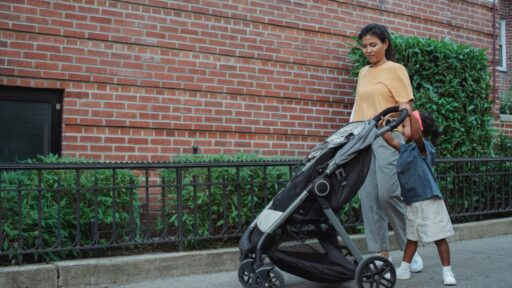

The U.S. Consumer Product Safety Commission is warning parents and caregivers to stop using B. Childhood High Landscape baby strollers immediately because they can trap a baby between the seat and grab bar. The agency says the opening creates an entrapment hazard that can cause serious injury or death.
According to the official CPSC product safety warning, the strollers violate the mandatory federal safety standard for strollers. CPSC is urging consumers to stop using the travel-system strollers, dispose of them, and not sell or give them away.
This is not a minor product notice. When CPSC tells families to stop using a baby product immediately, the concern is urgent. Strollers carry infants and young children in situations where caregivers may not notice a dangerous position quickly enough. A design gap that allows entrapment can turn a routine walk or errand into a serious emergency.
Which Strollers Are Involved?
The warning involves all B. Childhood High Landscape baby strollers. CPSC describes them as black, foldable strollers with golden metal accents, a brown handle, and brown grab bars. They were sold as part of a 2-in-1 travel system with a seat that converts into a bassinet and includes a hand-held infant carrier accessory.
The model number is important. CPSC says “Model Number V9” is printed on a label on the back of the stroller seat. Parents who bought a B. Childhood stroller should check the label and compare the product with the agency’s description and images.
The strollers were sold online at Shein.com for about $230. CPSC also says the product may have been sold by various third-party sellers and on other websites. That means parents should not assume the warning only applies if they bought directly from one marketplace.
What Is the Entrapment Hazard?
The danger comes from an opening between the stroller seat and the grab bar. CPSC says that opening can allow a baby to become entrapped. Entrapment is especially dangerous for infants because they may not be able to free themselves, reposition their bodies, or cry loudly enough before breathing or circulation is affected.
A stroller grab bar may look harmless, but the spacing around it matters. If a child slips into a gap, the body or head can become trapped. Depending on the child’s position, the risk can include strangulation, suffocation, crushing pressure, or serious injury.
The CPSC warning specifically says the product violates the mandatory stroller standard. The agency’s carriages and strollers business guidance explains that federal stroller rules are intended to address hazards such as falls, entrapment, pinching, collapse, and other risks that can injure infants and children.
Why CPSC Says to Dispose of the Stroller
CPSC is not telling consumers to repair the stroller, add padding, tape over the gap, remove the grab bar, or keep using it with extra caution. The agency says to stop using the stroller immediately and dispose of it.
That wording matters. It means CPSC does not view the product as safe for continued use by ordinary consumers. A makeshift fix may create new hazards or fail during use. Baby products must be designed to protect children without relying on parents to constantly manage a known defect.
CPSC also says consumers should not sell or give away the stroller. This is important because unsafe baby products often move through secondhand markets, yard sales, online listings, or hand-me-downs. Passing the stroller to another family simply transfers the danger.
The Seller Has Not Responded
CPSC says it issued a Notice of Violation to B. Childhood of Chino, California, but the seller has not responded to the notice. That is another reason the agency warning is serious.
When companies cooperate with CPSC, they may announce recalls, offer refunds, provide repair kits, or contact consumers directly. In this case, the public warning says the seller has not responded, so parents may not receive a normal recall remedy or direct company support.
This makes consumer action even more important. Families who own the stroller should not wait for a company email, refund process, or repair kit before removing the product from use.
Why Mandatory Stroller Standards Exist
Strollers are used in daily life, but they are not simple products. They include frames, hinges, wheels, brakes, seats, restraints, canopies, bars, folding locks, and accessories. A failure in one part can create a serious risk for a small child.
The federal stroller standard is designed to reduce common hazards. These can include entrapment, falls, folding collapse, brake failure, instability, sharp edges, restraint problems, and structural failure.
CPSC approved the stroller safety rule to help prevent deaths and injuries involving infants and children. The agency’s 2014 announcement on the federal stroller safety standard said the rule was intended to address risks identified in stroller and carriage incidents.
A product that violates this standard is not just missing paperwork. It may fail design requirements created specifically to protect children.
Why Online Baby Products Need Extra Scrutiny
The B. Childhood stroller warning also highlights a bigger problem: baby products sold online through marketplaces and third-party sellers can be difficult for parents to evaluate. A product page may show attractive photos, modern styling, and positive-looking descriptions, but that does not prove the product meets U.S. safety rules.
Parents may assume that if a stroller is sold on a major website, it has already been fully vetted. That is not always safe to assume. Online marketplaces can include imported products, third-party listings, private-label goods, and items from sellers that may not have strong U.S. safety compliance systems.
When buying baby gear online, parents should look for recognizable brands, clear model information, safety certifications, recall history, manufacturer contact details, and compliance with U.S. standards. A low price or stylish design should not outweigh safety.
What Parents Should Do Right Now
Parents who own a B. Childhood High Landscape baby stroller should stop using it immediately. They should check the model label on the back of the stroller seat and compare the stroller with CPSC’s product description.
If the stroller matches the warning, it should be taken out of service and disposed of so no one else uses it. Parents should not resell it online, donate it, give it to a friend, or leave it somewhere another family might pick it up.
If a child was injured or nearly injured while using the stroller, the incident should be reported to CPSC through SaferProducts.gov. Reports help regulators identify hazardous products, track patterns, and warn other families faster.
Why Caregivers Should Check Secondhand Gear
Secondhand baby gear can save money, but it can also carry hidden risk. A stroller may look fine while still being recalled, noncompliant, damaged, missing parts, or unsafe under current standards.
Before using any secondhand stroller, parents should check the brand, model number, manufacture date, recall status, restraint system, brakes, folding locks, wheels, and structural condition. If the model label is missing or the product cannot be identified, it may be safer not to use it.
CPSC maintains a recalls and product safety warnings page that consumers can search before buying or using baby products. This is especially important for strollers, cribs, play yards, high chairs, car seats, infant loungers, and sleep products.
Entrapment Risks Can Be Hard to See
One reason entrapment hazards are dangerous is that they may not be obvious during normal inspection. A stroller can look sturdy and still have an opening that becomes hazardous only when a baby shifts position, slides down, leans forward, or moves against the grab bar.
Parents may think supervision solves the problem, but an entrapment event can happen quickly. Babies have limited strength and coordination. A child who becomes trapped may not be able to lift their head, push away, or reposition.
This is why product design is so important. Baby gear should prevent foreseeable dangerous positions rather than depending on constant adult intervention.
The Role of Restraints
A stroller’s harness system is an important safety feature. Children should be properly buckled according to the manufacturer’s instructions every time they ride. A properly used harness can reduce the risk of slipping, falling, climbing, or sliding into unsafe positions.
However, restraints do not excuse a defective design. If a stroller has an entrapment hazard that violates the safety standard, parents should not keep using it simply because they plan to buckle the child more carefully.
The safest approach is to remove the hazardous stroller from use and replace it with a product that meets required safety standards.
Why Infant Travel Systems Need Careful Design
Travel systems are popular because they promise convenience. A seat may convert into a bassinet, stroller seat, or hand-held infant carrier accessory. But every conversion point adds complexity. Moving parts, bars, locks, hinges, and openings must be designed carefully.
If a product converts between modes, parents must also understand which mode is safe for which age and position. A bassinet mode, seated mode, and carrier accessory may each have different risks.
The B. Childhood warning involves a 2-in-1 travel system, which makes the design issue especially concerning. Parents may use the same product in different configurations and assume each one is safe because it was sold as a complete system.
Why Infant Products Need Stronger Consumer Awareness
Baby products carry a special responsibility because the users cannot protect themselves. Infants cannot read warnings, adjust straps, climb out safely, or explain discomfort. That means parents rely heavily on manufacturers, sellers, regulators, and product standards.
When a seller does not respond to CPSC, parents lose a normal safety channel. The public warning becomes the main way families learn about the risk.
This is why parents should sign up for recall alerts, register baby products when possible, and periodically check older gear. Even responsible caregivers can miss a warning if they rely only on marketplace emails or brand notifications.
How to Choose a Safer Replacement Stroller
A safer stroller should have a stable frame, reliable brakes, a secure harness, clear labeling, strong locking mechanisms, and no dangerous openings where a child’s head, neck, or body can become trapped. Parents should buy from reputable sellers and check for recalls before use.
It is also wise to read the manual before using any stroller. The manual should explain weight limits, age limits, recline positions, harness use, folding instructions, brake operation, and accessory compatibility.
Parents should avoid using unapproved accessories that change how a stroller functions. Cup holders, aftermarket bars, seat inserts, hooks, toys, and attached bags can affect stability or create new hazards if not designed for that specific model.
Why This Warning Should Not Be Ignored
Some product warnings may feel distant, especially when no injury is mentioned in the notice. But the absence of a reported injury does not mean the product is safe. CPSC warnings often aim to prevent the first tragedy or stop a known hazard before more children are exposed.
The phrase “risk of serious injury or death” should be taken literally. Entrapment hazards involving infants can become life-threatening quickly. A stroller is supposed to make transportation safer and easier, not introduce a hidden danger at chest or neck level.
Parents should act now rather than wait for a recall remedy that may never arrive.
Final Takeaway
CPSC is warning parents and caregivers to stop using B. Childhood High Landscape baby strollers immediately because an opening between the seat and grab bar can allow a baby to become entrapped. The agency says the hazard creates a risk of serious injury or death and violates the mandatory federal stroller safety standard.
The affected products are black foldable B. Childhood High Landscape baby strollers with golden metal accents, a brown handle and grab bars, and “Model Number V9” printed on a label on the back of the stroller seat. They were sold online at Shein.com for about $230 and may also have been sold by third-party sellers on other websites.
Parents should stop using the stroller, dispose of it, and avoid selling or giving it away. Anyone who experienced a safety incident should report it to CPSC through SaferProducts.gov. With infant products, a hidden gap or unsafe opening is not worth the risk.