
China has taken another important step toward landing astronauts on the Moon before 2030, but its latest launch was not carrying a lunar lander or testing a Moon rocket.
The Shenzhou-23 mission instead sent three astronauts to the Tiangong space station, where one crew member is expected to remain in orbit for approximately a year. That extended mission will give Chinese researchers valuable information about how the human body responds to prolonged exposure to microgravity—knowledge that will be essential for future lunar expeditions and longer journeys into deep space.
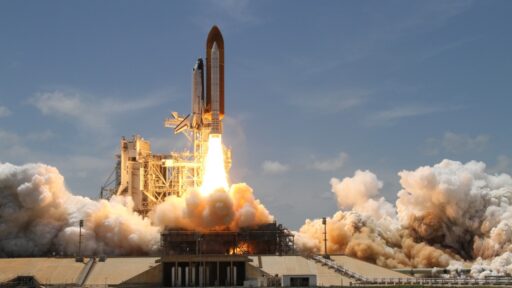
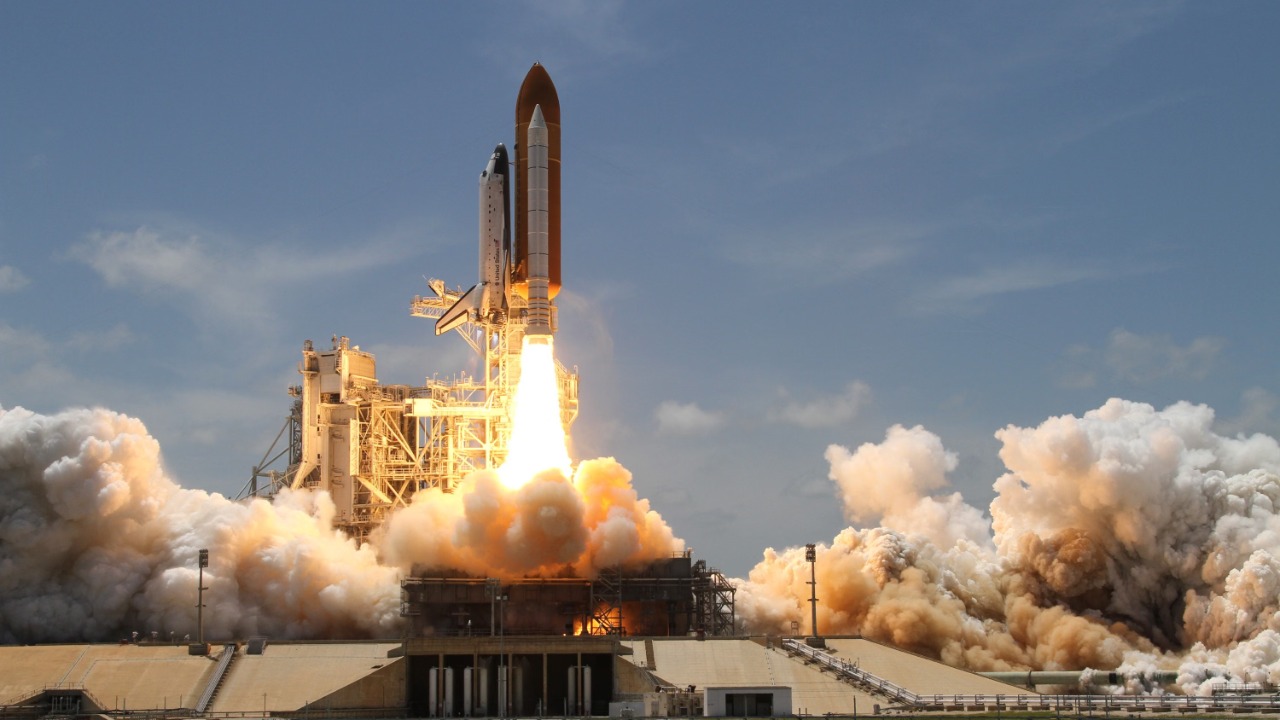
Shenzhou-23 launched from the Jiuquan Satellite Launch Center on May 24, 2026, aboard a Long March-2F rocket. Although the spacecraft is travelling only to low Earth orbit, the mission supports a much larger objective: developing the people, technology and operational experience required to place Chinese astronauts on the lunar surface by the end of the decade.
Shenzhou-23 Carried Three Astronauts to Tiangong
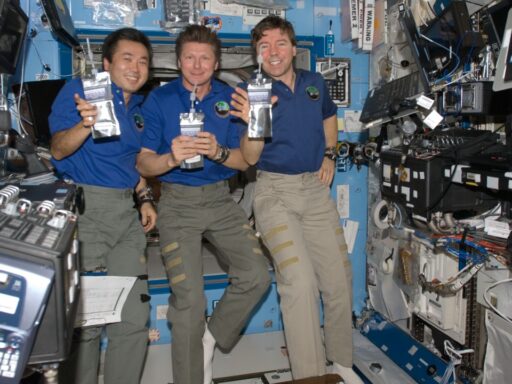
The Shenzhou-23 crew consists of mission commander Zhu Yangzhu, Zhang Zhiyuan and Li Jiaying, who is also known as Lai Ka-ying.
Li became the first astronaut from Hong Kong to participate in a space mission. Before joining China’s astronaut program, she worked as a police inspector and completed a doctorate in computer forensics.
The crew travelled to China’s permanently occupied Tiangong space station, where it was scheduled to complete an in-orbit handover with the astronauts of Shenzhou-21. That earlier crew had already spent more than 200 days aboard the station by the time Shenzhou-23 arrived.
Tiangong has become the central training and research platform for China’s human-spaceflight program. It allows astronauts and ground teams to practise docking, spacewalks, maintenance, emergency procedures and scientific operations without leaving Earth orbit.
Those activities may appear routine compared with a Moon landing, but lunar missions depend on the same underlying capabilities. Astronauts must operate independently, manage complex spacecraft and remain physically capable during missions that could last several weeks.
One Astronaut Is Expected to Spend a Full Year in Space
The most important feature of Shenzhou-23 is its planned long-duration human-spaceflight study.
One member of the crew is expected to remain aboard Tiangong for roughly one year, which would be China’s longest continuous human spaceflight. Chinese authorities had not initially confirmed which astronaut would complete the extended stay.
A year in orbit provides researchers with an opportunity to study changes that may not be fully visible during a conventional six-month mission.
Microgravity can reduce bone density, weaken muscles and change the distribution of fluids throughout the body. It can also affect vision, balance, the cardiovascular system and immune function.
China reportedly intends to build a detailed, multi-system record of how the astronaut’s body responds throughout the mission. Researchers can then compare medical measurements taken before launch, during the flight and after the astronaut returns to Earth.
Similar work has already been carried out through long-duration missions aboard the International Space Station. China now wants its own biological data, medical procedures and operational experience rather than depending entirely on research conducted by other countries.
Why a Year in Orbit Matters for a Moon Landing
A direct crewed lunar mission would be much shorter than a year-long stay aboard Tiangong. However, the physical duration is only one part of the challenge.
China’s first lunar astronauts will need to endure launch, extended weightlessness, docking operations, lunar gravity and a high-speed return through Earth’s atmosphere. They may also spend several days working inside relatively small spacecraft with limited medical support.
Studying astronauts during prolonged missions helps researchers identify risks early and develop countermeasures such as exercise routines, dietary plans and medical monitoring systems.
Long-duration experience also prepares China for ambitions beyond its first landing. Beijing is working with international partners on plans for an International Lunar Research Station, which is intended to support a more sustained scientific presence near the Moon’s south pole during the 2030s.
A temporary landing can be completed with a relatively short mission. Maintaining a lunar station would require crews to remain healthy and productive for much longer periods.
The Mission Includes Biological and Materials Research
Shenzhou-23 is expected to conduct dozens of scientific and technological projects aboard Tiangong.
Reported experiments include studies involving zebrafish and mouse embryos, allowing researchers to examine how microgravity influences early biological development. The mission is also expected to investigate human physiology and the production of high-performance rare-earth magnetic materials in orbit.
Space-based biology is especially important for long-term exploration because crews may eventually need to grow food, manage ecosystems and understand whether reproduction and early development are possible beyond Earth.
Materials research has a different purpose. Microgravity removes many of the effects caused by buoyancy and sedimentation, sometimes allowing researchers to manufacture or study materials with structures that are difficult to achieve on Earth.
Not every experiment will directly support the 2030 lunar landing. Together, however, they expand the scientific and technical experience needed for a mature space program.
China Still Needs an Entirely New Lunar Transportation System
The Long March-2F rocket used for Shenzhou-23 cannot send astronauts to the Moon.
China’s lunar-landing architecture will rely on the much more powerful Long March-10 rocket, along with the new Mengzhou crew spacecraft and the Lanyue lunar lander.
Under the announced mission plan, two Long March-10 rockets would be launched separately. One would carry the Mengzhou spacecraft and astronauts, while the other would carry the Lanyue lander. The vehicles would meet and dock in lunar orbit. Two astronauts would descend to the surface, complete their work and then return to the orbiting crew spacecraft for the journey back to Earth.
This two-launch design avoids the need for one enormous rocket carrying every mission element at once. It also introduces demanding rendezvous and docking requirements far from Earth.
China has been testing the systems needed for this architecture, including crew-escape technology, spacecraft recovery and reusable rocket components. Officials have said development of the Long March-10, Mengzhou and Lanyue systems is progressing toward the pre-2030 landing objective.
Shenzhou-23 does not replace those tests. It strengthens the human and operational side of the program while the lunar hardware continues to be developed.
Chang’e-7 Will Examine the Lunar South Pole
China’s robotic lunar program is also preparing the way for future astronauts.
The Chang’e-7 mission is scheduled for launch during the second half of 2026. It is designed to investigate the environment and resources around the Moon’s south pole, including areas where permanently shadowed terrain may contain water ice.
Water is one of the most valuable possible lunar resources. It could support astronauts directly and potentially be separated into hydrogen and oxygen for fuel or life-support systems.
Chang’e-7 is expected to use multiple spacecraft elements to examine the region in greater detail. It will be followed by Chang’e-8, which is intended to test technologies related to resource use and construction on the lunar surface.
These robotic missions reduce uncertainty before astronauts arrive. They can identify terrain hazards, analyse potential landing areas and determine whether local resources are realistically accessible.
China and the United States Are Entering a New Lunar Race
China’s 2030 target is often compared with NASA’s Artemis program.
NASA is currently preparing a sequence of increasingly complex missions intended to return astronauts to the Moon and establish a long-term presence. Its present plan includes testing commercial lunar landers in Earth orbit before attempting a crewed surface landing later in the decade.
The two programs use different approaches.
China’s lunar system is being developed primarily through state-controlled organizations and a clearly defined two-launch architecture. NASA relies on a combination of government hardware and commercial vehicles from companies such as SpaceX and Blue Origin.
Schedules on both sides remain uncertain. Human lunar missions require extremely reliable rockets, life-support systems, spacesuits, landers and docking equipment. A serious failure in any one of those areas could delay a landing by years.
China’s advantage may be the steady progression of its program. It has developed Tiangong, operated repeated crew rotations and completed increasingly ambitious robotic Moon missions.
NASA, however, has far more historical experience with crewed lunar operations and is working with a broad international partnership.
The Launch Was a Step, Not the Moon Mission Itself
Shenzhou-23 should not be mistaken for a direct test of China’s lunar spacecraft.
Its Long March-2F rocket, Shenzhou capsule and Tiangong destination belong to China’s established low-Earth-orbit program. The future Moon landing will use different vehicles and operate hundreds of thousands of kilometres farther away.
Its importance lies in preparation.
The mission will help China understand long-duration human health, train crews, test autonomous operations and increase confidence in running complex missions continuously. Those capabilities will support the first lunar landing and any attempt to establish a longer-term presence afterward.
China still must complete major tests of its Long March-10 rocket, Mengzhou spacecraft, Lanyue lander and lunar surface equipment. It must also demonstrate that those systems can work together reliably.
Nevertheless, Shenzhou-23 shows that the 2030 project is no longer just a distant announcement. China is building its lunar program through overlapping human, robotic and technological missions, each addressing a different part of the challenge.
The rocket that launched in May was not heading for the Moon. The experience gained from the people aboard it may help determine whether China reaches the lunar surface before the decade ends.