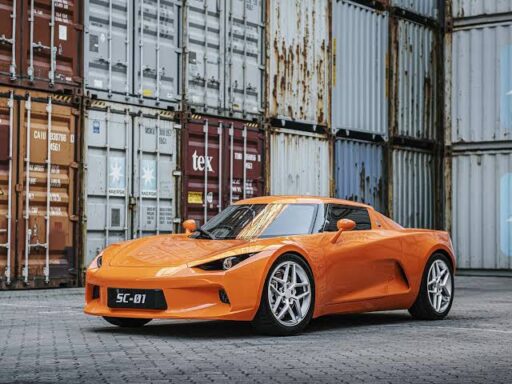
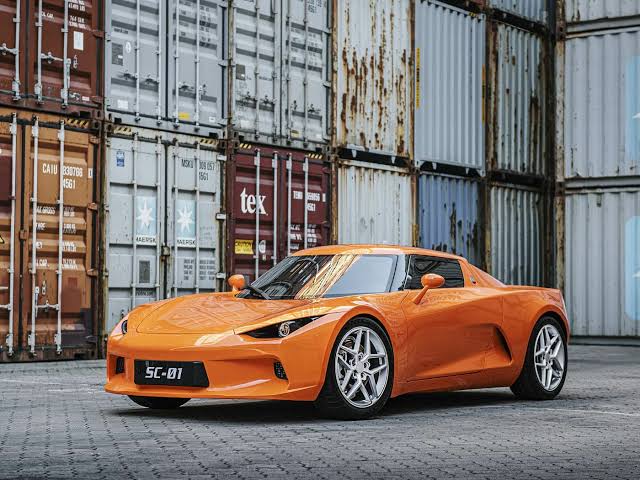

Affordable electric cars are becoming easier to find, but affordable electric sports cars remain extremely rare. Most performance EVs rely on enormous batteries, complex software and four-digit horsepower figures, often resulting in high prices and curb weights that would have seemed unthinkable for a traditional two-seat coupe.
The Chinese-built SC01 takes a very different approach. Developed as a compact, driver-focused electric sports car, it combines dual-motor all-wheel drive, nearly 430 horsepower and a claimed 0-to-62-mph time of 2.9 seconds with a curb weight of only 1,365 kilograms, or roughly 3,009 pounds. In China, it costs approximately $32,000 to $34,000 depending on exchange rates, placing it near the price of an entry-level Ford Mustang rather than an exotic EV.
The SC01 Prioritizes Lightness Over Extreme Power
Modern electric performance cars are often remarkably fast, but many achieve their acceleration by combining very large battery packs with increasingly powerful motors. That formula can deliver impressive numbers while producing vehicles weighing well over two tons.
The SC01 challenges that trend. Its dual electric motors generate a combined 320 kilowatts, equivalent to 429 horsepower, and 560 Nm of torque. One motor powers the front axle while the second powers the rear, creating an all-wheel-drive system capable of sending the car from zero to 62 mph in a claimed 2.9 seconds. Top speed is electronically limited to 124 mph.
Those figures are impressive, but the car’s weight may be more important than its output. At 1,365 kilograms, the SC01 is unusually light for a battery-electric vehicle and significantly lighter than many electric grand tourers and performance sedans. Top Gear’s early look at the SC01 notes that it weighs approximately 500 kilograms less than the MG Cyberster, another Chinese electric sports car.
The resulting power-to-weight ratio should allow the SC01 to deliver strong acceleration without relying on 700, 800 or 1,000 horsepower. More importantly, reduced mass may improve braking, direction changes, suspension response and driver confidence on narrow roads or racing circuits.
A Mid-Engine Layout Without a Combustion Engine
One of the SC01’s most unusual engineering decisions involves the location of its battery. Most electric vehicles use a skateboard-style platform with a large battery pack mounted beneath the passenger compartment. This arrangement can lower the center of gravity and maximize cabin space, but it also raises the seating position and can make a vehicle feel physically tall.
The SC01 instead places its 60-kWh battery behind the passenger compartment. The layout is designed to imitate the proportions and weight distribution of a traditional mid-engine sports car, even though the vehicle has electric motors rather than a gasoline engine.
Positioning the battery behind the two occupants allows for a lower roof, a low seating position and the visual proportions associated with cars such as the Lotus Elise, Alpine A110 and older mid-engine Italian coupes. The official Small Sports Car Company specification page describes the SC01 as a two-seat coupe built around a tubular spaceframe chassis with a “mid-engine” layout.
The car measures 4,106 millimeters long, 1,830 millimeters wide and only 1,170 millimeters tall. Its short 2,503-millimeter wheelbase and low body should give it a compact footprint compared with most current performance EVs.
The Chassis Looks Designed for Real Drivers
The SC01 is not simply a powerful motor package placed inside a dramatic body. Its chassis specification suggests that the development team has focused heavily on handling and driver feedback.
The car uses a tubular steel spaceframe rather than a conventional high-volume unibody platform. Its suspension includes horizontal pushrods, adjustable compression and rebound damping and independent control at each corner. Large brakes include six-piston front calipers and four-piston rear calipers, while lightweight 18-inch magnesium alloy wheels reduce unsprung mass.
The claimed center-of-gravity height is only 380 millimeters. Combined with the low seating position, compact dimensions and rear-mounted battery, that figure suggests the SC01 was designed to feel like a purpose-built sports car rather than a shortened electric sedan.
Drivers can reportedly select front-wheel drive, rear-wheel drive or all-wheel drive. That flexibility could make the car unusually engaging, allowing the same dual-motor system to prioritize efficiency, stability or rear-driven handling depending on the selected mode.
The Interior Rejects the Giant-Screen Trend
The SC01’s cabin follows the same lightweight philosophy as its chassis. Instead of filling the dashboard with multiple displays, large touchscreens and elaborate ambient lighting, the interior uses a relatively simple layout focused on the driver.
Carbon-fiber bucket seats, physical controls and a compact digital instrument display create an environment closer to a traditional lightweight sports car than a technology-heavy luxury EV. The car still includes Bluetooth audio, a six-speaker sound system and cruise control, but those features do not dominate the cabin.
This approach may appeal to enthusiasts who believe modern cars have become too dependent on touchscreen menus. A dedicated sports car benefits from controls that can be adjusted quickly without requiring the driver to look away from the road.
Practicality is naturally limited. The SC01 has only two seats and a 170-liter rear luggage compartment. However, that capacity may be sufficient for small bags, helmets or luggage for a short trip, which is appropriate for a compact performance coupe.
Its 311-Mile Range Requires Important Context
The SC01 uses a 60-kWh nickel-manganese-cobalt battery and carries a claimed range of approximately 311 to 323 miles, depending on the published figure. However, that number is based on China’s CLTC testing procedure, which generally produces more optimistic results than the EPA test used in the United States or the WLTP procedure used in Europe.
Real-world range is therefore likely to be lower, especially when the car is driven at high speed, used on a track or operated in cold weather. Even so, the relatively small battery contributes to the vehicle’s low weight and may still provide sufficient range for weekend driving and normal road use.
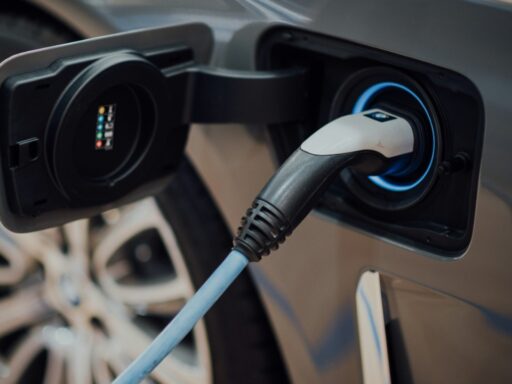
Peak charging speed is listed at 120 kW. That figure is lower than the 200-kW-plus rates offered by some new premium EVs, but the SC01’s smaller battery means it does not need to receive as much total energy. The practical charging experience will depend on the final charging curve rather than the peak number alone.
The $34,000 Price Applies to China
The SC01 officially launched in China at RMB 229,800. At the exchange rate used when the launch was reported, that equaled approximately $31,530, while more recent coverage has described the price as roughly $34,000. CnEVPost’s launch report confirms that the car is produced by Jiangxi Jiangling Group New Energy Vehicle and was introduced as a single dual-motor variant.
That domestic price makes the SC01 one of the most intriguing performance values in the Chinese market. It costs less than many electric family crossovers while offering acceleration associated with far more expensive sports cars.
International buyers should not expect the same price. Shipping, regulatory approval, taxes, tariffs, distribution costs, warranties and local assembly could substantially increase the final amount outside China. No official United Kingdom retail price has been announced.
The SC01 Is Preparing to Enter Europe and the UK
The SC01 is no longer expected to remain exclusively in China. Its European operation has stated that production will be limited to 1,000 units, making the overseas version a relatively rare model rather than a mass-market launch. The official European SC01 website describes the planned European release as a one-time limited edition.
The British distributor says the car is being prepared for a spring 2027 introduction, while right-hand-drive production deliveries have been reported for April 2027. Early vehicles are expected to be used for demonstrations, development and market preparation before customer deliveries begin.
There is currently no confirmed plan to sell the SC01 in the United States. Import tariffs, certification requirements and the small size of the affordable sports-car market would make an American launch difficult. The vehicle’s growing international attention may still encourage partnerships or limited-import solutions in the future, but any such possibility remains speculative.
A Different Future for Electric Performance Cars
The SC01 is significant because it rejects the idea that every electric performance car must be a heavy luxury product with extraordinary power and a six-figure price.
Its formula is far more traditional: two seats, low weight, compact dimensions, strong brakes, sophisticated suspension and enough power to be extremely fast. Electrification changes the powertrain, but the underlying philosophy remains connected to lightweight sports cars such as the Lotus Elise and Mazda MX-5.
Questions remain about production quality, international pricing, real-world range and long-term support. A small manufacturer must also prove that it can deliver parts, software updates and service once the first excitement surrounding the launch has passed.
Nevertheless, the SC01 demonstrates what can happen when electric-car engineering focuses on simplicity rather than excess. A 429-horsepower EV weighing around 3,000 pounds would be notable at almost any price. At roughly $34,000 in China, it becomes one of the most compelling examples of how quickly the performance-car market is changing.