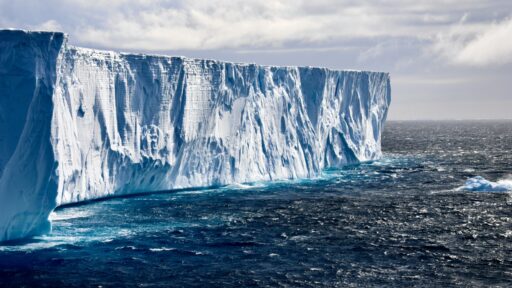
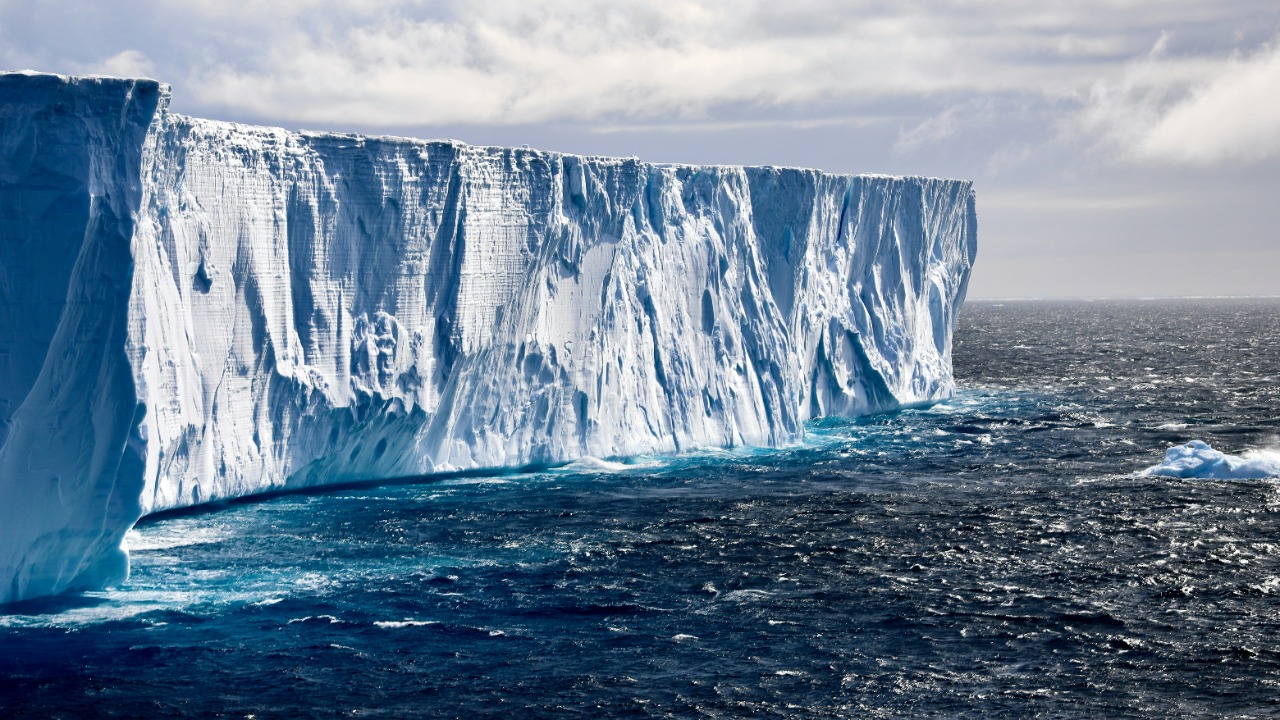

Antarctica’s Thwaites Glacier is once again living up to its ominous nickname. Researchers now warn that the floating ice shelf that helps hold this so‑called “Doomsday Glacier” in place could fracture and largely disintegrate within the year, accelerating the loss of ice into the ocean and raising the risk of faster sea level rise.
The warning follows new field measurements and satellite data showing that the ice shelf has thinned, cracked and loosened its grip on the seafloor. Scientists stress that the glacier will not vanish overnight, but the loss of its protective shelf would remove a critical brake on one of the most unstable parts of the West Antarctic Ice Sheet.
What has changed around Antarctica’s rapidly weakening Thwaites Glacier
Thwaites Glacier sits in West Antarctica and drains an area comparable in size to Great Britain into the Amundsen Sea. Its floating extension, or ice shelf, acts like a buttress that slows the land‑based ice behind it. According to researchers who have worked on and around the glacier, that buttress is now riddled with fractures and could break apart in large sections within months, exposing the glacier’s vulnerable front directly to the ocean.
Recent field campaigns have revealed that relatively warm, salty water from the deep ocean is reaching the base of Thwaites and eroding it from below. Instruments lowered through boreholes into the ice have measured rapid thinning where this warm water flows along the glacier’s grounding zone, the place where ice that rests on bedrock begins to float. As that grounding line retreats inland, more of the glacier starts to float and becomes sensitive to further ocean attack.
Satellite radar and optical imagery show that the ice shelf’s surface is now crisscrossed by widening crevasses and long rifts that cut across the flow. Some of these cracks align with zones of thinning at the base, a sign that structural weaknesses are propagating upward through the ice. Researchers cited in recent warnings say these fractures could link up quickly, causing large slabs of the shelf to calve away.
At the same time, the glacier’s flow speed has increased compared with earlier decades. As the shelf loses contact with pinning points on the seafloor, friction that once held the ice in place is reduced. Observations summarized in new reports describe how portions of the ice shelf are now moving more like a loose plate than a locked support, a configuration that rarely lasts long in such a dynamic environment.
The concern extends beyond Thwaites itself. Work described in recent research highlights that neighboring glaciers in the Amundsen Sea sector are also thinning and retreating, and that their combined potential for sea level rise rivals that of the rest of the Antarctic Ice Sheet. Thwaites sits near the center of this cluster of instability, which is why scientists treat its condition as a bellwether for the wider region.
Why the looming loss of Thwaites’ ice shelf matters right now
The immediate global concern is sea level. Thwaites currently contributes only a fraction of a millimeter per year to global sea level, but its catchment holds enough ice to raise seas by around 65 centimeters if it were to collapse completely. The glacier also buttresses parts of the wider West Antarctic Ice Sheet, which together contain several meters of potential sea level rise. Researchers quoted in new analyses warn that the loss of the ice shelf could be the first step in a longer chain of retreat that unfolds over centuries but locks in higher seas.
Even a modest acceleration of Thwaites would have consequences within the lifetimes of people living in low‑lying coastal cities. Projections discussed in recent modeling work indicate that if warm water continues to undercut the glacier and the ice shelf disintegrates, the rate of ice discharge into the ocean could roughly double. That would add several centimeters of sea level rise this century on top of contributions from Greenland, mountain glaciers and ocean thermal expansion.
For places such as Miami, Lagos, Kolkata and Rotterdam, a few extra centimeters can mean the difference between floods that occur once per decade and floods that hit several times a year. Higher background sea level lifts storm surges and king tides, pushing saltwater farther into drainage systems and groundwater. Urban planners already struggle to adapt to existing trends; a faster contribution from Thwaites would shorten the timelines for sea walls, managed retreat and other costly defenses.
The glacier also matters for global climate policy. Scientists have long debated whether parts of West Antarctica have already crossed a point of no return, a state known as marine ice sheet instability. If the bed beneath the ice slopes downward inland, retreat can become self‑sustaining once it starts. Observations summarized in recent briefings suggest that Thwaites may be entering such a phase in some sectors, especially where the grounding line has already pulled back onto deeper bedrock.
Yet researchers emphasize that human choices still shape how quickly these processes unfold. The amount of heat the ocean takes up depends on future greenhouse gas emissions. Studies highlighted in new coverage point out that lower emissions scenarios lead to slower ocean warming around Antarctica, which reduces the rate of undercutting at Thwaites and its neighbors. The glacier may still retreat, but doing so over a longer period gives societies more time to adapt.
There are also regional feedbacks to consider. As the ice shelf breaks apart, the newly exposed ocean surface will absorb more sunlight than the white ice it replaces, adding a small but real boost to local warming. Fresh meltwater pouring into the Amundsen Sea can change ocean circulation patterns, potentially feeding back into how heat is delivered to the ice front. These interactions are active areas of research, and scientists are racing to refine them in models before the system shifts into a new state.
What scientists and societies are preparing for as Thwaites’ future comes into focus
Researchers are already planning the next phase of fieldwork and monitoring to keep pace with the glacier’s rapid changes. Autonomous underwater vehicles, GPS stations on the ice and satellite missions will track how the front of Thwaites responds if large sections of the shelf break away. As summarized in recent explanations, these observations feed directly into ice sheet models that inform global sea level projections used by governments and insurers.
One priority will be to understand how quickly the glacier can adjust to the loss of its floating support. Some scenarios suggest a period of rapid acceleration immediately after the shelf disintegrates, followed by a slower phase as the glacier finds a new balance farther inland. Others indicate that if the bedrock topography is particularly unfavorable, retreat could continue in pulses as new cliffs of ice become unstable and break off. The only way to distinguish these paths is with high‑resolution data that capture the glacier’s response in real time.
Coastal communities, meanwhile, are being urged to factor the possibility of a faster contribution from West Antarctica into their planning. Reports such as recent assessments note that infrastructure designed for older, lower sea level projections could be underbuilt if Thwaites accelerates. Updating flood maps, revising building codes and reconsidering where to place critical facilities such as hospitals and power stations are all on the agenda in exposed regions.
Policymakers are also being pressed to connect the fate of Thwaites with decisions on fossil fuel use and climate finance. The physical processes at the glacier’s base are driven by heat that has already entered the ocean, which means some level of continued retreat is likely. However, every fraction of a degree of global warming avoided reduces the energy available to melt Antarctic ice. Linking that science to concrete emission targets and funding for adaptation in vulnerable countries is becoming an increasingly explicit part of climate negotiations.