
Luxury electric vehicles have spent years competing over familiar numbers.
More horsepower.
More range.
Faster charging.
Bigger screens.
Genesis has decided that its new flagship needs something considerably more memorable: rear-hinged coach doors, heated real-wood floors and front seats that can rotate 180 degrees.
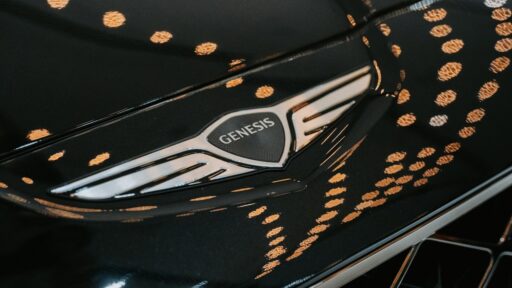
The new Genesis GV90 is the Korean luxury brand’s first full-size flagship electric SUV. The more extravagant GV90 Neolun takes ideas from the 2024 Neolun concept and, surprisingly, carries some of its wildest features into production. Genesis unveiled the production vehicle in San Francisco on August 19.
Underneath all the luxury theater is serious EV hardware too: a 123.5-kWh battery, dual electric motors producing up to 657 horsepower and an estimated range of roughly 310 miles in the seven-seat version.
But specifications may not be what makes people remember this SUV.
Those doors probably will.
The Coach Doors Actually Made It Into Production
Concept cars routinely appear with enormous openings and impractical doors.
Then engineers get involved.
Crash requirements appear.
Manufacturing costs become real.
The spectacular doors disappear.
Genesis somehow avoided that familiar outcome.
The GV90 Neolun uses what Genesis calls the Neolun Arch Gate, combining rear-hinged coach doors with a hidden B-pillar arrangement. When opened, the design creates an unusually large, unobstructed entrance to the cabin. Genesis describes it as the world’s first independently operating hidden-B-pillar coach-door system.
That independence is important.
A simpler pillarless coach-door design could require one door to be opened before the other.
Genesis developed a dual-motion hinge that first moves the rear door outward before rotating it open, allowing the rear and front doors to operate independently.
It sounds like a small engineering detail.
It is what makes the dramatic design practical.
Removing the B-Pillar Creates an Obvious Safety Problem
The B-pillar—the structural section normally located between the front and rear doors—is not merely there to make entering the rear seat slightly more annoying.
It contributes to the vehicle’s structural strength.
Removing the visible pillar therefore creates a serious challenge during a side impact or rollover.
Genesis says it compensated through substantial structural engineering.
The GV90 incorporates dual high-strength steel beams into its door architecture, while a reinforced structure surrounding the passenger compartment effectively creates a concealed roll cage.
Genesis has also developed an unusual roof airbag.
The company describes it as the world’s first application of such a system, forming part of a 12-airbag arrangement designed to protect occupants.
That demonstrates how much engineering was required simply to preserve one of the concept’s signature design elements.
Coach doors may look glamorous.
Making pillarless ones survive modern crash requirements is much less glamorous—and considerably harder.
The Heated Floor May Be Even Stranger
Luxury vehicles already heat almost everything.
Seats.
Steering wheels.
Armrests.
Windshields.
Genesis has moved on to the floor.
The GV90 Neolun uses real wood veneer flooring with integrated radiant heating.
It sounds excessive until the inspiration is considered.
Genesis says the idea draws from the traditional Korean ondol heating system, where heat is distributed through the floor of a home.
Instead of simply adding another gadget, Genesis is trying to translate a piece of Korean culture into automotive luxury.
That matters because Genesis has spent much of its relatively short existence competing with European luxury brands.
Copying Mercedes-Benz feature for feature would only take it so far.
Creating distinctly Korean interpretations of luxury gives the company something more recognizable.
The heated floor is a good example.
Nobody was exactly demanding it.
But people will remember it.
Even the Doors and Armrests Can Be Heated
The radiant floor is part of a broader approach to cabin warmth.
Heated surfaces extend into areas such as the door cards and armrests in the Neolun, creating something closer to a heated living space than a conventional car interior.
This could make more sense in an EV than it initially appears.
Heating occupants and surfaces directly can sometimes be more efficient than using large amounts of energy to warm all the air inside a cabin.
For an electric vehicle, cabin heating matters because every bit of energy ultimately comes from the traction battery.
Genesis, however, is clearly selling the feature primarily as comfort rather than an efficiency experiment.
The message is essentially:
Why heat only the seat when the entire environment can feel warm?
The Front Seats Can Turn Around
Then things become even less conventional.
When the GV90 Neolun is parked, its front seats can rotate 180 degrees.
Driver and front passenger can turn around to face the people sitting behind them, creating a four-person lounge arrangement.
The idea sounds like something designed for autonomous cars.
The GV90 is not a fully autonomous vehicle, so nobody will be spinning the driver’s seat around while traveling down a highway.
But when parked—perhaps while charging—the feature could make the enormous cabin more useful.
Instead of everyone facing forward toward an empty windshield, occupants can face one another.
Genesis is effectively asking buyers to stop thinking of the interior purely as rows of seats.
It wants the cabin to function temporarily as a room.
The Four-Seat Version Takes That Idea Much Further
The Neolun can be configured around an Executive Suite-style four-seat interior.
That is where the vehicle begins targeting chauffeur-driven luxury rather than ordinary family SUV duty.
Features include privacy blinds, pop-out tables and a refrigerator.
Materials are appropriately extravagant.
Genesis offers combinations involving natural wood, leather, cashmere and even stone.
The company has also given its color combinations suitably luxurious names, including Veiled Indigo with Puglia Green and Tyrian Purple with Travertine Beige.
None of this is necessary transportation.
That is exactly the point.
At this level, luxury automakers are not selling transportation alone.
They are selling an environment.
The Roof Can Control Light in Six Different Zones
Even the glass above passengers gets an unusual degree of customization.
Genesis’ Smart Vision Roof can adjust opacity independently across six zones.
That means passengers can potentially control how much light enters different parts of the cabin without everyone sharing the same roof setting.
It is a small detail, but it fits the broader philosophy of the Neolun.
Individual passengers get their own environment.
That increasingly seems to be where ultra-luxury cars are heading.
The rear passenger is no longer simply someone occupying another seat.
He or she gets individualized climate, lighting, entertainment and privacy.
Genesis Hasn’t Forgotten About Giant Screens
Despite emphasizing physical materials and hospitality, Genesis has not resisted the industry’s obsession with displays.
The GV90 includes a 23.6-inch OLED screen that can expand when the vehicle is parked.
The expanded display grows to approximately 1.7 times its normal size, turning the front of the cabin into something closer to a small cinema.
There is also a 25-inch head-up display, while Genesis’ Pleos Connect platform handles the vehicle’s infotainment experience.
The distinction is that Genesis is not making the screen the entire interior.
Physical materials still matter.
Wood remains wood.
Seats are still designed around comfort.
Buttons and surfaces coexist with digital technology.
That may appeal to luxury buyers who are not convinced that replacing every physical control with a touchscreen automatically makes a vehicle more expensive-feeling.
It Has a 123.5-kWh Battery
Beneath the unusual interior sits a very large battery.
Genesis says the GV90 uses a 123.5-kWh battery pack on its new eMP platform.
The seven-seat model is expected to deliver around 310 miles of range.
That is respectable rather than revolutionary given the battery’s enormous capacity.
But efficiency is not necessarily the priority.
The GV90 is large.
It is heavy.
It carries luxury equipment.
And buyers in this segment are likely to care about comfort and performance at least as much as maximizing miles per kilowatt-hour.
Fast charging becomes particularly important with such a large battery.
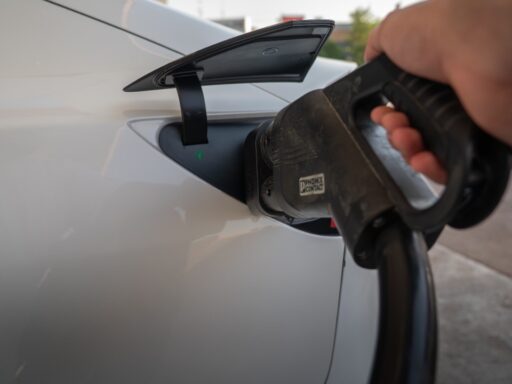
Genesis says the GV90 can charge from 10% to 80% in approximately 22 minutes using a 350-kW DC fast charger.
If real-world charging performance approaches that claim, it could make long-distance travel much easier.
Up to 657 Horsepower Should Be More Than Enough
Luxury does not mean slow.
The GV90’s dual-motor electric powertrain can produce as much as 657 horsepower, giving the enormous SUV serious performance potential.
Genesis also equips the vehicle with technologies including air suspension, rear-wheel steering and an electronically controlled limited-slip differential.
Rear-wheel steering is particularly useful on something this large.
At lower speeds, turning the rear wheels opposite the fronts can reduce the turning circle.
At higher speeds, moving them in the same direction can improve stability.
That could make a massive flagship SUV feel less cumbersome in parking lots and urban streets.
For a vehicle likely to spend considerable time carrying passengers through cities, that may matter more than the headline horsepower number.
The GV90 Is Genesis’ Attempt to Move Beyond “Value Luxury”
Genesis has faced an unusual problem since becoming a standalone luxury brand.
Its vehicles have frequently offered impressive equipment and design.
But established competitors have something Genesis cannot manufacture overnight:
history.
Mercedes-Benz has more than a century of automotive heritage.
BMW has decades of luxury-performance credibility.
Rolls-Royce operates in an entirely different cultural category.
Genesis was formally launched as a standalone brand only in 2015.
That makes competing purely on prestige difficult.
The GV90 suggests another strategy.
Don’t imitate the established luxury hierarchy.
Offer things the established brands don’t.
Pillarless coach doors.
Heated wood floors.
Rotating seats.
A zoned smart roof.
A roof airbag.
That gives customers a reason to talk about the Genesis rather than merely asking whether it is cheaper than a comparable Mercedes.
China May Be Influencing What Luxury Means
There is another interesting element behind the GV90.
China’s luxury EV industry has rapidly normalized features that would once have seemed extravagant even in expensive European vehicles.
Rear refrigerators.
Huge entertainment displays.
Reclining executive seats.
Advanced massage systems.
Extensive ambient lighting.
Highly configurable cabins.
Business Insider notes that several GV90 Neolun features resemble trends already popular in China’s increasingly competitive high-end EV market.
That matters because China has become one of the places where the definition of automotive luxury is changing fastest.
Traditional luxury focused heavily on materials, craftsmanship and brand heritage.
Chinese EV manufacturers increasingly add technology, entertainment and passenger comfort to that equation.
Genesis appears to be combining both philosophies.
The Competition Is Getting Serious
The GV90 enters an increasingly crowded high-end electric SUV market.
Potential rivals include the Mercedes-Maybach EQS SUV, Cadillac Escalade IQ and Lucid Gravity, while the Neolun’s positioning inevitably invites comparisons with vehicles from Bentley and Rolls-Royce.
That is ambitious territory.
Genesis does not have the badge recognition of Rolls-Royce.
It may not need it.
A buyer considering an expensive EV may value technology differently from someone buying a traditional V12 luxury sedan.
That creates an opening for newer brands to redefine what an expensive car should offer.
How Much Will the GV90 Neolun Cost?
Genesis has not yet announced final U.S. pricing.
The regular GV90 is widely expected to enter six-figure territory, while the more elaborate Neolun should sit significantly higher.
Genesis says the GV90 family will begin going on sale in early 2027.
That pricing decision will be crucial.
If Genesis gets too close to established ultra-luxury brands, some customers may simply choose the badge with greater prestige.
Price it meaningfully below them, and the Neolun could offer an extraordinary amount of technology and theater for the money.
The Heated Floor Isn’t Really the Point
It would be easy to dismiss the GV90 Neolun as a collection of extravagant gimmicks.
Who needs a heated wooden floor in an SUV?
Who needs front seats that turn backward?
Why does a roof need six individually adjustable opacity zones?
But luxury cars have never been about need.
The more interesting point is that Genesis is developing its own definition of excess.
Instead of trying to make another electric SUV distinguished primarily by acceleration and touchscreen size, it is concentrating on the experience of occupying the vehicle.
The coach doors make getting inside feel like an event.
The rotating seats turn the cabin into a lounge.
The heated floor borrows from Korean domestic architecture.
The materials emphasize physical luxury.
And underneath it all sits a 657-horsepower electric platform with a massive battery and rapid charging capability.
The GV90 Neolun therefore represents something more interesting than another expensive EV.
It is Genesis asking whether a young luxury brand can compete with companies carrying decades—or centuries—of prestige by simply offering customers an experience those older brands don’t.
If it works, heated floors and bizarre doors may end up being far more important to Genesis than another few miles of electric range.