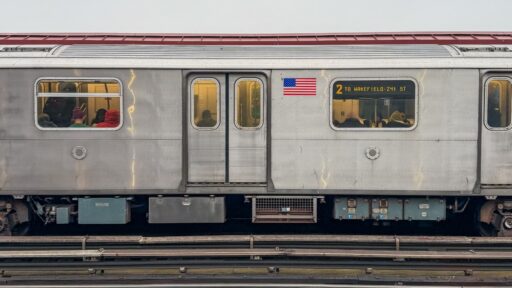
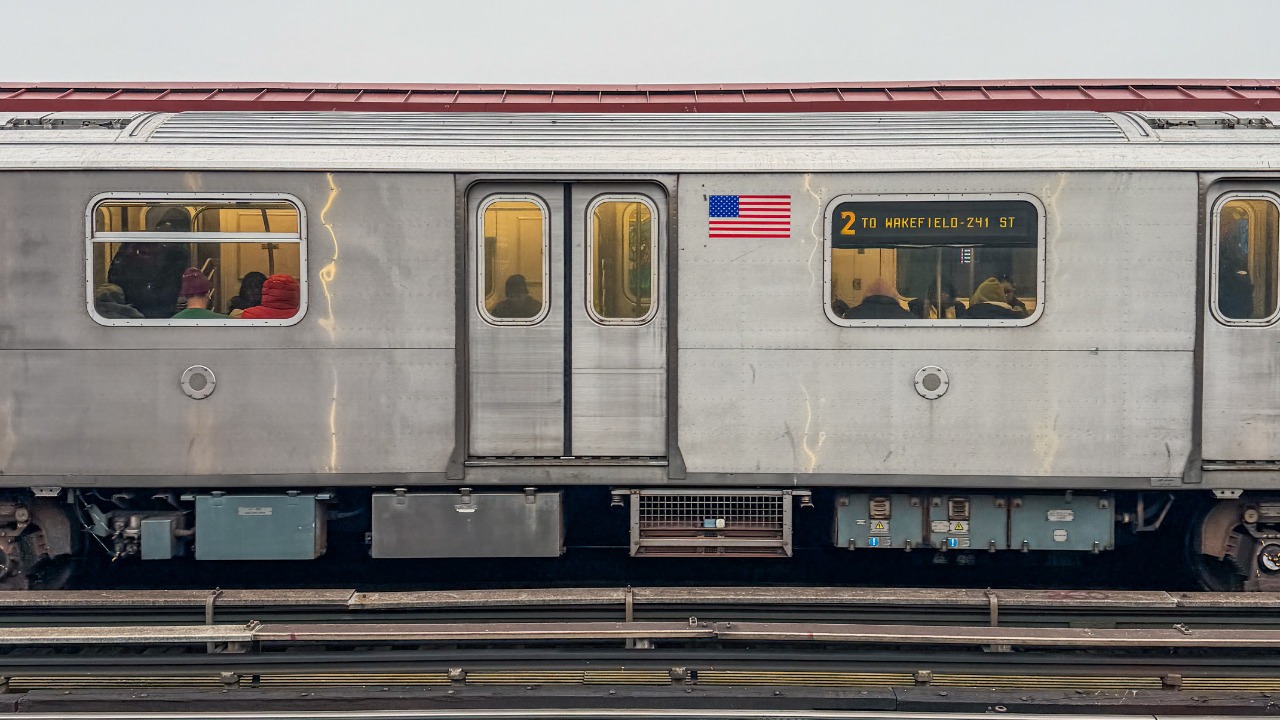

For decades, NYC Subway Cars carried millions of passengers through crowded tunnels beneath Manhattan, Brooklyn, Queens and the Bronx. When many of those trains reached retirement age, their final destination was not a scrapyard or railway museum.
It was the Atlantic Ocean.
Between August 2001 and April 2010, the Metropolitan Transportation Authority deployed more than 2,500 retired subway cars at approved underwater sites along the East Coast. Once cleaned and prepared, the empty steel shells were transported by barge and deliberately lowered or pushed into the sea to become artificial reefs.
What initially looked like an unusual disposal programme created hard underwater habitat on stretches of seabed that had offered marine animals relatively little shelter. Today, the submerged trains support invertebrates, fish and recreational diving, giving some of New York’s best-known subway cars a second life far removed from the city.
The MTA Had Thousands of Old Cars to Retire
The programme began as New York City Transit was replacing ageing fleets with newer rolling stock. Among the trains leaving service were the famous “Redbirds,” a group of cars known for the deep red paint applied during rebuilding programmes in the 1980s.
Discarding hundreds of large railcars presented a difficult logistical challenge. Conventional scrapping required transportation, dismantling and extensive material processing. At the same time, several coastal states were seeking durable structures for artificial-reef programmes.
The two needs aligned. Instead of treating every retired carriage entirely as metal waste, the MTA could donate prepared shells to state marine agencies. The cars eventually reached reef sites off New Jersey, Delaware, Maryland, Virginia, South Carolina and Georgia. The New York Transit Museum’s history of the reefing programme describes the project as an unprecedented recycling effort that transformed obsolete trains into marine habitat.
The Trains Were Not Simply Dumped Into the Ocean
Photographs of subway cars being pushed from barges can make the programme look like uncontrolled ocean dumping. In reality, artificial-reef material requires preparation before deployment.
The cars were reduced to cleaned structural shells so they would not release loose fittings, oils or other unwanted materials into the marine environment. Environmental agencies reviewed the preparation process, particularly because older transit equipment could contain asbestos and other substances requiring controlled removal or encapsulation.
The US Environmental Protection Agency’s current vessel-to-reef guidance identifies fuels, oils, asbestos, polychlorinated biphenyls, paint residue, mercury, refrigerants and floating debris as potential concerns in artificial-reef projects. Materials must be removed, stabilised or otherwise managed before a structure is approved for placement.
New Jersey environmental documentation explained that remaining non-friable asbestos in the subway cars was sealed with a non-toxic coating. The primary human-health danger from asbestos comes when airborne fibres are inhaled, a pathway that differs significantly once intact material is sealed and submerged. The cars were therefore prepared according to the environmental standards accepted for the project rather than being discarded in operational condition.
Subway Cars Are Surprisingly Effective Reef Structures
A large part of the Atlantic seafloor along the Mid-Atlantic coast consists of relatively flat sand. Such environments can support marine life, but they provide less hard surface and vertical shelter than rocky outcrops or natural reefs.
A subway car changes that environment immediately. Its steel body rises above the seabed, while its windows, doorways and hollow interior create openings of different sizes. The structure offers attachment points for stationary organisms and refuge for animals trying to avoid currents or predators.
NOAA explains that artificial reefs add hard substrate and vertical complexity to places where those features may be limited. Once deployed, the surfaces can be colonised by mussels, sponges, corals and other encrusting organisms. Smaller animals then use the structure for food and shelter, attracting larger fish.
The shape of a subway car happens to suit that purpose unusually well. Its broad base helps it remain upright, its weight limits movement, and its many openings allow water and marine animals to pass through. It resembles a large prefabricated reef module, even though its original designers never intended it to leave the railway.
Delaware’s Redbird Reef Became the Programme’s Best-Known Site
The most famous resting place for the retired trains is Delaware’s Redbird Reef, located roughly 16 miles from the Indian River Inlet.
The reef covers approximately 1.3 square miles of ocean floor and contains more than 700 repurposed Redbird subway cars. Those trains share the site with rock, concrete, decommissioned military vehicles, barges and retired vessels. Delaware has received additional subway cars for other reef locations, making the trains an important part of the state’s wider artificial-reef network.
The name preserves a visible piece of New York transit history even though the cars’ red paint has gradually disappeared beneath corrosion and marine growth. What once carried commuters through subway tunnels now sits in approximately 75 to 80 feet of seawater, surrounded by fish rather than station platforms.
EPA divers who inspected early deployments reported that the cars remained intact, accumulated marine growth and attracted species including flounder, tautog and sharks. The successful Delaware deployment encouraged other states to accept additional cars for their own reef programmes.
Marine Life Gradually Takes Over the Carriages
The transformation does not occur instantly. A newly deployed subway shell initially remains recognisable, with its stainless-steel sides and familiar rectangular openings still visible.
Microorganisms and algae begin settling on the surface. Mussels, barnacles, sponges and other attached invertebrates follow, turning smooth metal into a textured feeding environment. Small fish use the interior and spaces around the underframe for cover, while larger predators patrol the outside.
Over time, the railway identity becomes less obvious. Corrosion removes exposed metal, sediment collects around the base and marine growth covers the roof and walls. The cars function less like abandoned machinery and more like part of an interconnected reef system.
NOAA research has found that appropriately designed artificial reefs can support fish densities, biomass and species diversity comparable with nearby natural reefs. However, the results depend on location, construction material, layout and management. Artificial reefs are therefore useful habitat tools, but they are not interchangeable solutions that will work equally well in every marine environment.
The Reefs Also Attract Fishers and Divers
The submerged subway cars provide more than ecological structure. Their predictable locations attract recreational anglers searching for reef-associated fish, while their unusual history makes them appealing destinations for experienced scuba divers.
Artificial reefs can concentrate marine activity around known coordinates, allowing boats to find productive fishing areas without searching across featureless seabed. They can also reduce some pressure on naturally occurring reefs by creating additional destinations, although concentrating fish may make them easier to catch if fisheries are not managed carefully.
Divers encounter rows of carriages that still resemble an underwater transit system. Some cars remain upright, while others have shifted, settled into sediment or deteriorated. Entry into artificial structures can carry entanglement, collapse and overhead-environment risks, so the sites require suitable experience and conditions rather than casual exploration.
Not Every Artificial Reef Is Automatically Beneficial
The subway project is often presented as a perfect example of recycling, but artificial reefs require careful regulation. Poorly selected materials can break apart, move during storms or introduce pollutants. Structures placed in unsuitable locations may damage existing habitat or interfere with fishing and navigation.
There is also an ongoing scientific question about whether artificial reefs create additional fish production or mainly attract animals from surrounding areas. Evidence shows that the structures reliably concentrate organisms, while their effect on the total regional population can vary by species and location.
That is why modern projects rely on environmental preparation, permitted locations and continued monitoring. A subway carriage becomes useful reef material only after unsuitable components are removed and marine authorities determine that its structure and destination are appropriate.
The Last Stop Came in 2010
The MTA’s artificial-reef programme ended in April 2010 after more than 2,500 cars had been deployed. Subway fleets retired later were generally dismantled or processed through conventional recycling instead. The Transit Museum notes that most cars from the R42 fleet entered the reefing programme, while those retired after it ended were sent for scrap.
The programme’s legacy remains visible beneath the Atlantic. Its trains have spent more than a decade being reshaped by saltwater, currents, sediment and marine organisms.
New Yorkers once saw these cars arrive covered in graffiti, crowded with commuters and rattling through underground stations. On the ocean floor, they perform a quieter service. Their windows have become entrances for fish, their roofs support colonies of invertebrates, and their empty interiors provide shelter where little solid habitat previously existed.
For thousands of retired subway cars, the end of the line was not truly the end. It was the beginning of an entirely different journey beneath the sea.