
Somalia may be heading toward an exceptionally dangerous rainy season as two powerful climate patterns develop at the same time.
Researchers warn that the October-to-December 2026 Deyr rains could coincide with a strong El Niño and a positive Indian Ocean Dipole. That combination has occurred during only two comparable recent seasons—1997 and 2023—and both produced exceptional rainfall and widespread flooding.
The latest forecasts indicate an even stronger extreme-rainfall signal than scientists saw at the same stage before the devastating 2023 floods. Researchers therefore say governments, donors and humanitarian organisations must release funding and begin protective work before the rains arrive.
Waiting until communities are already underwater would make emergency operations more expensive, difficult and dangerous.
Why the 2026 Deyr Season Is Causing Alarm
Somalia has two principal rainy seasons. The Gu season generally runs from March to June, while the shorter Deyr season usually occurs between October and December.
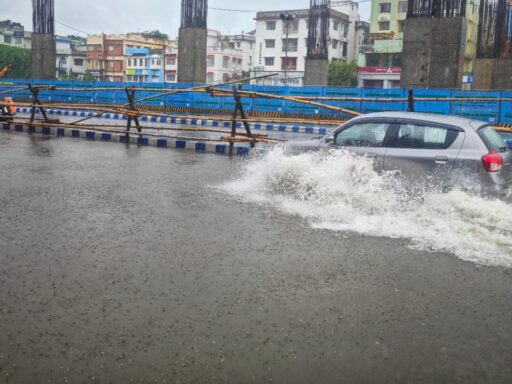
Deyr rainfall is essential for agriculture, livestock and water supplies. However, exceptionally intense rain can overwhelm rivers, damage settlements and create destructive flash floods.
Researchers led by Cardiff University are examining lessons from Somalia’s 1997 and 2023 flood disasters. Their analysis has been released before peer review because the current forecast has urgent implications for planning.
The team says the 2026 Deyr season is likely to develop while both El Niño and the Indian Ocean Dipole are active. These large-scale climate systems can reinforce weather patterns that bring unusually heavy rain to the Horn of Africa.
The World Meteorological Organization said in June that El Niño had an 80 percent likelihood of developing during June to August 2026, with probabilities near or above 90 percent that it would continue until at least November. Most forecast models indicated that the event would become at least moderate and possibly strong.
That timing places its development directly ahead of Somalia’s Deyr season.
El Niño Can Bring Heavier Rain to the Horn of Africa
El Niño begins when surface waters in the central and eastern equatorial Pacific become unusually warm.
Although the warming occurs thousands of kilometres from Somalia, it changes atmospheric circulation and can influence rainfall across much of the world.
Its effects vary between events, but El Niño is commonly associated with wetter conditions in parts of the Horn of Africa. It can increase the likelihood of persistent rain, intense storms and flooding during the region’s short-rain season.
The warming does not guarantee that every part of Somalia will experience the same rainfall. Local conditions, wind patterns and the Indian Ocean can alter the final outcome.
However, seasonal forecasting does not need to predict the exact rainfall total in every district to support early action. A strong probability of a damaging event can justify repairing flood defences, moving supplies and warning exposed communities.
The Indian Ocean Dipole Could Intensify the Risk
The Indian Ocean Dipole measures the difference in sea-surface temperatures between the western and eastern tropical Indian Ocean.
During its positive phase, waters near the western Indian Ocean can become warmer relative to those farther east. This can alter winds and increase moisture reaching East Africa.
El Niño and a positive Indian Ocean Dipole do not always occur together. When they do, their combined influence may substantially increase the risk of extreme Deyr rainfall.
The same pairing was present in 1997 and 2023. Both seasons produced major floods, but researchers say the 1997 rainfall was considerably more extreme.
Current forecasts show a stronger indication of exceptional rain than was visible at the equivalent point before the 2023 disaster, although seasonal models still contain uncertainty.
The concern is not simply that another flood will occur. It is that the event could approach or exceed a level Somalia’s current preparedness systems have never faced.
The 1997 Floods Provide a Disturbing Comparison
The 1997 Deyr season remains one of Somalia’s most serious flood disasters.
Exceptionally heavy rain caused rivers to overflow, settlements to become isolated and crops and livestock to be lost. Transport routes, water systems and health services were severely disrupted.
Those floods occurred before many of Somalia’s current early-warning and humanitarian coordination systems existed. Communities had fewer opportunities to receive forecasts, strengthen riverbanks or evacuate before conditions deteriorated.
Somalia was better prepared when similar climate conditions returned in 2023. Yet researchers caution that the 2023 event was not as intense as 1997.
The lower death toll in 2023 demonstrates that preparation may save lives, but it does not prove existing systems could cope with a substantially larger disaster.
Early Action Helped Before the 2023 Floods
Humanitarian organisations spent approximately $24 million on anticipatory measures before and during Somalia’s 2023 floods.
It was the largest anticipatory-action operation linked to a seasonal forecast at that time. Work included repairing breaks in riverbanks, pre-positioning emergency supplies, protecting water sources and buildings, restocking health facilities and distributing early warnings.
The floods still caused 188 deaths, widespread displacement and severe damage. However, the reported death toll was approximately 90 percent lower than during the comparable 1997 event.
Researchers describe the 2023 response as an important demonstration of what can be achieved when forecasts lead to action.
They do not regard it as proof that Somalia is ready for 2026.
Exposure differed between the two events, and the academic analysis has not established that anticipatory measures alone caused the reduction in mortality. A larger flood could overwhelm repaired embankments, evacuation routes, aid warehouses and local response teams.
Somalia Is Already Struggling With Severe Drought and Hunger
The flood threat is arriving while Somalia remains deeply affected by drought.
Nearly 6.5 million people were projected to face crisis-level or worse food insecurity by the end of March 2026. Around 1.84 million children under five were expected to experience acute malnutrition during the year, including almost 500,000 facing severe malnutrition.
Low rainfall had already caused water shortages, crop failures, livestock deaths, rising food prices and displacement.
Heavy rain might appear beneficial after drought, but a rapid shift from drought to flooding can create additional damage rather than recovery.
Dry and degraded soils may struggle to absorb intense rainfall. Water can run quickly across the surface, producing flash floods and erosion. Flooding may then destroy the remaining livestock, crops, homes and roads of families that have already exhausted their resources during drought.
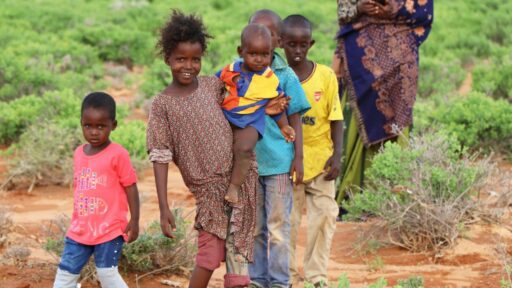
Displaced communities are particularly vulnerable because they may live in temporary shelters located near rivers, drainage channels or low-lying land.
Flooding Could Create a Major Public-Health Emergency
The danger continues after floodwater begins to recede.
Contaminated water can spread cholera and other diarrhoeal diseases. Damaged latrines, overflowing waste sites and polluted wells may leave communities without safe drinking water.
Standing water can also expand mosquito breeding areas and increase the risk of malaria.
Health facilities may become inaccessible when roads and bridges are damaged. Clinics could run short of medicines, clean water, electricity and staff while patient numbers are increasing.
Pre-positioning health supplies is therefore one of the most important early measures. Medicines, water-treatment materials, nutritional products and mobile-clinic equipment must be placed where they can still be reached if transport routes fail.
Protecting wells and boreholes before flooding begins can also prevent contamination that would otherwise require expensive emergency water deliveries.
River Communities Face the Greatest Immediate Danger
The Juba and Shabelle river systems create particular risks.
These rivers support farming and settlements across southern Somalia, but broken or weak embankments can allow floodwater to spread across large areas.
Repairing known breaches before the rainy season is more effective than trying to close them while rivers are rising. Authorities also need updated maps showing which communities, roads, schools, farms and health centres would be affected under different flood scenarios.
Warnings must reach people in languages and formats they understand. A technical seasonal forecast has limited value when communities do not know what action to take or where to evacuate.
Effective early warning therefore requires local radio, mobile messages, community leaders and clearly identified evacuation routes.
Humanitarian Funding Has Fallen as Costs Have Increased
Researchers say Somalia’s preparation challenge is being made worse by declining humanitarian funding.
Funding has fallen sharply since the 2023 floods, while operational costs have reportedly increased by approximately 25 percent because of disruption to regional supply chains associated with the closure of the Strait of Hormuz.
Higher costs mean the same amount of aid purchases less fuel, food, medicine, transport and protective equipment.
Late funding would create an additional disadvantage. Once heavy rain begins, roads may become impassable, air transport may become necessary and goods may be harder to obtain.
Anticipatory financing allows agencies to purchase supplies earlier, strengthen infrastructure and arrange transport before demand and prices rise.
Researchers are calling for flexible, front-loaded funding rather than money that becomes available only after strict emergency thresholds have been crossed.
Delivery Capacity Matters as Much as the Funding Total
Simply announcing money is not enough.
Humanitarian organisations need staff, warehouses, transport contracts, cash-payment systems, communications equipment and access agreements. They also need procedures that allow funds to be released quickly when forecast triggers are reached.
Somalia’s security conditions create further complications. Armed conflict and territorial restrictions can prevent humanitarian teams from reaching some exposed communities.
Aid workers may face threats, checkpoints and limits on movement at the same time that floods are cutting physical access.
Investment must therefore support local organisations and delivery networks that are already present in high-risk areas. These groups may be able to distribute warnings, cash assistance and essential supplies more quickly than external teams arriving after a disaster.
Climate Change Could Make the Rainfall More Severe
El Niño and the Indian Ocean Dipole are naturally occurring climate patterns. Climate change does not create every individual event, but it can increase its potential consequences.
A warmer atmosphere can hold more moisture, allowing storms to produce heavier rainfall when the necessary weather systems develop.
Researchers note that global temperatures have risen by approximately 0.7°C since the extreme 1997 Somalia floods. That additional warming increases atmospheric moisture and may raise the potential intensity of rainfall.
The World Meteorological Organization says there is no established evidence that climate change is increasing the frequency or strength of El Niño itself. However, a warmer ocean and atmosphere can amplify associated hazards, including heatwaves and heavy precipitation.
This means historical events may no longer represent the upper limit of what communities should prepare to face.
Forecasts Still Contain Uncertainty
A warning about a potentially unprecedented event is not a declaration that record flooding will definitely occur.
Seasonal forecasts become more reliable as the target period approaches. El Niño’s final strength, the Indian Ocean Dipole, local wind patterns and the exact position of rainfall systems can still change.
Different regions of Somalia may receive very different rainfall totals. Some areas could experience destructive flooding while others receive more manageable rain.
Uncertainty is not a reason to delay all preparation.
Emergency planners routinely make decisions before every detail is known. The relevant question is whether the probability and potential consequences are serious enough to justify preventive spending.
When millions of vulnerable people are exposed, repairing riverbanks or stocking clinics may remain worthwhile even when the worst-case forecast does not occur.
The Opportunity to Act Exists Before the Rains Arrive
El Niño is one of the world’s most predictable major climate patterns. That gives Somalia and its partners a valuable planning window that does not exist before sudden disasters such as earthquakes.
Researchers say decisions made in the coming weeks will determine whether early action reaches the necessary scale before flood impacts peak.
The priorities include strengthening embankments, protecting water infrastructure, preparing shelters, pre-positioning relief supplies, supporting health centres, distributing cash and ensuring warnings reach exposed communities.
Preparation cannot prevent every flood. It can reduce the number of people trapped without food, clean water, medical care or a safe route out.
Somalia’s 2023 Response Was a Beginning, Not the Final Test
Somalia enters the coming Deyr season with stronger forecasting and early-action systems than it had in 1997.
The 2023 experience showed that governments and humanitarian organisations can use seasonal information to intervene before a flood reaches its peak.
The danger is assuming that previous success guarantees readiness for a larger event.
Researchers describe 2023 as a successful rehearsal. The 2026 combination of El Niño, the Indian Ocean Dipole, existing hunger, reduced aid funding and rising operational costs could create a far more difficult emergency.
The forecasts may still change, but the potential consequences are too serious to ignore.
Somalia does not need to wait for flooded towns and broken roads to prove the warning was justified. The country has an opportunity to act while supplies can still be moved, river defences can still be repaired and exposed communities can still prepare.