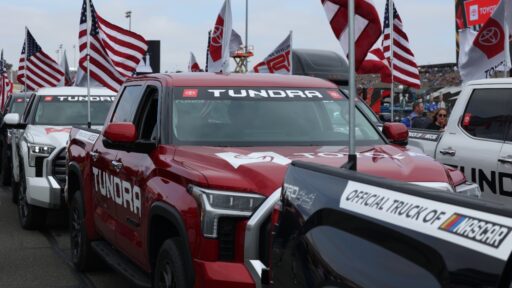

Toyota has announced another safety recall involving certain 2024 Toyota Tundra pickup trucks after discovering that manufacturing debris left inside their engines could damage a critical bearing and cause a sudden loss of power.
The latest recall involves approximately 44,000 non-hybrid Tundras in the United States. Federal recall documents list 43,566 potentially affected vehicles equipped with a specific configuration of Toyota’s V35A engine. The affected trucks were produced between February 7 and August 5, 2024.
What Is Wrong With the Tundra Engines?
During engine production, small pieces of machining debris may not have been completely removed from some engine assemblies. That debris can circulate or become lodged against the crankshaft’s main bearing.
When the engine continues operating under heavier loads, the debris may damage the bearing and accelerate wear. A damaged bearing can eventually lead to engine knocking, rough running, difficulty starting or a complete engine stall.
Losing engine power while travelling at highway speeds can make the vehicle more difficult to control and increase the risk of a crash.
The problem is specifically connected to the number-one main bearing. Toyota said the engines covered by this recall were built after the company had introduced additional manufacturing controls intended to remove debris. However, its investigation found that some remaining particles could still be large enough to damage the bearing.
Which Toyota Tundras Are Affected?
The recall covers certain model-year 2024 Toyota Tundra non-hybrid trucks fitted with a particular V35A engine configuration. Not every 2024 Tundra is included, even when it was produced within the stated manufacturing period.
Owners should check their Vehicle Identification Number rather than relying only on the model year or production date. A truck’s VIN can be entered into the official Toyota recall lookup or the NHTSA recall database to confirm whether it is included.
The federal campaign number is 26V320. Toyota identifies the campaign as 25TB14 or 25TA14.
Warning Signs Tundra Owners Should Watch For
An affected engine may begin producing knocking or unusual mechanical sounds before it fails. Drivers may also notice rough operation, reduced performance, warning lights, starting problems or an unexpected loss of driving power.
These symptoms do not automatically prove that machining debris has damaged the bearing, but owners should not ignore them. Toyota advises customers experiencing possible symptoms to contact an authorized dealer.
A sudden change in engine sound or performance deserves immediate attention, particularly when the truck is regularly used for towing, hauling or other high-load driving.
Has Toyota Announced a Repair?
Toyota said it was completing preparations for the remedy and planned to contact customers in phases as repairs became available. The company also stated that affected owners would receive the recall repair free of charge.
The original NHTSA filing scheduled phased owner notifications between July 6 and July 20, 2026. Owners should follow the instructions in their recall notice and speak directly with a Toyota dealership about repair availability.
Toyota has said that engines manufactured after the affected recall period received an improved number-one main bearing designed to better resist damage from debris that may remain after production.
This Is Not Toyota’s First Tundra Engine Recall
The latest action follows two earlier recalls involving similar V35A engine contamination concerns. Toyota announced the first related recall in May 2024 and another in November 2025.
The original 2024 campaign covered approximately 102,000 Toyota and Lexus vehicles in the United States. Toyota later said dealers had repaired more than 77,000 of those vehicles using engines equipped with the improved bearing.
The repeated recalls show that the engine debris issue extended beyond the earliest production period. Toyota continued investigating field failures, inspecting engines and testing bearings before deciding that another group of Tundras needed to be recalled.
What Owners Should Do Now
Owners of a 2024 Toyota Tundra should check their VIN through Toyota or NHTSA, even when the truck appears to be running normally. Recall eligibility is based on the specific vehicle and engine production information, not simply the visible condition of the truck.
Drivers who hear engine knocking, experience rough operation or notice a loss of power should avoid placing unnecessary loads on the vehicle and contact a Toyota dealer promptly.
Recall repairs are normally completed without charge to the vehicle owner. Keeping copies of maintenance records, repair invoices and communications with the dealership may also help if the truck has previously received engine-related work.
Why This Recall Matters
A bearing failure is not a minor software or convenience issue. It can affect the engine’s ability to continue running and may leave the driver without motive power while the vehicle is moving.
For Tundra owners, the safest approach is to verify the VIN, monitor the engine for changes and complete the recall repair as soon as Toyota confirms that the remedy is available for their truck.