
Five tourists drowned in the waters around Panama City Beach, Florida, during a devastating four-day period in June 2024, prompting urgent warnings about the danger of rip currents along the Gulf Coast.
The victims included a 19-year-old visitor from Oklahoma, three friends from Alabama and a 60-year-old woman from Missouri. Their deaths occurred between Thursday, June 20, and Sunday, June 23, as authorities repeatedly warned beachgoers about hazardous surf and strong currents.
The tragedy was not a single mass-casualty incident. It was a series of separate drownings that unfolded within days of one another along the same popular vacation coastline.
The First Victim Was a 19-Year-Old Tourist
The first reported victim was Ryker Milton, a 19-year-old from Muskogee, Oklahoma.
Milton drowned on Thursday, June 20, after becoming caught in dangerous Gulf waters near Panama City Beach. His death began a four-day period in which four more visitors would lose their lives.
Although beaches can appear calm from the shoreline, rip currents may form in narrow channels between breaking waves. They can pull swimmers away from land quickly without dragging them beneath the surface.
The danger usually comes when a swimmer panics and tries to fight directly against the current, becoming exhausted before reaching shore.
Three Friends Drowned the Following Evening
On Friday, June 21, three young men from Birmingham, Alabama, entered the water shortly after arriving for a vacation.
The Bay County Sheriff’s Office identified them as 25-year-old Harold Denzel Hunter, 24-year-old Jemonda Ray and 24-year-old Marius Richardson. All three were fathers.
Authorities received an emergency call at approximately 8:11 p.m. after the men became distressed in the water. Rescue teams pulled them from the Gulf one by one, but all three later died at local hospitals.
Family members said the group had only recently reached its vacation rental when the men went into the water. What was meant to be the beginning of a beach trip became a devastating loss for three families.
A Missouri Woman Became the Fifth Victim
On Sunday, June 23, 60-year-old Debbie Szymanski of Missouri was swimming near the Carillon Beach area on the western end of Panama City Beach.
Family members noticed that she had become unresponsive and began bringing her toward shore. Emergency personnel transported her to a hospital, where she was pronounced dead.
Her death brought the number of tourists who had drowned around Panama City Beach to five in four days.
Reports later described a sixth drowning in the wider Panama City Beach area within less than a week, but the widely reported four-day sequence involved these five visitors.
Dangerous Beach Flags Were Posted
Authorities had been warning beachgoers about hazardous water conditions during the deadly period.
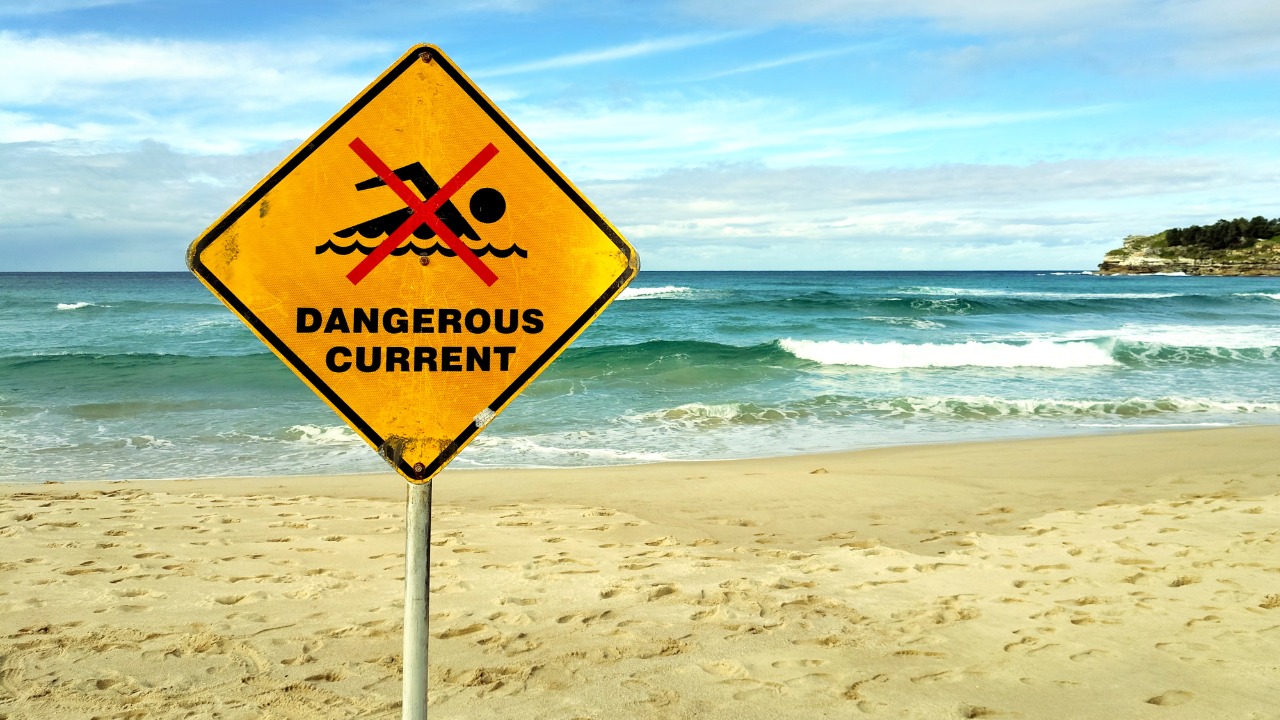
Panama City Beach uses a colored flag system to communicate surf conditions. A single red flag means high surf or strong currents are present. Double red flags mean Gulf waters are closed to the public because conditions are considered extremely dangerous.
Local guidance warns that during a single-red-flag period, even entering knee-deep water can be unsafe. Double-red-flag conditions prohibit swimming entirely.
Officials said warnings were distributed through beach flags, text alerts, social media and patrols. However, visitors may not always understand how quickly Gulf conditions can change or how powerful a rip current can be.
Panama City Beach visitors can check current flags and register for local alerts through the city’s official rip-current safety page.
What a Rip Current Actually Does
A rip current is a concentrated flow of water moving away from the beach.
Waves continually push water toward shore. That water must return to deeper areas, and it may flow outward through a narrow channel between sandbars, beside a pier or through a break in the surf.
A rip current does not normally pull a swimmer underwater. It pulls the person farther from shore.
The current may move faster than even a strong swimmer can sustain. Attempting to swim directly against it can rapidly cause fatigue, panic and drowning.
The National Weather Service says rip currents account for a large percentage of surf-zone deaths in the United States, with most fatalities occurring during June and July and many taking place in the agency’s Southern Region.
Rip Currents Can Look Deceptively Calm
One reason rip currents are so dangerous is that they do not always look rough.
A channel with fewer breaking waves may appear calmer and safer than the white water on either side. In reality, the gap may exist because water is flowing strongly away from the beach and disrupting normal wave formation.
Possible signs include a darker channel extending offshore, a break in the line of waves, foam or debris moving seaward and water with a noticeably different color.
These clues are not always obvious, even to experienced swimmers. The safest approach is to swim near a staffed lifeguard and follow the posted flag system rather than trying to judge the water independently.
The National Weather Service provides local risk forecasts through its Florida rip-current map.
Fighting the Current Can Lead to Exhaustion
A swimmer’s natural reaction is often to turn toward shore and swim as hard as possible.
That can be the most dangerous response because the swimmer is moving directly against the outward flow. The current may continue carrying the person away despite the effort, leading to panic and exhaustion.
Current lifesaving guidance emphasizes staying calm, floating to conserve energy and allowing the current to weaken before attempting to return.
The “flip, float and follow” approach encourages a swimmer to roll onto their back, float and follow the current until its pull decreases. The person can then swim parallel to the shoreline or angle toward breaking waves that may help carry them back.
A swimmer who cannot escape should wave an arm and call for help rather than exhausting themselves.
Attempting a Rescue Can Create Another Victim
Friends and family members often rush into the water when they see someone struggling.
Without training or flotation equipment, the rescuer may also become caught in the current. Multiple-drowning incidents frequently begin with one person attempting to save another.
A bystander should immediately alert a lifeguard or call emergency services. Throwing a flotation device, life ring, bodyboard or cooler toward the swimmer may provide support without placing another person in the current.
Anyone who does enter the water to help should take flotation and avoid allowing a panicked swimmer to pull them beneath the surface.
Professional lifeguards are trained to approach distressed swimmers safely, which is one reason swimming near a staffed tower significantly improves survival chances.
Strong Swimmers Are Still Vulnerable
Rip-current deaths are not limited to people who cannot swim.
A strong swimmer may underestimate the speed of the current, overestimate their stamina or become disoriented when the shoreline begins moving farther away.
Waves, heat, alcohol, fatigue and the effort required to assist another person can reduce even an experienced swimmer’s ability to return.
Visitors may face additional risk because they are unfamiliar with the local flag system and Gulf conditions. Calm weather on land does not guarantee safe water.
The absence of large crashing waves also does not mean rip currents are impossible.
Lifeguard Coverage Has Limits
Panama City Beach extends across a long coastline visited by large numbers of tourists.
Officials have acknowledged that providing lifeguard coverage across every part of the beach is difficult. Some areas are protected by municipal lifeguards, while others depend on private resorts, patrols or emergency responders arriving after a call.
Swimming near an active lifeguard remains far safer than entering an unguarded stretch of water.
Visitors should also confirm when lifeguard shifts end. Conditions may remain dangerous during the evening after towers are no longer staffed.
Beachgoers should never interpret the presence of other swimmers as proof that the water is safe. A group may be ignoring the flags or may not understand the danger themselves.
Why the Florida Panhandle Is Vulnerable
The Florida Panhandle’s beaches contain shifting sandbars, channels and coastal structures that can contribute to rip-current development.
Wave direction, wind, tides and offshore weather systems can change the risk from one day to another. A current may also form near piers, jetties and breaks between sandbars.
The National Weather Service categorizes daily risk as low, moderate or high. Even a low-risk forecast does not mean no rip currents will occur, particularly near structures and irregular sections of the shoreline.
During high-risk periods, dangerous currents may become frequent and affect several parts of the beach simultaneously.
What Beachgoers Should Do Before Entering
Visitors should check the flag color before approaching the water and review the National Weather Service surf forecast.
A green flag means lower hazard, not zero hazard. Yellow indicates moderate surf or currents. Red represents high hazard, while double red closes the water.
Children and inexperienced swimmers should wear properly fitted US Coast Guard-approved life jackets around open water. Inflatable pool toys and arm floats are not reliable lifesaving equipment and can be carried offshore.
Alcohol should be avoided before swimming because it affects judgment, coordination and stamina.
People should enter the water only near lifeguards, keep children within reach and avoid swimming alone.
The Tragedy Was a Warning, Not a Current Event
The five-death sequence occurred from June 20 through June 23, 2024. It was widely recirculated afterward because it remains one of the clearest recent examples of how quickly rip currents can claim multiple lives at a busy tourist beach.
Current beach conditions can be entirely different from those during the 2024 incident. Anyone planning to visit Panama City Beach should check the live flag status and forecast on the day of the trip rather than relying on an older news report.
The tragedy’s lesson, however, remains current. Rip currents are often invisible, can overpower strong swimmers and may become deadly within minutes when warnings are ignored.
The safest decision during red or double-red flags is not to test the water. It is to remain on shore until authorities say conditions have improved.