
A swimmer at a New York City beach was bitten on the foot in what authorities are treating as a suspected shark attack, leaving the victim with a serious but non-life-threatening injury and prompting an immediate response from lifeguards and police. The incident has renewed questions about shark activity along the Long Island and New York City shoreline, where summer crowds and marine wildlife are increasingly sharing the same stretch of water.
In the aftermath, officials temporarily cleared swimmers from the surf and launched air and water patrols, even as they stressed that such encounters remain rare. The episode has become a test of how prepared New York’s beaches are for a risk that is still statistically low but far more visible than in past decades.
Key details of the suspected shark bite at the New York beach
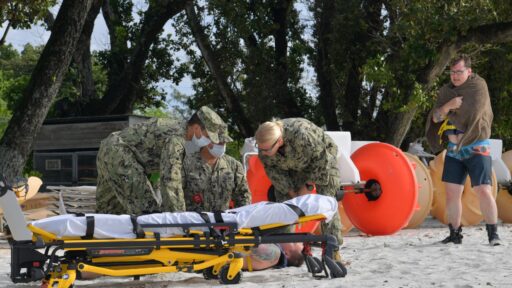
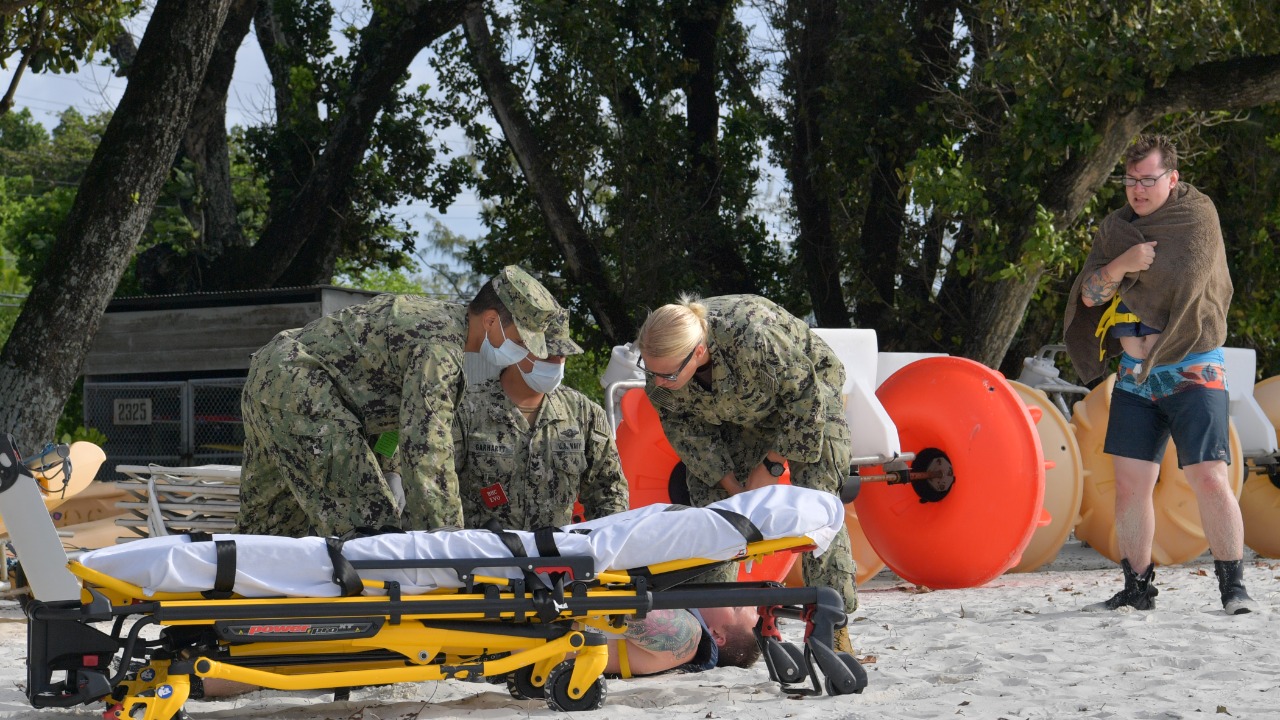
Authorities said the swimmer was in the water near the shoreline at a New York City beach on the edge of Long Island when something clamped down on one of the person’s feet. The victim managed to get back to shore, where lifeguards and emergency medical crews saw clear bite wounds that officials described as consistent with a shark injury. Local coverage of the swimmer bitten on noted that the attack was suspected rather than definitively confirmed, since no shark was captured or photographed at the scene.
Reports from city agencies indicated that the person was taken to a hospital with a significant foot injury but was conscious and stable. In one account, responders described the wound as deep enough to expose bone, a detail echoed in additional local reporting that portrayed the bite as serious but survivable. A separate summary of the suspected shark attack similarly emphasized that doctors did not consider the injury life-threatening.
Beach staff reacted quickly once the bite was reported. Lifeguards ordered swimmers out of the water and kept them on the sand while police and park officials began scanning the surf. According to a detailed account of the suspected shark attack, authorities used boats and helicopters to look for any shark activity near the area where the swimmer had been hurt. No shark was spotted during those sweeps, and the water was later reopened under heightened monitoring.
The beach where the incident occurred is part of a heavily visited stretch of coastline that includes both New York City-managed waterfront and state-run parks. Another report, which described a swimmer bitten on at a New York City beach, placed the location within the city’s jurisdiction but close to the more open Atlantic waters that border Long Island. That geography has become a recurring theme as shark sightings have ticked up along the broader New York shoreline in recent summers.
How the incident shifts the conversation about sharks at New York beaches
The suspected attack comes at a time when New York officials are already paying closer attention to shark activity. Long Island beaches, including Jones Beach and other Atlantic-facing stretches, have reported a series of sightings and occasional bites in recent years. A weather-focused account of a suspected shark attack highlighted how state and local agencies have been expanding patrols and using drones to watch for marine predators near the surf line.
Biologists often point to a combination of factors behind the apparent increase in encounters. Cleaner coastal waters and successful conservation measures have helped rebuild populations of bait fish and other prey species close to shore. Sharks that follow those food sources are more likely to cruise near bathing beaches, especially during the warmest months when both fish and people concentrate in the same shallow zones. At the same time, better reporting and widespread smartphone cameras mean that sightings that once went unnoticed now travel quickly through social media and local news.
Even with those trends, scientists consistently stress that the risk to any individual swimmer remains very low. New York’s oceanfront sees millions of beachgoers each summer, while confirmed shark bites still number in the single digits in a typical season. The rarity of such attacks is one reason officials often frame them as a manageable hazard rather than a reason to avoid the water altogether. In this case, authorities treated the bite as a serious safety incident but moved just as quickly to restore access once they were satisfied that no shark remained in the immediate area.
For New York City, the episode also intersects with broader questions about how urban shorelines are adapting to climate and ecological change. Warmer ocean temperatures can influence the distribution of marine species, including sharks, and may extend the season when they are present near popular beaches. Coastal managers are under pressure to keep beaches open, both for recreation and for the local economy, while also showing that they are prepared for low-probability but high-visibility events such as shark bites.
The response to this incident reflects that balancing act. Officials did not permanently close the beach or impose blanket bans on swimming. Instead, they relied on a mix of short-term restrictions, targeted patrols, and public messaging that framed the bite as a rare event within a larger pattern of safe beach use. That approach mirrors how Long Island authorities have handled earlier bites at nearby beaches, where temporary closures and intensified monitoring have become the standard playbook.
What authorities and beachgoers are likely to see next
In the short term, beach managers are expected to keep patrols elevated in the area where the swimmer was hurt. That typically includes additional lifeguard watch, more frequent helicopter or drone flyovers, and coordination with marine biologists who track shark movements along the coast. If further sightings occur, officials can again restrict swimming or shift bathers to different sections of the beach until conditions appear safe.
The incident is also likely to feed into ongoing discussions about technology and training at New York-area beaches. Some Long Island parks already use drones to scan the surf for large marine animals, and the suspected attack at this city beach may strengthen arguments for expanding that equipment and training city lifeguards to interpret aerial footage. Emergency response protocols, including how quickly medical teams can reach an injured swimmer and transport them to a trauma center, are also likely to get another review.
Public communication will be another focus. Residents and tourists are increasingly aware of shark headlines, and health officials often have to walk a fine line between transparency and alarm. That means reinforcing basic safety advice, such as avoiding swimming at dawn or dusk, staying away from schools of bait fish, and listening to lifeguard instructions, while reminding people that the overall risk of a bite remains very low. Local television coverage, including reports that a New York swimmer in a suspected shark encounter, tends to amplify public concern, which makes clear and consistent messaging especially important.
Investigators will continue to analyze the nature of the wound to confirm whether it matches a shark bite pattern or could have been caused by another marine animal. That process can take time, particularly when there is no recovered tooth fragment or clear photograph of the animal involved. A separate local account that described a suspected attack that illustrates how graphic details can circulate even when the exact species is still unverified. If experts eventually conclude that the injury came from a shark, it will add one more data point to the region’s growing record of confirmed bites.
Over the longer term, the episode feeds into a broader reassessment of how people share coastal spaces with wildlife. New York’s beaches are part of an Atlantic ecosystem that includes sharks, rays, seals, and other predators and prey. As those animals recover or shift their ranges, encounters with humans become more likely. The challenge for city and state officials is to integrate that ecological reality into beach planning, from lifeguard staffing and patrol patterns to public education campaigns that treat sharks as a natural part of the ocean rather than an unpredictable menace.