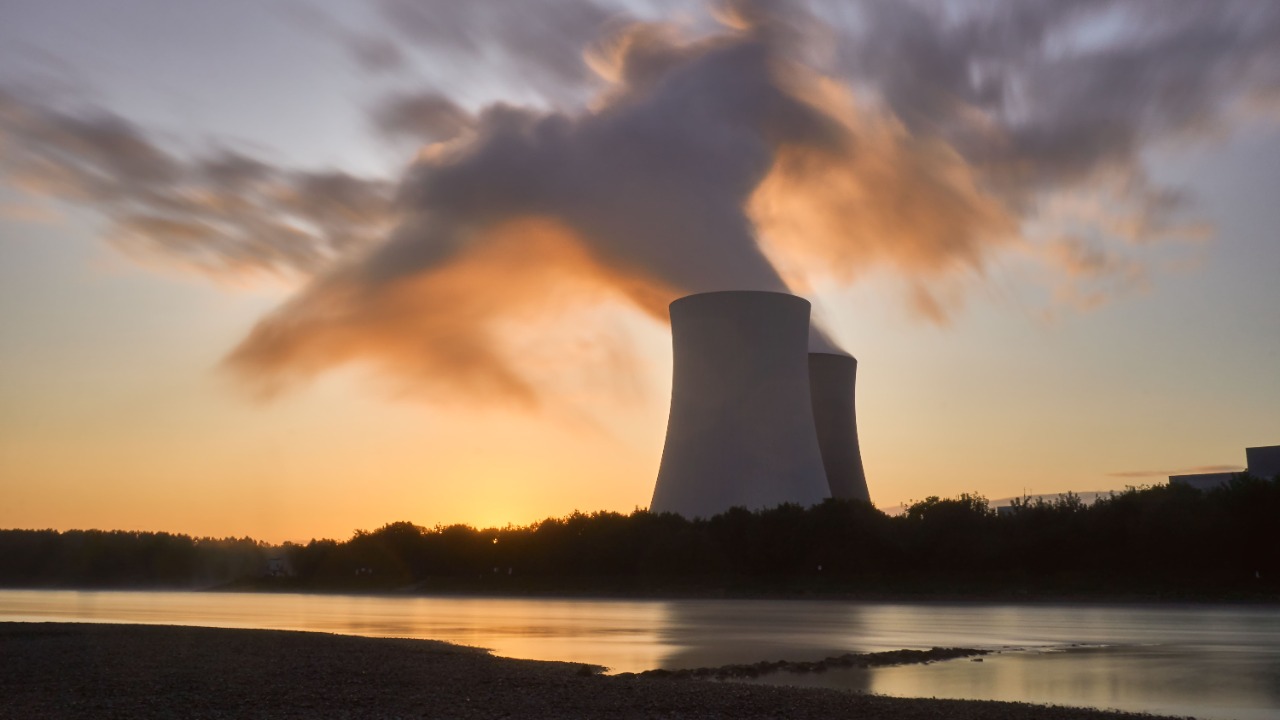

A nuclear startup has switched on a compact reactor that will power a new AI-focused data center designed to use almost no water for cooling. The project links two of the most resource-hungry technologies on the planet, nuclear power and large-scale computing, in a bid to cut both emissions and local water stress.
The facility is being developed by Valar Nuclear in partnership with Nvidia and is pitched as a template for how future AI infrastructure could grow without overwhelming regional grids or draining rivers and aquifers. If it works as advertised, it could reset expectations for what “sustainable” actually means in the age of generative AI.
How Valar Nuclear’s compact reactor and AI campus are different
Instead of plugging a server farm into an existing grid that still leans heavily on fossil fuels, Valar Nuclear is building its data center directly around a small nuclear reactor. The startup’s system is described as tiny compared with conventional gigawatt-scale plants, with a footprint and output tailored to a single industrial campus instead of an entire region.
The company’s plan, outlined in its partnership with Nvidia, centers on a reactor that feeds power straight into racks of GPUs and supporting infrastructure. Rather than treating nuclear generation and computing as separate businesses, Valar Nuclear is trying to integrate them into one vertically controlled site where power, heat, and cooling can all be optimized together. Nvidia’s role is to supply the AI hardware and software stack that will run inside the facility, aligning the design with the specific needs of accelerated computing rather than generic cloud workloads.
The data center itself is engineered to run with minimal water use. Traditional hyperscale facilities often rely on evaporative cooling towers that consume large volumes of freshwater per megawatt of IT load. By contrast, Valar Nuclear’s campus is described as almost waterless, which implies a shift to technologies such as closed-loop liquid cooling or high-efficiency air systems that recycle rather than evaporate water. The reactor’s waste heat can be managed through dry cooling equipment instead of open cooling ponds or once-through river systems, which are common in older nuclear plants.
Placing the computing infrastructure at the reactor site also cuts down on transmission losses. Power does not need to travel over long-distance lines to reach the data center, which can improve overall efficiency and reduce strain on regional grids that are already grappling with new AI-driven demand. In effect, the project treats nuclear output as a private, dedicated power plant for AI.
According to reporting on the partnership, Valar Nuclear and Nvidia are framing this design as a model for future AI campuses that want both high reliability and low environmental impact. They present the reactor-powered site as a direct answer to concerns that AI expansion will lock in decades of new fossil generation if it continues to rely on conventional grid connections.
Why a nuclear-powered, almost waterless AI center matters now
AI data centers are rapidly becoming some of the largest single consumers of electricity on the grid, and their growth trajectory is steep. Training and running large models requires dense clusters of GPUs that draw steady power and generate intense heat. Utilities in several regions have already warned that new AI campuses could double local load growth over short periods, raising fears that new natural gas plants will be built just to keep up.
In that context, a small reactor dedicated to AI workloads offers a different path. Nuclear plants provide steady, low carbon baseload power, which aligns well with the around-the-clock operation of data centers. By tying a compact reactor directly to the facility, Valar Nuclear aims to deliver a predictable, high-capacity supply without adding pressure to surrounding grids or driving new fossil investments. The project is pitched as a way to keep AI growth compatible with climate targets instead of in conflict with them.
Water use is emerging as a second major concern. Many large data centers rely on evaporative cooling that can consume millions of gallons of water per day in hot climates. At the same time, traditional nuclear plants are among the largest industrial users of water because they need cooling for their steam cycles. A combined AI and nuclear site would normally risk compounding those impacts.
Valar Nuclear’s partnership with Nvidia is explicitly framed around an almost waterless design that aims to avoid that collision between power and cooling demand. Reporting on the project describes a data center engineered to conserve water while still supporting high density AI workloads, with the nuclear plant providing stable power on site. The companies present this as a response to growing scrutiny over how both sectors affect local water supplies, especially in regions already facing drought or competing agricultural needs. The collaboration is highlighted in coverage of Valar Nuclear’s partnership with Nvidia on a data center that aims to conserve water.
The timing also reflects shifting sentiment around nuclear technology. Governments and investors are revisiting nuclear power as a low carbon option that can support electrification, including the rapid growth of AI. Small reactors that can be factory-built and deployed near industrial loads are a key part of that conversation. By tying its first project to a high-profile AI application, Valar Nuclear is trying to position nuclear as not just a climate solution but also a practical answer to the infrastructure demands of advanced computing.
For Nvidia, the partnership is a way to show that its AI ecosystem can grow without being limited by local grid constraints or criticized for runaway emissions and water use. The chipmaker has become synonymous with AI acceleration, and its customers are pushing for ever larger training clusters. A nuclear-powered, water-saving campus offers a narrative that AI can scale responsibly if it is paired with the right energy and cooling technologies.
What this experiment could change for future AI and energy projects
If Valar Nuclear’s reactor-backed campus performs as promised, it could influence how both data center operators and policymakers think about siting and permitting. Instead of clustering AI facilities near cheap gas plants or existing transmission hubs, future projects might be built around compact nuclear units located where land, water, and community support align. That would shift some of the growth away from already strained grid nodes and toward purpose-built industrial zones.
The project also acts as a test case for integrating nuclear regulation with digital infrastructure. Small reactors still face extensive licensing and safety reviews, and combining them with high-value computing assets introduces new questions about cybersecurity, physical security, and operational coordination. If regulators and operators can demonstrate a workable model, it may smooth the path for other industrial campuses that want to pair nuclear with hydrogen production, desalination, or other energy-intensive processes.
On the technology side, an almost waterless AI center will be closely watched by competitors and utilities. If the cooling systems deliver on efficiency and reliability, they could become standard for future high density sites even without nuclear. Techniques like direct-to-chip liquid cooling, warm water loops, and advanced heat exchangers are already gaining traction. A successful nuclear campus that proves these methods at scale would accelerate their adoption and reduce the sector’s dependence on evaporative towers.
There are also potential ripple effects for local communities. A compact reactor and data center campus can provide long-term, high-skilled jobs in engineering, operations, and security. At the same time, the project will be judged on how transparently it addresses safety, waste management, and emergency planning. Public acceptance of nuclear projects often hinges less on technical details and more on trust, which means Valar Nuclear’s outreach and communication strategy will be as important as its engineering.
For the AI industry, the main question is whether this model can scale. One small reactor and one data center will not make a dent in global emissions or water use on their own. The real impact would come if similar campuses are replicated across regions that are racing to add AI capacity. That would require standardized reactor designs, streamlined permitting, and financing structures that can support capital-intensive nuclear builds aligned with fast-moving technology cycles.