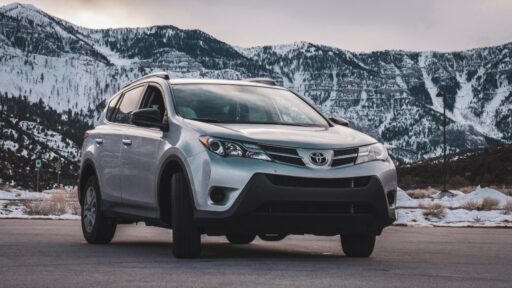
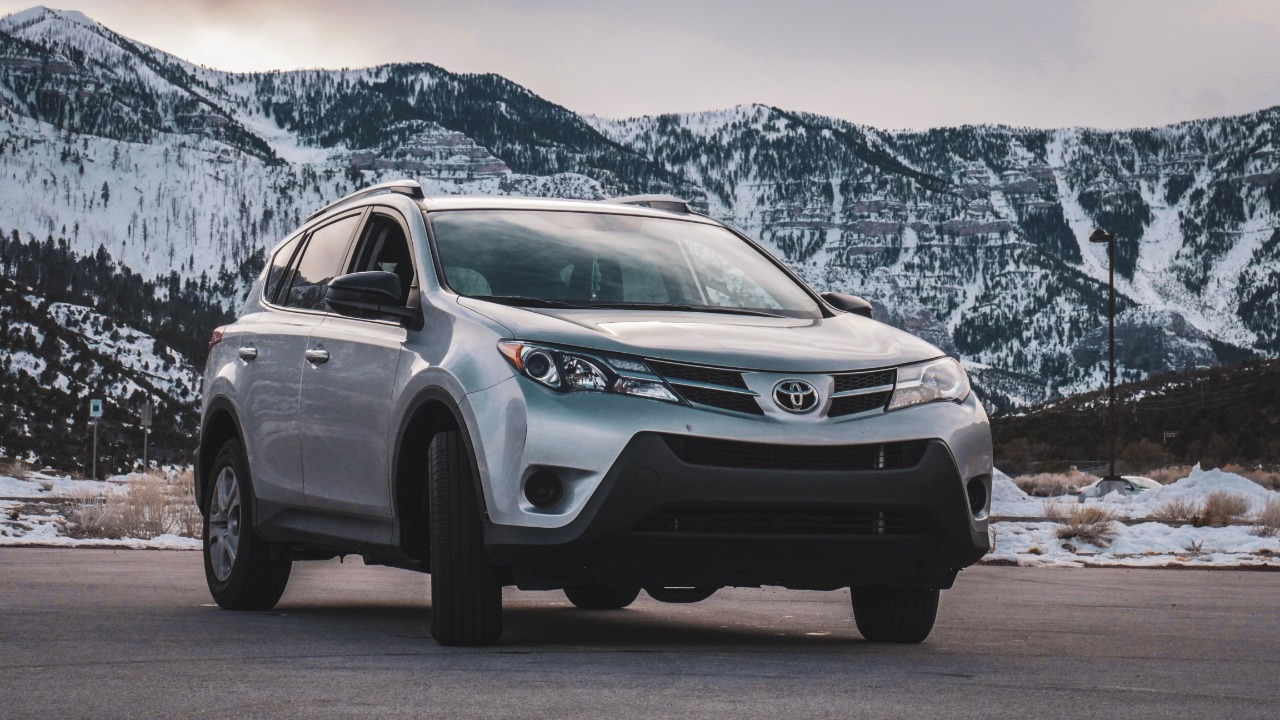

The Toyota Sequoia has climbed to the top of a new high-mileage ranking, with data showing it is roughly eight times more likely than the average SUV to reach 250,000 miles. That finding, based on long-term registration and odometer records, reinforces the full-size Toyota as one of the clearest examples of how conservative engineering and owner-friendly maintenance can translate into real-world longevity.
For shoppers facing high prices for new vehicles and rising financing costs, the Sequoia’s performance in this study turns a niche statistic into a practical buying signal. The numbers suggest that choosing the right nameplate can add years of service life and potentially save tens of thousands of dollars over the time a family keeps an SUV.
How the Sequoia surged to the top of 250,000‑mile rankings
The latest longevity analysis compares millions of vehicles and tracks how many of them are still on the road after passing the 250,000‑mile mark. Within that dataset, the Toyota Sequoia stands out as the SUV with the highest share of vehicles crossing that threshold, and the study calculates that its odds of reaching 250,000 miles are roughly eight times higher than the segment average. The same research places other Toyota body‑on‑frame models, such as the Land Cruiser and 4Runner, among the longest‑lasting vehicles, but none match the Sequoia’s probability of quarter‑million‑mile survival.
That performance aligns with earlier reliability rankings that have repeatedly flagged the Sequoia as an SUV that can “last a lifetime.” One analysis of long‑term ownership singled out the Sequoia as an overlooked SUV that often serves as a family workhorse for more than a decade, with owners reporting relatively few major mechanical failures even as odometers climb well past 200,000 miles. Those findings help explain why the new 250,000‑mile study is not an outlier but part of a consistent pattern.
The methodology behind the quarter‑million‑mile rankings relies on registration records and service data rather than short‑term surveys. Analysts track how many examples of each model year remain in use after a long period, then calculate the share that have exceeded 250,000 miles. In that framework, the Sequoia’s performance is not driven by a handful of outliers but by a broad base of high‑mileage trucks that continue to pass inspections and renew registrations.
Other full‑size SUVs do appear in the upper tiers of the rankings. Large Chevrolet and GMC models, as well as the Ford Expedition, post above‑average odds of reaching 250,000 miles, reflecting the durability of their truck‑based platforms. Yet the Sequoia’s lead over those rivals is substantial enough that analysts describe it as an outlier even within the long‑lasting body‑on‑frame group.
What changed in the Sequoia’s design and ownership story
The Sequoia’s longevity record is rooted in a long production run that favored incremental improvements over radical redesigns. Earlier generations used naturally aspirated V8 engines paired with conventional automatic transmissions, hardware that owners and independent mechanics often describe as understressed and easy to service. That conservative approach appears repeatedly in high‑mileage case studies, where 2007 to 2013 Sequoias with original drivetrains and minimal internal work show up as daily drivers rather than weekend projects.
In recent model years, Toyota introduced a hybridized twin‑turbo V6 and more advanced electronics, a shift that raised questions among some long‑time owners about long‑term durability. The current 250,000‑mile study, however, primarily reflects vehicles that predate that change, since it takes many years for a model to accumulate enough miles to qualify. Analysts who track long‑term trends caution that it will take another ownership cycle before the latest Sequoia generation can be judged on the same terms as the older V8 trucks.
Maintenance behavior is another factor that has evolved. Reporting on high‑mileage vehicles shows that owners who reach 250,000 miles tend to follow strict service schedules, rely on quality fluids and parts, and address small problems quickly. In interviews with drivers of long‑lasting SUVs, technicians highlight regular transmission fluid changes, timely timing‑belt or chain service, and suspension refreshes as the habits that separate 250,000‑mile survivors from vehicles that are traded or scrapped earlier.
Data from a high‑mileage survey of cars, trucks, and SUVs that reached 250,000 miles and beyond indicates that models like the Sequoia, Toyota Tundra, and Honda Pilot often share a similar ownership profile. Many are kept by a single family for most of their life, used for commuting and road trips rather than severe commercial duty, and stored indoors in harsher climates. An overview of longest‑lasting vehicles links that kind of careful usage to higher survival rates across multiple brands.
At the same time, the market around the Sequoia has shifted. Full‑size SUVs have grown more expensive and more luxurious, with larger screens, complex driver‑assistance systems, and intricate air‑suspension setups. Those upgrades improve comfort but also add potential failure points as vehicles age. The Sequoia’s reputation was built in an era when its feature set was simpler than some rivals, which made long‑term ownership less risky for buyers who intended to keep an SUV for 15 years or more.
Why the Sequoia’s longevity edge matters in 2025
The new study arrives at a moment when buyers are under pressure from record transaction prices and extended loan terms. A review of vehicles most likely to last more than 250,000 miles notes that stretching a loan across seven or even eight years only makes sense if the vehicle itself can deliver reliable service for at least that long. In that context, the Sequoia’s performance in the rankings becomes a financial argument as much as a mechanical one.
Coverage of cars reaching 250,000 highlights that owners who keep a vehicle for 15 years or more can avoid multiple rounds of sales tax, registration fees, and depreciation hits. For a full‑size SUV that might cost well into the five‑figure range even on the used market, stretching its life by another 50,000 or 100,000 miles can mean postponing a costly replacement by several years. That is particularly relevant for families that rely on a single large vehicle for hauling kids, gear, and trailers.
The Sequoia’s success also feeds into brand perceptions. Studies of the longest‑lasting nameplates consistently place Toyota at or near the top, with models like the Sequoia, Land Cruiser, and Tacoma appearing frequently. One ranking of the best nameplates to reach 250,000 miles groups the Sequoia with the Honda Ridgeline and Subaru Outback as vehicles that routinely cross that line in real‑world use. That kind of cross‑segment consistency supports the idea that corporate engineering and quality control philosophies matter as much as any single model.
Resale values reflect those expectations. Used‑vehicle pricing guides show that older Sequoias with high mileage often command a premium compared with similarly aged domestic SUVs, in part because buyers assume they can safely add another 50,000 miles. For households that buy used and drive long distances, that reputation can shift demand toward specific models and away from others that may be cheaper up front but less trusted over the long haul.
There is also an environmental angle. Analysts who study vehicle life cycles point out that manufacturing a new full‑size SUV carries a significant carbon footprint. Extending the useful life of an existing vehicle reduces the frequency of that manufacturing impact. While the Sequoia is not a fuel‑sipping hybrid, the fact that many examples remain in service for 250,000 miles or more means that their production footprint is spread across a longer lifespan.
What the Sequoia’s example signals about the future of long‑lasting SUVs
The Sequoia’s dominance in the 250,000‑mile rankings raises a question for automakers: can newer, more complex vehicles match that performance? A recent analysis of vehicles likely to beyond 250,000 miles suggests that hybrids and even some battery‑electric models are starting to appear in long‑term datasets, although they still trail traditional trucks and SUVs. That trend hints that durability is not limited to old‑school powertrains, provided manufacturers design components with long service lives and offer strong support for software and battery management.