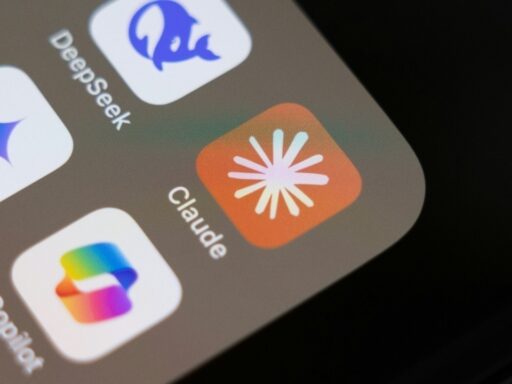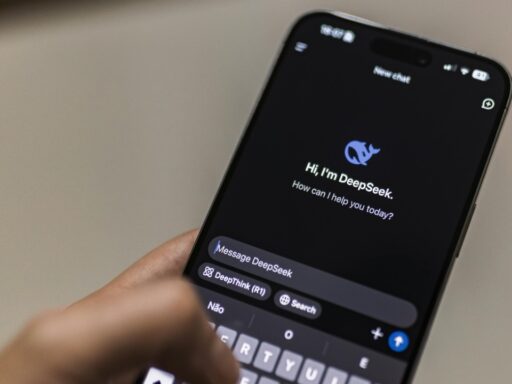
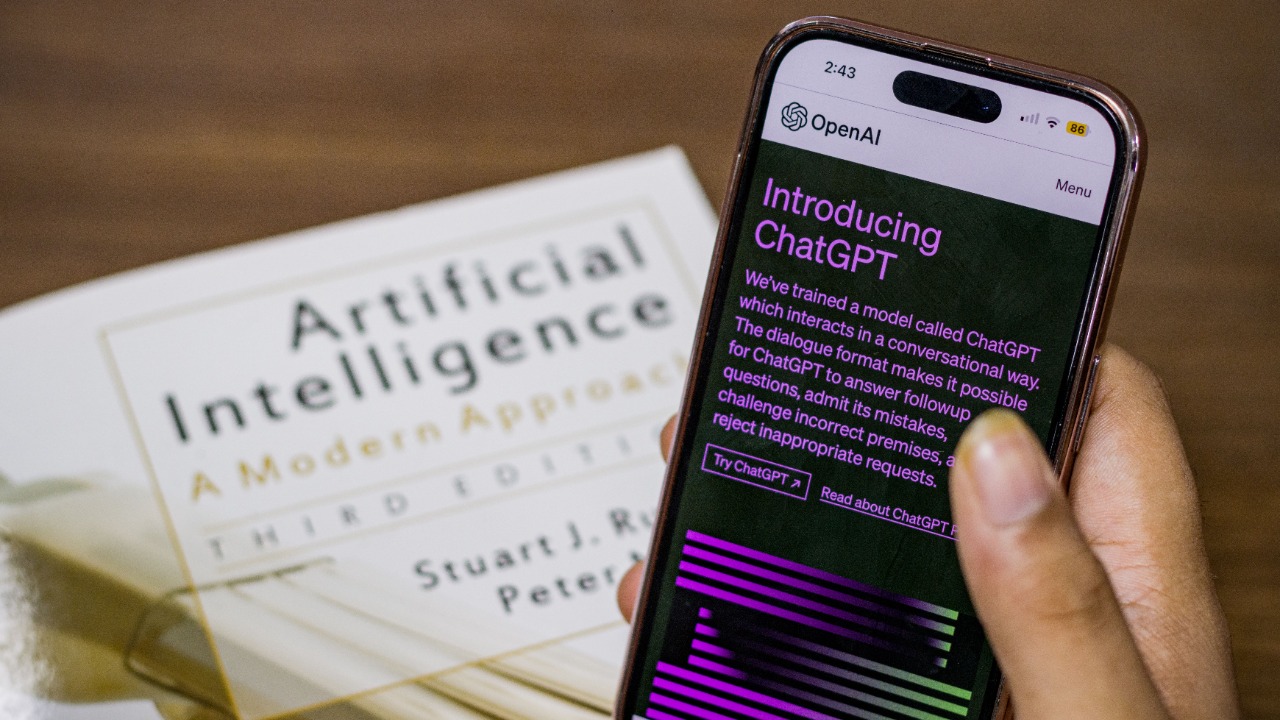

For the first time since chatbots went mainstream, the consumer AI assistant contest has a recognizable podium. OpenAI’s ChatGPT, Google’s Gemini, and Anthropic’s Claude now account for most of the mindshare, product integrations, and usage in general purpose assistants, even as dozens of smaller models crowd the field. The race has shifted from proving that large language models are impressive to deciding which assistant will become the default interface for work, search, and software itself.
How the AI assistant field narrowed to a clear top tier
The early phase of generative AI was noisy, with new chatbots and wrappers appearing every week. Over the last year, usage data and product decisions have converged around three platforms. Reporting on the commercial side shows that ChatGPT’s market share in consumer assistants has slipped below 50 percent as Google Gemini and Anthropic Claude gain ground, but together the three capture the majority of traffic and developer attention.
OpenAI still benefits from first-mover advantage. ChatGPT established the default mental model for conversational AI, and its integration into products like Microsoft’s Copilot and enterprise tools keeps it highly visible. Meanwhile, Google has pushed aggressively, turning Gemini into the core assistant across Android, Chrome, and Workspace. That system-level distribution means Gemini is now the first AI many users encounter when they unlock a Pixel phone or open Gmail, a shift highlighted in coverage of the intensifying competition between ChatGPT.
Claude’s rise has followed a different path. Rather than owning an operating system or a dominant search engine, Anthropic has focused on positioning Claude as a careful, business-friendly assistant. Analysts tracking head-to-head performance describe Claude, ChatGPT, Gemini as the current benchmark group for quality and capability, with Claude often praised for long-context handling and a more measured tone that appeals to legal, financial, and research users.
Technical evaluations and product launches have reinforced this three-way focus. A detailed comparison of frontier models notes that each of the big three has moved beyond simple chat to support code execution, document uploads, and multimodal reasoning, while many smaller entrants still lack that breadth. That capability gap, combined with distribution, helps explain why the field now feels like a race among three primary assistants rather than an open experiment.
Why the new AI assistant hierarchy matters right now
The consolidation around ChatGPT, Gemini, and Claude is more than a popularity contest. It shapes how work is done, which companies capture value, and what kind of AI behavior users come to expect. A review of real-world deployments shows that these assistants are already embedded in tools that handle email, project management, and customer support, which means their design choices ripple into millions of workflows.
One clear effect is on software development. A survey of leading generative AI applications found that a large share of the fastest-growing products, from code copilots to AI note takers, are built on top of APIs from the same handful of model providers. The catalog of 100 prominent AI illustrates how frequently developers rely on OpenAI, Google, or Anthropic as a base layer, even when the end user experience carries a different brand.
On the consumer side, Gemini’s integration into search and mobile raises direct questions about who controls discovery and advertising. Reports on Google’s latest releases describe Gemini’s deeper integration into Android and Chrome, turning AI answers into the default response for many queries that previously generated a page of links. That shift affects publishers, e-commerce, and any business that has relied on search engine optimization, since an assistant that summarizes the web can easily become a gatekeeper.
ChatGPT’s position still carries weight in education and creative work. Classrooms, tutoring platforms, and individual learners often start with ChatGPT because of familiarity and the depth of examples and prompts circulating online. Coverage of the ongoing model comparisons notes that many users treat ChatGPT as the baseline, then move to Gemini or Claude for specific strengths like tighter integration with Google Docs or more structured analysis of long documents.
Claude’s influence is strongest where safety and reliability are primary concerns. Enterprise buyers that handle sensitive data or regulated industries are drawn to Anthropic’s focus on constitutional AI and guardrails. Analysts who track the enterprise segment point out that Claude’s long context window and conservative defaults reduce the risk of hallucinated citations in legal or financial settings, which in turn lowers the cost of human review.
For regulators and policymakers, the emergence of a clear top three narrows the field of companies that must be engaged on safety, competition, and labor impacts. When a small group of assistants mediates knowledge work, concerns about concentration and gatekeeping are no longer theoretical. The competitive dynamic between OpenAI, Google, and Anthropic, documented in coverage of their escalating AI race, now intersects directly with debates over antitrust and data governance.
How product design and strategy differ across ChatGPT, Gemini, and Claude
Although the three assistants often appear interchangeable in benchmarks, their strategies diverge in ways that matter for users and developers. ChatGPT is evolving toward a general-purpose agent that can call tools, browse the web, and interact with other services through an expanding plugin and actions ecosystem. This approach treats the assistant as a programmable layer that can sit on top of existing workflows rather than replacing them outright.
Gemini, by contrast, is being woven into Google’s core products. Its role in Gmail, Docs, Sheets, and Android means that for many users it is less a standalone chatbot and more a background assistant that quietly drafts emails, summarizes meetings, or suggests search refinements. Analysts examining Gemini’s product strategy describe this as a bet that convenience and default placement will outweigh brand loyalty to any particular chatbot interface.
Claude has leaned into depth over ubiquity. Anthropic’s assistant is often praised in side by side for its ability to handle long, technical documents and maintain consistent reasoning across extended conversations. That makes it attractive for analysts, researchers, and teams that want an AI collaborator rather than a quick-answer engine. Claude’s interface and API also emphasize transparent citations and structured outputs, which can simplify auditing in corporate environments.
These strategic differences influence how third-party developers choose a platform. A startup building an AI layer into a customer support tool might favor Gemini if its customers already live inside Google Workspace, or ChatGPT if they want broad language support and a rich plugin ecosystem. A legal tech company that needs careful analysis of long contracts might prefer Claude because of its context length and safety profile. The same survey of AI that highlights the dominance of the top three also shows developers mixing and matching models depending on the task.
What the next phase of the AI assistant race is likely to bring
The current top three are not guaranteed to stay in place, but the next phase of competition will likely deepen their influence rather than reset the board. Analysts expect more specialization inside each assistant, with domain-tuned modes for coding, design, research, and personal productivity layered on top of a shared core model. Comparative reports such as the 2026 model analysis already treat these assistants as platforms that can spawn many niche experiences.
Another area to watch is how these systems handle real-time information and search. Coverage of Google’s latest Gemini releases suggests that tight integration with is becoming a key differentiator. OpenAI and Anthropic are responding with their own browsing and retrieval features, but the company that best fuses conversational interfaces with trustworthy, up-to-date information could define the standard for AI-assisted search.
Hardware and operating systems are also emerging as a front. Gemini already has a foothold on Android devices, and there is ongoing speculation about deeper AI integration into laptops and wearables. If ChatGPT or Claude secure similar system-level partnerships, the balance of power could shift again. For now, however, Gemini’s position inside Android and Chrome gives Google a structural advantage in casual, everyday queries.