
On Peru’s central coast, archaeologists have uncovered the remains of a 4,000‑year‑old ceremonial temple that pushes the origins of monumental ritual architecture in the region further back than many specialists expected. Buried for millennia beneath desert sands, the complex reveals a sophisticated culture that organized labor, ritual, and art long before the rise of the Inca. Its discovery is reshaping how researchers understand early Andean religion and the societies that built it.
The temple’s architecture, murals, and burials offer a rare snapshot of a formative era when coastal communities were experimenting with new ways to gather, worship, and display power. As excavations continue, the site is already forcing archaeologists to revisit long‑held assumptions about which regions led Peru’s first great building projects and how early these ceremonial traditions began.
New details from the 4,000‑year‑old coastal temple
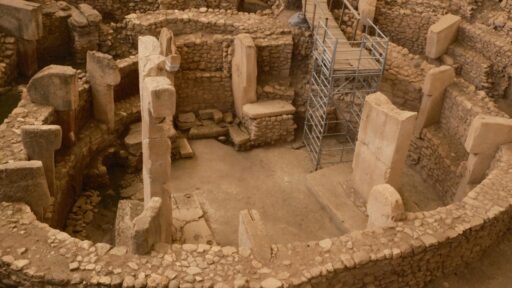
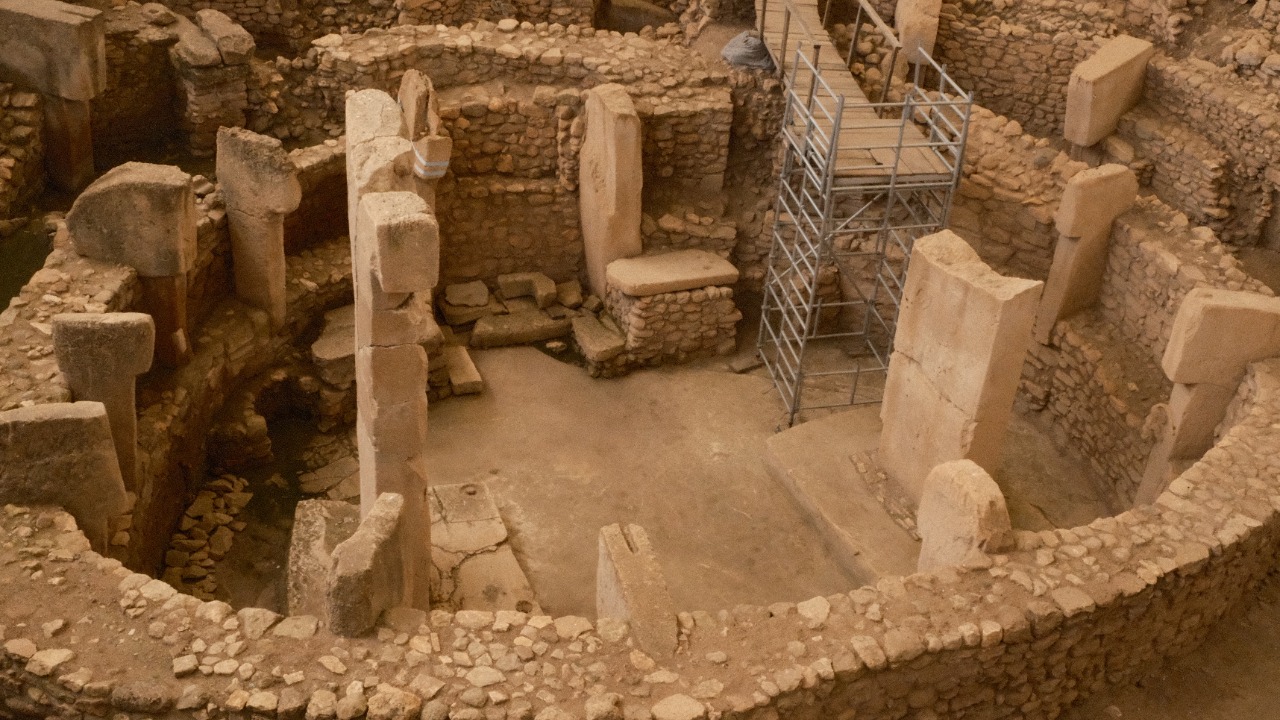
The newly documented sanctuary sits in the Chancay Valley on Peru’s central coast, where a team led by Peruvian archaeologist Pieter Van Dalen Luna has been excavating a complex of ancient structures. According to reporting on the project, the temple dates to roughly 2,000 BCE and includes a central platform, flanking rooms, and a staircase that would have guided participants into a restricted ceremonial space, all constructed with stone foundations and adobe walls that survived despite centuries of erosion and looting. The layout signals a planned sacred precinct rather than a domestic settlement.
Inside this complex, archaeologists identified a sealed ceremonial context that appears to have been intentionally buried after use. As described in coverage of the discovery, the team found a small chamber containing burnt offerings, ash, and fragments of decorated objects, evidence of repeated rituals that culminated in the careful closure of the space. That kind of ritual “deactivation” is known from other early Andean sites and suggests that the temple’s builders saw architecture itself as a participant in religious life, something that could be consecrated and then retired through formal acts.
The most visually striking feature is a polychrome mural preserved on one of the interior walls. Researchers describe a stylized human figure with a birdlike head and outstretched arms, painted with red, yellow, and white pigments and framed by geometric motifs. The image, highlighted in detailed coverage of the polychrome mural, appears to merge human and avian traits, a common theme in early Andean iconography that often signals shamanic transformation or divine power associated with sky and mountains.
Archaeologists also uncovered human remains within and near the temple. Reporting on the excavations notes that at least one set of human skeletons dates back more than 3,500 years, placing the burials in the same broad timeframe as the temple’s use. The bodies were found in flexed positions, sometimes accompanied by simple grave goods, which suggests that the sanctuary served both as a place of communal ritual and as a burial ground for individuals granted special status.
Although the site is still under excavation, early analysis points to a community that invested heavily in ceremonial architecture despite limited evidence of large residential areas nearby. That pattern matches a broader Andean trend in which religious centers, rather than palaces or fortified towns, anchor early social organization.
How this temple reshapes the story of early Andean civilization
For decades, the standard narrative placed the earliest and most influential ceremonial centers of Peru in the north, especially at sites like Caral and later Chavín de Huántar. The newly uncovered temple on the central coast challenges that hierarchy by showing that complex ritual architecture was also flourishing further south at roughly the same time. Coverage of the discovery in archaeological reporting stresses that the sanctuary’s age places it among the oldest known temples in the region, suggesting parallel experiments in religious architecture across multiple valleys.
Its iconography adds another layer to that shift. The bird‑headed figure painted on the mural, with its dynamic pose and bold colors, shows that abstract religious imagery was already well developed on the central coast by 2,000 BCE. This challenges earlier assumptions that such complex symbolic programs emerged only later in highland centers. Instead, it points to a shared visual language that crossed ecological zones and may have been shaped by coastal trade and pilgrimage networks.
Recent work at other coastal sites reinforces this broader rethinking. At Penico, a 3,800‑year‑old complex in the Lurín Valley south of Lima, archaeologists have documented a monumental platform, staircases, and plazas that were used for ritual gatherings long before imperial states rose in the Andes. The Peruvian government has now opened Penico to visitors, presenting it as a key example of early ceremonial architecture on the central coast. Visual coverage of the Penico site shows broad terraces and restored stairways that echo the design principles seen at the newly excavated temple.
Taken together, Penico and the Chancay Valley temple indicate that coastal communities were not peripheral followers of northern or highland models. They were innovators in their own right, experimenting with plazas, elevated platforms, and controlled access routes that structured how people moved, watched, and participated in rituals. The new temple’s emphasis on a single, symbolically charged mural inside a restricted chamber suggests a form of religious authority centered on specialized knowledge, perhaps controlled by ritual leaders who managed access to the most sacred images.
The discovery also feeds into a wider reassessment of how early Andean societies balanced agriculture, fishing, and religious life. Coastal valleys like Chancay and Lurín combine fertile river oases with rich marine resources, conditions that could support surplus production without the intensive terracing seen later in the highlands. Archaeologists argue that such surpluses made it possible to mobilize labor for temple construction and periodic festivals, which in turn reinforced social hierarchies anchored in ritual rather than in formal state institutions.
Modern Peru is beginning to recognize the value of these early centers for both scholarship and tourism. Coverage of the central coast temple notes that local authorities see the site as part of a growing circuit of pre‑Inca attractions near Lima, which already includes Caral, Pachacamac, and now Penico. The new discovery strengthens that circuit by adding a rare, early example of painted religious art that can be interpreted alongside later murals and sculptures across the region.
Protection, research, and public access for Peru’s early temples
The unearthing of a 4,000‑year‑old ritual complex brings immediate challenges. The temple’s adobe walls and murals are extremely vulnerable once exposed, and archaeologists have warned that rapid conservation measures are essential to prevent fading and collapse. Reporting on the excavation notes that the team has already installed temporary coverings and is coordinating with Peru’s Ministry of Culture to stabilize the painted surfaces, a process that will likely involve climate‑controlled shelters and careful consolidation of the pigments.
Looting is another concern. The Chancay Valley has long been targeted by huaqueros, or grave robbers, who dig for ceramics and textiles. Now that the temple’s location is public, authorities must secure the area and involve nearby communities in site stewardship. Experiences at Penico and other coastal complexes show that community‑based tourism can help. At Penico, local guides trained by archaeologists now lead visitors through the terraces and plazas, offering narratives that connect the ancient structures to present‑day life in the valley. Visual reports on new visitor access highlight how controlled tourism, combined with signage and oversight, can generate income while protecting fragile remains.
Researchers expect the Chancay temple to become a long‑term field laboratory. Future seasons will likely focus on mapping the full extent of the complex, sampling floors and hearths for botanical remains, and refining the chronology with radiocarbon dates. Comparative studies with other early sites, including Penico and northern centers, should clarify whether the bird‑human mural represents a local deity, a shared Andean myth, or a unique cult tied to the valley’s landscape and resources.