
Geneticists are uncovering traces of ancient humans who left no identified bones yet still left their mark inside living people. These hidden ancestors, inferred entirely from DNA, suggest that the family tree of Homo sapiens is far more crowded and entangled than the fossil record alone indicates. What was once a fringe idea, that modern genomes carry signatures of a long-vanished population, has become a central puzzle in human evolution.
How the idea of a missing human ancestor emerged from DNA
For most of the twentieth century, scientists pieced together the story of human origins almost entirely from skulls, teeth, and tools. That picture shifted when researchers began sequencing ancient genomes and comparing them to the DNA of people alive today. The first surprises came from Neanderthals and Denisovans, whose genetic material clearly mixed with early modern humans, leaving recognizable fragments in present-day populations.
As methods improved, researchers started to notice something stranger. In some parts of the genome, patterns of variation did not match any known ancient group. In West Africa, for example, geneticists analyzing modern populations found segments that looked too old and too distinct to have come from Neanderthals or Denisovans. The best explanation was that people in the region had interbred with an unknown archaic population, sometimes called a ghost lineage, that has not yet been identified in the fossil record.
More recent work has pushed the timeline of such hidden ancestors even deeper. By examining how mutations accumulate and how genetic segments break up over generations, researchers have inferred that one mysterious contributor to modern DNA may have split from other human lineages roughly 1.5 million years ago. That estimate, drawn from statistical models of genome data, implies a population that branched off long before Homo sapiens appeared and later reconnected through interbreeding.
These inferences rely on straightforward logic. When a stretch of DNA in modern people is more divergent than expected, and when it clusters together in a way that suggests a single source, it likely came from a long-isolated group that mixed back into the ancestors of some living populations. The absence of matching fossils does not erase that signal. Instead, it underscores how incomplete the physical record is compared with the molecular one.
What scientists mean by a “ghost” lineage in human evolution
In evolutionary biology, a ghost lineage is any branch of the tree that is inferred from genetic or statistical evidence but not yet confirmed with bones or other physical remains. In human evolution, the term has become shorthand for extinct populations that left DNA in modern people but no clearly identified skeletons. Researchers use it for the unknown archaic group in West Africa, for possible ancient populations in Asia, and now for the much older contributor suggested by recent genomic studies.
The concept extends well beyond humans. Paleontologists routinely infer ghost lineages when a fossil appears in one time period and its close relative appears much later, implying a missing stretch of history in between. In genetics, the same idea plays out in sequences that look too old or too distinct to fit known branches. A growing body of work has cataloged such ghost lineages across many species, from mammals to fish.
What makes the human case so striking is the level of detail that can now be extracted from living genomes. By comparing thousands of people from different regions, researchers can estimate when a hidden population split from other groups, how large it might have been, and when it mixed back into the ancestors of modern humans. Some models point to repeated waves of contact, rather than a single episode, hinting at a long period when multiple human species shared the same landscapes.
One recent analysis, highlighted in coverage of a 1.5 million year old genetic signal, suggests that this ancient population contributed a small but detectable fraction of DNA to people living today. That contribution appears in patterns that do not match Neanderthal or Denisovan segments and that carry hallmarks of very deep divergence. The work, discussed in detail in a recent analysis, frames the unknown group as a “ghost” precisely because no fossil has yet been tied to its genome.
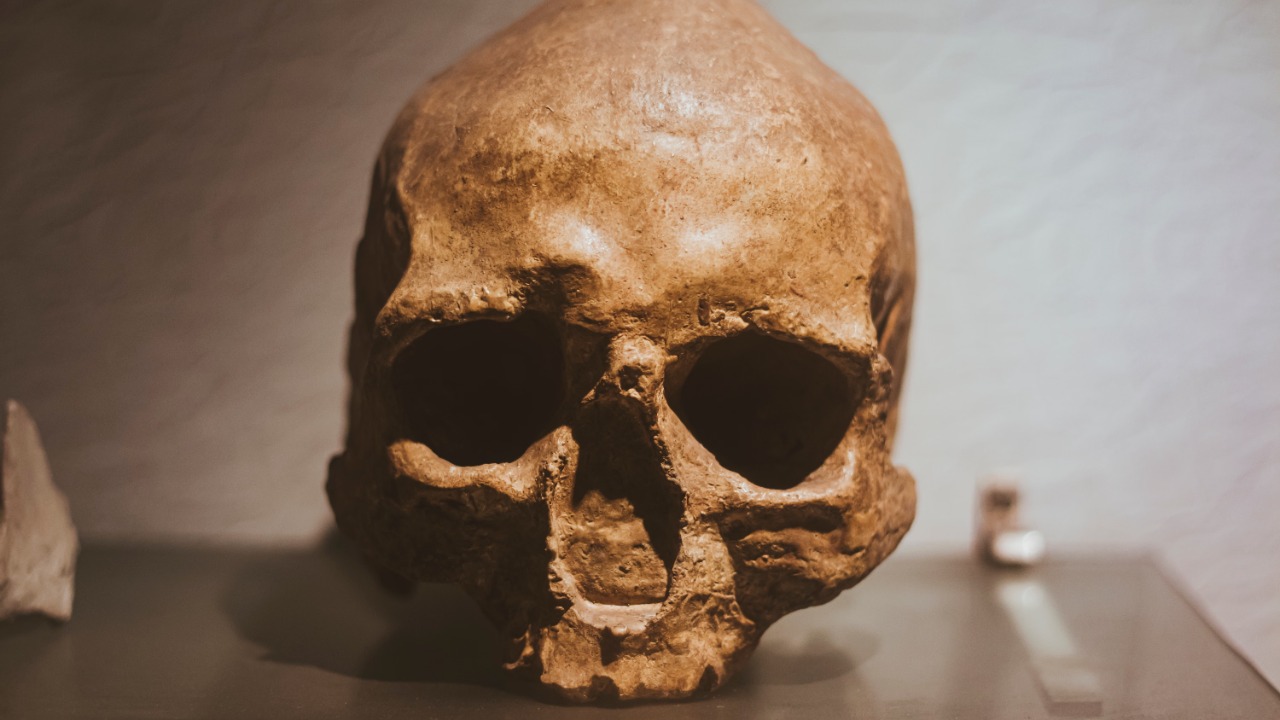
Meanwhile, archaeologists continue to uncover physical remains that complicate the picture. In one case, scientists studying ancient bones found that the individuals had no close genetic relatives among people alive today, even though their remains were relatively recent in evolutionary terms. Reporting on these unrelated remains shows that not all lineages left descendants and that some branches of the human family tree ended without contributing to modern populations. The contrast between ghost DNA that survives without fossils and fossils that left no surviving DNA underlines how patchy the evidence can be.
Why hidden ancestors matter for science, identity, and medicine
The discovery of ghost lineages is more than a curiosity about deep time. It changes how scientists reconstruct the story of Homo sapiens and how people think about their own origins. Rather than a single, clean line from archaic ancestors to modern humans, the evidence points to a network of populations that split, met again, and exchanged genes over hundreds of thousands of years.
For human evolution, this means that traits once attributed to a single event or migration may instead reflect a mosaic of contributions. The unknown archaic population in West Africa, for example, appears to have added genetic diversity that cannot be explained by known contacts with Neanderthals or other groups. The presence of ghost DNA in suggests that Africa itself hosted multiple long-lived human populations that interacted in complex ways, rather than serving only as a starting point for later expansions.
These findings also carry social and cultural weight. Commercial ancestry tests often present personal heritage as a set of tidy percentages tied to modern nation states or broad continental categories. The reality revealed by ghost lineages is far messier. Many ancestors belonged to populations that no longer exist as distinct groups and that left no names, languages, or artifacts that can be easily linked to contemporary identities. Acknowledging that complexity can challenge simplistic narratives of purity or linear descent.
In medicine, ghost DNA may help explain why certain genetic variants are more common in some populations and how they affect health. Segments inherited from Neanderthals and Denisovans have already been linked to traits such as immune responses and risk for particular diseases. If an even older lineage contributed DNA to modern humans, some of its variants may still influence how people respond to infections, metabolize nutrients, or adapt to local environments. A recent study of ancient genetic contributions to modern traits, summarized in a research update, highlights how archaic segments can shape biological pathways that matter today.
Pinpointing which parts of the genome came from which ancestral populations can also sharpen efforts to identify disease-causing mutations. When a variant is common because it was inherited from a long-isolated group, it may behave differently in genetic association studies than variants that arose more recently. Accounting for these deep sources of variation can improve the accuracy of risk predictions and help avoid misinterpreting signals that are actually tied to ancient structure in the population.
Where the search for the “ghost” humans goes next
Researchers now face a twin challenge: refining the genetic picture of ghost lineages and, if possible, connecting those signals to physical remains. On the genetic side, larger and more diverse datasets are key. Many populations, especially in Africa, Oceania, and parts of Asia, remain underrepresented in genome studies. As more groups are included, scientists expect to detect additional traces of unknown ancestors and to clarify how widespread the 1.5 million year old contribution really is.
Improved statistical tools will also matter. Current models already compare millions of genetic variants across individuals but still rely on assumptions about mutation rates and population sizes. New methods that can test multiple scenarios and incorporate ancient as well as modern DNA should provide tighter estimates of when ghost lineages split off and how much they contributed. Cross-checking different approaches will help separate genuine signals from artifacts of the modeling process.