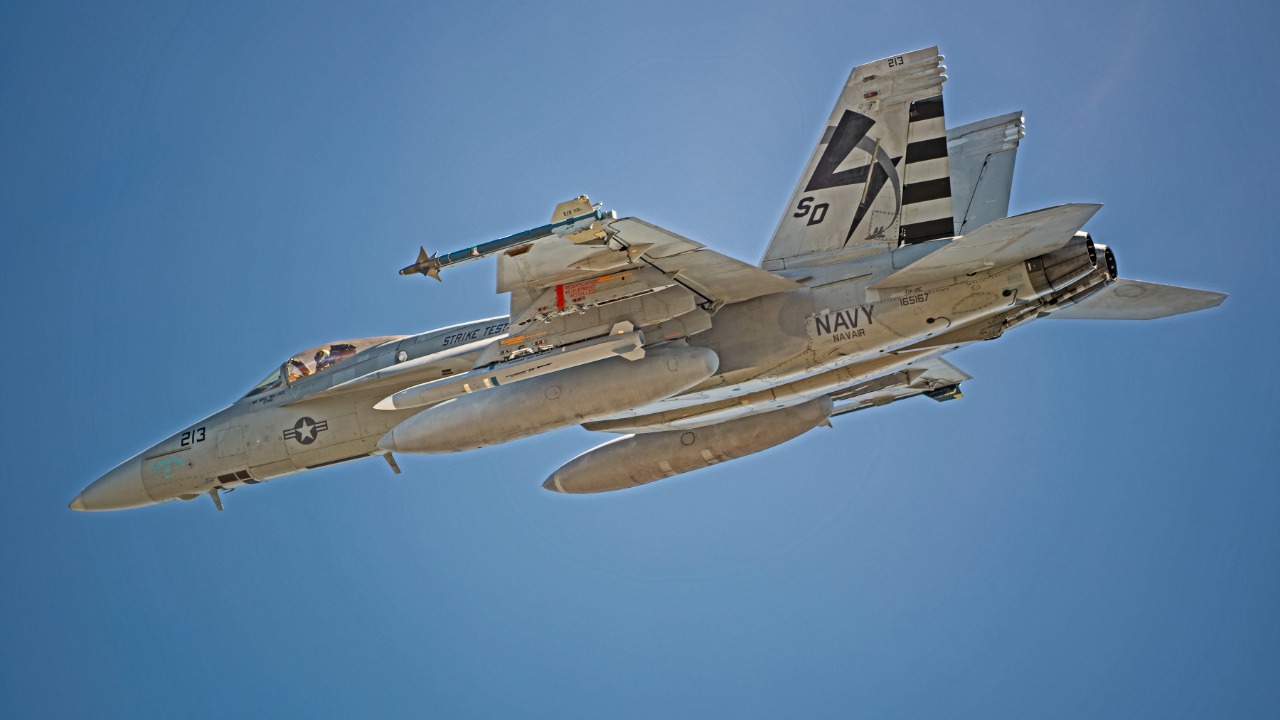

The US Navy expects a new extended-range anti-radar missile to move from testing to operational service before the end of the year, marking one of the most significant upgrades to its carrier air wing strike arsenal in more than a decade. The weapon is designed to hunt down and destroy enemy air-defense radars from far beyond current ranges, a capability that Navy leaders argue is essential for operating near heavily defended coastlines.
An evolution of the existing AGM-88 family, the missile has been developed to give carrier aircraft a better chance of breaking open dense surface-to-air missile belts without exposing pilots to the most lethal engagement zones. Its planned fielding timeline has become a key benchmark for how quickly the Navy can adapt to increasingly sophisticated Russian and Chinese air defenses.
New capabilities behind the Navy’s extended-range anti-radar weapon
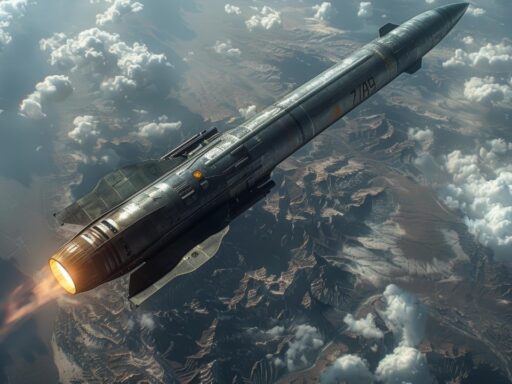
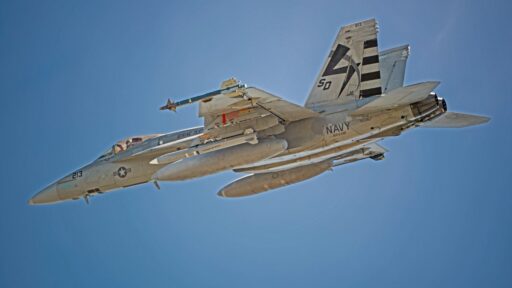
Navy officials describe the new missile as an extended-range, air-launched weapon that builds on the AGM-88E Advanced Anti-Radiation Guided Missile, often called AARGM, but with a much larger motor and updated guidance. The program, widely referred to as AARGM-ER, is intended to arm both the F/A-18E/F Super Hornet and the F-35C, giving each jet a standoff suppression-of-enemy-air-defenses option that current AGM-88 variants cannot match. Reporting on the Navy’s effort to field this air-defense-busting missile highlights that the service is still pushing to declare an initial operational capability within the year despite a broader Pentagon review of long-range strike portfolios, which some officials have described as a strategic pause for other programs, according to Navy planners.
The new missile’s core mission is classic suppression and destruction of enemy air defenses, but its design reflects how that mission has changed. Modern surface-to-air missile systems use highly mobile launchers, networked sensors, and sophisticated radar modes that can shut down, shift frequency, or relocate in order to survive. To counter that, the extended-range missile uses an advanced seeker that can home on radar emissions, combine them with precision navigation, and continue to prosecute a target even if the radar operator tries to go dark. Program descriptions emphasize that the weapon is optimized for high-speed flight at long range, which allows carrier aircraft to fire from outside the engagement envelope of systems such as the S-300 and S-400 families.
Earlier accounts of the program note that the Navy has worked to integrate the missile with the F/A-18E/F first, then with the F-35C, in order to give carrier air wings a mix of stealthy and non-stealthy launch platforms. The missile’s form factor is tailored so that it can fit inside the F-35’s weapons bays while still providing the range needed to attack deep inland radars. Test shots have focused on validating the weapon’s ability to survive the stresses of launch, separate cleanly from the aircraft, and transition into powered flight while maintaining a lock on emitting targets.
Officials involved in the program have framed the timeline as aggressive but achievable, pointing to a series of successful captive-carry flights and live-fire events. The Navy’s public posture has been that the remaining work involves software refinements, final operational testing, and logistics preparations, rather than any wholesale redesign of hardware. That stance underpins the confidence behind the claim that the missile will be in fleet hands before the year closes.
What has shifted in the Navy’s approach to anti-radar warfare
The new missile arrives as the Navy rethinks how it conducts suppression of enemy air defenses in contested regions. For decades, the service relied on older AGM-88 variants that were effective against fixed or slowly moving radar sites, but less suited to modern, highly mobile batteries. The extended-range design reflects a shift from short-range, reactive shots to preplanned, long-distance attacks that can be launched from outside the densest threat rings. Analysts have described the program as part of a broader move toward distributed, long-range fires that link aircraft, surface ships, and potentially ground-based launchers through common targeting networks, an idea that also appears in Army discussions of how long-range missiles can support the Air Force rather than compete with it, as seen in debates over long-range fires.
Recent reporting on the Navy’s anti-radiation portfolio notes that the new missile is not simply a replacement, but a qualitative leap in how far and how fast carrier aircraft can reach into defended airspace. The weapon is described as having a significantly greater range than legacy AGM-88 rounds, combined with improved survivability against modern air defenses that use advanced engagement radars and integrated command networks. According to coverage of the program’s latest milestones, the Navy has kept the missile on a priority track even as other modernization efforts have been slowed or rephased, underlining how central suppression of air defenses has become to carrier operations.
The shift is also visible in how the Navy talks about integration with airborne sensors. The extended-range missile is expected to work closely with platforms that can detect and classify radar emissions at long distances, including EA-18G Growlers and other electronic warfare assets. Reporting on the program’s ability to target airborne radars points to scenarios where the missile could be used against not only ground-based emitters but also radar-equipped aircraft that provide early warning or battle management. Analysts have highlighted that the Navy is exploring ways to use the weapon’s seeker and datalink to engage such high-value targets, a role sketched in coverage of how the missile might be used against airborne radars.
Another change lies in the way the Navy is coordinating with allied and partner forces. As regional militaries invest in their own long-range anti-ship and anti-radar capabilities, the extended-range missile becomes one piece of a larger, coalition-level suppression strategy. Japanese plans to enhance their anti-ship missile inventory, including extended-range variants intended to hold adversary fleets at risk from standoff distances, show how allies are moving in parallel on long-range precision strike. Analysis of Japan’s procurement of new anti-ship systems describes how Tokyo aims to field longer-range and more survivable weapons to counter regional naval power, a trend outlined in assessments of Japan’s missile inventory.
Why the extended-range anti-radar missile matters for current conflicts
The Navy’s push to get the missile into service this year is tied directly to the threat environment around the Western Pacific, the Baltic region, and the Middle East. Potential adversaries have invested heavily in layered air defenses that combine long-range engagement missiles, overlapping radar coverage, and mobile launchers. In such settings, carrier air wings must either accept higher risk or find ways to degrade those defenses before sending in strike aircraft. The new missile is meant to give commanders a tool to start that degradation from well outside the threat rings, reducing the exposure of pilots and high-value platforms.
Reports on the program’s recent test events emphasize that the missile is designed to counter not only traditional search and fire-control radars, but also modern, agile systems that can hop frequencies and operate in complex electromagnetic environments. Coverage from earlier this year described how the Navy is seeking a new anti-radiation missile that can operate effectively in contested spectrum conditions and integrate with advanced targeting networks, reflecting concerns that legacy weapons might struggle against sophisticated jamming and deception. That requirement has been highlighted in assessments of the Navy’s need for a new anti-radiation missile capable of dealing with such threats.
The missile also fits into a broader US effort to maintain credible strike options despite the spread of anti-access and area-denial systems. Ground-based ballistic and cruise missiles, long-range bombers, and stealth aircraft all contribute to that goal, but carrier air wings remain a flexible, forward-deployed element that can respond quickly to crises. A carrier strike group operating near a contested coastline must be able to suppress enemy radars in order to open corridors for follow-on strikes, rescue operations, or freedom of navigation patrols. The extended-range anti-radar missile is central to that opening move.