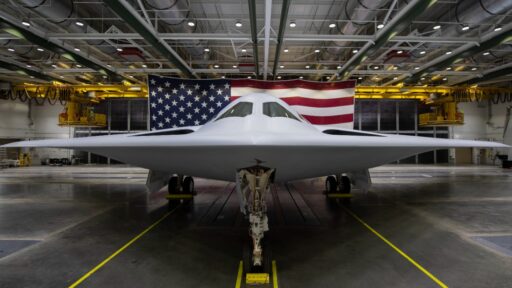
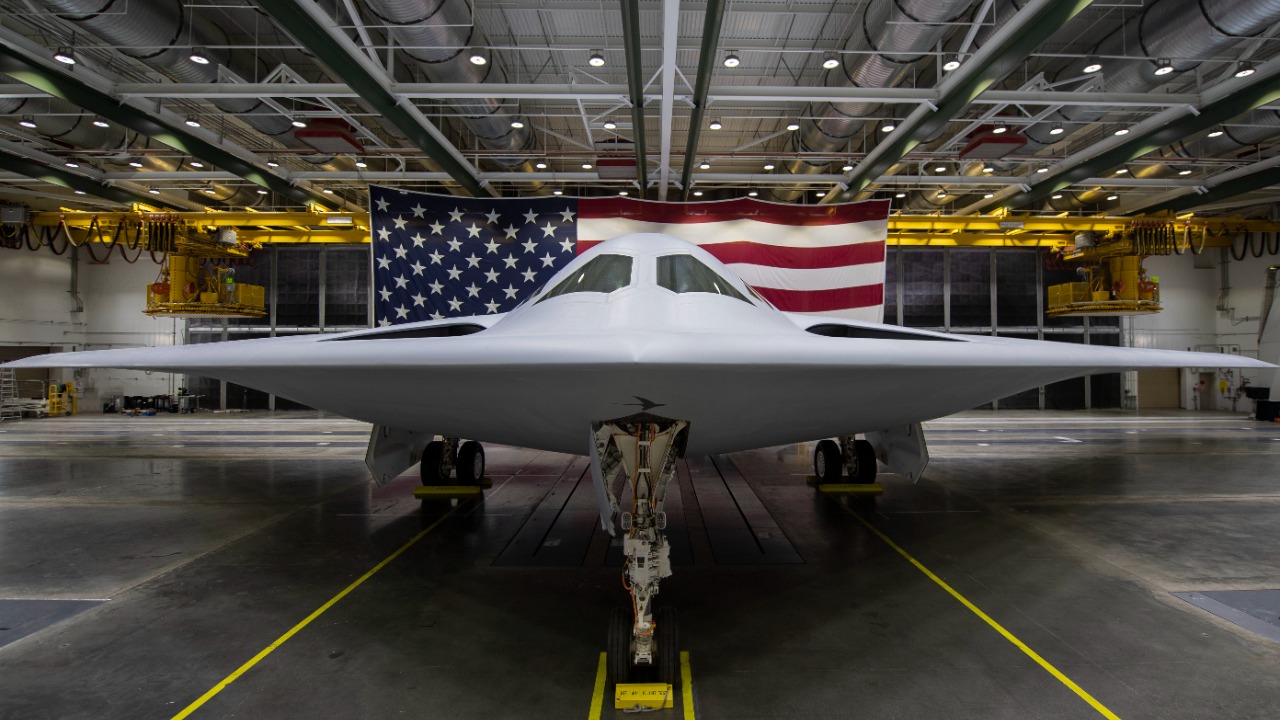

The B-21 Raider has quietly entered a new phase. With two test aircraft now flying from Edwards Air Force Base, the program is shifting from proving basic airworthiness to demonstrating how the bomber will actually operate in combat conditions. That transition marks a subtle but significant change in how the U.S. Air Force is treating its first new stealth bomber in a generation.
The twin test jets are no longer just exotic prototypes. They are becoming the backbone of an emerging fleet that will have to fit into a broader shift in U.S. warfighting concepts, nuclear deterrence strategy, and day-to-day operational planning.
How the B-21 test effort at Edwards AFB has evolved
The first B-21 Raider to reach Edwards Air Force Base arrived to begin a tightly controlled flight test campaign, focused initially on basic handling qualities, systems checks, and integration with ground test data. That phase has now expanded with the arrival of a second aircraft, giving the test community a more flexible schedule and the ability to divide tasks between jets. According to reporting on the arrival of the second B-21, the additional aircraft moved quickly into the existing test rhythm at the base.
Flight operations have also become more routine. The first B-21 has been flying roughly twice a week from Edwards, a tempo that signals growing confidence in the design and its systems. That pattern, described in coverage of the bomber flying twice, suggests that early discoveries and fixes are being handled without long stand-downs. With two aircraft now available, test planners can keep one jet focused on envelope expansion while the other supports mission systems work or ground integration.
The test program has already moved beyond simple takeoff and landing profiles. The B-21 has been photographed conducting aerial refueling, a core requirement for any long-range bomber. Imagery of the Raider taking fuel from a tanker, documented in coverage of its first aerial refueling, confirms that the aircraft is engaging with the broader Air Force infrastructure rather than operating as an isolated prototype. That kind of interaction is a key marker that development is feeding directly into operational validation.
Edwards has long served as the hub for integrating new aircraft into real-world tactics and procedures, and the B-21 is following that pattern. The presence of two test jets allows for parallel work on software loads, sensor fusion, and low observable maintenance processes, each of which must be validated before the bomber can be declared ready for operational test and evaluation.
Why dual B-21 test jets matter for U.S. warfighting concepts
The shift from pure development to early operational validation comes as the Department of Defense is rewriting how it expects to fight high-end wars. The Joint Warfighting Concept, described in detail in an analysis of the long pivot, emphasizes distributed operations, resilient command and control, and the ability to penetrate heavily defended airspace. The B-21 is one of the few platforms explicitly designed with that environment in mind.
Having two aircraft in the air test fleet matters because it allows the Air Force to start validating how the Raider will support those new concepts, not just whether it can fly safely. Test crews can now run more realistic mission profiles that combine low observable routing, electronic warfare effects, and precision strike planning, then compare results across multiple sorties. That kind of repetition is essential for refining tactics that match the Joint Warfighting Concept’s emphasis on integrated fires and contested logistics.
The B-21 is also central to the future of the nuclear triad. While the current test jets are not operational bombers, the procedures, communications links, and mission planning tools they validate will feed directly into the nuclear-certified fleet that follows. Early operational validation helps ensure that the bomber can plug into command and control architectures designed for both conventional and nuclear missions, a requirement that grows more complex as the United States adapts to potential simultaneous crises in multiple theaters.
From a deterrence standpoint, the visible progress of the B-21 program sends its own message. Regular test flights from Edwards, supported by tanker operations and ground maintenance crews, show that the aircraft is moving steadily toward fielding. For potential adversaries that track U.S. long-range strike capabilities closely, the appearance of a second test jet and a sustained sortie rate provide concrete evidence that the Raider is not a paper project.
At the same time, the dual-aircraft test fleet gives the Air Force more room to experiment with how the B-21 will work alongside other systems. The bomber is expected to operate in concert with stand-in and stand-off weapons, space-based sensors, and advanced command and control networks. Early operational validation flights can explore how mission data flows to and from the aircraft, how it cooperates with tankers and escorts, and how its stealth profile affects timing and routing decisions for joint force packages.
What the expanded B-21 test program sets up next
With two test aircraft now active at Edwards, the next steps revolve around scaling complexity rather than simply adding more flying hours. The test force can begin to script missions that look more like the real taskings the Raider will face once it enters service. That means longer-range profiles, more demanding ingress and egress routes, and a broader mix of simulated threats in the test environment.
Mission systems testing will likely become the dominant driver of the schedule. Sensors, electronic warfare suites, communications gear, and weapon interfaces all have to be pushed through a series of regression tests and software updates. Having two jets allows one to carry a stable software baseline while the other trials new code, which reduces risk and accelerates feedback. As the program edges toward operational test, those software loads will need to stabilize so that tactics development can proceed without constant reconfiguration.
The aerial refueling work already underway hints at another priority: ironing out the logistics chain that will support the Raider in peacetime and war. Tanker crews, maintenance personnel, and mission planners all have to adapt to the bomber’s specific requirements, from fuel transfer procedures to low observable repair techniques. The more that can be standardized during the test phase, the smoother the transition will be when production aircraft begin arriving at operational bases.
For the broader force, the expanded B-21 activity at Edwards provides a live laboratory for the Joint Warfighting Concept. Planners can use real test data to refine assumptions about how many sorties a Raider squadron can generate, how quickly aircraft can be turned around between missions, and what kind of basing footprint is required to keep the fleet survivable. Those insights feed into everything from munitions stockpiles to runway hardening projects.
There are also implications for allied planning. While the B-21 is a U.S. platform, its presence affects how partners think about combined operations, particularly in the Indo-Pacific. As the test program clarifies the bomber’s range, payload options, and support needs, allies can adjust their own infrastructure and exercise plans to account for a future in which Raiders operate from or through their regions, even if the details remain classified.
Ultimately, the arrival of a second B-21 at Edwards and the steady tempo of test flights signal that the program has crossed an invisible line. It is no longer about proving that the aircraft exists or that it can get airborne. The focus has shifted to proving that it can be used, sustained, and integrated into a joint force built around new concepts of high-end conflict. That is where development becomes strategy, and where each additional sortie out of the Mojave Desert shapes how the United States plans to fight in the decades ahead.