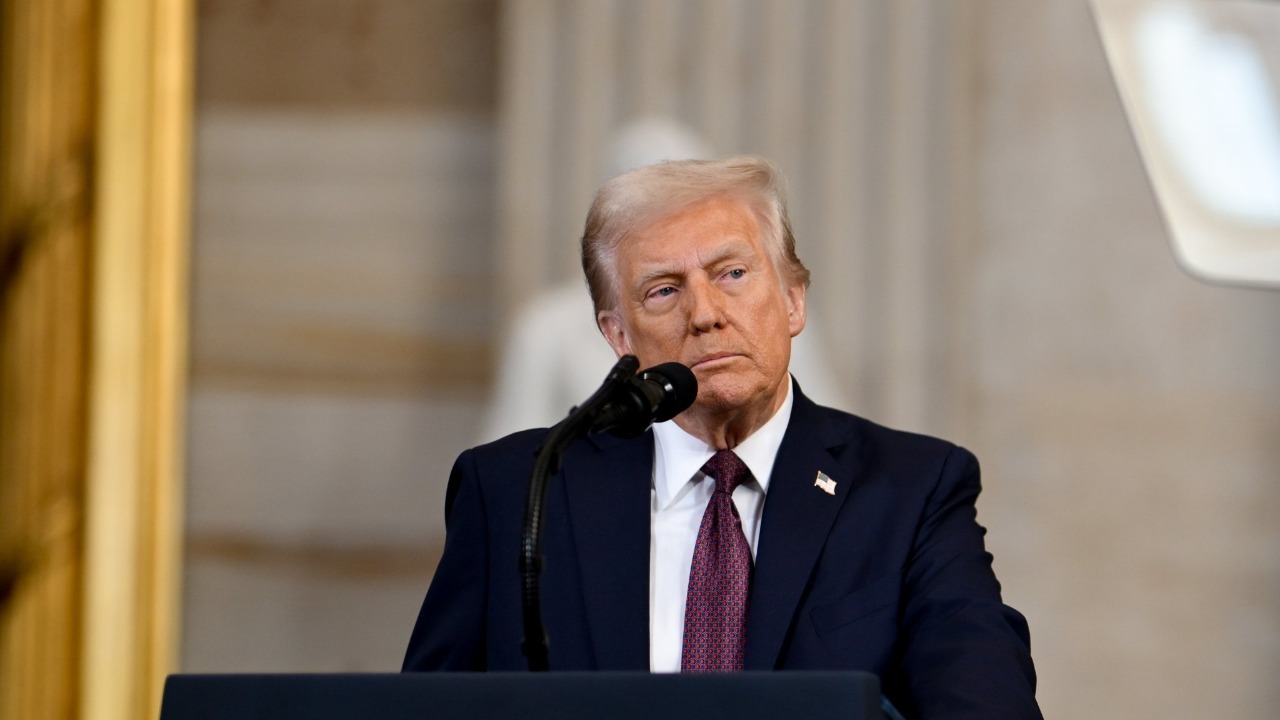

President Donald Trump’s push to establish comprehensive US cryptocurrency rules is facing an obstacle created partly by his family’s own involvement in the industry.
The Digital Asset Market Clarity Act, commonly called the CLARITY Act, is intended to resolve years of uncertainty over how cryptocurrencies should be classified and regulated. Supporters argue that it would protect consumers, give legitimate companies predictable rules and prevent digital-asset businesses from leaving the United States.
However, Democratic senators are demanding stronger safeguards to prevent presidents, lawmakers and their families from financially benefiting from industries they regulate. Trump’s reported crypto-related income of more than $1.4 billion in 2025 has made those ethics provisions the most difficult part of the negotiations.
Republicans released updated legislation on July 22, but critics immediately argued that its restrictions contain exceptions that could allow Trump’s existing cryptocurrency businesses to continue generating substantial income. Without an acceptable compromise, the legislation may not secure the Democratic votes required to overcome a Senate filibuster.
What the CLARITY Act Would Change
The CLARITY Act is a wide-ranging market-structure bill covering cryptocurrency exchanges, token issuers, brokers, dealers, stablecoins and decentralised financial services.
One of its central purposes is to define when a digital asset should be treated as a security and when it should be regulated as a commodity. The legislation would give the Commodity Futures Trading Commission a major role in policing spot cryptocurrency markets while preserving Securities and Exchange Commission authority over securities and certain token offerings.
The original House legislation passed in July 2025 by a 294–134 vote. The Senate Banking Committee advanced its version in May 2026 by a 15–9 vote, demonstrating that the basic concept has attracted some bipartisan support. The Congressional Research Service overview of the CLARITY Act explains that the proposal would significantly expand the CFTC’s authority over digital commodities and the companies handling them.
The updated Senate proposal would also impose registration, disclosure, custody and anti-money-laundering requirements on cryptocurrency intermediaries. Customer assets would have to be separated from company property, while exchanges and affiliated businesses would face rules intended to control conflicts of interest.
Supporters say these requirements would address regulatory failures exposed by collapses such as FTX. Senator Cynthia Lummis’s section-by-section summary also describes provisions covering stablecoin rewards, cybersecurity, foreign exchanges, tokenised securities and protections for customer property during bankruptcy.
Trump’s Crypto Income Changed the Debate
Market-structure legislation was already technically complicated, but Trump’s financial disclosures turned the negotiations into a wider debate about presidential conflicts of interest.
A Reuters analysis found that Trump reported receiving more than $1.4 billion from family-associated cryptocurrency ventures in 2025. Those ventures included World Liberty Financial and the Trump-branded meme coin.
The disclosures also showed that Trump continued to hold billions of World Liberty governance tokens through associated entities. Trump-related companies reported substantial holdings of Bitcoin and Ether, while part of the money generated from crypto activities appears to have moved into traditional stocks and bonds.
The Trump Organization said the disclosures demonstrated strong liquidity and a conservative balance sheet. The White House told Reuters that Trump’s assets were held in discretionary accounts managed by independent financial institutions. It has consistently denied that the president participates in the daily management of the family’s cryptocurrency businesses. The full findings are detailed in Reuters’ analysis of Trump’s financial disclosure.
Democrats argue that independent asset management does not eliminate the underlying financial interest. A president can influence regulators, enforcement priorities, legislation and public attitudes toward digital assets even without personally managing a company.
That concern is especially important in cryptocurrency markets, where a statement from a prominent political figure can rapidly affect token prices and trading activity.
Why Democrats Reject the Current Ethics Language
The updated proposal places restrictions on government officials issuing, sponsoring or holding certain interests in digital assets. Its Republican authors describe the language as a serious attempt to prevent self-dealing while preserving legitimate investments.
Democratic critics argue that the restrictions are too narrow. The Senate Banking Committee’s Democratic staff says the proposal focuses on assets in which an official has a “direct interest,” potentially leaving room for ownership through family companies, licensing agreements, trusts or other intermediary structures.
The draft also reportedly allows existing projects to continue using an official’s name, image or likeness under certain circumstances. Critics say this provision could permit the Trump meme coin and related ventures to continue operating even after the legislation becomes law.
Senator Elizabeth Warren’s analysis of the latest ethics provisions claims that the language would not require Trump to dispose of many current cryptocurrency interests. It would also permit officials to hold ordinary digital assets as investments while making government decisions affecting the wider market. Those conclusions represent the Democratic committee staff’s interpretation and are disputed by Republican supporters of the bill.
Enforcement Is Another Major Dispute
Even senators willing to accept some investment exemptions remain concerned about enforcement.
Under the proposed framework, the US Department of Justice would hold the principal authority to enforce the presidential ethics restrictions. State attorneys general and private parties would be prevented from independently bringing cases under those provisions.
Democrats argue that an administration’s own Justice Department cannot provide a sufficiently independent check on the president. They also object to language that would end the enforcement provisions after Trump’s term, potentially preventing a later administration from investigating alleged violations committed while the rules were active.
Republicans may view limits on private and state enforcement as necessary to prevent politically motivated litigation. Democrats see the same limits as a guarantee that the restrictions will have little practical force.
Senators Ruben Gallego and Thom Tillis have reportedly been working on an alternative compromise, although its complete terms had not been made public. The outcome could determine whether enough moderate Democrats support the final bill.
The Bill Faces Problems Beyond Trump
Presidential ethics may be the largest obstacle, but it is not the only unresolved issue.
Banks are pushing for tighter restrictions on rewards paid to stablecoin holders. They argue that interest-like returns could encourage customers to move money from insured bank accounts into stablecoins, reducing the deposits banks use to support loans.
Cryptocurrency companies respond that a broad ban would protect established banks from competition. The updated bill prohibits paying interest solely for holding a payment stablecoin but permits some rewards connected with transactions, liquidity provision, loyalty programmes and other activities.
The legislation also faces disagreements over illicit-finance controls, consumer protections, decentralised finance and the degree to which vertically integrated crypto companies should be allowed to combine exchange, brokerage, custody and trading functions. Reuters reported earlier that defining the boundary between SEC and CFTC authority was another major goal of the Senate proposal.
The Crypto Industry Has Political Leverage
The debate is taking place during an election year in which the cryptocurrency industry has accumulated significant campaign resources.
Fairshake and affiliated political committees reportedly raised approximately $164 million for the midterm elections and had already spent more than $66 million. That financial influence creates a difficult calculation for Democrats.
Supporting the bill could provoke opposition from progressives who believe it provides regulatory benefits to Trump and the crypto industry. Blocking it could cause well-funded crypto political groups to support opposing candidates in competitive races.
The industry argues that campaign activity is necessary because years of regulatory uncertainty have allowed agencies to determine policy through enforcement actions instead of clear legislation. Critics contend that political spending is being used to obtain weaker oversight and protect profitable business models.
Passage Before the August Recess Looks Unlikely
The White House has made cryptocurrency policy an important part of its economic agenda and has promoted the goal of making the United States the world’s leading digital-asset centre. The administration’s digital financial technology report calls for a pro-innovation regulatory approach and clearer federal policies for blockchain companies.
However, presidential support cannot replace the votes required in the Senate. The bill needs Democratic backing to reach the 60-vote threshold normally required to overcome a filibuster.
Senate Majority Leader John Thune indicated that passage before the August recess was unlikely after Democrats rejected the latest proposal. That delay is important because the legislative calendar will become increasingly crowded as the midterm elections approach.
The CLARITY Act was originally promoted as a way to separate cryptocurrency regulation from political uncertainty. Instead, its immediate future now depends on whether Congress can separate the president’s public policymaking role from his family’s private crypto interests.
A compromise remains possible. It would probably require stronger restrictions on new presidential crypto ventures, clearer treatment of indirect ownership and an enforcement mechanism considered independent enough to satisfy Democratic negotiators.
Without those changes, Trump’s success in the cryptocurrency industry may continue to block the regulatory legislation that his administration and the broader market want most.