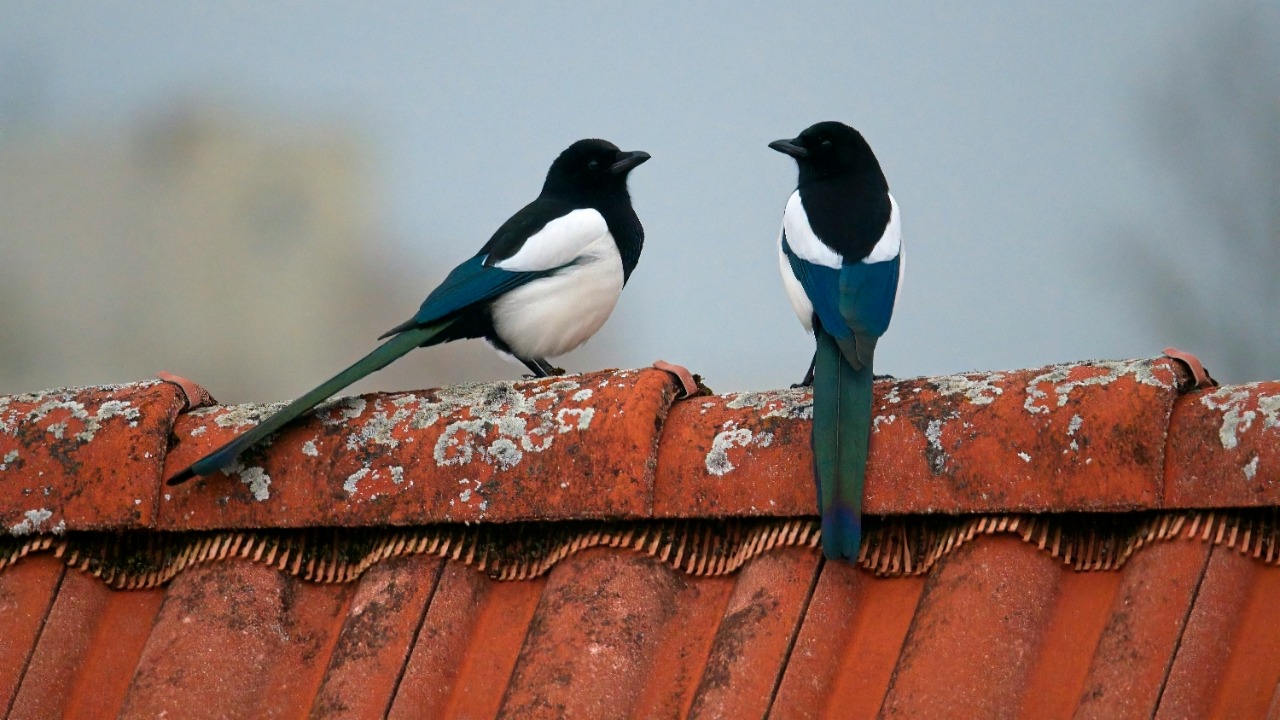

Australian magpies are already famous for their bold personalities and sharp intelligence, but new research suggests their social lives also sculpt the way they speak. A recent study reports that magpies that interact with more neighbors and family members build richer combinations of calls, effectively expanding their vocal “phrases” as their social world grows more complex. The work offers a rare, detailed look at how social structure can shape the building blocks of animal communication.
By tracking individual birds and mapping who spends time with whom, the researchers link specific social patterns to the ways magpies string together their calls. The findings point to a feedback loop in which social complexity and vocal complexity evolve together, with implications for how scientists think about the origins of language-like communication in animals.
What happened
The study focused on wild Australian magpies living in long-term, stable groups that defend territories and maintain intricate social hierarchies. Researchers followed marked birds over extended periods, recording which individuals associated closely and how often they interacted. At the same time, they collected hundreds of high-quality audio recordings to catalog each bird’s repertoire of calls and the ways those calls were combined into sequences.
Rather than counting only how many distinct calls a bird could produce, the team analyzed how magpies combined those calls into short, repeated patterns. Some sequences were simple, such as a single whistle repeated several times. Others were more elaborate, with multiple call types arranged in consistent orders that resembled short phrases. By comparing these vocal patterns with detailed social network data, the researchers could ask whether birds with richer social lives also used more varied combinations.
The data showed a clear pattern. Magpies that occupied central positions in their social networks, spending time with a larger number of group mates and neighboring birds, produced a wider variety of call sequences than more socially isolated individuals. Birds that frequently interacted across family lines, or that acted as bridges between subgroups, also tended to use more complex combinations. According to the reporting on magpie communication, the researchers argue that social exposure appears to give birds more opportunities to hear, practice, and refine different vocal patterns.
Social context also influenced which combinations were used when. Calls that appeared in courtship or territorial disputes were more tightly structured, with specific sequences recurring in similar situations. In contrast, calls exchanged among close group members during routine foraging or resting were more flexible, with birds experimenting with different orders and combinations. That contrast suggests magpies treat some vocal strings as conventional signals, while leaving other parts of their repertoire open for improvisation.
The study further reports that juvenile magpies did not simply copy adult calls one by one. Young birds that grew up in larger, more interconnected groups developed a broader range of call combinations as they matured, even when their basic set of call types was similar to that of juveniles in smaller groups. The authors interpret this as evidence that social learning operates at the level of sequences and timing, not just at the level of individual notes.
Why it matters
The link between social structure and vocal combination in magpies feeds into a long-running debate about how complex communication systems evolve. Many species, from songbirds to whales, show regional dialects or learn songs from tutors. Far fewer studies have traced how the patterning of calls, not just their acoustic shapes, responds to social life. By tying specific network positions to measurable differences in call sequences, the magpie study offers concrete evidence that social complexity can drive combinatorial complexity.
Combinatorial communication, in which a limited set of basic elements is rearranged into many possible sequences, is a central feature of human language. People use a finite set of phonemes to build words, then combine those words into an effectively unlimited set of sentences. Magpies are not using language in that sense, but their behavior shows that social birds can use a modest inventory of calls to create a far richer set of messages through structured combinations. That pattern strengthens the idea that language-like properties can emerge gradually from simpler systems shaped by social pressures.
The findings also matter for how scientists interpret animal intelligence. Australian magpies already stand out for their problem-solving skills and cooperative behavior. They live in multi-generational groups, engage in coordinated defense of territories, and sometimes show helping behavior toward unrelated birds. The new work suggests that vocal flexibility may be part of the toolkit that supports those social strategies. Birds that manage more relationships may need more nuanced ways to signal affiliation, resolve tension, or coordinate group actions, which in turn rewards individuals that can master more elaborate call sequences.
There are practical implications as well. Conservation programs often move birds between habitats or reintroduce captive-bred individuals into wild populations. If social experience shapes not only what calls birds know but how they combine them, then relocating individuals without their usual social partners could disrupt communication in ways that are not obvious from simple call counts. Managers who focus only on whether a species’ basic calls are present might miss subtler breakdowns in the structure of vocal exchanges that matter for territory defense or mate choice.
The study also invites a rethinking of how researchers design experiments on animal communication. Many lab-based studies present isolated sounds to captive animals and measure their responses. The magpie work suggests that to understand how signals function, scientists need to pay closer attention to the social networks in which those signals are embedded. A call that looks simple in isolation may carry very different meanings depending on which other calls it tends to precede or follow in real social interactions.
What to watch next
The magpie findings open several clear directions for future research. One priority is to test whether similar patterns appear in other highly social birds, such as corvids and parrots, that are already known for vocal learning. If ravens, crows, or cockatoos also show links between network position and call combination structure, that would suggest a broader principle in which social connectivity consistently drives combinatorial complexity across species.
Another question is how stable magpie call sequences remain over time. The current work links social structure and vocal combinations at a particular snapshot. Long-term tracking could reveal whether changes in group composition, such as the loss of a dominant bird or the arrival of new neighbors, trigger shifts in which call patterns are used. That kind of evidence would help clarify whether vocal combinations function more like traditions that can drift as social conditions change, or like fixed conventions that remain stable even as individuals come and go.
Researchers are also likely to probe the cognitive side of the behavior more directly. If magpies rely on structured sequences, then playback experiments can test whether birds respond differently when the order of calls is altered while the individual elements remain the same. Strongly different reactions would indicate that magpies are sensitive to syntax-like patterns, not just to the presence of particular call types. Combined with brain imaging or neural recording in related species, that line of work could reveal how the avian brain encodes and processes sequences.
There is also room to explore how development and early social exposure shape lifelong vocal habits. The study already suggests that juveniles in richer social environments acquire more varied combinations. Future work could track individuals from fledging through adulthood to see whether early network position predicts later vocal flexibility, or whether birds can catch up if their social world expands later in life. That developmental perspective would connect magpie research to broader questions about sensitive periods for learning in animals and humans.