
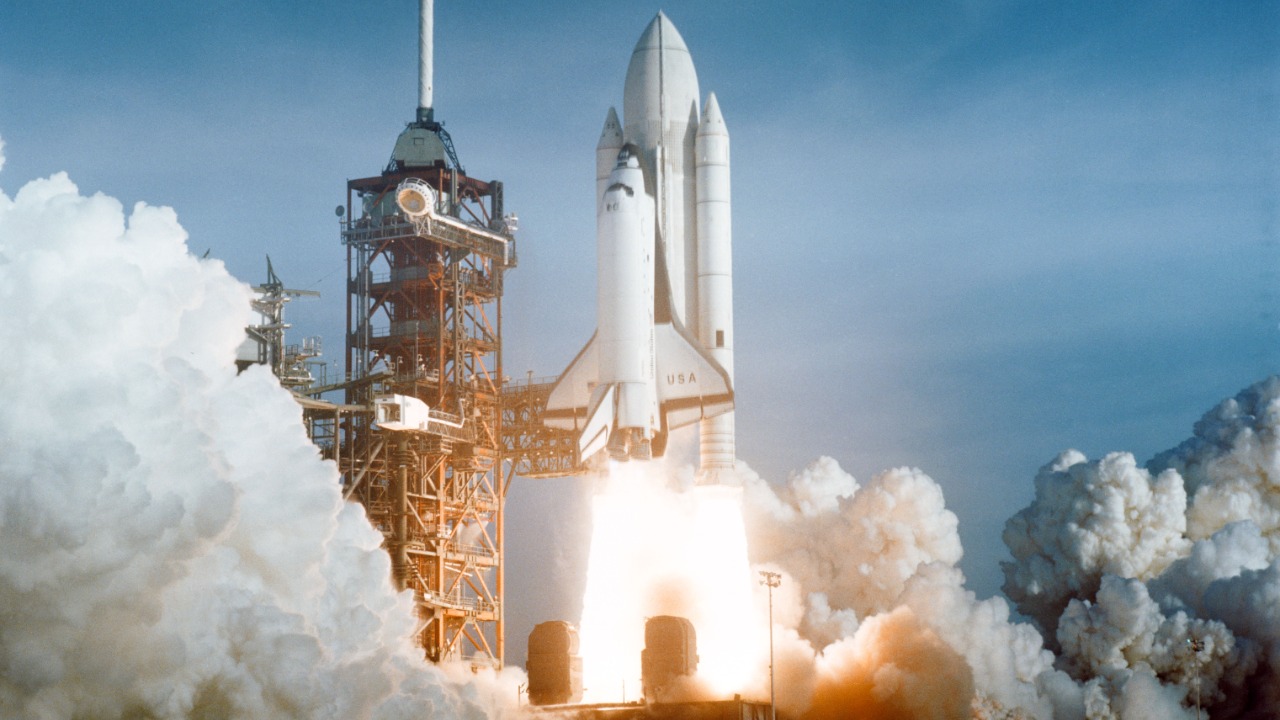

SpaceX has launched a Falcon Heavy carrying ViaSat-3 F3, a high-power broadband satellite that completes Viasat’s global geostationary constellation. The mission adds terabit-class capacity over the Asia-Pacific and Indian Ocean regions, extending a network designed to serve everything from commercial airlines to government users.
The successful flight caps a multi-year effort to field three very large satellites in geostationary orbit and follows a weather delay that briefly held the rocket on the pad. With F3 on its way to orbit, attention now turns to how quickly Viasat can bring the new capacity into service and how it will compete with a wave of low-Earth-orbit broadband systems.
What happened
The Falcon Heavy lifted off from Launch Complex 39A at Kennedy Space Center, carrying the ViaSat-3 F3 communications satellite toward a geostationary transfer orbit. The spacecraft is the third in Viasat’s ViaSat-3 series, a set of very high-capacity satellites intended to provide near-global coverage. According to mission reports, the rocket followed a standard profile for a heavy geostationary payload, with the side boosters expending their propellant without recovery to maximize performance to orbit, and the center core also not returning.
Viasat describes F3 as a terabit-class satellite designed to operate in geostationary orbit over the Asia-Pacific and Indian Ocean regions. The spacecraft was built by Boeing using its 702MP+ platform, a high-power bus that supports very large payloads. Boeing has said that the ViaSat-3 satellites are among the most powerful commercial communications spacecraft it has produced, with the bus tailored to support Viasat’s flexible payload design and high throughput requirements, according to a Boeing statement.
The launch followed an earlier stand-down by SpaceX because of poor weather conditions around the Florida spaceport. Local reports noted that the company delayed the Falcon Heavy countdown after a scrub triggered by unfavorable conditions in the launch corridor, a decision that pushed the mission to a later window, as described in coverage of the. Once conditions improved, Falcon Heavy proceeded through fueling and countdown milestones without further interruption.
Viasat confirmed shortly after liftoff that the satellite had separated from the upper stage and that ground controllers had acquired a signal. The company said ViaSat-3 F3 was healthy and beginning the early phases of orbit raising and deployment. A mission update described the launch from Kennedy Space Center as successful and noted that the spacecraft would now use its onboard propulsion to reach its final geostationary slot, according to an announcement of the.
Once on station, F3 is expected to undergo a period of in-orbit testing before entering service. That process typically includes deployment of large solar arrays and antennas, calibration of the payload, and validation of performance across the satellite’s coverage footprint. Viasat has not publicly detailed the exact duration of this commissioning period in the provided sources, so the timeline for full commercial service remains Unverified based on available sources.
Why it matters
ViaSat-3 F3 is more than a single spacecraft; it is the final piece of a three-satellite architecture that Viasat has promoted as a global, high-capacity network. Earlier satellites in the series target the Americas and the EMEA region, while F3 focuses on Asia-Pacific and the Indian Ocean. With all three in orbit, Viasat aims to offer consistent broadband coverage across key aviation, maritime, and enterprise routes, as described in reporting on the completion of the.
The ViaSat-3 satellites are described as terabit-class, meaning each one is designed to deliver on the order of 1 terabit per second of throughput. That scale of capacity, if fully realized, would allow Viasat to support dense traffic from commercial airlines, cruise ships, offshore platforms, and remote enterprise sites. It also positions the company to pursue government and defense contracts that require secure, high-bandwidth links over wide areas. According to mission coverage, the F3 payload is tailored for flexible allocation of capacity, which lets Viasat shift bandwidth to where demand is strongest within the satellite’s footprint, as noted in analysis of the terabit-class satellite.
For SpaceX, the mission underscores Falcon Heavy’s niche in the commercial market. The rocket can deliver very heavy satellites to geostationary transfer orbit in a single launch, which appeals to operators that invest in large, long-lived spacecraft. By flying ViaSat-3 F3, SpaceX reinforces its role as a primary launch provider for high-value commercial communications missions that require significant performance and schedule reliability.
The flight also comes at a time when geostationary operators face intense competition from low-Earth-orbit constellations such as Starlink and OneWeb. Those systems offer lower latency and global coverage through large fleets of smaller satellites. Viasat’s strategy with ViaSat-3 is to counter with very high capacity and targeted coverage in regions where demand is concentrated, such as transoceanic flight corridors and busy shipping lanes. Reporting on the ViaSat-3 program has emphasized that the trio is intended to complement, not simply replicate, the capabilities of LEO constellations, with a focus on high-throughput links for mobility and fixed enterprise services.
The choice of Boeing’s 702MP+ bus for F3 reflects that ambition. Boeing has described the platform as supporting high power and flexible payloads, with ViaSat-3 satellites designed to operate for many years in orbit. The investment in such large spacecraft indicates a long-term bet on geostationary infrastructure, even as the industry experiments with software-defined payloads and hybrid networks that blend GEO, MEO, and LEO capacity. The ViaSat-3 series, including F3, sits at the high end of that spectrum, as detailed in Boeing’s discussion of the delivery of the.
What to watch next
The immediate question for Viasat is how quickly ViaSat-3 F3 can complete orbit raising, deployment, and testing, then begin commercial service over Asia-Pacific and the Indian Ocean. The company has said the satellite will support aviation, maritime, enterprise, and government customers across the region, but detailed service activation milestones are Unverified based on available sources. Investors and customers will be watching for updates on in-orbit performance and any adjustments to coverage plans as the satellite comes online.
Another key storyline is how the completed ViaSat-3 constellation affects Viasat’s competitive position. With all three satellites in orbit, the company can offer end-to-end coverage across major long-haul flight paths that connect North America, Europe, the Middle East, and Asia-Pacific. Aviation connectivity deals with airlines that operate routes such as Los Angeles to Tokyo or London to Singapore may hinge on the reliability and capacity of this new infrastructure, as suggested in commentary on the global coverage goals.
Regulatory and spectrum issues also remain in focus. High-throughput GEO satellites rely on carefully coordinated frequencies and orbital slots, especially in crowded regions above Asia-Pacific. Any changes in international coordination or national licensing regimes could influence how Viasat allocates capacity or prioritizes markets within the F3 footprint. The company’s ability to navigate those regulatory environments will shape how fully it can monetize the new satellite.
On the launch side, Falcon Heavy’s performance on this mission will feed into future decisions by satellite operators weighing heavy-lift options. The vehicle has flown fewer missions than Falcon 9, but each high-profile commercial success strengthens its track record for large GEO payloads. Analysts will track whether more operators with very large satellites follow Viasat’s lead and book Falcon Heavy, or whether they shift to alternative launchers that are coming to market.
More broadly, the question is how GEO broadband strategies evolve in an era dominated by constellations in lower orbits. Viasat now has a trio of powerful geostationary satellites in space, but it also faces rising expectations around latency, flexibility, and pricing. The performance of ViaSat-3 F3 over Asia-Pacific will serve as a test case for whether very high-capacity GEO platforms can hold their own against thousands of smaller satellites in LEO. Industry observers will be watching usage patterns, service quality, and customer wins to see how that contest plays out, as highlighted in reporting on the completed ViaSat-3 network.