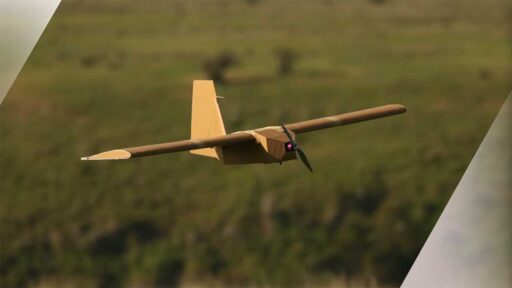
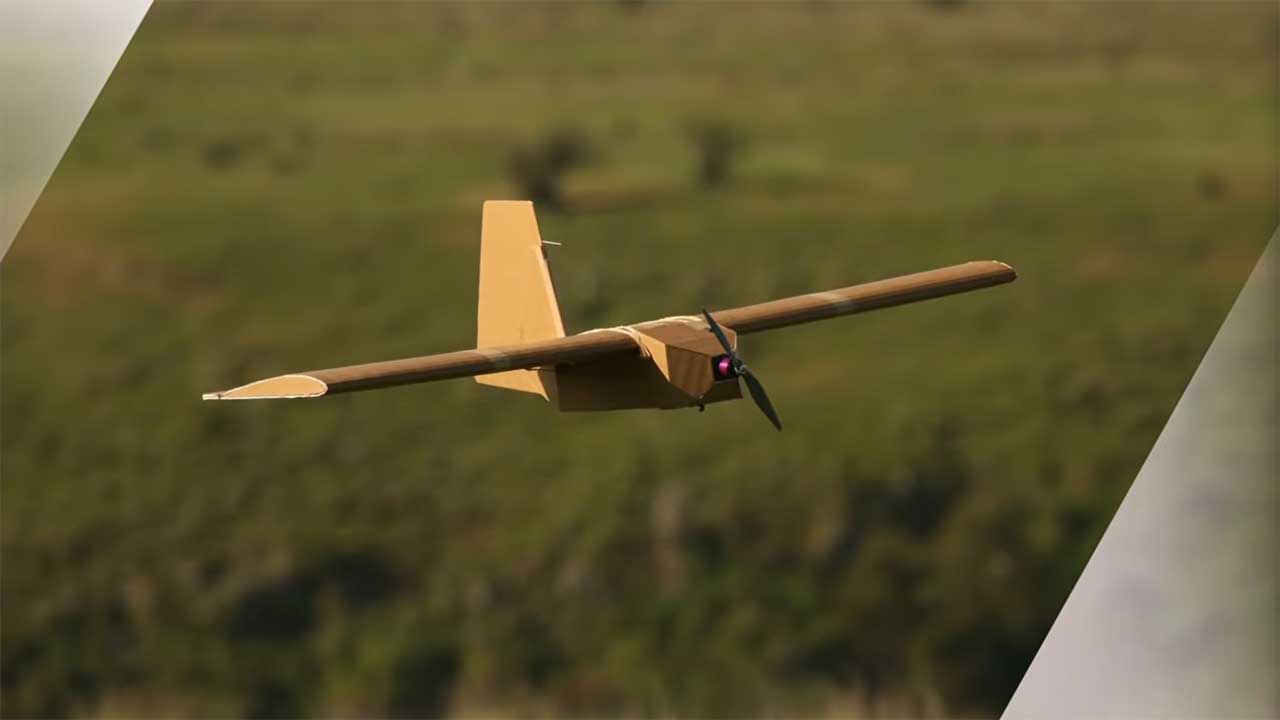

Japan is exploring whether flat-pack drones made from cardboard could become part of its defense toolkit, betting that cheap, disposable aircraft might help offset adversaries’ numerical advantages. The concept reflects a broader shift in military thinking, where quantity, cost and rapid replacement are starting to matter as much as high-end hardware.
Officials and industry partners are studying how lightweight cardboard airframes, combined with simple electric motors and guidance systems, could support logistics, surveillance and potentially front-line operations. The effort aligns with Japan’s recent push to expand its unmanned systems and prepare for large-scale attrition warfare.
What happened
Japan’s interest centers on low-cost unmanned aircraft that use corrugated cardboard or similar fiberboard for their main structure. These drones are designed to be shipped flat, assembled quickly in the field and flown with minimal training. The concept mirrors existing commercial products that use pre-cut cardboard wings and fuselages paired with off-the-shelf avionics and small electric propulsion units.
According to technical descriptions of cardboard drones, the airframes can be folded or slotted together without specialized tools, then fitted with modular payload bays. Wingspans are typically a few meters, allowing the aircraft to carry several kilograms of cargo or sensor equipment over tactical distances. Once assembled, they can be hand-launched or catapulted and recovered by belly landing on open ground.
Japan’s defense planners are evaluating whether such systems could support resupply missions to dispersed units, especially on remote islands or in areas where conventional aircraft would be vulnerable. Their focus is on simple GPS-guided or pre-programmed flight paths, with the option for remote piloting when communications allow. By relying on inexpensive materials and standardized components, the drones could be produced in large batches and delivered to units as needed.
The cardboard construction is not intended to rival the durability of composite or metal airframes. Instead, it trades longevity for speed and scale. Many units would likely be used only a handful of times, or even just once, before being discarded or lost in contested airspace. That approach fits a wartime model in which expendable platforms saturate the sky, complicating an adversary’s air defenses and preserving more valuable assets.
This exploration is unfolding alongside Japan’s broader investments in unmanned aerial vehicles, including larger reconnaissance platforms and armed drones. The cardboard concept sits at the opposite end of the spectrum from those high-end systems, aimed at missions where cost and disposability matter more than endurance or payload capacity.
Why it matters
The move toward cardboard-based aircraft reflects lessons from conflicts where cheap drones have reshaped the battlefield. In Ukraine and the South Caucasus, small unmanned systems have been used for everything from artillery spotting to precision strikes, often at a fraction of the cost of the weapons they help destroy. Japan’s interest in ultra-low-cost airframes suggests that its defense establishment expects similar dynamics in any future high-intensity conflict in East Asia.
Economic considerations are central. Traditional military drones can cost hundreds of thousands or even millions of dollars per unit, which limits how many can be bought and how freely they can be risked. Cardboard platforms built around commercial electronics could be produced for a tiny fraction of that price. In a scenario where air defenses are dense and attrition is severe, the ability to lose dozens or hundreds of drones without crippling the budget becomes strategically attractive.
Logistics is another driver. Japan faces the challenge of defending a long chain of islands, with small garrisons scattered across the Ryukyu archipelago and other remote locations. Lightweight drones that can deliver ammunition, medical supplies or spare parts to units that lack airstrips or secure ports would give commanders more flexibility. They could also help sustain operations if conventional supply routes are cut or heavily targeted.
The environmental and practical benefits of cardboard are part of the calculation as well. Cardboard structures are easier to incinerate or recycle than metal airframes, reducing the logistical burden of recovering wreckage or expired equipment. They are also less likely to leave behind sensitive components if they crash in contested areas, since the most valuable electronics can be designed to detach or self-destruct, leaving only a simple shell.
At the same time, the concept raises questions about survivability and performance. Cardboard is vulnerable to moisture, heat and rough handling. Designers must address how to protect the airframes from rain, salt air and repeated assembly and disassembly. Protective coatings, sealed packaging and limited-use lifecycles are potential answers, but each adds complexity and cost. Japan’s evaluation will need to balance these trade-offs against the appeal of very cheap, very simple designs.
There are also ethical and strategic concerns. Low-cost drones could, in theory, be adapted for offensive roles, including one-way attack missions. While Japan’s defense posture is officially focused on deterrence and self-defense, any technology that enables mass deployment of unmanned aircraft will draw scrutiny from neighbors and arms-control advocates. Clear doctrine and export controls will be important if cardboard-based systems move from experimental trials into regular service.
More broadly, the initiative fits into a larger shift toward “attritable” systems, which are designed to be affordable enough to lose in combat without severe strategic cost. That concept blurs the line between traditional military hardware and consumer-grade technology. Japan’s exploration of cardboard platforms illustrates how far that trend has moved, as defense ministries consider materials more associated with packaging than with aircraft manufacturing.
What to watch next
The next phase for Japan’s cardboard drone concept will likely involve structured testing and limited field trials. Observers will be watching for reports of demonstration flights with military units, particularly in coastal or island environments where the logistics benefits are most pronounced. Performance in wind, rain and salt-heavy air will be key indicators of whether the idea can move beyond controlled test ranges.
Procurement decisions will provide another signal. If the Ministry of Defense issues tenders for large quantities of cardboard-based systems, even for training or evaluation, it would suggest confidence that the concept has practical value. Contracts with domestic manufacturers, including small aerospace firms and materials specialists, would also show how Japan intends to integrate this technology into its industrial base.
Regulatory and doctrinal changes are worth tracking. The adoption of disposable drones may require updates to rules on airspace management, safety and environmental handling of wreckage. Military planners will need to define how such systems fit into existing concepts of operations, including who controls them, how they are tasked and how they are coordinated with crewed aircraft and more sophisticated unmanned platforms.
International reaction will shape the broader impact. Neighbors and allies will be assessing whether Japan’s exploration of ultra-cheap drones signals a wider regional shift toward massed unmanned systems. If other countries in the region pursue similar technologies, the result could be a new competition focused less on individual platform quality and more on the ability to produce and deploy large numbers quickly.
Technology spillover into civilian sectors is another angle. Cardboard drones optimized for military logistics could inspire commercial variants for disaster relief, medical delivery or remote-area supply. Japan is highly exposed to earthquakes, typhoons and volcanic activity, and rapid, low-cost aerial delivery platforms could complement existing emergency response tools. The same attributes that make cardboard airframes attractive for wartime resupply could prove useful when roads and ports are damaged by natural disasters.
Finally, the evolution of counter-drone measures will influence how far cardboard platforms can go. If adversaries field cheap, automated systems that can detect and intercept slow, low-flying aircraft, the value of expendable drones may depend on their ability to fly in large swarms or operate with minimal signatures. Japan’s research into cardboard airframes will likely intersect with parallel work on electronic warfare, camouflage and autonomous flight control, all aimed at keeping these simple aircraft effective in increasingly crowded and contested skies.