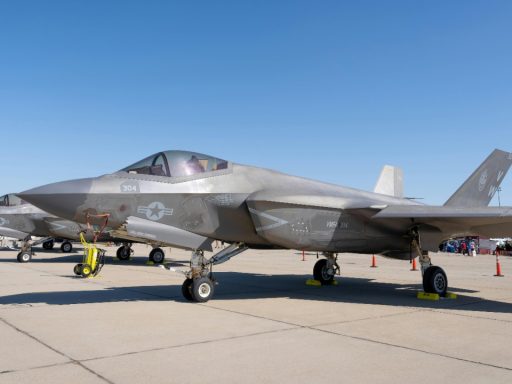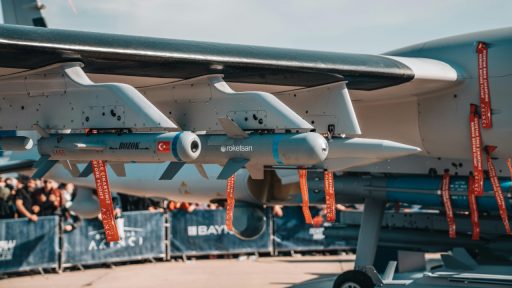
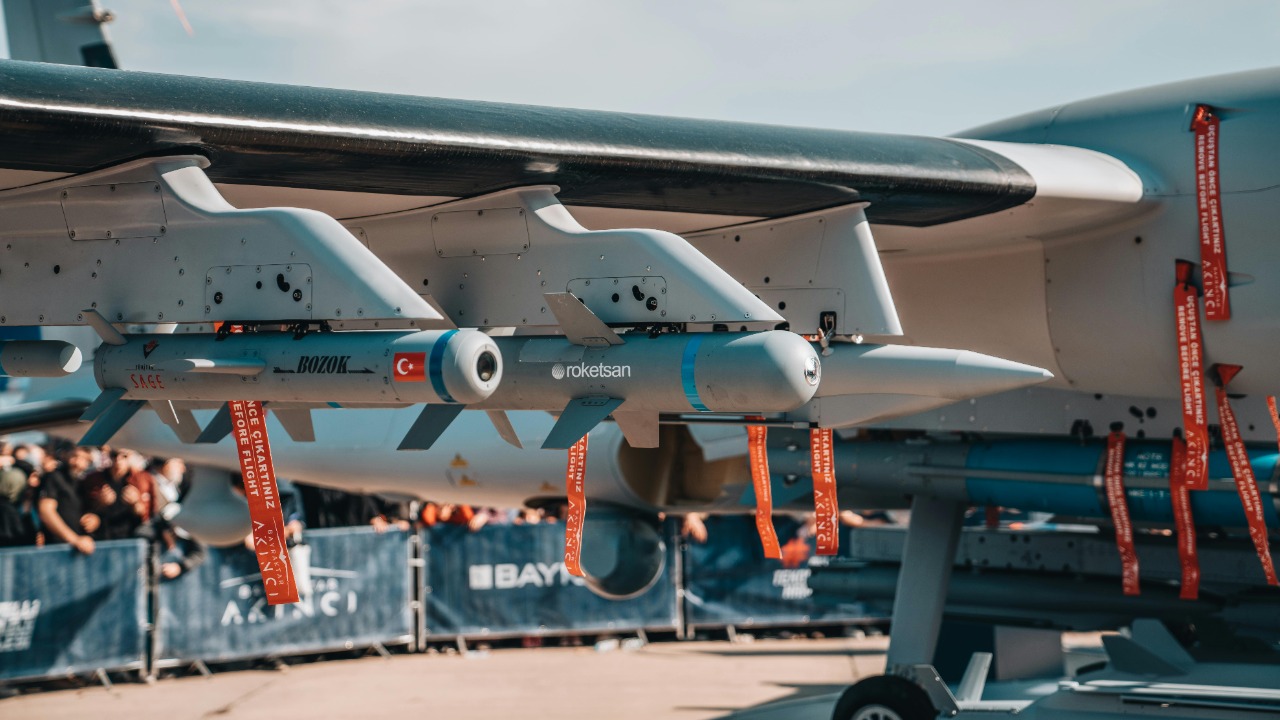

A new American strike aircraft is being paired with a small cruise missile that can smash hardened targets and blind enemy radars from far outside hostile air defenses. Together, the Sky Warden platform and the Red Wolf weapon point to a future in which a modest turboprop can launch brutal kinetic attacks and sophisticated electronic warfare strikes in the same mission.
Rather than relying only on high‑end jets, the United States is testing how rugged, low‑cost aircraft armed with smart, long‑range munitions can handle complex battlefields. This fits into a wider shift toward distributed firepower, where missiles and electronic effects matter more than the airframe that carries them.
Sky Warden: a simple aircraft built for complex missions
The Sky Warden is built to stay overhead for long periods, circle quietly above a fight, and strike when needed. It is designed for close air support, precision strike, and armed ISR—intelligence, surveillance, and reconnaissance—while still plugging into any joint force network around the world. That mix of roles means the same plane can watch a target for hours, relay data to ground units, and then deliver a guided weapon when the moment is right, as described in early strike integration reports.
The aircraft also shows how quickly a modern combat system can be reconfigured. Promoted as a modular platform, Sky Warden can swap sensors, weapons, and communication gear in short order, allowing a unit to tailor it for counterterrorism one day and high‑end conflict the next. That rapid reconfiguration is highlighted in technical briefings on how Sky Warden delivers close air support and networked strike options without needing a large support footprint.
Red Wolf: a small cruise missile built for big effects
The Red Wolf is the new missile turning Sky Warden from a light attack aircraft into a long‑range standoff shooter. Positioned as the kinetic member of L3Harris’ launched‑effects family, Red Wolf is described as a multi‑domain vehicle for long‑range standoff strikes that can hit hardened or mobile targets. Company material frames Red Wolf as a way to validate new concepts quickly and speed adoption of these small, smart munitions.
Red Wolf can operate as either a loitering munition or a small cruise missile, fly as far as 200 nautical miles, and deliver precision effects at that distance. That range figure of 200 nautical miles is central, because it lets a slow turboprop stay far away from heavy defenses while its weapon does the dangerous work. In practice, a Sky Warden can launch a Red Wolf, let it loiter as a scout, then dive in for a strike once a high‑value target appears.
From OA-1K Sky Warden to OA-1K concepts and beyond
The same company pushing Sky Warden has also pitched cruise missiles for the OA‑1K, sometimes described as a Skyraider‑style light attack aircraft. Reporting on those efforts stresses the OA‑1K’s rugged simplicity and its ability to land and take off from rough expeditionary airfields and unprepared airstrips. That basic but tough airframe is seen as an ideal host for modern cruise missiles that can be rolled on and off pallets as needed.
Within that context, L3Harris officially unveiled Red Wolf, as well as the companion Green Wolf, which is fitted with an electronic warfare payload instead of a traditional explosive warhead. The development path for these systems dates back to 2020, showing that the company has been working on launched‑effects families for several years. Coverage of the unveiling explains how Red Wolf and were designed together, one for kinetic attack and one for electronic disruption, so operators can mix and match effects from the same basic missile body.
Green Wolf, Marine helicopters, and the rise of electronic attack
If Red Wolf is the hammer, Green Wolf is the scalpel for the electromagnetic spectrum. Carrying an electronic warfare payload instead of a blast warhead, Green Wolf is intended to jam, deceive, or otherwise disrupt enemy sensors and communications. Program details for new Marine Corps weapons describe how the systems are autonomous missiles that zero in on targets from up to 200 nautical miles away and can be deployed in swarms, with one version delivering kinetic effects and the other, the Green Wolf, delivering electronic warfare capabilities.
This is part of a wider move toward electronic attack and escort jamming as core tools, not niche add‑ons. Naval programs point in the same direction, with systems such as SKY SHIELD described as an all‑inclusive, multi‑purpose, fully autonomous Electronic Attack and Escort Jamming system integrated into a single unit. That concept, which uses advanced Gallium Nitride amplifiers, shows how SKY SHIELD Electronic is meant to shield ships from modern missile threats, and it mirrors what Green Wolf seeks to do for aircraft and helicopters.
How Red Wolf compares with high-end hypersonic weapons
Red Wolf and Green Wolf sit at one end of the missile spectrum, while hypersonic systems such as Mako occupy the other. Mako has been described as The Hypersonic Missile That The F‑22, F‑35 and B‑52 Can All Shoot, highlighting that a single weapon is being tailored for some of the most advanced aircraft in the world. That program, often referred to as the Mako Hypersonic Missile, aims for extreme speed and long reach, while the Wolf family focuses on flexibility, affordability, and mixed kinetic and electronic effects.
Both trends point to the same goal: keeping launch platforms safe while pushing risk onto the missile instead of the pilot. In one case, a stealth jet like an F‑35 or a bomber like a B‑52 can fire a hypersonic round from far outside enemy territory. In the other, a lighter aircraft such as Sky Warden can release a Red Wolf or Green Wolf that flies 200 nautical miles to strike or jam. The brutal kinetic punch of Red Wolf, combined with the subtle disruption of Green Wolf and the high‑speed reach of Mako, signals that future air campaigns will be decided as much by smart munitions as by the aircraft that carry them.