
A United States Air Force KC-135 Stratotanker arrived at RAF Mildenhall in the United Kingdom with visible damage along its fuselage that aviation experts say looks consistent with shrapnel strikes. The incident has raised immediate questions about where the aircraft was operating, what caused the damage, and how close a critical support asset may have come to a far more serious outcome.
Although the tanker landed safely and there have been no confirmed reports of injuries, images of the punctured skin and pitted metal have quickly become a focus for military analysts, who see the episode as a stark illustration of the risks facing support aircraft in contested airspace.
What happened
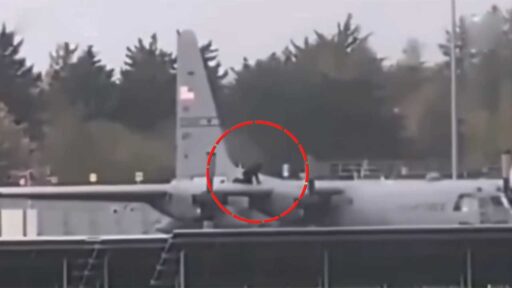
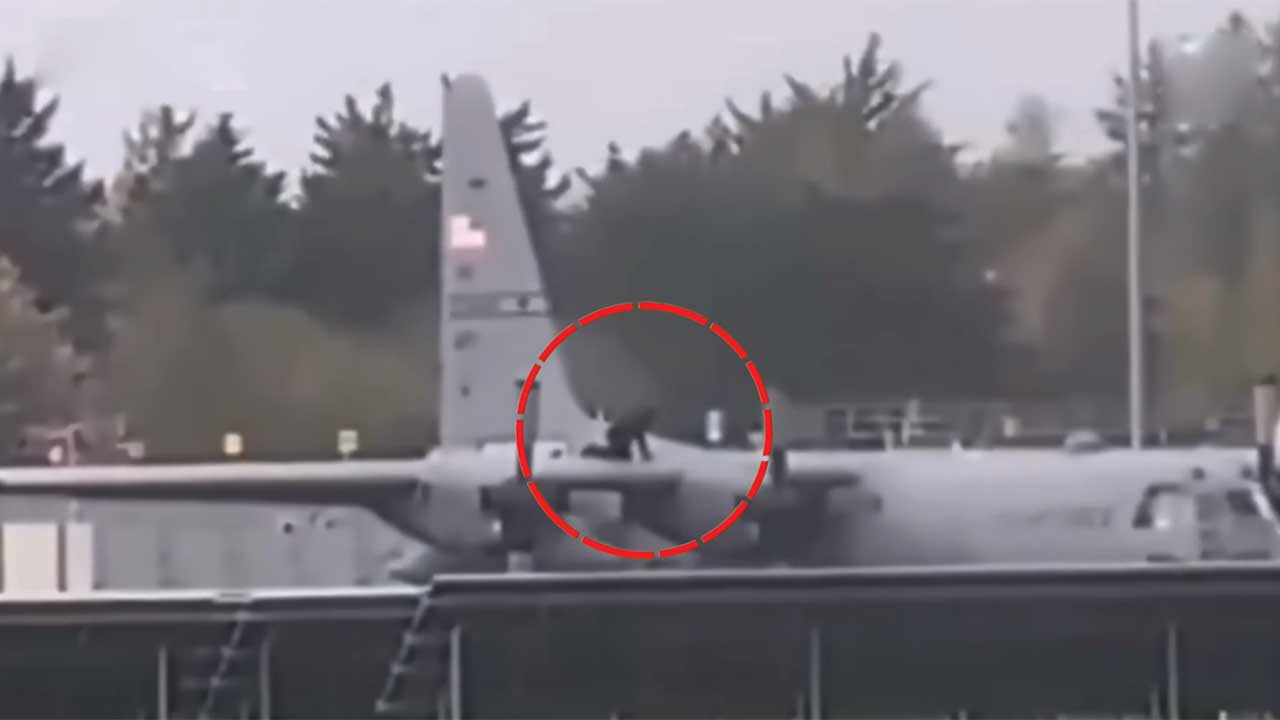
Video circulating on social media shows a KC-135 taxiing at RAF Mildenhall with dozens of small, circular marks and tears along the forward fuselage and near the wing root on at least one side of the aircraft. In some frames, the metal appears peeled back around the impact points, with bright, untreated aluminum exposed against the tanker’s grey paint, suggesting fresh structural damage rather than old, patched repairs. One assessment shared with US viewers described the pattern as consistent with shrapnel rather than simple wear or bird strikes.
A separate recording carried by an Australian outlet showed the KC-135 arriving at the Suffolk base, its refueling boom stowed normally but its fuselage clearly scarred by multiple small penetrations. Commentators in that clip noted that the punctures appeared concentrated along a band of the aircraft, a pattern that would match a blast or fragmentation source located off to one side of the flight path rather than a single direct hit. That visual detail has been highlighted in coverage for Australian audiences.
Arabic-language reports have also picked up the footage, describing a United States Air Force tanker with visible holes in its fuselage panels after landing at a British base. One outlet noted that the aircraft’s skin showed what looked like clusters of small impact points, some apparently penetrating fully through the outer layer of metal. That description in regional coverage has added to speculation that the aircraft encountered some form of explosive fragmentation rather than isolated debris.
Specialist aviation reporting has tried to place the incident within the KC-135’s typical operational profile. RAF Mildenhall is a long-standing hub for United States Air Force refueling operations that support flights over Europe, the North Atlantic, and, when required, missions toward Eastern Europe and the Middle East. Analysts have pointed out that the tanker’s presence there fits normal patterns, but the visible damage does not. One detailed breakdown on an industry site described the marks on the fuselage as “shrapnel-like” and noted that the distribution of impacts suggested exposure to fragments at some point in flight, a point that has been repeated in specialist analysis.
Another video-focused outlet framed the event within a broader stream of user-shared military clips, showing the damaged KC-135 taxiing as ground crews and airfield vehicles moved nearby. The footage, which appears to have been taken from a distance across the airfield, zooms in to highlight the pockmarked skin near the nose and along the side of the tanker. That recording, carried by a platform that often aggregates viral defense clips, has been widely shared through a short video segment.
So far, there has been no publicly confirmed account from the United States Air Force detailing the exact cause of the damage, the tanker’s route before arrival, or whether the aircraft declared any kind of in-flight emergency. Unverified based on available sources. The visible evidence, however, has been enough to drive a wave of expert commentary about the potential scenarios that could produce such a pattern of impacts.
Why it matters
The KC-135 Stratotanker is a central pillar of United States and allied air operations, responsible for keeping fighters, bombers, and surveillance aircraft on station far from their home bases. Any suggestion that a tanker has been exposed to shrapnel or fragmentation fire raises hard questions about the safety margins that commanders are accepting for these high-value but relatively vulnerable platforms. Unlike front-line fighters, the KC-135 lacks modern stealth shaping and typically relies on distance and airspace control for protection.
Experts who have commented on the footage have pointed out that the pattern of damage appears to be limited to the outer skin, with no immediate visual evidence of catastrophic structural compromise. That observation suggests that the tanker’s redundant systems and rugged airframe gave the crew enough margin to continue to a safe landing. For air planners, however, the more pressing issue is how close the incident may have come to affecting critical systems such as fuel lines, pressurization, or cockpit instrumentation.
The location of the damage on the forward fuselage has also attracted attention. Impacts near the nose section can threaten avionics and crew, while hits near the wing root raise concerns about fuel tank integrity. Even if the fragments did not penetrate deeply enough to trigger a fire or rapid decompression, the incident highlights how quickly a seemingly minor pattern of holes could escalate into a life-threatening emergency if key components are struck.
Strategically, any evidence that a KC-135 operating in support of missions over contested regions has been subjected to fragmentation would signal that adversaries are either willing or able to reach farther into air corridors that were previously considered relatively safe. The tanker fleet is aging, and the KC-135 in particular dates back to the late 1950s and 1960s for many airframes. Keeping these aircraft in service depends on careful risk management, including route planning that avoids unnecessary exposure to ground fire or missile threats.
The public nature of the footage also matters. In previous eras, damage to support aircraft might have remained largely hidden within official reporting channels. Today, smartphone video from airfields and rapid sharing on social platforms can turn a single landing into a global talking point within hours. That visibility can pressure militaries to explain what happened more quickly, but it can also feed speculation when official statements lag behind what the images appear to show.
For allies that rely on United States aerial refueling support, the sight of a damaged tanker at a key European base is a reminder that their own operations are tied to the survivability of these aircraft. If risk levels rise for tankers, commanders might need to adjust how far forward they are willing to push refueling tracks, which in turn could shorten the time that fighters or surveillance aircraft can spend near contested areas. In a tightly scheduled air campaign, even small changes in tanker availability can ripple across the entire force.
What to watch next
The immediate question is whether the United States Air Force will publicly confirm the cause of the damage. An official statement that attributes the marks to shrapnel from a specific incident, such as a surface-to-air missile engagement, anti-aircraft artillery, or an explosion near the flight path, would clarify the level of threat that the tanker encountered. If, instead, investigators conclude that the damage came from another source, such as airborne debris or a maintenance-related issue, that would reshape the current debate.
Observers will also be watching for any signs of changes in flight patterns or operational posture for KC-135 units based at or rotating through RAF Mildenhall. A noticeable shift in where tankers are seen flying, or a temporary reduction in visible activity, could suggest that commanders are reassessing risk around particular routes. Conversely, a steady rhythm of arrivals and departures similar to past months would signal confidence that the incident was isolated or manageable.
Maintenance and inspection outcomes will be another key indicator. If structural assessments find that the damage was largely superficial, the tanker might return to service after panel replacements and standard checks. If deeper issues are discovered, such as compromised frames or systems, the aircraft could face a longer repair period. The level of work required will offer indirect clues about the energy and origin of the impacts.