

The best family electric car is not automatically the model with the largest battery or quickest acceleration. Parents must also consider passenger space, child-seat access, cargo capacity, charging speed, safety technology and the ease of completing longer journeys.
A compact electric crossover may be perfect for a family of four, while a household carrying grandparents, teenagers or several child seats may require a genuine three-row vehicle. Some families prioritize affordable daily transportation, while others need towing capability or enough space for sports equipment and holiday luggage.
The following models stand out because they solve different family needs. Prices, driving ranges and standard equipment can vary by trim, location and production date, so buyers should confirm the exact configuration before ordering.
1. Kia EV9: The Best All-Round Three-Row Family EV
The Kia EV9 is one of the strongest choices for families ready to replace a gasoline-powered three-row SUV. Its upright shape provides a spacious cabin, practical access and enough seating for up to seven adults.
The 2026 EV9 offers an EPA-estimated range of up to 305 miles, depending on the configuration. Its 800-volt electrical architecture supports rapid DC charging, while its North American Charging Standard connection expands access to Tesla Supercharger locations and other compatible stations. Kia lists a starting MSRP of $54,900 for the 2026 Light RWD before destination charges, taxes and optional equipment.
Family usability is where the EV9 becomes especially convincing. Kia reports up to 42.8 inches of second-row legroom, an easy-access third row, USB-C connections for rear passengers and available six- or seven-seat layouts. The square exterior also preserves more useful headroom than the sloping rooflines found on many electric crossovers.
Safety strengthens its case. The 2026 EV9 earned an IIHS Top Safety Pick+ award, with good results in the institute’s major crashworthiness evaluations. Buyers can review the complete results through the IIHS Kia EV9 safety assessment.
The EV9 is best suited to families that need three usable rows but do not want to enter the luxury-SUV price category.
2. Hyundai IONIQ 9: The Best for Long-Distance Family Comfort
The Hyundai IONIQ 9 shares some underlying electric technology with the EV9, but it presents a softer, more comfort-focused interpretation of the large family EV.
Its entry-level S trim offers seven-passenger seating and an EPA-estimated range of 335 miles. SE and SEL versions are rated at 320 miles, while higher-powered Limited and Calligraphy configurations are rated at 311 miles. Those figures make the IONIQ 9 particularly attractive to families that regularly travel between cities or live far from public charging infrastructure.
The cabin can be configured with a second-row bench or captain’s chairs, depending on trim. Higher versions add features such as power-folding third-row seats, a panoramic roof and more powerful all-wheel-drive systems. The long wheelbase and flat electric-vehicle floor also help create generous space across the three rows.
The IONIQ 9 received a 2026 IIHS Top Safety Pick+ award. It achieved good ratings in the small-overlap front, updated moderate-overlap front and updated side tests, along with good ratings for its headlights and standard front-crash-prevention systems. The complete evaluation is available through the official IIHS IONIQ 9 rating.
The IONIQ 9 is the stronger choice for families that value range and relaxed road-trip comfort more than rugged styling or aggressive performance.
3. Tesla Model Y: The Best for Smaller Families and Easy Road Trips
The Tesla Model Y remains one of the most practical electric vehicles for a household that does not require a full-size third row.
Its standard family-friendly strengths include seating for five, a spacious rear cargo area, storage beneath the cargo floor and an additional front trunk. Tesla lists approximately 33.1 cubic feet of total cargo volume with five passengers in the five-seat model and up to 75.5 cubic feet when the rear seats are folded. Some configurations are available with seven seats, although the small third row is better suited to children or occasional use than full-time adult transportation.
The main advantage for travelling families is Tesla’s closely integrated charging experience. The navigation system can plan a journey around charging stops, prepare the battery before arrival and display charging availability. Tesla reports more than 80,000 Superchargers globally and says compatible vehicles can add as much as 200 miles in approximately 15 minutes under suitable conditions. Actual speed varies with temperature, battery charge, vehicle version and charger output. Families can examine the network through Tesla’s official Supercharger information.
The minimalist touchscreen-based cabin will not suit every buyer, and parents should test the controls before purchasing. However, the combination of cargo room, efficiency, route planning and widespread fast charging makes the Model Y particularly convenient for a family of three, four or five.
4. Volkswagen ID. Buzz: The Best Electric Family Van
The Volkswagen ID. Buzz is the most distinctive vehicle in this group, but its value is not limited to retro styling. Its upright van body provides the kind of passenger and cargo flexibility that conventional electric SUVs often struggle to match.
The American-market ID. Buzz offers three seating rows and can carry up to seven passengers, depending on configuration. Removing the third row and folding the second can provide as much as 145.5 cubic feet of cargo space. Sliding rear doors also make it easier to load children in narrow parking spaces where a large hinged SUV door may be inconvenient.
The rear-wheel-drive model has an EPA-estimated range of 234 miles, while the all-wheel-drive version is rated at 231 miles. That is considerably less than the longest-range SUVs in this selection, making the Buzz more suitable for families that can charge at home and do not routinely complete extremely long journeys without stopping. Volkswagen lists a starting MSRP of $59,995 for the 2025 Pro S model.
The ID. Buzz received a good result in the updated IIHS moderate-overlap front crash test, including good structural and rear-passenger injury assessments. However, its complete set of ratings should be reviewed carefully because not every tested category received the highest mark. The details are available on the IIHS ID. Buzz ratings page.
It is the strongest option for families that prioritize sliding doors, passenger flexibility and maximum interior volume over class-leading driving range.
5. Rivian R1S: The Best Premium EV for Active Families
The Rivian R1S combines three-row family transportation with genuine towing and off-road capability. It is designed for households that may use the same vehicle for school journeys, camping trips, winter travel and towing recreational equipment.
The R1S seats seven and includes a large rear cargo area, a front trunk and additional storage compartments. Current pricing begins at approximately $83,990, placing it well above the Kia and Hyundai alternatives. Depending on its battery and drivetrain, the current R1S lineup offers long-distance range and substantial performance, while second-generation versions can tow up to 7,700 pounds.
Its adjustable air suspension and multiple drive modes make it more capable on rough roads than most family-focused electric crossovers. That capability may be valuable for families travelling to campsites, mountain areas or properties reached through poorly maintained roads.
The trade-offs are price, size and operating cost. Large wheels, high-performance drivetrains and towing can reduce efficiency, while insurance and tire replacement may cost more than they would for a smaller crossover.
The R1S makes the most sense when its adventure capability will genuinely be used. For a family that remains almost entirely in urban areas, a less expensive EV may deliver better value.
The Right Choice Depends on How the Family Travels
The EV9 offers the most balanced three-row package, while the IONIQ 9 provides greater maximum range and a comfort-oriented cabin. The Model Y remains highly convenient for smaller households, and the ID. Buzz delivers unmatched van-style flexibility. The R1S is the premium choice for families that need towing and outdoor capability.
Before purchasing, a family should place its actual child seats in the vehicle, test third-row access and load the stroller, luggage or sports equipment normally carried. It should also compare winter range, insurance costs and local public-charging availability rather than relying only on the manufacturer’s maximum range figure.
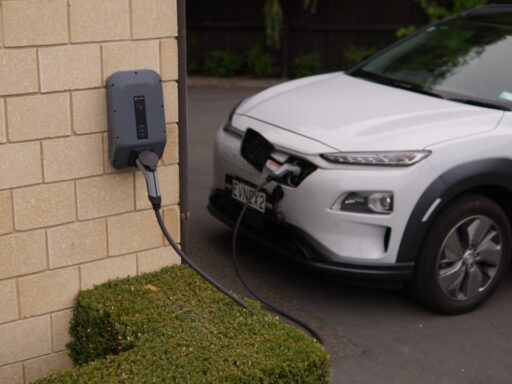
Home charging can have an even greater effect on ownership satisfaction than small differences between vehicles. A family able to begin most mornings with a charged battery may rarely need a public station during ordinary weekly use.
The best family EV is ultimately the one that fits everyday routines without forcing constant compromises. Range attracts attention, but space, access, safety and charging convenience determine whether the vehicle remains practical after the excitement of buying it has passed.