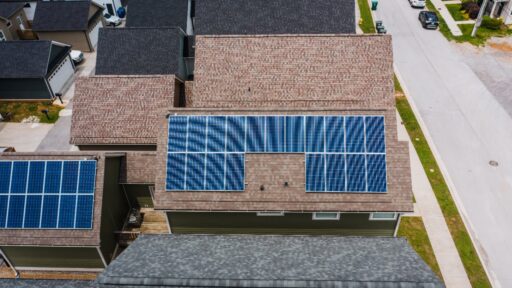
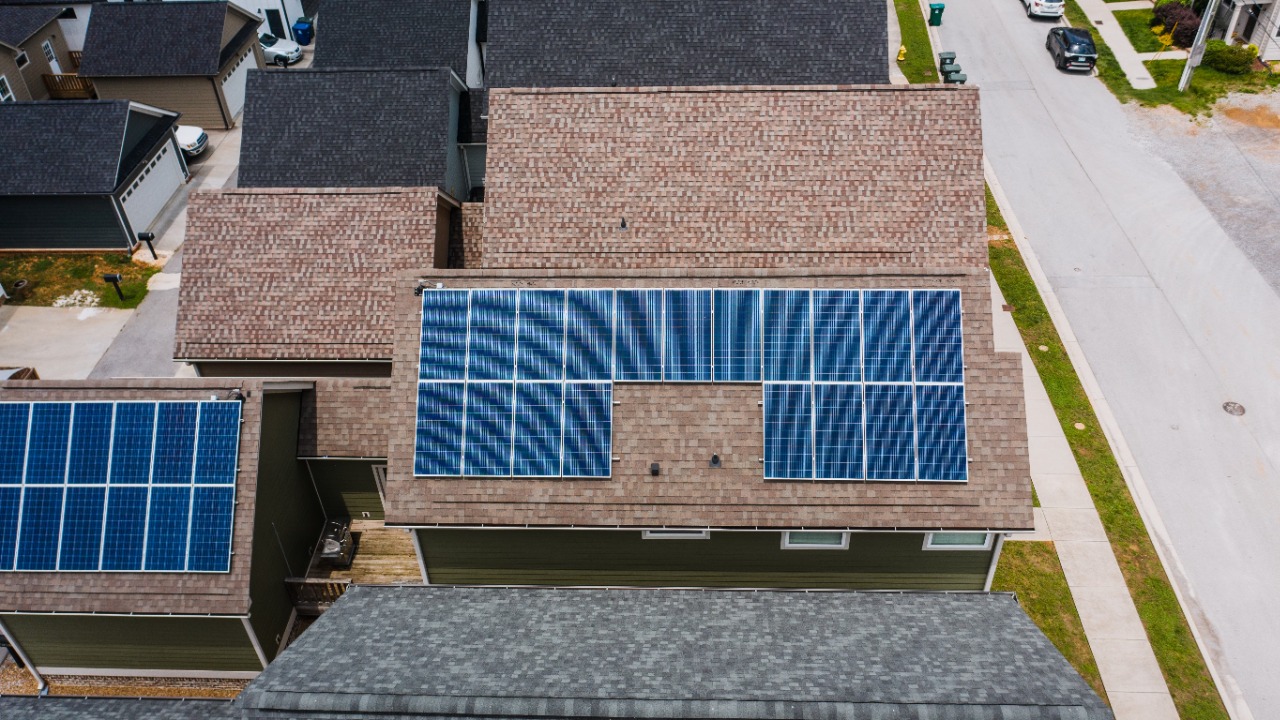

Charging a Tesla with rooftop solar can reduce reliance on utility electricity and make better use of energy generated at home. However, installing panels does not create a direct connection between the roof and the vehicle.
Solar panels generate direct-current electricity. An inverter converts it into alternating-current electricity that can be used by the home, sent to the grid or delivered through an EV charger. The Tesla then converts the incoming AC electricity back into the DC energy stored by its battery.
In an ordinary grid-connected system, the home’s solar production and electricity consumption are measured as part of one energy system. The Tesla may be charging while the panels are producing power, but that does not guarantee the car is using only solar electricity. Household demand, cloud cover and charging power can cause the property to import additional energy from the grid.
Tesla’s automated Charge on Solar feature is designed to address this problem by adjusting the vehicle’s charging rate according to the amount of surplus solar energy available. Before that feature can work properly, several hardware, software and installation requirements must be met.
The Solar System Must Produce Enough Surplus Energy
The first consideration is not the Tesla’s battery size. It is how much electricity remains after the home’s normal consumption has been covered.
A solar array may produce substantial power around midday but generate much less during cloudy weather, winter or early morning and evening hours. Air conditioning, water heating, cooking and other household loads receive priority whenever they are operating at the same time as the vehicle.
The U.S. Department of Energy notes that the number of solar panels required to support EV charging depends largely on how far the vehicle is driven. A household with a short daily commute may replace its driving energy with a relatively modest amount of solar production, while frequent long-distance driving may require a larger array. (Department of Energy’s solar and EV preparation guide)
An installer should therefore examine annual electricity consumption, expected vehicle mileage, local sunlight, roof orientation and available roof area. Simply adding a charger to a small solar system may still result in considerable grid consumption.
The Home Needs a Suitable Charging Circuit
Solar panels do not remove the need for correctly installed EV charging equipment.
A Tesla can charge from a standard household outlet, but Level 1 charging is slow and may not restore enough range between frequent journeys. Level 2 equipment uses a 240-volt circuit and is generally more practical for regular home charging.
Tesla’s Wall Connector can provide up to 11.5 kilowatts at 48 amps when installed on an appropriate 60-amp circuit. It can also operate at lower power levels when the home’s electrical panel or the vehicle cannot support the maximum output. The actual charging speed depends on the Tesla model, circuit rating and onboard charger. (Tesla Wall Connector specifications)
A qualified electrician must determine whether the electrical service, panel and available circuit capacity can support the charger. The Department of Energy recommends safety-certified charging equipment and notes that local permits may be required for Level 2 installations. EV charging is also treated as a continuous electrical load, making correct cable sizing, breaker selection and code compliance particularly important. (DOE home-charging guidance)
When panel capacity is limited, Tesla’s Dynamic Power Management can monitor the home’s electricity use and reduce the Wall Connector’s output when other large appliances are operating. This may avoid a costly service upgrade while still allowing faster charging when household demand falls.
Tesla’s Charge on Solar Feature Requires a Powerwall
A Tesla owner can manually schedule charging during sunny hours without owning a home battery. However, using Tesla’s dedicated Charge on Solar automation requires more than panels and a Wall Connector.
Tesla states that Charge on Solar requires an eligible Tesla vehicle, a Powerwall connected to a property with solar generation and a compatible version of the Tesla app. The system uses data from Powerwall to determine how much solar energy remains after household demand and then adjusts vehicle charging to match that surplus.
The minimum listed software requirements are vehicle software version 2023.32, Powerwall software version 23.12.10 and Tesla app version 4.30.5. Current Model S, Model 3, Model X, Model Y and Cybertruck vehicles are included, although Tesla says 2012–2020 Model S and 2015–2020 Model X vehicles are not currently eligible. Requirements can change through later software releases, so compatibility should be checked again before purchasing hardware specifically for the feature.
The Powerwall and vehicle also require stable connectivity during setup. The owner’s phone must be paired with the Powerwall site, and Tesla requires a charging location to be selected so the vehicle does not attempt to use solar-only charging when it is connected elsewhere.
The Utility Must Approve the Solar Installation
A newly installed solar system cannot always begin exporting power immediately.
Local authorities may require electrical and building inspections, while the utility may need to approve the interconnection and provide permission to operate. Tesla explains that its solar systems begin normal operation after inspection and utility permission have been completed. (Tesla’s solar approval process)
Charge on Solar also depends on the property’s export and site restrictions. Tesla states that eligible sites need solar without applicable export or site limits that prevent the feature from functioning correctly. Some utilities restrict how much electricity a home may send to the grid, and Tesla’s Powerwall settings can reduce solar production when export is prohibited and the battery is already full.
A homeowner should therefore confirm utility rules, electricity tariffs and export compensation before assuming that every surplus kilowatt-hour will be available for the car.
The Charging Limits Must Be Configured Correctly
Charge on Solar uses two charging limits rather than one.
The lower limit represents the minimum battery level the vehicle should reach using any available source, including solar, Powerwall or the utility grid. This setting helps ensure the car has enough range for planned driving even when the weather produces little surplus energy.
After the vehicle reaches that lower level, it can continue charging only from excess solar until it reaches the higher limit. Tesla says the vehicle adjusts its charging power approximately every ten seconds as solar generation and household consumption change.
The vehicle may wait rather than begin immediately when available surplus is low. Tesla says Charge on Solar can delay charging until there is at least 1.2 kilowatts of stable excess production. This prevents rapid starting and stopping as clouds pass or appliances switch on.
For this reason, the Tesla must normally be plugged in during daylight hours. A vehicle that arrives home after sunset cannot directly consume that day’s unused sunlight unless the energy has first been stored in Powerwall.
Powerwall Settings Can Change Which Device Receives Solar First
The vehicle is not always the system’s highest priority.
When Powerwall is below its selected Backup Reserve, it may use surplus solar to restore that reserve before sending energy to the Tesla. During severe weather, Storm Watch may also prioritize charging Powerwall from available sources so the home is prepared for a possible outage.
Tesla recommends Self-Powered mode for maximizing Charge on Solar operation. In that mode, Powerwall helps absorb short changes in home consumption while the vehicle adjusts its charging rate. Savings Mode may behave differently because it is designed around electricity prices and can reserve or export energy when doing so offers greater financial value.
Tesla’s newer Rate Plan Charging feature also cannot operate simultaneously with Charge on Solar. Rate Plan Charging prioritizes low-cost grid electricity during off-peak periods, while Charge on Solar follows surplus solar production. The homeowner must choose the strategy that best matches driving needs, utility rates and energy goals.
Solar Charging During an Outage Needs Backup Hardware
Rooftop panels alone usually will not charge a Tesla when the utility grid fails. Tesla states that a solar-only installation shuts down during an outage for safety, preventing the system from energizing power lines while utility crews may be repairing them. (Tesla’s explanation of solar-system performance)
A Powerwall system can isolate the home from the grid and allow solar production to continue. For the Tesla to charge during an outage, however, its charging connector must be connected to a circuit backed up by Powerwall. If only selected household circuits receive backup power, the charger must be included on the supported loads panel.
Powerwall will reduce or stop vehicle charging when household demand rises or stored energy falls below the selected threshold. This prevents the car from exhausting electricity needed for refrigeration, lighting, communications and other essential home loads.
Solar Charging Works Best as a Complete Energy Plan
Charging a Tesla with sunlight is technically straightforward once the right system is operating, but the planning should happen before the equipment is purchased.
The property needs enough solar production, suitable electrical capacity, code-compliant charging hardware and utility approval. Tesla’s automated Charge on Solar feature additionally requires an eligible vehicle, Powerwall, supported software, correct app pairing and daytime access to surplus generation.
Once those pieces are connected, the vehicle can become a flexible household load. It can accept extra energy when solar production is strong, pause when the home needs more power and fall back to grid charging when reliable driving range is more important than using solar alone.