
Public charging stations are essential for long journeys and drivers without private parking. They can restore hundreds of miles of range far faster than a home charger. However, maximum charging speed does not always mean maximum energy efficiency.
Every charging session loses some electricity before it reaches the battery. Energy may be consumed by power conversion, cable resistance, electronic controls, battery heating, battery cooling and equipment that remains active throughout the session. The amount lost depends on the charger, vehicle, power level, battery temperature and state of charge.
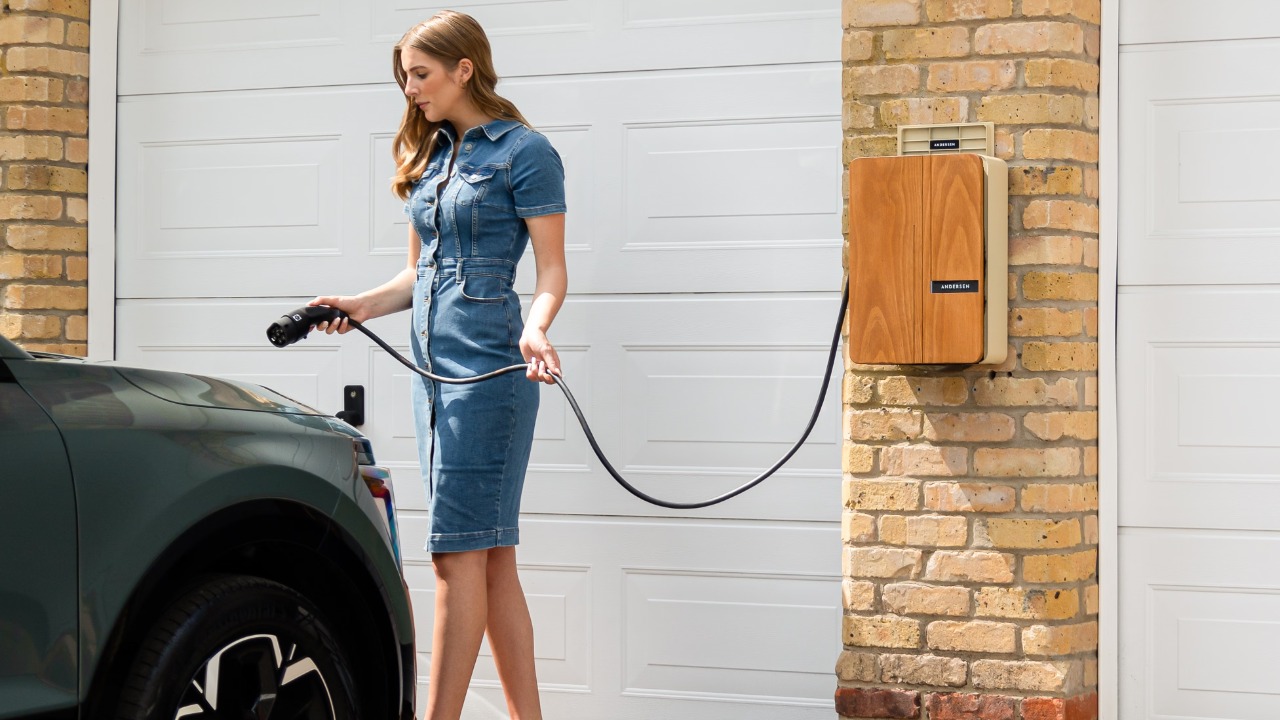
A properly installed home Level 2 charger can perform particularly well because it delivers power at a moderate rate without creating the intense heat associated with ultra-fast charging. It also gives the vehicle several hours to recharge, allowing it to avoid the aggressive thermal management sometimes required at a highway charging station.
The claim still needs qualification. A public Level 2 charger may be almost identical in efficiency to a home Level 2 unit, while a modern DC fast charger can be highly efficient under ideal conditions. The clearest comparison is therefore between routine home Level 2 charging and high-powered public DC fast charging.
Home and Public Chargers Deliver Power Differently
An electric vehicle battery stores direct-current electricity. The electricity supplied to a home is alternating current, so it must be converted before entering the battery.
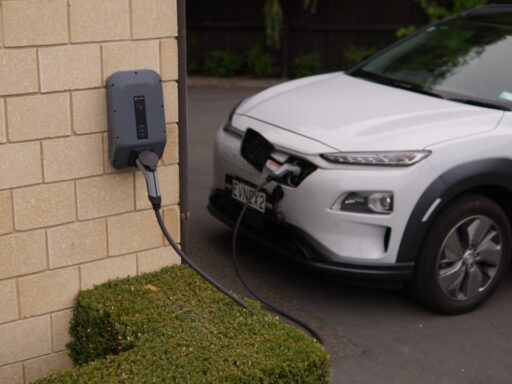
During home Level 1 or Level 2 charging, the wall-mounted unit mainly provides a safe electrical connection and communicates with the car. The vehicle’s onboard charger converts the incoming AC electricity into DC.
A public fast charger performs that conversion outside the vehicle. It converts grid electricity into DC and delivers it directly to the battery, bypassing the car’s onboard AC charger. The U.S. Alternative Fuels Data Center explains that residential Level 2 charging generally uses 240-volt service and can recharge a typical EV overnight, while public locations commonly offer both Level 2 equipment and DC fast chargers.
Moving the conversion equipment outside the vehicle can make DC charging highly efficient. However, conversion is only one part of the complete charging process. High-speed charging can require additional energy for cooling, heating and operating large station components.
Moderate Power Produces Less Battery Heat
Pushing energy into a battery at a very high rate increases heat generation. That heat must be controlled to protect the cells and maintain an acceptable charging speed.
When a vehicle connects to a powerful DC station, pumps, fans and cooling systems may begin operating. If the battery is cold, the vehicle may first consume electricity to warm it to a suitable charging temperature. If the battery becomes too hot, energy must be used to cool it.
Testing published by the German automotive organization ADAC found that DC charging losses varied significantly according to battery temperature and conditioning. Conversion losses inside the tested fast charger averaged approximately 3%, while battery heating and other vehicle-side requirements added further losses. Total grid-to-battery losses in the tested DC sessions ranged from approximately 5% to 15%.
A home Level 2 charger normally operates at a much lower rate. The slower process generally creates less battery heat, reducing the need for intensive cooling. The car can replenish its daily energy gradually instead of forcing a large amount into the battery during a short stop.
Overnight Charging Avoids Extreme Battery Conditions
Home charging usually begins after the vehicle has completed its daily journey and remains parked for several hours. Because there is no urgent deadline, the car can delay charging, reduce power when necessary and complete the session before morning.
A public fast-charging visit often happens during a journey when the driver wants the shortest possible stop. The battery may arrive cold after winter driving, extremely warm after sustained highway travel or nearly empty after a long distance. These conditions can increase the energy needed for temperature management.
Home charging also makes it easier to maintain the battery within a moderate state-of-charge range. Instead of waiting until the battery is nearly empty, a driver can replace a smaller amount of energy each night.
Charging speed usually decreases sharply as an EV approaches a high state of charge, particularly at a DC fast charger. Remaining connected while the charging rate falls can keep the vehicle and station systems active for longer while delivering less energy per minute. Routine home charging makes it easier to avoid depending on these slower final stages during public sessions.
A Home Level 2 Charger Can Beat a Standard Wall Outlet
Not every form of home charging is equally efficient. A standard 120-volt Level 1 connection is convenient, but its low power can increase the proportion of electricity consumed by fixed vehicle systems.
While an EV is charging, its control modules, converters and 12-volt systems remain active. If those components consume a few hundred watts, their effect is proportionally greater during a low-powered session that lasts 20 hours than during a higher-powered Level 2 session lasting several hours.
ADAC tested four EVs through a low-powered household connection and an 11-kilowatt wall charger. The wall charger produced lower losses in all four vehicles. The Tesla Model 3 recorded losses of 15.2% through the lower-powered connection and 7.7% at 11 kilowatts. The Renault Zoe recorded 24.2% and 9.7%, respectively. These results are vehicle-specific, but they demonstrate why “slower” does not always mean “more efficient.”
The most efficient residential setup is often not the slowest outlet available. It is a correctly sized Level 2 charger operating near a power level at which the vehicle’s onboard charger performs efficiently.
Public Fast-Charging Sites Have Additional Energy Loads
A public charging site contains more than a cable and electrical connector. A high-power installation may include large conversion cabinets, cooling equipment, illuminated displays, payment terminals, networking hardware, cellular communications and monitoring systems.
Some of these components consume power even when no vehicle is charging. A busy station can distribute those standby losses across many sessions, while an underused site may consume supporting energy for relatively little electricity delivered to vehicles.
Residential chargers are generally simpler. A non-networked home unit may require very little standby power, although Wi-Fi, displays and smart features still consume some energy.
The U.S. Environmental Protection Agency reports that EV chargers may spend around 85% of their time in standby mode. ENERGY STAR-certified chargers use approximately 40% less standby energy than comparable non-certified products. ENERGY STAR also applies active-efficiency requirements to eligible DC fast chargers, showing that public equipment can be designed to reduce these losses.
Home Charging Can Be More Efficient for the Grid
Energy efficiency can also be considered beyond the charger itself. A home charger can be scheduled to operate when electricity demand is lower, renewable generation is abundant or the utility offers cheaper off-peak rates.
The vehicle may consume nearly the same number of kilowatt-hours regardless of the time, but shifting the load can reduce stress on grid infrastructure and limit the need for expensive peak-generation resources. The U.S. Department of Energy notes that managed charging can reduce costs by scheduling EV charging during off-peak periods and avoiding simultaneous demand peaks.
Public fast chargers must serve vehicles when drivers arrive. Their demand can be concentrated during holidays, commuting periods and busy travel hours. A single high-powered site may create a substantial short-term load, whereas residential charging can be distributed throughout the night.
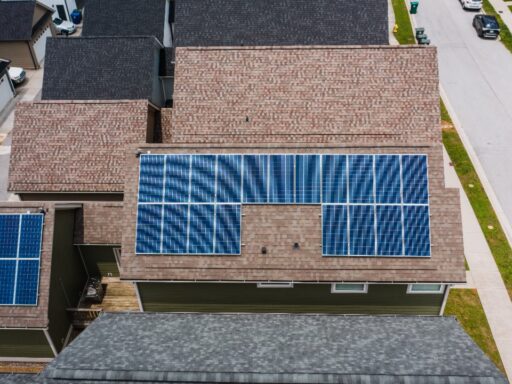
A home equipped with solar panels can create another advantage when charging is coordinated with onsite generation. Directly using household solar electricity can reduce the amount sent through the wider grid, although the overall efficiency depends on the inverter, charger, battery temperature and whether stationary storage is involved.
DC Fast Charging Can Still Win Under the Right Conditions
Home charging is not automatically more energy-efficient in every comparison.
A modern DC charger can convert AC to DC very effectively. ENERGY STAR-certified DC equipment in the covered power range must meet defined active-efficiency requirements, and certified 50-to-65-kilowatt models must achieve at least 93% average active efficiency.
When a battery arrives at the ideal temperature and accepts high power without extensive heating or cooling, DC charging may equal or outperform AC charging from the grid to the battery. ADAC’s testing similarly concluded that DC charging could have an efficiency advantage when battery conditioning was not required.
Public Level 2 charging should also not be confused with fast charging. A Level 2 unit at a workplace, hotel or shopping center uses the same general AC process as a residential unit. Its efficiency may be very similar when it supplies the same vehicle at a comparable power level.
Home Level 2 Charging Offers the Best Everyday Balance
The strongest advantage of home charging is not that every residential charger defeats every public station in a laboratory test. It is that home Level 2 charging combines moderate power, limited thermal stress, low supporting energy use and the ability to recharge during long parking periods.
Public DC fast charging remains invaluable for road trips, emergencies and drivers unable to install private equipment. Its purpose is to minimize waiting time, and some efficiency is occasionally exchanged for that speed.
For routine use, a properly installed home Level 2 charger generally offers the better balance of energy efficiency, cost, convenience and battery-friendly charging conditions. The best results come from using certified equipment, avoiding unnecessary power reductions, scheduling charging during off-peak hours and allowing public fast chargers to serve their intended role: keeping longer journeys moving.