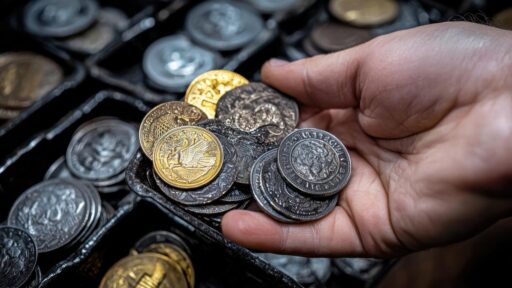
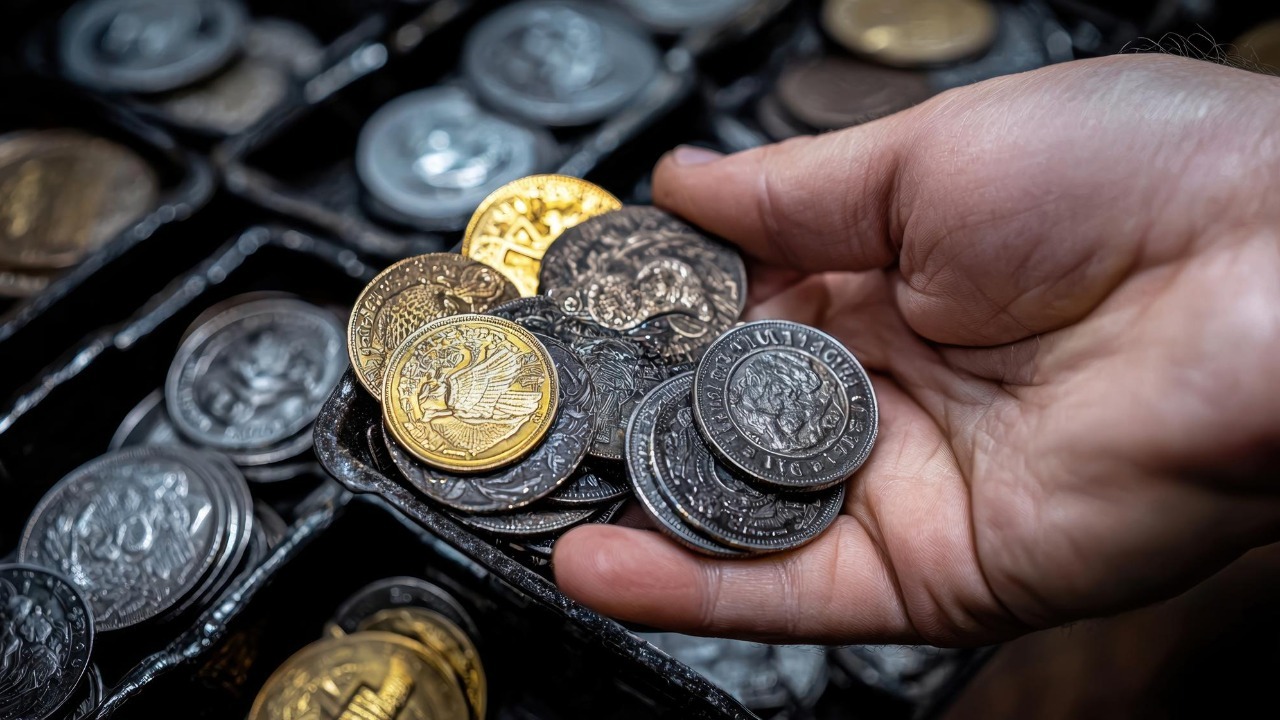

When divers first stumbled on a carpet of glittering coins off the Devon coast in the late 1980s, they knew they had found something extraordinary, but not whose story they had uncovered. More than 400 gold pieces lay scattered across the seabed, a fortune in metal and a mystery in maritime history. After three decades of painstaking detective work, researchers have finally tied the hoard to a Dutch ship that vanished roughly 300 years ago, closing a case that stretched from the English Channel to archives in the Netherlands.
The identification does more than satisfy curiosity. It reshapes the legal status of the treasure, clarifies who can claim what, and offers a rare, data-rich glimpse into how early 18th century trade and finance actually worked.
How a mystery hoard became a 300-year-old Dutch shipwreck
The discovery began as a routine dive off the coast of Devon, where a team exploring a known wreck site spotted individual gold coins lying in the sand. Over repeated visits, they recovered more than 400 pieces, many of them high quality gold ducats that appeared to be Dutch in origin. Early assessments suggested the coins dated to the early 1700s, hinting at a ship lost in that era, but nothing on the seabed clearly identified the vessel itself. There was no nameplate, no bell with a date, only scattered timbers and the treasure.
For years, the find sat in a kind of historical limbo. The coins were cataloged and conserved, but without a confirmed ship they could not be securely linked to a particular voyage, owner, or flag. That uncertainty complicated not only the story divers could tell about the wreck, but also the legal framework that governed the find. Under maritime law, the identity and nationality of a ship often determine whether a modern state, a private salvor, or descendants of original owners have a claim to what lies on the seabed.
The breakthrough came when researchers compared the coin dates and mint marks with archival shipping records from the Netherlands. Dutch maritime archives listed several vessels that had disappeared in the Channel while carrying large quantities of gold. By cross-matching the cargo descriptions, departure ports, and the approximate loss positions with the known location of the Devon site, investigators narrowed the field to a single candidate, a Dutch ship lost roughly 300 years ago while sailing with a substantial consignment of gold coins.
Archaeologists then revisited the wreck with this hypothesis in mind. Structural details of the hull fragments, the types of ceramics and ballast stones, and the distribution of the coins on the seabed all lined up with what would be expected from a Dutch merchant vessel of that period. Taken together, the archival trail and the physical evidence convinced specialists that the hoard belonged to a specific Dutch ship that never reached its destination.
The identification effort drew on a wide network of expertise. Dutch maritime historian Dom van Keulen, for example, has been closely involved in research on centuries-old shipwrecks off the English coast, using his knowledge of shipping logs and trade routes to connect scattered finds to named vessels. That kind of archival work was essential to move the Devon hoard from educated guess to documented history.
Why tying the coins to a Dutch vessel matters today
Confirming that the coins came from a Dutch ship lost about 300 years ago matters for several reasons that go well beyond numismatic curiosity. First, the identification transforms a pile of anonymous treasure into a time capsule of early 18th century commerce. Each coin, with its mint mark, weight, and gold content, is a data point in the financial systems that underpinned long distance trade. When hundreds of such coins are traced to a single voyage, historians can reconstruct how merchants moved capital, managed risk, and financed cargoes across borders.
Second, the ruling on identity clarifies ownership. Under modern conventions on underwater cultural heritage, states are more likely to argue that historic wrecks and their cargoes should be treated as shared heritage rather than as salvage to be sold off piece by piece. Once the Devon site was tied to a specific Dutch ship, it became easier for the Netherlands and the United Kingdom to frame the coins not simply as loot, but as archaeological material that should be studied and, where possible, displayed for the public.
The case also illustrates how slow and meticulous such work can be. Divers first recovered the coins decades ago, yet it took roughly 30 years of intermittent research, archival trawling, and comparative analysis to reach a confident conclusion. One account of the project describes how divers and researchers kept returning to the material as new techniques and records became available, gradually building a case that could stand up to scrutiny.
From a scientific perspective, the identification also highlights the value of leaving wrecks in place as much as possible. Early salvage operations often focused on lifting anything of obvious monetary value, sometimes stripping sites of context. In the Devon case, enough of the surrounding material remained to allow archaeologists to interpret the coins in relation to hull fragments, cargo remains, and local currents. That context helped explain how the coins were scattered and how the ship likely broke apart, details that feed into broader models of how wooden vessels decay on the seabed.
There is a broader policy angle as well. Governments and heritage bodies are under pressure to balance economic interests in salvage with the protection of underwater sites as historical archives. High profile identifications, especially when they involve large quantities of gold, tend to shape public opinion and, over time, legal frameworks. The Devon hoard reinforces the argument that patient research can deliver more value, in terms of knowledge and tourism, than a quick sale of recovered bullion.
Future research, legal questions, and the next chapter for the wreck
With the ship now identified, attention is turning to what should happen next, both on the seabed and in museums. Maritime archaeologists see the wreck as a laboratory for testing new survey and conservation techniques. Detailed 3D mapping of the site could reveal how the hull collapsed, how currents moved the coins, and whether more of the cargo remains buried under sediment. Each new fragment recovered and documented would refine the picture of the final moments of the Dutch vessel.
Conservation specialists are also rethinking how to present the coins and associated artifacts to the public. Rather than displaying the gold as an isolated treasure, curators can now tell a narrative that runs from the ship’s departure port through its intended trade route to its loss in the Channel. Contextual exhibitions can link the coins to other objects from the same wreck, such as ceramics, navigational instruments, or personal items belonging to crew and passengers. That approach turns a static hoard into a story about people, risk, and global trade in the early 1700s.
Legal and diplomatic questions will continue to play out in parallel. Once a wreck is tied to a specific flag state, that government often seeks a role in decisions about excavation, research priorities, and the eventual display or retention of artifacts. Cooperative agreements between the Netherlands and the United Kingdom could set terms for joint research, shared exhibitions, or rotating loans of material from the hoard. Such arrangements have become more common as states recognize that underwater heritage often lies in one country’s waters while belonging historically to another’s maritime tradition.
The identification also has implications for other unsolved wrecks. The Devon project shows how long running collaboration between divers, local authorities, and international historians can eventually crack cases that once seemed insoluble. That lesson is likely to encourage similar efforts on other sites where coins or cargo have been recovered without a clear link to a named vessel. Each success strengthens the argument for systematic recording of finds, careful conservation, and investment in archival research.