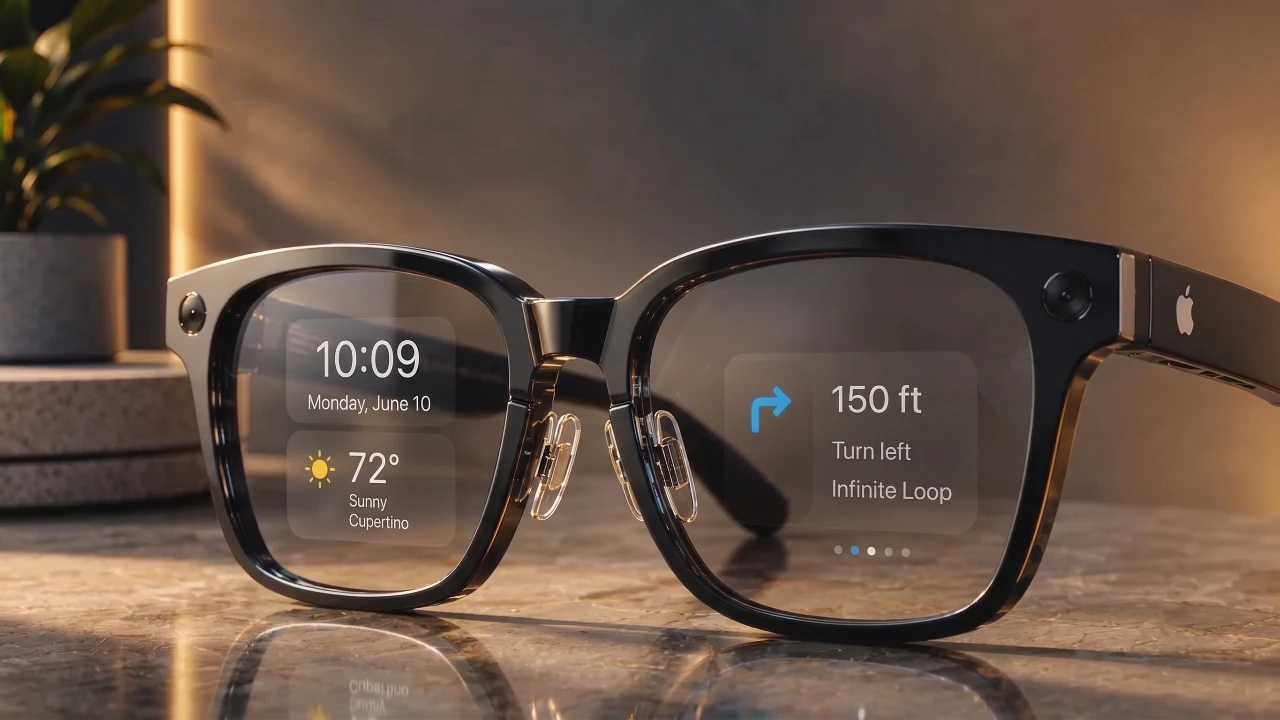

Apple’s long-rumoured smart glasses may arrive later than previously expected, but the delay does not necessarily signal a troubled product. Recent reports suggest that Apple is using the additional development time to address one of the biggest obstacles facing camera-equipped wearables: privacy.
The company is now reportedly considering unveiling its first smart glasses at the Worldwide Developers Conference in June 2027, followed by a commercial release later that year. Earlier reporting had suggested that Apple wanted to release the device by the end of 2026, meaning the current schedule represents a significant shift. Apple has not officially announced the glasses or confirmed their release date, so the timeline remains subject to change.
Rather than rushing to compete with Meta, Google and Samsung, Apple appears to be examining how wearable cameras, microphones and artificial intelligence can operate without turning the product into a permanent surveillance device.
Privacy Is More Complicated When the Camera Is Worn
A smartphone camera usually has to be removed from a pocket, raised and pointed toward a subject. Smart glasses can record from the wearer’s perspective with far less visible movement.
That convenience is also the source of the category’s greatest social problem. People standing nearby may not know whether the glasses are capturing video, analysing faces, listening to conversations or uploading environmental information to an AI system.
According to recent reporting, Apple has explored several approaches to reduce these concerns. The company has reportedly tested glasses without cameras, as well as models whose sensors could support AI-based visual assistance without allowing ordinary photography or video recording. Apple is also believed to be developing hardware and software protections that would make recording activity clearer to people nearby.
These ideas could limit some of the product’s most marketable features, but they may make the glasses more socially acceptable. A wearable device cannot become an everyday product when people feel uncomfortable around anyone wearing it.
Apple Has More to Protect Than a Product Launch
Apple has built privacy into its public brand identity. The company’s official privacy platform presents data protection and user control as fundamental product principles rather than optional software settings. Its current Apple Intelligence architecture also prioritises on-device processing, using Private Cloud Compute only when a request requires greater computational capacity.
Launching camera-equipped glasses without credible protections could therefore create a larger reputational problem for Apple than for a company whose business model already depends heavily on personalised advertising.
The challenge is not limited to protecting the person wearing the glasses. Apple must also consider the privacy of every bystander who enters the device’s field of view. Those individuals have not necessarily purchased the product, accepted its terms or agreed to have their actions analysed.
That creates a difficult engineering question. Apple must determine how much environmental awareness the glasses need to become useful while limiting the amount of information they capture, transmit and retain.
The Glasses May Depend on Visual Intelligence
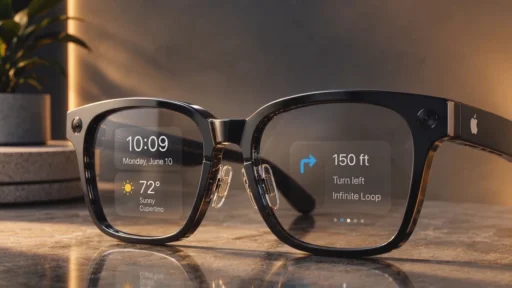
Apple’s first smart glasses are expected to function less like a miniature Vision Pro and more like an AI-powered companion worn throughout the day. Reports indicate that the initial version may not contain an augmented-reality display inside the lenses.
Instead, the glasses could use cameras, microphones, speakers and Siri to understand the wearer’s surroundings, answer questions, play audio, manage calls and provide contextual assistance. The product has reportedly been developed under the internal code name N50.
A user might look at a restaurant and ask for information, view a foreign-language sign and request a translation, or receive spoken guidance based on nearby objects. These experiences would depend on the device continuously interpreting the physical world.
Apple already offers elements of this concept through Visual Intelligence and Apple Intelligence. Its Apple Intelligence overview explains that many requests are processed directly on the device, while more complex operations may be handled through Private Cloud Compute.
Transferring that system to a lightweight pair of glasses is far more difficult than running it on an iPhone. The device would need sufficient processing power, reliable connectivity and acceptable battery life without becoming heavy, hot or visually unattractive.
Siri Must Be Ready Before the Glasses Are
The delay may also provide Apple with more time to strengthen Siri and its wider artificial-intelligence platform. Smart glasses without a display would depend heavily on voice interaction because the wearer could not simply tap through traditional menus.
A delayed or inaccurate assistant would be inconvenient on a phone. On glasses, it could make the entire product feel unnecessary.
Recent reports have linked the updated glasses timeline to Apple’s continuing work on Siri and Visual Intelligence. The glasses would need to interpret spoken requests, understand context and respond quickly enough to feel natural during everyday activities.
This makes the 2027 timeline easier to understand. Apple is not merely developing a new frame containing cameras and speakers. It is attempting to create a hands-free computing experience that relies on AI as its primary interface.
Releasing the hardware before the assistant is ready could repeat one of the technology industry’s most common mistakes: launching an impressive-looking device without a compelling daily purpose.
Apple Could Disable Recording When Privacy Controls Are Tampered With
One reported protection under consideration involves the glasses’ recording indicator. Camera-equipped smart glasses often use a small light to inform nearby people that recording is taking place.
However, an indicator is only useful when it cannot be easily covered, disabled or modified. Apple has reportedly explored a system that would automatically stop recording when the device detects interference with its indicator.
Such a feature would not eliminate every privacy concern, but it would represent a stronger approach than relying on users to behave responsibly.
Apple has already demonstrated a willingness to limit access to sensitive sensors on Vision Pro. Its developer documentation states that visionOS restricts application access to cameras and other sensors to protect user privacy.
A similar philosophy could influence the smart glasses. Third-party applications might receive useful results from the sensors without gaining unrestricted access to raw video of the wearer’s surroundings.
Processing More Information on the Device Could Reduce Risk
On-device processing may become one of Apple’s most important competitive advantages. When visual or audio data can be analysed locally, less information needs to leave the glasses or connected iPhone.
Apple explains that the cornerstone of Apple Intelligence is on-device processing, allowing the system to use personal context without automatically collecting that information. For larger requests, its Private Cloud Compute infrastructure is designed to process only the data needed for the task without making it accessible to Apple.
Applying these principles to smart glasses could allow the device to recognise an object, read text or provide directions without permanently storing a continuous recording of the wearer’s day.
The technical trade-off is substantial. Local AI processing consumes energy, requires specialised chips and can generate heat. Smart glasses also have far less physical space for batteries and cooling systems than phones or headsets.
Apple therefore has to balance privacy against weight, battery life and performance. The delay may provide the time required to make those compromises less noticeable to the wearer.
Arriving Late Could Be an Advantage
Apple would not be the first company to sell modern smart glasses. Meta has already established significant awareness through its Ray-Ban collaboration, while other technology and eyewear companies are developing camera-based and display-equipped products.
Entering later creates competitive risk, but Apple has frequently preferred to wait until a category can support a polished consumer experience. The company was not the first to produce a smartphone, smartwatch or mixed-reality headset.
In this case, waiting also allows Apple to observe the social and regulatory problems affecting rival devices. Camera-equipped wearables have raised questions about consent, facial recognition, data storage and recording in schools, workplaces and other sensitive environments. Research on wearable-camera privacy has similarly noted that bystanders often lack effective ways to control whether they are captured.
If Apple can provide useful AI assistance without making people feel constantly observed, the delay could become a strategic advantage rather than an embarrassing setback.
The Good Reason Behind the Delay
Apple’s reported decision to delay its smart glasses reflects the reality that wearable AI requires more than capable hardware. The product must earn trust from both the person wearing it and everyone standing nearby.
A rushed device could provide hands-free photography and AI assistance while creating lasting concerns about surveillance. A more carefully designed product could demonstrate when it is recording, minimise unnecessary data collection, process information locally and restrict how applications access environmental sensors.
None of those protections will make smart glasses completely free from privacy concerns. Their effectiveness will only become clear after Apple reveals the product and explains how its cameras, microphones and AI systems operate.
For now, the delay appears less like hesitation and more like recognition that the hardest smart-glasses problem is not placing a computer on someone’s face. It is making everyone else comfortable when that computer is looking back at them.